
To descend with confidence, focus on maintaining a balanced, relaxed stance aligned with the terrain. Keep your weight slightly forward, engage your core, and use your legs as shock absorbers. Look ahead rather than down, and stay calm by taking deep breaths and visualizing smooth control. Practice regularly to build instinctive reactions and trust your skills. By applying these techniques, you’ll improve your stability and confidence—keep going for more tips to master your descent.
Key Takeaways
- Maintain proper body positioning with a balanced stance and engaged core to stay stable on varied terrain.
- Keep your eyes focused ahead on the trail, not down at your skis or tires, for better reaction and control.
- Practice gradual, controlled descents to build confidence and develop instinctive responses over time.
- Use mental strategies like deep breathing and visualization to stay calm and focused during challenging sections.
- Slow down in tricky areas to regain control, and break the descent into smaller segments for better manageability.
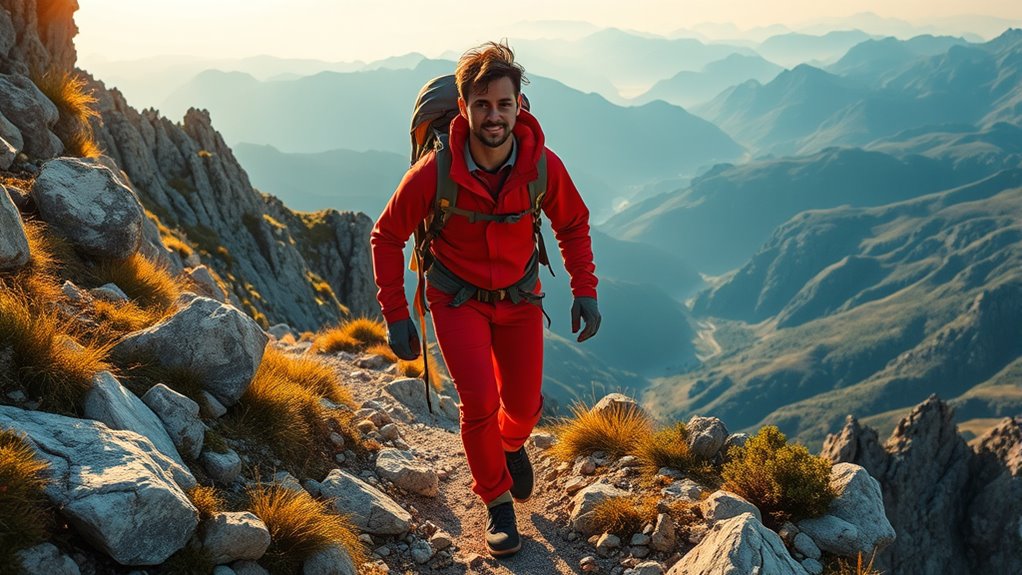
Have you ever hesitated during a descent, unsure if you’re in control? It’s a common feeling, especially when the terrain becomes steeper or more challenging. The key to descending with confidence lies in mastering techniques to maintain balance and employing mental strategies for calmness. When you focus on your body’s positioning and stay centered over your skis or bike, you create a solid foundation that keeps you stable. Keep your weight slightly forward or centered, depending on the terrain, and use your legs as shock absorbers to absorb uneven surfaces. Engage your core muscles to maintain control and stay relaxed, which helps prevent tension that can throw off your balance. Look ahead—not down at your skis or tires—and keep your eyes on the trail or slope. This not only gives you better reaction time but also helps you maintain a natural, balanced stance. When your gaze is fixed ahead, your body naturally aligns, reducing wobbliness or overcorrection.
Mental strategies for calmness are just as essential as physical technique. Before you start your descent, take a few deep breaths to settle your nerves. Remind yourself that you’ve prepared adequately and trust your skills. Visualize yourself descending smoothly, imagining a controlled, fluid motion from top to bottom. When you encounter a tricky section, slow down if needed and focus on one move at a time instead of panicking. Breaking the descent into smaller, manageable parts makes it less overwhelming. Stay positive and avoid negative self-talk—confidence grows with every successful step. If you start feeling anxious, pause briefly, scan the terrain for a safe line, and reset your mindset. Remember, confidence isn’t about flawless execution but about trusting your ability to adapt and respond. Keep your breathing steady and deliberate, which helps reduce tension and keeps your mind clear. Additionally, maintaining good air quality by ensuring proper ventilation can help keep your mind alert and focused during critical moments.
Practicing these techniques regularly builds a natural sense of confidence. The more you focus on your body’s positioning and mental calmness, the more instinctive these responses become. With time, you’ll find yourself approaching descents with a new sense of control and assurance. Confidence isn’t just a feeling; it’s a skill you develop through mindful practice and preparation. When you combine proper technique to maintain balance with mental strategies for calmness, you’ll notice a significant difference in how you handle challenging descents. Instead of hesitation or doubt, you’ll feel steady, composed, and ready to enjoy the thrill of the descent. Every confident descent reinforces your skills, making future descents even smoother. So, focus on your balance, stay calm, and trust yourself—you’re capable of handling more than you think.
Frequently Asked Questions
How Can I Overcome Fear of Heights When Descending?
To overcome your fear of heights when descending, start with mental preparation and visualization techniques. Visualize yourself descending confidently and safely, focusing on positive outcomes. Practice deep breathing to calm anxiety and break the descent into smaller, manageable steps. By mentally rehearsing success and staying present, you’ll build confidence. Remember, gradual exposure and consistent practice will help reduce your fear over time and make descending feel safer and more controlled.
What Equipment Ensures a Safe Descent in Challenging Conditions?
To guarantee a safe descent in challenging conditions, you should choose proper rock climbing gear like a reliable harness, locking carabiners, and a dynamic rope suited for the terrain. Use a friction device such as a belay device or an ATC to control your speed and maintain stability. Proper gear selection helps you stay secure and confident during descent, even when facing difficult or uncertain conditions, giving you peace of mind.
How Do Weather Changes Affect Your Confidence During Descent?
Weather changes can shake your confidence during descent, especially if you’re not maintaining weather awareness. Sudden shifts like wind, rain, or fog reduce visibility and increase turbulence, making you hesitant. To stay confident, focus on altitude adaptation and adjust your approach based on current conditions. Trust your training, stay alert, and remember that adapting quickly to weather variations helps you descend safely and with control.
Are There Specific Training Programs to Improve Descending Skills?
Yes, there are specific training programs designed to improve your descending skills. These programs focus on mountain trekking techniques, helping you refine your control, balance, and confidence on tricky terrain. You’ll learn essential skills like proper foot placement, pacing, and how to handle different surfaces. By participating in these structured courses, you’ll develop better technique refinement, making your descents safer and more enjoyable, regardless of weather conditions or terrain challenges.
What Are Common Mistakes to Avoid When Descending?
Ever wonder what mistakes can slow your descent? To avoid slipping, always focus on the right techniques, like maintaining proper body positioning and controlled movements. Don’t lean back excessively or overreach; instead, stay centered over your skis or bike. Keep your weight balanced and look ahead, not down. Are you using the right techniques to prevent slipping? Staying mindful of these tips helps you descend confidently and safely.
Conclusion
Remember, confidence is key when descending. Trust in your skills and stay focused, even when things feel uncertain. As the saying goes, “Slow and steady wins the race.” By maintaining your composure and trusting your abilities, you’ll navigate every descent safely and confidently. Every step down is a chance to prove to yourself just how capable you are. Keep your head up, stay calm, and descend with confidence—you’ve got this.