Foam rolling is a great way to boost your cycling performance by easing muscle tightness, speeding up recovery, and reducing soreness. It targets key muscles like quads, hamstrings, calves, and glutes, helping you stay balanced and injury-free. Regular foam rolling improves flexibility, promotes better blood flow, and supports overall muscle health. If you want to learn effective techniques and routines to get the most out of foam rolling, keep exploring for helpful tips.
Key Takeaways
- Foam rolling enhances muscle recovery, reduces soreness, and increases flexibility for cyclists.
- It helps prevent injuries like IT band syndrome and hamstring strains by maintaining muscle balance.
- Target key cycling muscles such as quadriceps, hamstrings, calves, and glutes with proper technique.
- Regular foam rolling before and after rides supports muscle health and improves performance.
- Incorporating foam rolling into your routine promotes injury prevention and faster muscle repair.
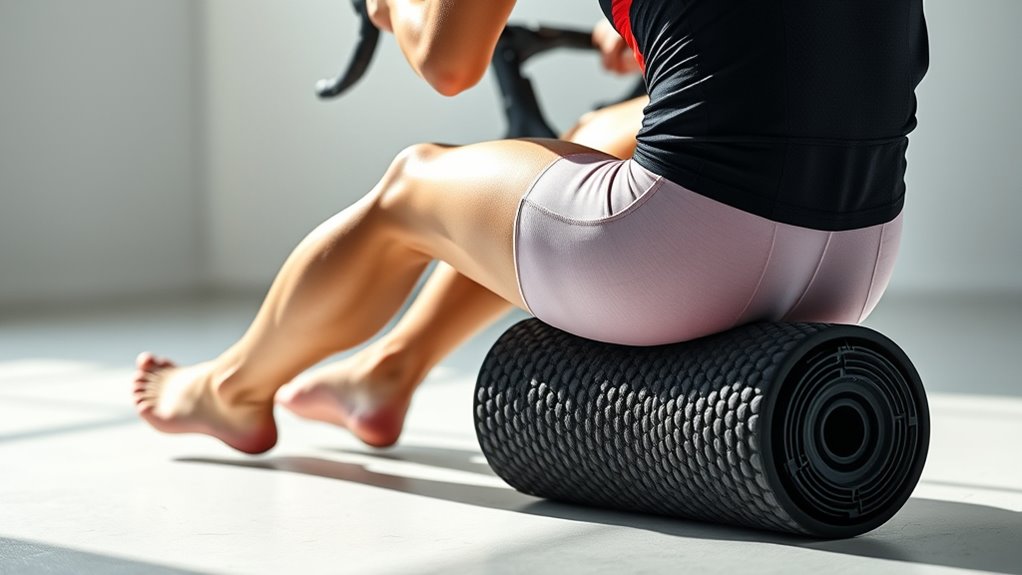
If you’re a cyclist looking to improve your performance and recovery, foam rolling can be a game-changer. It’s a simple, effective way to enhance muscle recovery and reduce the risk of injuries. When you ride regularly, your muscles endure repetitive stress, which can lead to tightness, soreness, and even strain if left unaddressed. Foam rolling helps loosen tight muscles and fascia, allowing blood to flow more freely to your tissues. This increased circulation delivers oxygen and nutrients necessary for quicker muscle repair and overall recovery, so you can get back on your bike feeling fresh and ready.
In addition to boosting muscle recovery, foam rolling plays a crucial role in injury prevention. Tight or knotted muscles can alter your biomechanics, putting extra strain on joints and other structures, which increases your injury risk. By regularly using a foam roller, you prevent muscles from becoming overly tight or imbalanced, maintaining proper alignment and movement patterns. This proactive approach reduces the chances of common cycling injuries like iliotibial band syndrome, Achilles tendinitis, or hamstring strains. Taking just a few minutes before and after rides to roll out your legs, hips, and lower back can make a significant difference in keeping your body resilient.
You should focus on key muscle groups used during cycling, such as your quadriceps, hamstrings, calves, and glutes. When you foam roll, you’re applying pressure to these areas to break down adhesions and release built-up tension. The process not only eases discomfort but also helps your muscles recover faster after long rides or intense training sessions. Proper technique is essential—use your body weight to gently roll over the targeted muscle, pausing on tender spots to release deeper knots. Consistency is key; incorporating foam rolling into your routine a few times a week amplifies its benefits and keeps your muscles supple. Additionally, understanding toilet features and selecting the right toilet for your bathroom needs can improve overall comfort and hygiene, just as proper muscle care enhances your cycling performance.
Beyond physical benefits, foam rolling can also boost your mental focus by providing a moment of mindfulness and self-care. As you focus on controlled movements and breathing, you create a mental connection with your body, which can improve your overall riding experience. Remember, preventing injuries and speeding up recovery aren’t just about pushing harder; they’re about supporting your body in a sustainable way. Incorporating foam rolling into your routine ensures your muscles stay healthy, your recovery is faster, and you’re less likely to encounter setbacks that hinder your progress on the bike.
Frequently Asked Questions
How Often Should Cyclists Foam Roll Weekly?
You should foam roll about 3-4 times a week to improve your cycling flexibility and prevent injuries. Regular foam rolling helps loosen tight muscles, making your rides smoother and reducing soreness. Focus on areas like your hamstrings, quads, and calves. Consistency is key—sticking to this routine guarantees you stay flexible and injury-free, ultimately enhancing your cycling performance and enjoyment.
Can Foam Rolling Replace Stretching Routines?
Think of foam rolling as a gentle tide washing over your muscles, soothing tension and releasing tightness. It can’t fully replace stretching routines, but it does play a vital role in muscle recovery and injury prevention. While foam rolling targets deep tissue, stretching lengthens muscles, enhancing flexibility. Combining both creates a balanced approach, helping you pedal stronger and stay injury-free on every ride.
What Are the Signs of Over-Foam Rolling?
You’ll notice over-foam rolling if you experience increased muscle soreness or joint stiffness instead of relief. It might also cause persistent discomfort, bruising, or tingling sensations. If your muscles feel tender long after rolling, or if your joints feel tight and unresponsive, it’s a sign you’re overdoing it. Take a break, reduce pressure, and listen to your body to avoid potential injury and allow proper recovery.
Is Foam Rolling Suitable for Beginners?
Think of foam rolling as a gentle dance with your muscles—suitable for beginners who want to boost muscle recovery and prevent injuries. You can start with light pressure, focusing on slow, controlled movements. It’s like giving your muscles a soothing massage, easing tension without overdoing it. As you get comfortable, you’ll discover how foam rolling helps improve flexibility and keeps your body in prime riding condition.
Are There Specific Foam Rollers Recommended for Cyclists?
Yes, there are specific foam rollers recommended for cycling recovery and improving muscle flexibility. Opt for a medium-density roller with a textured surface to target tight muscles effectively. Shorter rollers are portable and ideal for on-the-go recovery, while longer ones cover larger muscle groups. Using a foam roller tailored for cyclists helps you loosen tight muscles, reduce soreness, and enhance overall flexibility, making your rides more comfortable and efficient.
Conclusion
As you roll away tension, each pass becomes a wave washing over stiffness, freeing your muscles like a rising tide. With every roll, you’re planting seeds of resilience, cultivating a smoother ride ahead. Think of foam rolling as your steady compass, guiding you through rough waters toward clarity and flow. Embrace this ritual, and watch your cycling journey blossom—renewed, refreshed, unstoppable—like the dawn breaking over a calm, open sea.