When cornering on gravel and loose surfaces, it’s vital to adjust your tire pressure slightly lower for better grip and control. Stay relaxed, lean into the turn, and shift your weight slightly back and low to prevent washouts. Keep your elbows out and look through the turn to follow a smooth line. Proper body positioning and tire pressure help you maintain control and confidence—continue exploring these techniques to master tricky terrain.
Key Takeaways
- Lower tire pressure slightly to increase grip and conform to loose terrain without risking instability.
- Maintain a relaxed, centered body position, shifting weight slightly back and low to enhance control.
- Lean into corners by angling your body toward the inside while keeping elbows out and hands steady.
- Steer smoothly into slides, resisting abrupt braking, and guide the bike through controlled, gentle movements.
- Practice consistently to develop confidence, using body positioning and tire pressure adjustments as primary control tools.
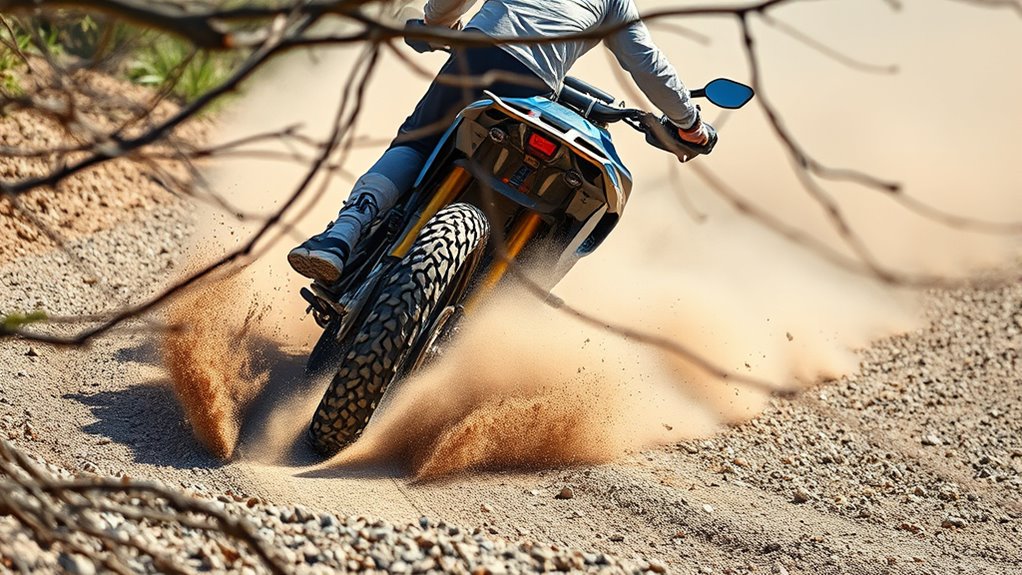
Cornering on gravel and loose surfaces requires a different approach than riding on pavement, as these conditions reduce traction and increase the risk of sliding. To navigate safely, you need to pay close attention to your tire pressure and body positioning. Proper tire pressure is essential because it influences how your tires grip the uneven surface. Lowering your tire pressure slightly compared to road riding can improve traction by allowing the tires to conform better to the loose terrain. However, don’t go too low, as excessively soft tires can feel unstable and increase the risk of pinch flats. Find a balance that provides enough grip without sacrificing handling. Before hitting the trail, check your tire pressure and adjust accordingly, considering factors like load and terrain. Remember that a slightly lower pressure than usual helps you maintain better contact with the ground, giving you more control during turns. Additionally, selecting the right suspension setup can significantly improve your ability to handle rough terrain and maintain stability on loose surfaces.
Your body positioning plays an equally important role in cornering on loose surfaces. As you approach a turn, stay relaxed and centered over your bike. Shift your weight slightly back and low, which helps prevent the front wheel from washing out and keeps the rear wheel more planted. Lean into the turn by angling your body toward the inside, but avoid over-leaning, which can cause your tires to lose grip. Keep your elbows out and your hands steady on the handlebars, allowing precise control without overreacting to slips or slides. As you lean into the corner, look through the turn to where you want to go—this helps your body and bike follow a natural line, improving stability and control. Your body position should be dynamic; adjust as needed if you feel the bike slipping or if terrain changes mid-corner.
Maintaining a steady speed through corners is essential. Too fast, and you risk losing traction; too slow, and you might not carry enough momentum to complete the turn smoothly. Use your body positioning and tire pressure to fine-tune your control. If you start to slide, resist the urge to brake abruptly, which can worsen the loss of traction. Instead, gently ease off power and steer into the slide, guiding the bike in the direction you want to go. With proper tire pressure and confident body positioning, you’ll find that cornering on gravel and loose surfaces becomes safer and more predictable. Practice these techniques consistently, and over time, your ability to handle tricky corners on challenging terrain will improve markedly.
Frequently Asked Questions
How Can I Improve My Confidence on Loose Surfaces?
To improve your confidence on loose surfaces, focus on enhancing your bike handling skills and adapting to the terrain. Keep your weight centered and relaxed, allowing the bike to move beneath you. Practice gentle, controlled steering and braking to maintain traction. Gradually increase difficulty as you become more comfortable, and always stay alert to changing conditions. With consistent practice, you’ll build the skills and confidence needed to navigate loose terrains smoothly.
What Bike Setup Is Best for Gravel Cornering?
Think of your bike setup as your trusted steering wheel in a storm. You want wider, slightly knobby tires with good tread for grip, and a handlebar position that offers stability and control. Keep the handlebars a tad lower for better leverage, and make sure the tire pressure is ideal for traction. This combo helps you navigate gravel corners confidently, giving you the balance and responsiveness needed to conquer loose surfaces.
How Do Tire Pressures Affect Cornering Grip?
Lower tire pressures increase your cornering grip by allowing more tire tread contact with the loose surface. Proper pressure management guarantees ideal traction without risking pinch flats. When you reduce pressure, your tires deform slightly, providing better grip and control around corners. Just be careful not to go too low, as it can cause sidewall damage or pinch flats. Regularly check your pressures to maintain the right balance for confident cornering on gravel.
Is It Necessary to Brake Before Turning on Gravel?
Did you know that proper braking techniques can reduce the risk of sliding by up to 50%? On gravel, it’s best to brake before turning, not during, to maintain control. You should also focus on bike positioning—shift your weight back slightly and keep your momentum. This approach helps you stay stable and avoid surprises, giving you confidence to navigate loose surfaces safely and effectively.
How Do Weight Shifts Influence Stability During Cornering?
Your weight shifts play a vital role in your stability during cornering. By leaning into the turn, you lower your center of gravity, which helps maintain balance. This shift increases tire grip on the surface, reducing the risk of slipping. Properly managing your weight transfer guarantees better control, especially on gravel and loose surfaces, allowing you to corner more confidently and safely.
Conclusion
Mastering cornering on gravel and loose surfaces takes practice and confidence. Remember, maintaining a steady throttle and looking through the turn helps your bike stay stable. Did you know that over 60% of motorcycle accidents on loose surfaces occur during cornering? By applying these techniques, you can reduce your risk and enjoy the thrill of riding off-road. Stay smooth, stay alert, and keep practicing—you’ll be controlling those tricky corners with ease in no time.