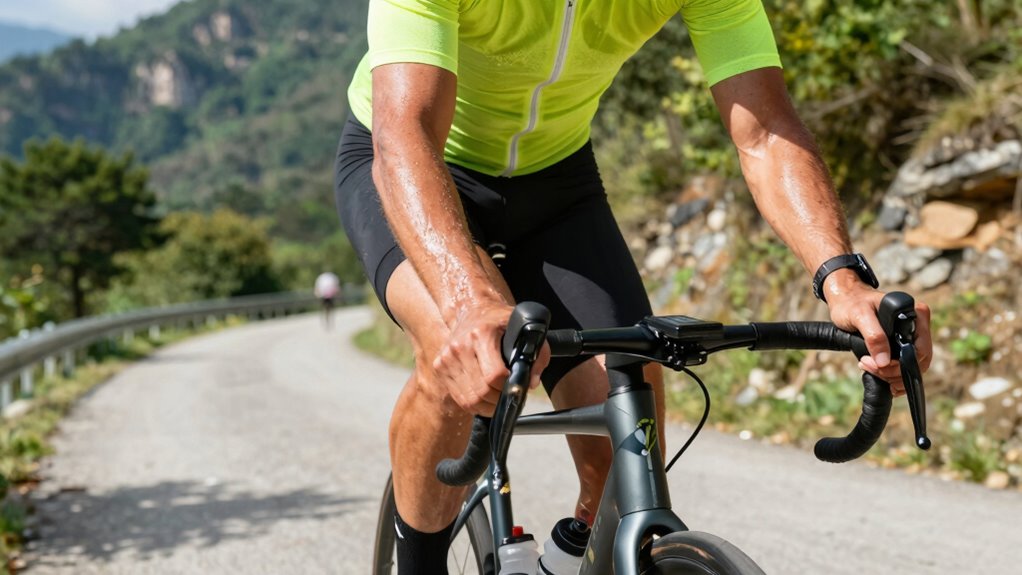

To increase your ride distance safely, set realistic goals and boost your distance by no more than 10% each week, allowing your body to adapt gradually. Focus on consistent training, balanced nutrition, and proper bike maintenance to keep you riding comfortably. Incorporate rest days and pace yourself during longer rides to avoid burnout. Over time, you’ll build endurance smoothly—keep going, and you’ll discover more tips to help you ride farther with confidence.

Get sports gear delivered free with Prime
- Fast, free delivery on millions of items
- Prime Video, Amazon Music and more included
- Member-only deals all year
Key Takeaways
- Increase your riding distance by no more than 10% weekly to ensure safe, steady progression.
- Incorporate rest days to allow muscles and joints to recover and adapt.
- Maintain proper nutrition and hydration to support longer rides and prevent fatigue.
- Regularly check and maintain your bike to ensure efficiency and reduce mechanical issues.
- Focus on pacing and building endurance gradually for sustainable, comfortable extended cycling.

Looking to go further on your rides? Increasing your ride distance gradually is a smart way to build endurance without risking injury or burnout. The key is to develop a consistent plan that balances challenge with recovery, making sure your body adapts safely over time. Before you start, focus on two essential aspects: cycling nutrition and bike maintenance. Proper fueling ensures your body has the energy to handle longer rides, while a well-maintained bike prevents mechanical issues that could derail your progress.
Start by evaluating your current riding distance and setting a realistic goal. For example, if you’re comfortable riding 10 miles, aim to increase that by no more than 10% each week. This slow, steady increase allows your muscles, joints, and cardiovascular system to adapt gradually. To support this, pay attention to your cycling nutrition—incorporate carbohydrate-rich snacks before and during your ride to maintain energy levels, and stay hydrated to prevent fatigue. Eating balanced meals that include proteins and healthy fats post-ride will help your muscles recover and prepare you for longer distances.
Increase your ride distance gradually, focusing on nutrition and recovery to build endurance safely.
As your rides get longer, consider adjusting your bike maintenance routine. Ensuring your bike’s tires are properly inflated, your chain is lubricated, and brakes are responsive can make a significant difference. A smooth-running bike reduces effort and helps you sustain longer rides comfortably. Regularly check your gear and make minor adjustments before each ride to prevent mechanical failures that could cut your session short. Additionally, understanding basic cycling safety practices can help you avoid accidents and stay confident during your longer outings. It’s also beneficial to familiarize yourself with proper riding techniques to improve efficiency and reduce fatigue over extended distances. Incorporating bike fitting adjustments can further enhance comfort and performance, especially during longer rides. Moreover, paying attention to bike ergonomics can help prevent discomfort and injuries during extended cycling sessions. To optimize your performance, consider learning about cycling training plans that are tailored for increasing endurance safely.
Incorporate rest days into your training schedule to allow your body to recover. Overdoing it can lead to fatigue or injury, which hampers progress. On your longer rides, pace yourself and don’t be tempted to ride at maximum effort from the start. Instead, find a sustainable rhythm that you can maintain comfortably for the duration. As you build endurance, you’ll notice your body becoming more efficient, and your rides will naturally extend.
Products Worth Considering

Coleman SaluSpa Miami Energy-Efficient AirJet Inflatable Hot Tub, 2–4 Person

GoPro Fluid Pro AI 3-Axis Gimbal Stabilizer with AI Tracking and Fill Light

GoPro HERO12 Black Waterproof Action Camera with 5.3K60 Video and 27MP Photos
As an affiliate, we earn on qualifying purchases.
Frequently Asked Questions
How Often Should I Rest Between Longer Rides?
You should rest between longer rides based on your body’s signals, typically taking a 5-10 minute break every hour. During these pauses, guarantee proper hydration to replenish lost fluids and prevent fatigue. Use cycling accessories like padded gloves or a saddle cushion to reduce discomfort, making recovery easier. Listening to your body is key; if you feel tired or sore, extend your rest periods to prevent injury and maintain endurance.
What Are the Signs of Overtraining?
Overtraining shows signs like persistent muscle soreness and energy dips that don’t improve with rest. Did you know that nearly 70% of endurance athletes experience overtraining symptoms? If you notice your performance stagnates, your motivation drops, or your sleep is disrupted, it’s a clear warning. These signs indicate you’re pushing too hard, and you need to scale back to allow recovery, preventing injury and burnout.
Should I Change My Bike Setup for Longer Rides?
Yes, you should consider adjusting your bike setup for longer rides. Focus on bike ergonomics to guarantee comfort and reduce fatigue, which helps you ride longer without discomfort. Upgrading equipment like a more comfortable saddle or handlebar grips can make a big difference. Small adjustments can improve your overall experience, prevent injuries, and help you build endurance gradually. Always listen to your body and tweak your setup as needed for peak performance.
How Does Nutrition Impact Increasing Ride Distance?
Did you know proper nutrition can boost your endurance by up to 20%? Nutrition impacts your ride distance by fueling your muscles and preventing fatigue. Focus on nutrition timing to optimize energy levels, eating carbs before and during long rides. Hydration strategies are equally essential; staying well-hydrated prevents cramps and maintains stamina. Together, good nutrition and hydration help you increase ride distance safely and effectively, making longer rides more enjoyable.
Can Mental Fatigue Limit My Progress?
Yes, mental fatigue can limit your progress. When your mental resilience dips, you might feel less motivated, making it harder to push through longer rides. To combat this, use motivation strategies like setting small goals or visualizing success. Staying mentally strong helps you maintain focus, enhances endurance, and keeps you progressing steadily. Remember, mental fatigue is as vital as physical fatigue in determining how far you can ride.
Conclusion
Think of your riding journey as tending a garden. You start with small, careful planting—short rides—and gradually, with patience and consistent care, your garden blossoms into a lush, expansive landscape. Each ride adds a new flower, a new tree, building confidence and strength. Stay patient and steady, and soon you’ll find yourself exploring vast new terrains. Remember, just like a garden, your endurance grows best with gentle nurturing over time. Keep riding, and watch your distance flourish.