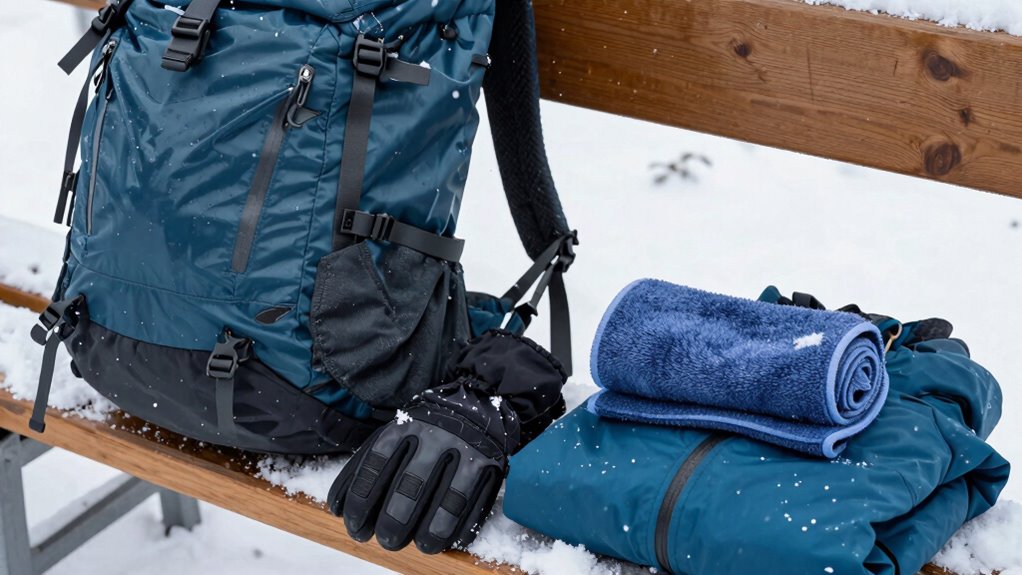

To keep your winter gear dry between rides, always hang jackets, pants, and gloves in a well-ventilated area after use, avoiding cramped spaces or plastic bags that trap moisture. Use breathable storage options, and make certain everything is completely dry before storing long-term. Incorporate moisture-wicking fabrics and control moisture during cleaning. Regularly inspect gear and guarantee proper ventilation, quickly catching dampness or mold. Continue on to learn more tips to keep your gear in top condition.
Key Takeaways
- Hang gear in a well-ventilated area after each ride to promote thorough drying.
- Avoid storing wet gear in plastic bags or cramped spaces to prevent moisture buildup.
- Use moisture-wicking fabrics and cleaning products to reduce dampness and control moisture.
- Incorporate dehumidifiers or silica gel packs in storage areas to absorb excess moisture.
- Regularly inspect gear for dampness or mold, ensuring it is completely dry before storage.
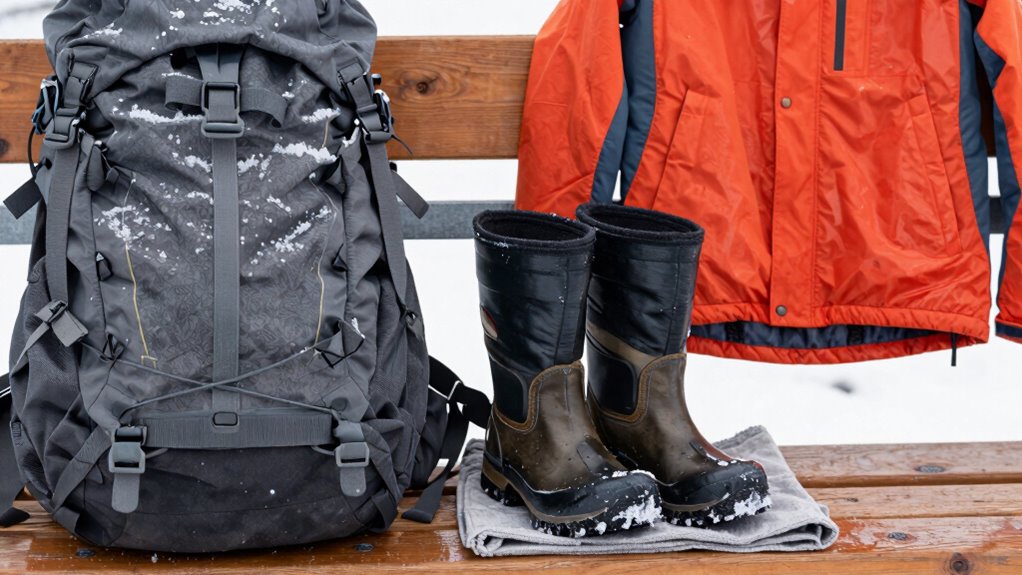
Ever wonder how to keep your winter gear dry in harsh conditions? When you’re out riding in cold, wet weather, keeping your gear dry between rides becomes essential to stay warm and comfortable. Proper winter gear storage is the first step. After a ride, don’t just toss your gear into a corner or your bag. Instead, hang your jackets, pants, and gloves in a well-ventilated area. Avoid cramped spaces or plastic bags, as these trap moisture and promote mold or mildew growth. Instead, opt for breathable storage options that allow air to circulate. This helps moisture escape, preventing your gear from soaking up residual dampness. Using moisture wicking fabrics for your base layers can also make a big difference. These materials pull moisture away from your skin and push it to the outer surface, where it can evaporate more quickly. When your base layers stay dry, your overall gear remains more resistant to moisture buildup, reducing the risk of dampness that can lead to cold spots or discomfort. Additionally, ensuring proper ventilation in your storage area can significantly accelerate drying times and prevent lingering dampness. Incorporating moisture control techniques into your storage routine can further help maintain your gear’s condition and longevity.
Between rides, always allow your gear to dry thoroughly before storing it away for an extended period. If possible, lay wet items flat in a warm, dry place rather than folding or stuffing them into your bag. This ensures air can circulate around every part, speeding up the drying process. For gloves and smaller accessories, consider using a dehumidifier or placing silica gel packs in your storage area to absorb excess moisture. Keeping your gear in a dry environment minimizes the chance of rust on metal parts and prevents fabric deterioration over time. Proper gear-specific storage solutions help maintain your equipment’s integrity and prevent damage caused by moisture. Regularly inspecting your gear for signs of dampness or mold helps you catch problems early. When cleaning, follow the manufacturer’s instructions and use moisture-wicking cleaning products to help preserve the fabric’s performance.
Ultimately, staying on top of winter gear storage and making smart choices about moisture wicking fabrics can keep your gear dry longer, ensuring you’re ready for the next ride. Proper care not only prolongs the lifespan of your equipment but also keeps you comfortable and safe during every winter adventure.
As an affiliate, we earn on qualifying purchases.
Frequently Asked Questions
Can I Use a Regular Dryer to Dry Winter Gear?
You shouldn’t use a regular dryer to dry winter gear because of dryer safety and fabric compatibility concerns. Many winter fabrics, like down or waterproof materials, can be damaged or lose effectiveness if exposed to high heat. Always check the care label first. Use the lowest heat setting or a gentle air-dry cycle to protect your gear’s integrity, ensuring it stays warm and functional for your next ride.
How Often Should I Treat Gear With Waterproofing Spray?
Think of your gear as a sponge—over time, it loses its ability to repel water. You should treat your gear with waterproofing spray every 4 to 6 rides or when you notice water seeping in. Regular waterproofing maintenance keeps your gear performing like new, ensuring it stays dry and protected. Frequent gear treatment, especially after exposure to snow and rain, maintains peak waterproofing and extends your gear’s lifespan.
Is It Better to Hang or Fold Winter Gear for Drying?
You should hang your winter gear for drying, as it promotes better airflow and prevents material sensitivity issues like creases or damage. Hanging gear allows moisture to escape efficiently, avoiding mold or odor buildup. Folding might seem convenient, but it traps moisture and stresses the fabric. Proper gear storage by hanging guarantees your gear stays dry, fresh, and ready for your next ride, extending its lifespan and maintaining its waterproof qualities.
What Are Common Mistakes That Make Gear Wet Faster?
Fumbling with fabric materials and insulation types can cause gear to get wet faster. You might ignore waterproofing or use improper cleaning methods, which allow moisture to seep in. Failing to ventilate your gear after use traps dampness, while storing it in humid environments encourages mold. Avoid rushing the drying process or using high heat, as these mistakes weaken fabrics and insulation, making your gear less effective and wetter than necessary.
How Do I Prevent Mold Growth on Damp Gear?
To prevent mold growth on damp gear, you should guarantee proper mold prevention by thoroughly drying your gear after each ride. Avoid storing damp gear in confined spaces, and instead, hang it in a well-ventilated area. Use a dehumidifier if necessary to reduce moisture. Regularly inspect your gear for signs of mold, and clean it with a mixture of water and vinegar to keep damp gear mold-free and fresh.
Conclusion
So, there you have it—master the art of winter gear preservation, and you’ll be the envy of every snowbound cyclist. With a little effort, your gear stays dry, your ride remains triumphant, and you avoid the tragic fate of soggy socks and frozen gloves. Who knew that keeping your gear dry could be so simple? Now, go forth and conquer the winter roads, armed with nothing but dry gear and a dash of dry humor.