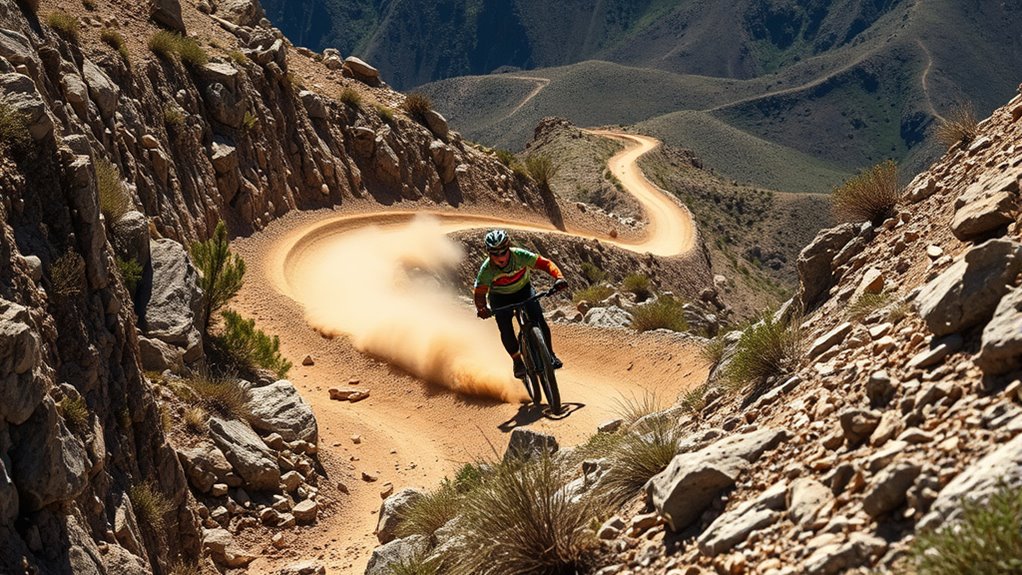

To master switchbacks on your MTB, focus on proper body positioning by shifting your weight back slightly and keeping your elbows relaxed. Lean the bike into the turn while staying upright with your body, using your hips to pivot smoothly. Look through the turn and plan your line early to maintain momentum. Consistent practice and trail awareness will build your confidence. Keep experimenting, and you’ll uncover more tips to improve your switchbacks.
Key Takeaways
- Shift weight slightly back and keep elbows relaxed to maintain balance and control during tight switchbacks.
- Lean the bike into corners while keeping your body upright to improve steering and tire grip.
- Plan your line before entering the turn and use smooth, controlled movements rather than forcing the turn.
- Adjust bike setup by lowering saddle, tuning suspension, and lowering tire pressure for better maneuverability.
- Practice gradually tighter turns to build confidence, focusing on fluid body positioning and consistent technique.
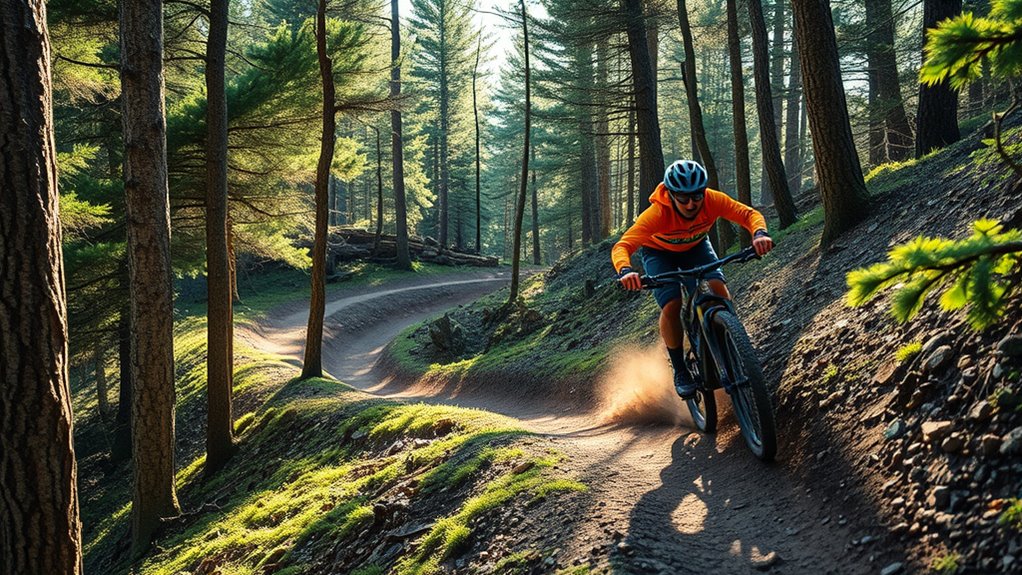
Mastering switchbacks on mountain biking trails is essential for tackling technical terrain efficiently and confidently. When approaching a sharp turn on a trail, your ability to navigate the switchback smoothly can make the difference between maintaining momentum or losing control. The key to mastering these tight corners lies in understanding and applying proper climbing techniques and ensuring your bike setup is optimized for technical riding.
First, focus on your climbing techniques as you approach the switchback. As you near the turn, shift your weight slightly back to maintain balance and prevent the front wheel from washing out. Keep your elbows out and relaxed, which helps you stay agile and responsive. When you start the turn, lean your bike into the corner while keeping your body more upright. This allows the tires to grip the trail better and makes steering more precise. Use your hips to pivot and turn the bike rather than relying solely on your arms. Your goal is to make the bike follow a smooth, controlled arc. To do this effectively, look ahead through the turn, not down at your front wheel. Your eyes should lead your hands, helping you anticipate the trail’s flow and plan your line through the switchback.
Shift your weight back, keep elbows relaxed, and look ahead to navigate switchbacks smoothly and confidently.
A proper bike setup plays a vital role in handling switchbacks confidently. Ensure your suspension is tuned for technical terrain—softer settings can absorb bumps and keep the tires in contact with the trail, providing better control. Lowering your saddle slightly can also improve maneuverability by shifting your center of gravity lower and closer to the bike. Make sure your tires are at the right pressure; slightly lower pressures increase grip on loose or uneven surfaces, which is common on switchbacks. Your handlebars should be wide enough to give you leverage and control, especially during tight turns. Additionally, check that your brakes are responsive and modulate smoothly—this is indispensable for controlling your speed on tricky corners without skidding or losing traction. Regularly inspecting your bike components ensures optimal performance and safety during technical riding.
Practicing switchbacks in a controlled environment helps you become more comfortable with your bike setup and refine your climbing techniques. Start with wider, less steep turns to build confidence, then gradually work your way into tighter switchbacks. Remember, the goal is to stay relaxed and fluid, making precise movements rather than forcing your way through. With consistent practice, you’ll develop better weight distribution, improved bike handling, and an instinctive feel for how your bike reacts during tight turns. Mastering switchbacks isn’t just about technical skill; it’s about understanding your bike, your body, and the trail—so you can ride confidently and enjoy the challenge of technical terrain.
Frequently Asked Questions
What Gear Should I Use on Switchbacks?
When tackling switchbacks, you should select a gear that allows for controlled, steady pedaling—usually a lower gear. This helps maintain balance and traction while you navigate tight turns. Make sure your bike setup is optimized, with the saddle height and handlebar position comfortable for quick adjustments. Proper gear selection and a suitable bike setup give you better control, reducing fatigue and helping you ride smoothly through switchbacks.
How Do I Maintain Balance on Tight Turns?
To maintain balance on tight turns, focus on your body positioning by leaning into the turn and keeping your hips low. Keep your eyes focused on the trail ahead to anticipate the curve and adjust your body accordingly. Use your core to stay stable, and shift your weight smoothly to the outside pedal. This combination of body positioning and visual focus helps you navigate tight turns confidently and maintain control.
What’s the Best Technique for Ascending Switchbacks?
Did you know that mastering switchbacks can reduce your climbing time by up to 20%? To ascend effectively, select a lower gear to maintain momentum and prevent fatigue. Keep your bike positioned slightly to the outside of the turn, leaning into the corner while staying balanced. Shift your weight forward on the pedals and look ahead through the turn. This approach helps you stay smooth, controlled, and confident on tight switchbacks.
How Can I Improve My Cornering Skills?
To improve your cornering skills, focus on your bike handling and trail navigation. Keep your eyes up and look through the turn to anticipate the curve. Shift your weight slightly back and to the outside of the turn, and lean the bike into the corner while keeping your body more upright. Practice smooth, controlled movements, and gradually increase speed to build confidence and finesse on switchbacks and tight corners.
Are There Specific Bike Setups for Switchbacks?
You need a bike setup that screams agility for switchbacks! Crank your suspension to be soft enough to absorb sharp turns and keep your bike responsive. Dial down your tire pressure to increase grip and maneuverability on tight corners. With these tweaks, your bike will glide through switchbacks like a pro, making every turn feel like a smooth, controlled dance. Get ready to conquer those switchbacks with confidence!
Conclusion
Mastering switchbacks makes mountain biking more manageable and memorable. With patience, practice, and persistence, you’ll push past problems and perfect your technique. Don’t doubt your dedication—destiny favors the daring. Embrace every elevation, effort, and experience. Soon, switchbacks will seem simpler, smoother, and more satisfying. So, stay spirited, steady, and skilled. Success on switchbacks isn’t just a skill—it’s a story of strength, stamina, and steadfastness in your mountain biking journey.