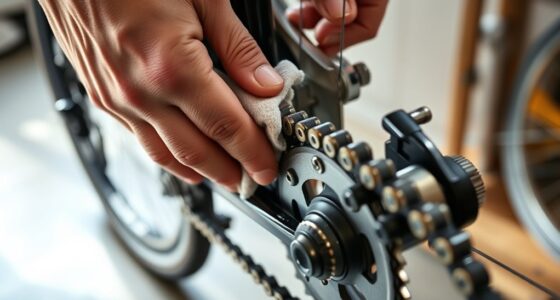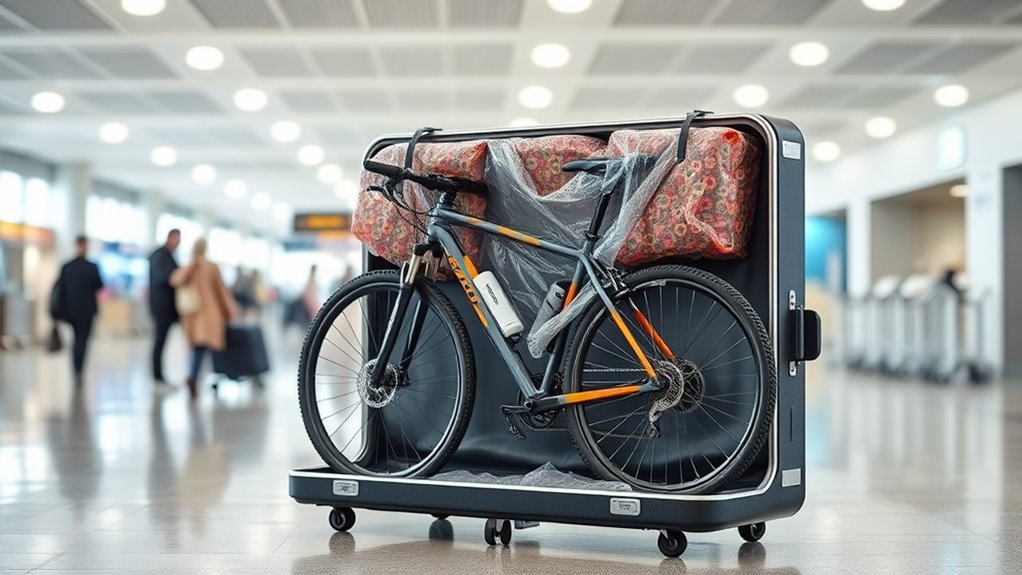

To pack your bike for air travel, start by cleaning and drying it to prevent rust. Disassemble parts like pedals, handlebars, and wheels, then secure loose components with padding or bubble wrap. Use a sturdy bike box or case, filling gaps with padding to keep everything stable. Remove any accessories, and label your case clearly. Check airline policies for size and weight limits to avoid surprises—if you keep going, you’ll get all the tips you need for a smooth journey.
Key Takeaways
- Disassemble the bike by removing pedals, handlebars, and wheels, then secure parts with padding or bubble wrap.
- Choose a durable, airline-approved bike case or box, ensuring it meets size and weight restrictions.
- Clean and dry the bike thoroughly before packing to prevent rust and ensure proper inspection.
- Label the case clearly with contact information and add fragile stickers for extra protection.
- Check airline policies for specific packing requirements, fees, and handling instructions before travel.
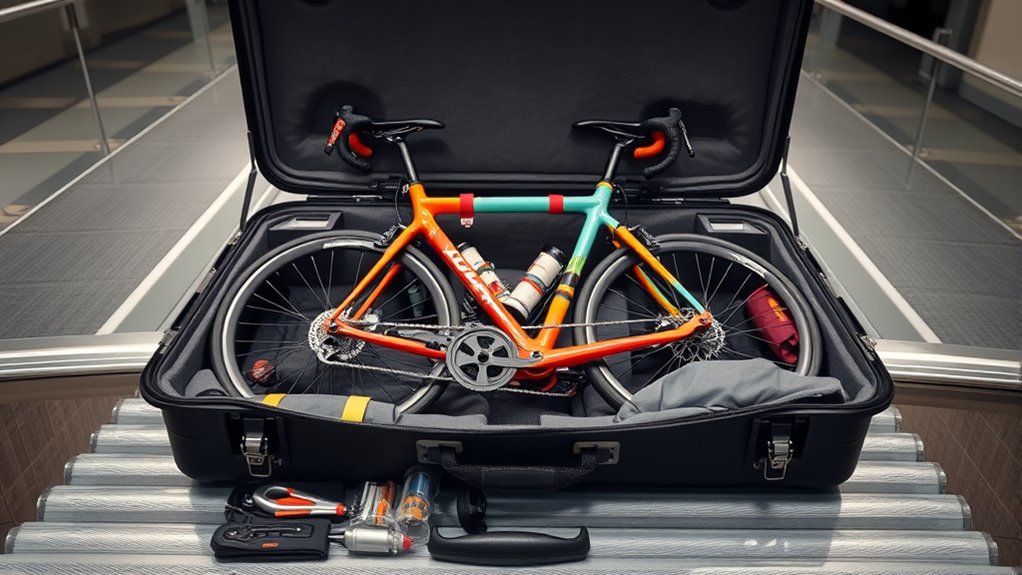
Traveling with your bike can be straightforward if you plan ahead and pack it properly. The key is understanding airline policies and making sure your bike is in top shape before you travel. Before you start packing, perform some basic bike maintenance to ensure your bike is ready for the journey. Check the brakes, gears, and tires, and tighten any loose bolts. A well-maintained bike is less likely to get damaged during transit and will make reassembly easier once you reach your destination.
Next, familiarize yourself with the airline policies regarding bike transportation. Different airlines have varying rules about size, weight limits, and fees. Some airlines consider bikes as standard checked luggage, while others may charge additional fees or require special handling. It’s crucial to review these policies well in advance to avoid surprises at the airport. Many airlines require bikes to be packed in a hard-shell case or a sturdy bike box to prevent damage. Some even have specific packing guidelines, such as removing pedals or deflating tires, so check the airline’s website or contact customer service for detailed instructions.
Once you’ve understood the airline policies, choose the appropriate packing method. Many cyclists opt for a dedicated bike travel case or a heavy-duty bike box. These containers protect your bike during handling and reduce the risk of damage. Disassemble your bike by removing the pedals, handlebars, and wheels, and secure loose parts with padding or bubble wrap. Wrap delicate components, like the derailleur and shifters, to prevent scratches. Place the frame and other parts carefully inside the case or box, ensuring they fit snugly. Use padding to fill any gaps and avoid movement during transit.
When packing, keep your bike maintenance in mind. Double-check everything before sealing the case. Make sure the bike is clean and dry; this helps prevent rust and corrosion during travel. Remove any loose items, such as water bottles or accessories, that could get lost or cause damage. Label your bike case clearly with your contact information, and consider adding fragile or handle-with-care stickers for extra protection. Additionally, consider using a case with high durability to better withstand rough handling during transit.
Finally, plan your check-in process carefully. Arrive early to give yourself enough time for security checks and to handle any questions about your bike. Keep your bike’s documentation, like proof of ownership or airline approval, handy in case it’s needed. By paying attention to airline policies, doing proper bike maintenance, and packing thoughtfully, you can help your bike arrive safe and sound, ready for your next adventure.
Frequently Asked Questions
What Is the Best Way to Prevent Bike Damage During Transit?
To prevent bike damage during transit, you should use protective padding around delicate parts like the frame and components, and guarantee all parts are securely fastened. Double-check that wheels are properly secured and the bike is tightly packed in a sturdy case or box. Avoid loose items that can shift during transit, and consider adding extra padding for vulnerable areas. These steps help minimize movement and protect your bike from impacts.
Are There Specific Airlines With Better Bike Shipping Policies?
Some airlines have better bike shipping policies, making your experience smoother. You should check airline policies before booking, focusing on fees, packing requirements, and handling procedures. Airlines like Delta, American, and United often offer more accommodating bike shipping options, including dedicated bike policies and fewer fees. By choosing an airline with favorable policies, you guarantee your bike travels safely and arrives in excellent condition, saving you time and stress.
How Early Should I Arrive at the Airport With My Bike?
You should arrive at the airport at least two hours before your flight, or three hours if you’re traveling internationally. Use your pre-flight checklist to guarantee your bike is properly packed with quality packing materials, like bubble wrap and a sturdy bike box or case. Arriving early gives you enough time to go through security, handle any questions about your bike, and make sure everything is in order for a smooth check-in process.
Can I Ride My Bike Immediately After Arriving at My Destination?
Once you arrive, you can ride your bike right away if it’s well-maintained and suited for the local riding conditions. Think of your bike as a trusted steed, ready to gallop. Just make sure you perform quick bike maintenance checks—tires, brakes, and gears—so you’re safe and prepared. Familiarize yourself with the local terrain, and then hit the trails, feeling the wind and the thrill of new adventures straight away.
What Additional Fees Might Airlines Charge for Bike Transport?
Airlines often charge baggage fees or oversized charges for bike transport. You might pay a flat fee or additional costs depending on your airline’s policies. Some airlines treat bikes as special or oversized items, which could mean higher fees. To avoid surprises, check your airline’s specific baggage policies ahead of time, and consider pre-paying for your bike to save money and guarantee smooth transport.
Conclusion
Packing your bike properly guarantees it arrives safely and ready to ride. For example, imagine arriving at your destination only to find your bike damaged; it’s frustrating and costly. By following the right packing techniques—using a sturdy box, padding, and proper tools—you prevent damage and enjoy your trip. Remember, investing a little time now saves you headaches later. With careful packing, your bike will be as ready as you are to hit the trails or roads.