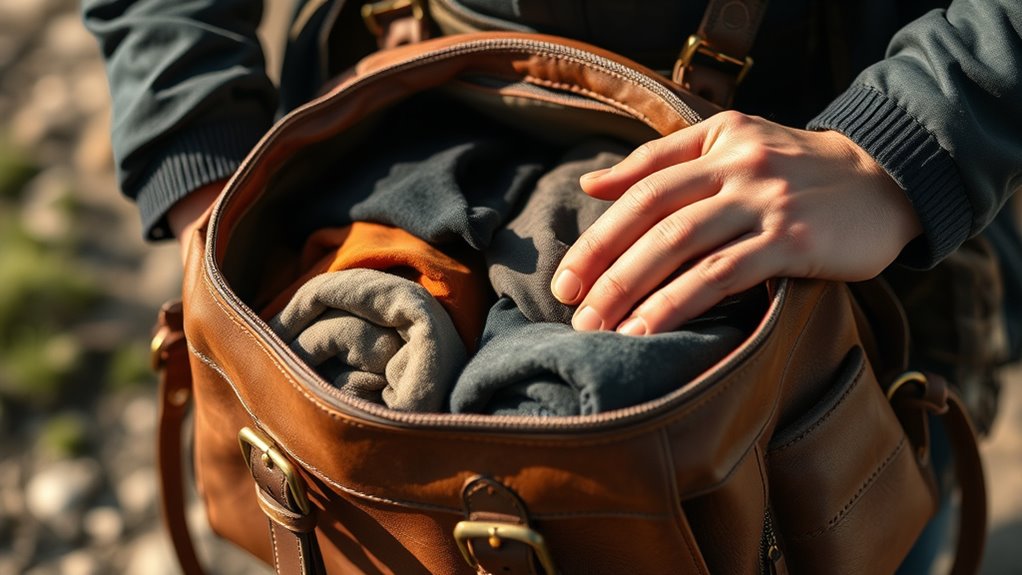

To pack a saddle bag like a pro, select a bag that fits your gear without overstuffing and organize items carefully. Roll your spare tube to avoid creases, store tire levers with it for quick access, and keep tools near the opening. Secure bulky items with external straps and guarantee everything is tight to prevent shifting. Maintaining an organized setup makes it easier to access essentials swiftly and ride confidently; continue to refine your packing strategy for best results.
Key Takeaways
- Choose a appropriately sized saddle bag that fits essentials without overstuffing or shifting.
- Organize items by layering flat and bulky gear to prevent damage and maximize space.
- Secure items with external straps or elastic bands to prevent shifting during the ride.
- Place frequently accessed items like multi-tools and CO2 inflators near the opening for quick reach.
- Double-check that all gear is firmly secured before riding to ensure safety and easy accessibility.
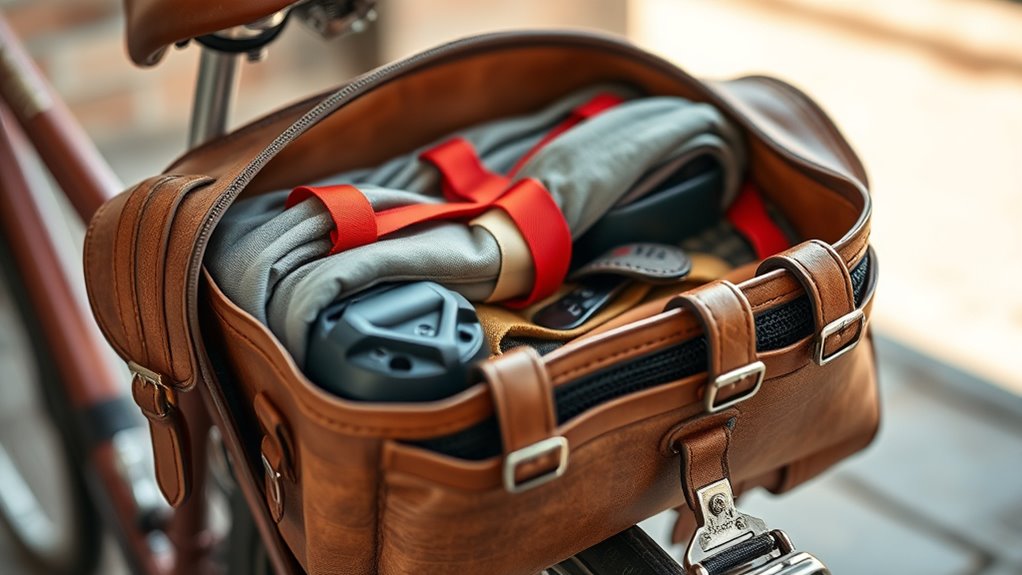
Ever wonder how to pack your saddle bag efficiently and securely for a ride? The key lies in understanding packing essentials and mastering saddle bag organization. When you get it right, your ride becomes smoother, safer, and more enjoyable. First, think about the essentials you’ll need during your trip. These typically include a spare tube, tire levers, a multi-tool, a pump or CO2 inflator, and some quick-fix items like a patch kit. You might also want to carry a small first aid kit, energy bars, or gels, depending on the length of your ride. Once you’ve identified your packing essentials, the goal is to organize them in a way that’s accessible yet compact.
Master saddle bag organization: pack essentials smartly for a smoother, safer, more enjoyable ride.
Start by selecting a saddle bag that fits your gear without overstuffing. Overpacking can cause the bag to bulge or shift, which can be uncomfortable and affect your bike handling. Inside, use small pouches or compartments if your bag has them, or pack items in a way that prevents them from rattling around. For example, place flat items like patches and a mini first aid kit at the bottom, then layer thicker or bulkier items like a tire or pump on top. Keep your multi-tool and quick-access items near the opening so you can grab them quickly if needed.
Saddle bag organization is all about smart placement. Roll your spare tube to prevent creases that could damage it, and position it along the side or top of the bag for easy access. The tire levers can be stored in the same compartment, along with small items like a chain link or extra batteries if you have a light. Place your CO2 inflator or mini pump toward the middle or bottom, ensuring they don’t rattle or shift during the ride. If your bag has external straps or elastic bands, use them to secure bulky items or to keep your bag snug against your bike frame. Additionally, many modern arcade machines incorporate microprocessors and specialized hardware, making their internal organization crucial for performance and maintenance.
Additionally, always double-check that everything is secured before you start riding. Loose items can bounce around, creating noise or even falling out. Remember to keep essential items like your phone, ID, or money in an easily accessible pocket or compartment. Proper saddle bag organization not only maximizes space but also keeps your gear protected and ready for quick retrieval. With a little practice, packing your saddle bag will become second nature, and you’ll be prepared for whatever your ride throws at you. The right setup makes all the difference, so take the time to get it right and enjoy your ride with confidence.
Frequently Asked Questions
What Materials Are Best for Saddle Bag Durability?
You should choose materials like synthetic leather and waterproof nylon for saddle bag durability. Synthetic leather offers a strong, weather-resistant surface that handles daily wear well, while waterproof nylon keeps your gear dry during rain or splashes. Combining these materials guarantees your saddle bag stays intact and functional over time, even in tough conditions. Always look for high-quality versions of these materials to maximize longevity and performance.
How Do I Prevent Saddle Bags From Shifting During Riding?
Like a true adventurer, you want your saddle bags to stay put during your ride. To prevent shifting, focus on saddle bag tension and secure attachment methods. Adjust straps snugly but not too tight, ensuring even tension on both sides. Use quality clips or buckles, and double-check your fastenings before setting off. Properly secured, your gear stays steady, letting you enjoy the ride without worry or distraction.
What Weight Limit Should I Consider for Saddle Bag Packing?
You should consider your saddle bag’s capacity and aim for a balanced weight distribution, generally keeping the total weight under 10-15% of your bike’s total load. Check your saddle bag’s specified weight limit, usually printed inside or on the tag, to avoid overloading. Distributing gear evenly ensures stability and prevents shifting during rides, making your trip safer and more comfortable. Always stay within the recommended weight limits for peak performance.
How Do I Organize Fragile Items in a Saddle Bag?
Imagine your fragile items nestled safely, almost as if protected by an invisible shield. To achieve this, use small storage containers to keep things separate and prevent shifting. Apply padding techniques like bubble wrap or foam around delicate items, then place them snugly in your saddle bag. This way, your valuables stay secure, even over bumpy terrain, giving you peace of mind on every ride.
Are There Specific Saddle Bag Sizes for Different Horse Breeds?
Yes, there are specific saddle bag sizes for different horse breeds to guarantee proper fit and comfort. You should choose a saddle bag size that matches your horse’s breed and build, as smaller breeds need smaller bags, while larger breeds can handle bigger ones. Always measure your horse and consult sizing charts for horse breed compatibility. Proper sizing helps prevent discomfort and keeps your gear secure during rides.
Conclusion
Now that you know how to pack your saddle bag like a pro, you’re ready to hit the road with confidence. Think of your bag as a trusty sidekick—organized, reliable, and always prepared. I once saw a cyclist expertly pack a bag in seconds, ready for anything the trail threw at them. With practice, you’ll master this skill too. Remember, a well-packed saddle bag is your secret weapon for smooth, stress-free adventures. Happy riding!