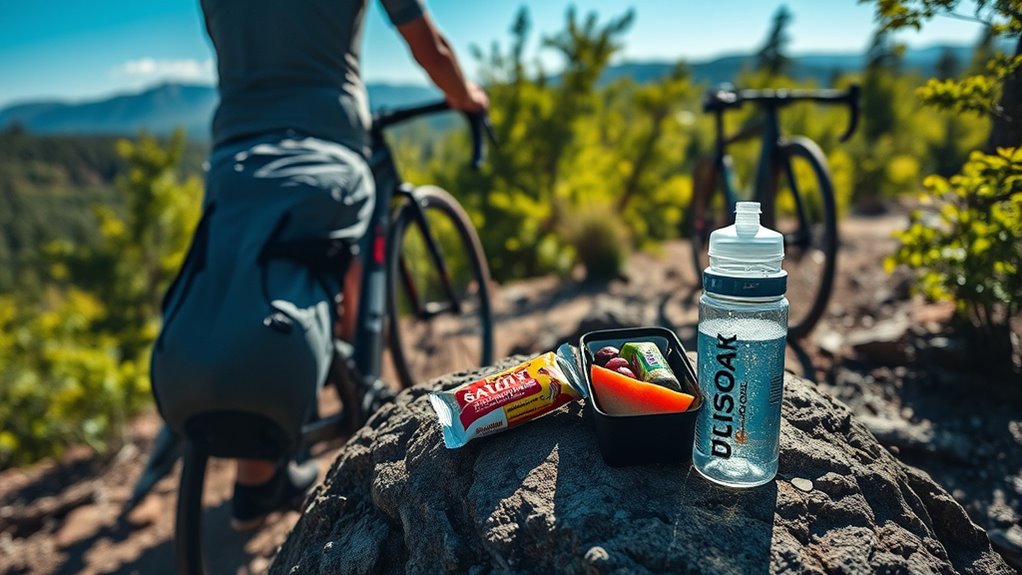
To plan water and food for remote rides, carry enough water to cover the entire distance, using filters or purification tablets for natural sources. Sip small amounts regularly to stay hydrated and avoid stomach issues. Pack easy-to-digest, energy-dense snacks like gels, nuts, and dried fruits, consuming small portions every 20-30 minutes. Balancing hydration with electrolytes keeps your energy steady. Keeping these tips in mind helps you stay safe and energized—you’ll find more useful strategies as you continue.
Key Takeaways
- Calculate total ride distance and environmental conditions to determine water and food requirements accordingly.
- Carry sufficient water bottles, considering 1-2 bottles per hour, and include water purification options for natural sources.
- Pack energy-dense, easy-to-digest snacks like gels, nuts, and dried fruits, consuming small portions regularly.
- Plan hydration and nutrition to match exertion levels, balancing electrolytes and fluids to prevent dehydration.
- Prepare for remote areas by identifying natural water sources and using filtration or purification to ensure safe hydration.
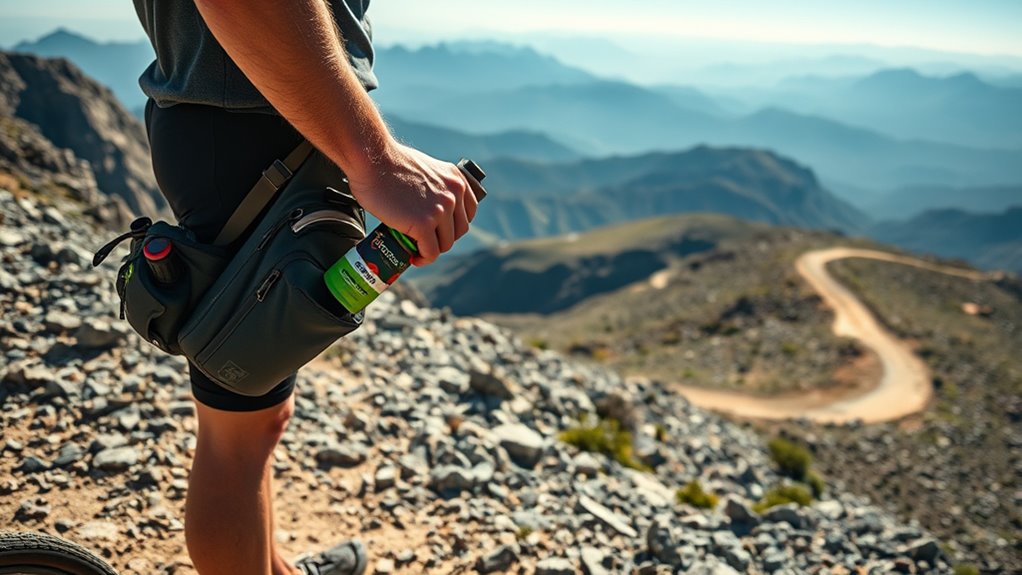
When heading out on remote rides, planning your water and food supplies is crucial to guarantee you stay energized and safe. Without proper preparation, you risk dehydration, fatigue, and diminished performance. To avoid this, you need to develop effective hydration strategies and nutrition planning tailored to your ride’s duration and difficulty. Start by evaluating how much water you’ll need. For most rides, aim to drink roughly one to two bottles per hour, but this can vary based on temperature, humidity, and your exertion level. Carry enough water to cover the entire distance, and consider bringing a lightweight filter or purification tablets if you plan to refill from natural sources. Hydration strategies should also include drinking small amounts regularly rather than gulping large quantities infrequently. This helps your body absorb fluids more efficiently and prevents stomach discomfort. Using a hydration monitor or tracker can help you stay on top of your fluid intake and optimize your hydration plan. Nutrition planning is equally critical. Before you set out, have a clear plan for what you’ll eat and when. Opt for easy-to-digest, energy-dense foods such as energy bars, gels, nuts, dried fruits, and bananas. These provide quick-release carbs and essential nutrients to keep your energy levels stable. Pack enough snacks to sustain you through the ride, but avoid overloading, which can be cumbersome and lead to unnecessary weight. During the ride, aim to consume small portions every 20 to 30 minutes to maintain blood sugar levels and prevent bonking. Hydrate simultaneously but avoid drinking too much at once to minimize discomfort. Consider flavoring your water with electrolyte tablets or powders to replace lost salts and minerals, especially if you’re sweating heavily. Post-ride hydration and nutrition are just as important. Once you’ve finished, replenish lost fluids with plenty of water and consider an electrolyte drink if you’ve sweated a lot. Follow up with a balanced meal containing carbs, protein, and healthy fats to aid recovery and rebuild your energy stores. Proper planning ensures you won’t be caught off guard in remote areas where help or supplies might be scarce. It also boosts your confidence, knowing you’re prepared for any situation. Taking into account filtration technology can help you choose the best way to keep your water clean during your ride. This proactive approach makes all the difference, helping you enjoy your ride to the fullest while staying safe and energized from start to finish.
Frequently Asked Questions
How Do I Estimate My Water Needs for Different Ride Durations?
To estimate your water needs for different ride durations, use hydration calculators that consider factors like temperature, humidity, and exertion level. For shorter rides, plan to carry at least 16-20 ounces per hour, while longer rides may require more. Remember food storage tips to keep snacks fresh and portable. Always carry extra water for unexpected delays and stay mindful of your body’s signals to stay properly hydrated throughout your ride.
What Are the Best Lightweight, High-Energy Snacks for Remote Rides?
Think of your snack packing like building a toolkit for your ride. For lightweight, high-energy options, choose energy gel types—they’re compact and super efficient. Pair them with portable snacks like dried fruit, nuts, or energy bars that pack a punch without adding weight. These snacks fuel your ride and keep your energy steady, so you can conquer the miles ahead without feeling weighed down.
How Can I Prevent Food and Water From Spoiling During Long Rides?
To prevent food and water from spoiling during long rides, focus on food preservation by choosing non-perishable snacks and storing them in airtight containers. Use proper water storage techniques like insulated bottles or hydration packs to keep water fresh and cool. Keep supplies in a cool, shaded spot on your bike, and consider bringing a small cooler or insulated bag for added protection against heat.
What Emergency Supplies Should I Carry for Hydration and Nutrition?
An ounce of prevention is worth a pound of cure. You should carry essential hydration gear like water bottles, a hydration pack, or electrolyte tablets, and emergency food supplies such as energy bars, trail mix, or jerky. These supplies guarantee you stay fueled and hydrated if plans go awry. Always be prepared for unexpected delays or rough terrain, so pack enough to keep you safe and energized on your ride.
How Do Weather Conditions Affect My Hydration and Food Planning?
Weather conditions substantially impact your hydration strategies and food preservation plans. Hot, humid weather increases your fluid needs, so carry extra water and electrolyte drinks. Cold weather can reduce your thirst, but you still need to hydrate regularly. Rain and humidity may cause food spoilage, so pack foods that are easy to preserve and won’t spoil quickly. Adjust your intake based on temperature, ensuring you stay hydrated and your food remains safe to eat.
Conclusion
Remember, your water and food are your guiding stars on remote rides. Just as sailors trust their compass through uncharted waters, trust your plan to keep you steady and safe. Every sip and bite fuels your journey, turning distant horizons into achievable adventures. With proper preparation, you’ll navigate the unknown with confidence, knowing you’re equipped to reach your destination. Let your nourishment be the beacon that keeps your spirit shining bright amid the vast, open road.