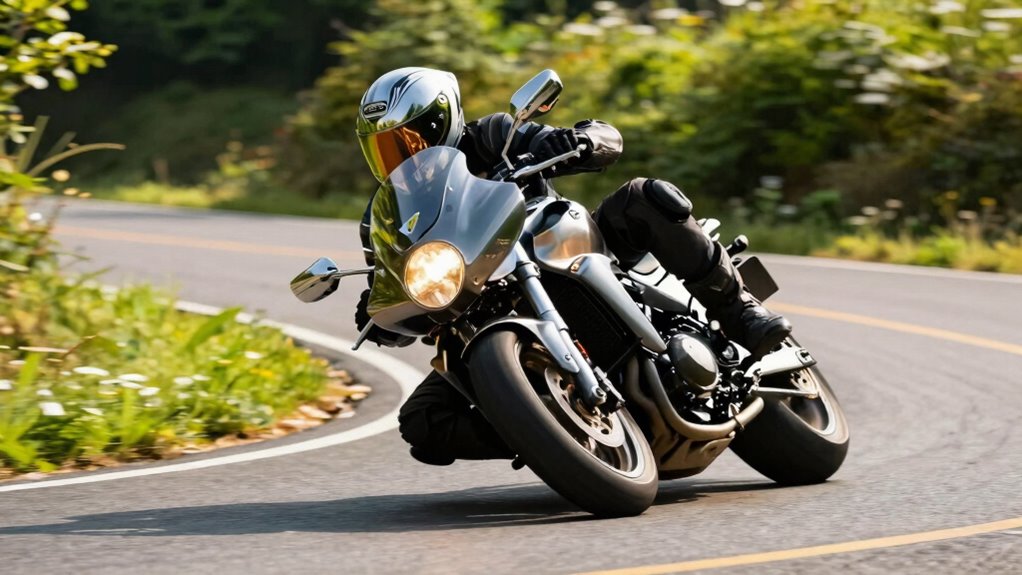

To practice cornering safely, find open spaces like empty parking lots or closed tracks where you can avoid traffic and obstacles. Start at slow speeds to build confidence, focusing on smooth, controlled movements and maintaining steady throttle. Keep your body upright and lean with the bike, looking through the turn, and use proper body positioning. As you improve, gradually increase speed and complexity, remembering that safe progress depends on patience and control—if you keep exploring, you’ll learn more effective techniques.

Get sports gear delivered free with Prime
- Fast, free delivery on millions of items
- Prime Video, Amazon Music and more included
- Member-only deals all year
Key Takeaways
- Practice in open, controlled environments like empty parking lots or closed tracks at slow speeds.
- Focus on smooth, controlled movements and gradual speed increases to build confidence safely.
- Maintain proper body positioning, looking through turns and keeping knees close to the tank.
- Incorporate techniques like trail braking and gentle countersteering to improve control gradually.
- Prioritize safety and consistency over speed, progressing patiently to develop skills without risks.
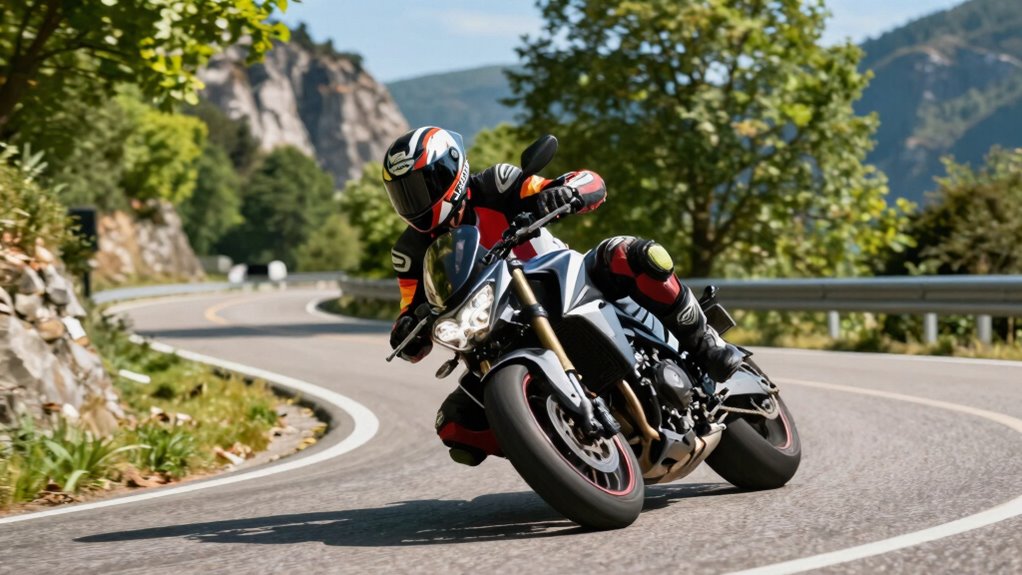
Have you ever wondered how to improve your cornering skills on a bike or motorcycle? Mastering the art of cornering is essential not just for riding enjoyment but also for ensuring your safety on the road. When you practice cornering without taking risks, you focus on building your skills gradually, which is key to maintaining motorcycle safety. You don’t need to push your limits aggressively; instead, you can incorporate proven racing techniques into your practice routine in a controlled manner.
Start by choosing a safe, open space like an empty parking lot or a closed track. Here, you can simulate real cornering scenarios without the danger of traffic or obstacles. Begin with slow speeds to get comfortable leaning your bike into turns. As you get more confident, gradually increase your speed while keeping control. Remember, smoothness is critical—jerky movements can destabilize your bike and compromise safety. Focus on maintaining steady throttle and consistent body positioning throughout each turn.
Choose a safe, open space to practice smooth, controlled cornering at slow speeds for building confidence and safety.
Using racing techniques can help you refine your cornering skills safely. For example, look through the turn—your head and eyes should follow the direction you want to go. This helps with balance and helps you anticipate the curve’s exit. Keep your body upright and lean with the bike, not against it. Shifting your weight appropriately allows better traction and control, especially when entering sharper turns. Practice trail braking—gradually reducing your brake pressure as you lean into the corner, which improves your bike’s grip. These techniques, when practiced intentionally and slowly, can significantly enhance your riding precision and confidence without risking a fall. Additionally, understanding riding environments can help you choose safer places to practice and gradually build your skills. Being aware of how different terrains and settings affect your bike’s behavior is an important aspect of safe riding practices. Incorporating knowledge about motorcycle dynamics can further improve your ability to handle different cornering situations effectively. Recognizing your motorcycle’s handling characteristics helps in adapting your technique to various conditions and ensures safer cornering.
It’s also vital to pay attention to your motorcycle’s position and your body posture. Keep your knees close to the tank and your elbows out, which offers better stability. Use your core muscles to stay balanced and prevent unnecessary movement. As you become more adept, incorporate gentle countersteering—pushing the handlebar slightly in the opposite direction of your turn to initiate lean—this is a racing technique that improves your ability to maneuver smoothly and precisely.
Practicing these skills consistently, with patience and focus, will improve your cornering without putting you in danger. Remember, motorcycle safety isn’t about going fast but about controlling your bike confidently through every turn. By adopting racing techniques thoughtfully and practicing in safe environments, you develop better technique, more control, and ultimately, a safer riding experience. There’s no rush—progress steadily, and you’ll find your confidence and skill growing with each ride.
Products Worth Considering

BowFlex Results Series SelectTech Adjustable Dumbbells (Pair)

Coleman SaluSpa Sicily Energy-Efficient Inflatable Hot Tub, 5–7 Person

TheraGun Therabody PRO Plus 6-in-1 Deep Tissue Massage Gun, Black
As an affiliate, we earn on qualifying purchases.
Frequently Asked Questions
What Gear Should I Wear When Practicing Cornering Safely?
When practicing cornering safely, you should wear essential safety equipment like a helmet, gloves, and protective gear such as knee and elbow pads. These items help minimize injury in case of a fall. Choose gear that’s comfortable and fits well, enabling you to move freely. Wearing proper safety equipment not only shields you but also boosts your confidence, so you can focus on improving your cornering skills without unnecessary risks.
How Can I Improve My Confidence Before Trying Cornering Techniques?
Building confidence before cornering is like sharpening your focus before a race. You can do this through mental preparation and visualization techniques, imagining smooth, controlled turns. Practice positive self-talk and breathe deeply to calm nerves. Visualize yourself executing perfect corners, which helps reduce anxiety and boosts your confidence. With consistent mental rehearsal, you’ll feel more in control and ready to tackle corners safely, even at higher speeds.
Are There Specific Bikes Better Suited for Practicing Cornering?
Some bikes are better suited for practicing cornering because they offer superior bike stability and tire grip. Look for bikes with a lower center of gravity and balanced weight distribution, which help you maintain control. Sport or naked bikes typically excel in these areas, providing better handling and confidence during cornering. Choosing a bike with quality tires and good suspension also enhances grip, making your practice safer and more effective.
How Do Weather Conditions Affect Safe Cornering Practice?
Weather conditions considerably impact safe cornering practice. Rain increases the risk by reducing traction, making it easier to slip or slide during turns. Wind influence can destabilize your bike, especially on exposed or open roads. You should adjust your speed and braking, take wider turns, and stay alert to these conditions. Practicing in ideal weather is safest, but if you must ride in adverse conditions, proceed cautiously and prioritize safety at all times.
What Common Mistakes Should I Avoid During Initial Cornering Practice?
Like a rider avoiding loose gravel, you should steer clear of overconfidence pitfalls and incorrect braking during initial cornering practice. Don’t lean too much or rush into turns, which can cause loss of control. Avoid clutching or braking harshly mid-corner, as it destabilizes your balance. Focus on smooth inputs and gradual adjustments. Staying cautious and aware helps you build confidence without risking a fall or injury.
Conclusion
Now that you know how to practice cornering safely, you’re practically a racing legend in the making. Picture yourself slicing through corners like a lightning bolt, leaving chaos in the dust—without ever risking a tumble or a skid. Every smooth turn boosts your confidence, transforming you into a cornering master. Keep practicing, stay safe, and soon you’ll be carving curves so effortlessly, even the fastest racers will be in awe of your skills.