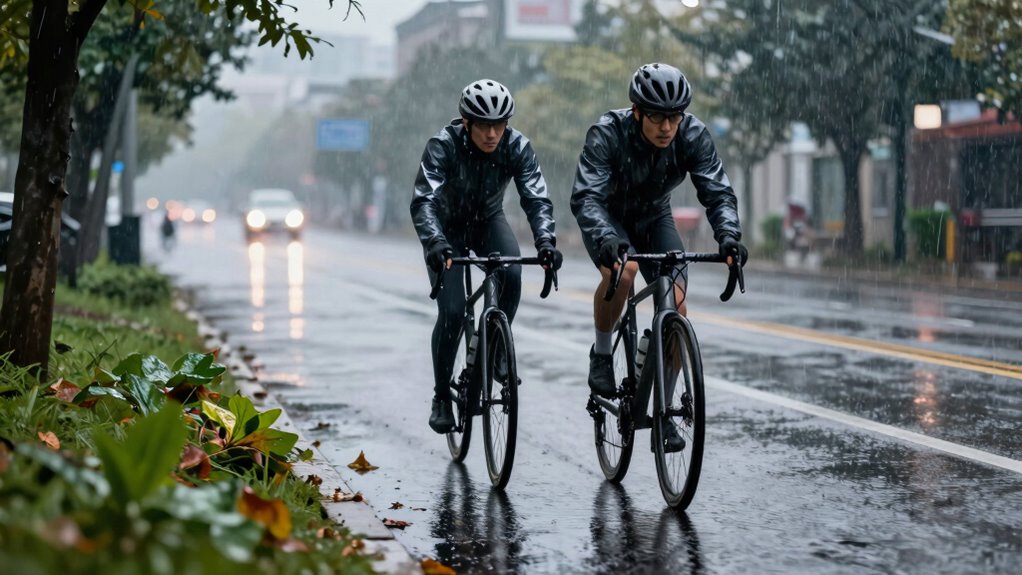

To ride better in light rain, wear waterproof, reflective gear for visibility and stay alert to road hazards like puddles and slick patches. Slow down and increase your following distance, applying smooth throttle and brakes to prevent slipping. Keep your headlights on and maintain proper tire pressure for better grip. Focus on staying relaxed and confident, scanning ahead for hazards. With some quick adjustments, you can ride safely and comfortably—keep going to discover more tips to enhance your skills.

Get sports gear delivered free with Prime
- Fast, free delivery on millions of items
- Prime Video, Amazon Music and more included
- Member-only deals all year
Key Takeaways
- Wear reflective, waterproof gear and keep visors clean to enhance visibility and stay dry.
- Use headlights continuously and ensure all lighting is functioning properly to increase visibility.
- Reduce speed and increase following distance to accommodate wet road traction and stopping distances.
- Avoid large puddles and scan the road for hazards like slick patches or debris.
- Maintain smooth throttle, brakes, and steering to prevent slipping and maintain control.
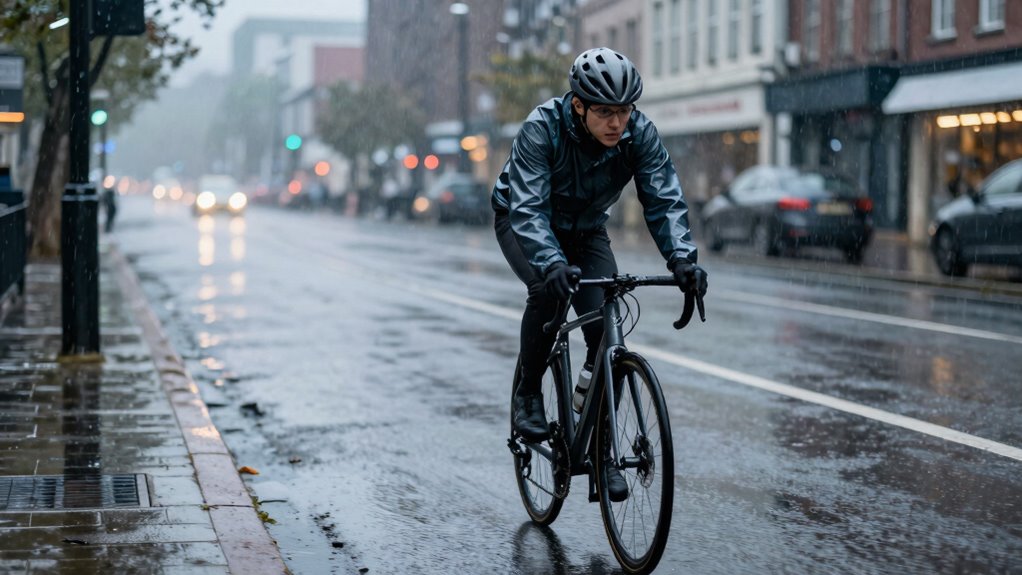
Riding in light rain can be challenging, but with the right approach, you can stay safe and maintain control. The key is to prepare yourself and your bike for the conditions. Wearing proper rain gear is essential; waterproof jackets, pants, and gloves help keep you dry and comfortable, which allows you to focus on riding rather than being distracted by the weather. Reflective rain gear can also improve your visibility to other drivers, especially in low-light conditions that often accompany rain showers. When you’re dressed appropriately, you’ll find it easier to stay alert and react quickly to road changes.
One of the most important factors in light rain is road visibility. Wet roads tend to be slick, and water droplets on your visor or glasses can obscure your vision. Make sure your helmet visor is clean and treated with an anti-fog coating, so your view stays clear. If your visor gets water spots or foggy, pull over safely to wipe it clean. Keep your headlights on, even during the day, to increase your visibility to others. This simple step can make a significant difference in how well other drivers see you, especially as rain can reduce overall visibility. Additionally, maintaining your motorcycle’s lighting system ensures optimal visibility in wet conditions.
Keep your visor clean and fog-free, and keep headlights on to stay visible in rainy conditions.
Adjust your riding style to suit the conditions. Slow down and give yourself more space to brake and maneuver. Increased stopping distances are common in wet conditions, so maintaining a greater following distance allows you to react without rushing. Be gentle with your throttle and brakes; sudden movements can cause your tires to lose grip. Take turns and corners more cautiously, leaning less than you would in dry weather, and look through your turns to anticipate any hazards like puddles or debris hidden beneath the water. Additionally, ensure your tires are properly inflated to maximize grip on slick surfaces.
Puddles and slick surfaces are your biggest hazards in light rain. They can cause hydroplaning if you’re not careful, especially at higher speeds. Scan the road ahead and avoid riding through large puddles whenever possible, as they might hide potholes or other dangers. If you do hit a slick patch, stay relaxed and steer smoothly—avoid jerking the handlebars or applying sudden brakes. Focus on keeping your bike upright and balanced, and you’ll have a better chance of maintaining control. Being aware of the road conditions can help you prepare for unexpected hazards and react appropriately. Regularly inspecting your tires and brakes also contributes significantly to your safety in wet conditions.
Finally, stay extra vigilant and keep your attention on the road. Light rain may seem less threatening than a heavy downpour, but it still reduces traction and visibility. With the right rain gear, careful riding, and an awareness of your surroundings, you can ride confidently and safely through light rain, making the most of your ride despite the weather. Remember to regularly check your motorcycle maintenance, as proper upkeep can significantly improve your safety in wet conditions.
Products Worth Considering

GoPro HERO Compact Waterproof 4K Action Camera

GoPro HERO12 Black Waterproof Action Camera with 5.3K60 Video and 27MP Photos

GoPro LIT HERO Waterproof Action Camera with Built-In Light
As an affiliate, we earn on qualifying purchases.
Frequently Asked Questions
What Gear Should I Wear for Riding in Light Rain?
You should wear proper rain gear and waterproof clothing to stay dry and safe in light rain. Opt for a waterproof jacket and pants that fit well, ensuring they don’t restrict movement or visibility. Don’t forget a waterproof helmet cover and gloves to keep your hands and head dry. Wearing the right gear helps you stay comfortable, maintain grip, and focus on your ride, even in light rain conditions.
How Can I Improve Visibility During Light Rain?
To improve visibility during light rain, you should wear appropriate rain gear like waterproof jackets with reflective strips and a clear visor. Use visibility tips such as keeping your headlights on, wearing bright or reflective clothing, and ensuring your bike’s lights are clean and functioning. These measures help you stay visible to others and see better, making your ride safer and more comfortable even in light rain conditions.
Are There Specific Bike Tires Better for Rainy Conditions?
Yes, specific bike tires are better for rainy conditions. Look for tires with deep, multi-directional tread to channel water away effectively. Tires with a softer rubber composition provide better grip on wet surfaces, reducing slips. You should also consider tires with siping—small cuts on the tread—that improve traction. These features help you stay safer and maintain control when riding in light rain.
How Do I Handle Puddles Safely While Riding?
When handling puddles, you should slow down and stay alert for puddle detection to avoid hydroplaning risks. Keep your front wheel steady and avoid sharp turns, which can cause slipping. Scan ahead to identify large puddles early, and steer around them if possible. Maintaining a relaxed grip on the handlebars helps you stay balanced. Riding cautiously and attentively reduces the chance of accidents caused by hidden hazards under puddles.
What Should I Do if My Brakes Get Slippery?
If your brakes get slippery, first, gently pump them to restore grip. Use rain-resistant lubricants during brake maintenance to prevent moisture buildup and guarantee smoother operation. Avoid sudden or harsh braking, as it can cause skidding. Regularly check brake pads and discs for wear and clean them with appropriate products. Proper maintenance and using suitable lubricants help keep your brakes effective, even in wet conditions.
Conclusion
Riding in light rain can be tricky, but with the right mindset, it becomes manageable. Stay alert, slow down, and keep your focus sharp—your safety depends on it. The rain softens the noise of traffic, yet it demands your attention more than ever. Embrace the quiet drizzle, find your rhythm, and trust your skills. Because when you ride carefully in light rain, you’re not just avoiding slips—you’re mastering the art of riding smoothly through life’s gentle challenges.