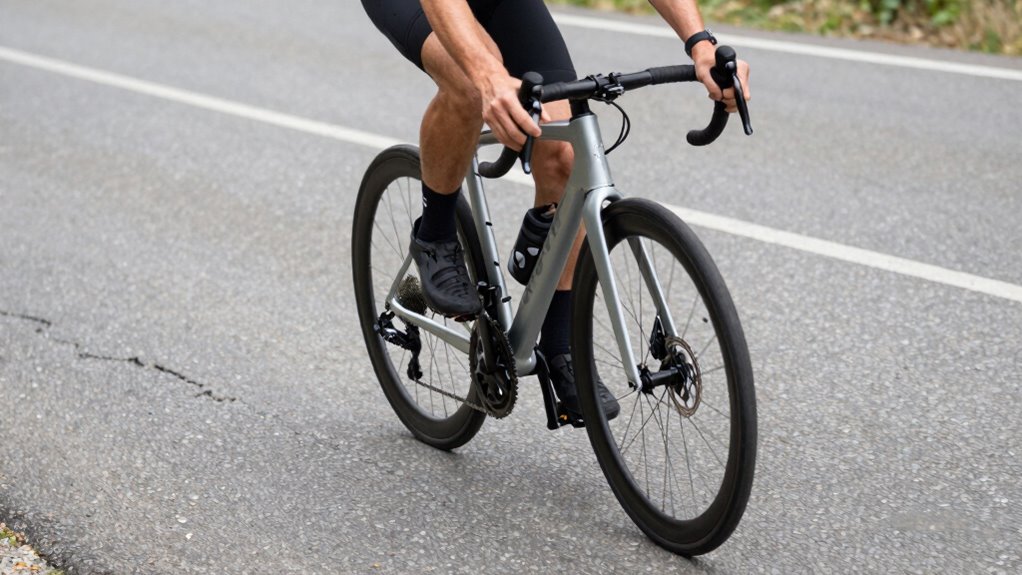

To ride smoother over rough pavement, make sure your bike is well-maintained—check tire pressure, brake alignment, and keep components clean and lubricated. Choose wider tires with more tread and lower pressure for better grip and cushioning. Keep your posture relaxed, loosen your grip, and shift your weight back slightly over uneven spots. Adjust your riding style based on surface types to improve comfort and safety. For more tips on smoothing your ride, there’s plenty to explore below.

Get sports gear delivered free with Prime
- Fast, free delivery on millions of items
- Prime Video, Amazon Music and more included
- Member-only deals all year
Key Takeaways
- Keep tires properly inflated and use wider, treaded tires for better traction and shock absorption.
- Relax your grip, loosen your arms, and shift your weight back to absorb bumps smoothly.
- Maintain a steady cadence and avoid sharp turns to enhance stability on uneven surfaces.
- Adjust riding posture by slightly leaning back and staying relaxed to improve comfort and control.
- Regularly inspect and maintain your bike’s tires, brakes, and suspension for optimal performance on rough pavement.

Riding over rough pavement can be jarring, but with the right techniques, you can make your ride much smoother. One key to achieving this is understanding how bike maintenance and knowledge of road surface types play crucial roles. A well-maintained bike responds better to uneven surfaces, reducing vibrations and improving comfort. Regularly check your tire pressure, brake alignment, and suspension if you have it. Properly inflated tires are essential because they absorb shocks more effectively, especially on rough pavement. Worn-out tires or those with low pressure can make your ride feel harsher and more unstable. Also, keep your drivetrain and suspension components clean and lubricated, so your bike handles bumps better and maintains consistent performance.
Getting familiar with different road surface types can help you prepare and adapt your riding style. Asphalt may be smoother but can still have cracks, potholes, and debris that cause jolts. Gravel or dirt paths, on the other hand, demand different techniques. When riding over asphalt with cracks or uneven patches, loosen your grip on the handlebars slightly to allow your arms to absorb shocks naturally. Staying relaxed helps prevent fatigue and keeps your bike stable. On gravel or loose surfaces, lower your tire pressure a bit — but not too much — to increase traction and cushioning. This adjustment helps your tires conform to the terrain, making riding over rough patches less jarring. Understanding road surface types can greatly influence your choice of riding style and equipment. Additionally, choosing the appropriate bike tires for these surfaces can make a significant difference in comfort and safety.
Loosen your grip and stay relaxed to absorb shocks over cracks and uneven patches efficiently.
Your riding posture also makes a big difference. Keep your elbows slightly bent and your arms relaxed, acting as natural shock absorbers. Instead of stiffly holding the handlebars, allow your body to move with the terrain. Shift your weight back slightly when approaching uneven patches or potholes, so the front wheel can roll over obstacles more smoothly rather than hitting them directly. Maintaining a steady cadence and avoiding sudden jerks or sharp turns will help you stay balanced and comfortable. Additionally, understanding the importance of bike maintenance can significantly improve your riding experience, especially on rough surfaces. Proper bike maintenance ensures that all components function optimally, which is especially crucial when navigating challenging terrains.
Choosing the right tires for the terrain can greatly improve your ride. Wider tires with more tread are better suited for rough or loose surfaces, providing extra grip and cushioning. Consider investing in bike maintenance tools like a pump, tire levers, and a patch kit, so you’re always ready to keep your tires in excellent condition. Regularly inspecting your bike and making necessary adjustments ensures it responds well to different road surface types, making your rides more enjoyable and less fatiguing over time. With these tips, you’ll notice a marked difference in how smoothly you can navigate rough pavement, turning challenging terrain into a more pleasant experience.
As an affiliate, we earn on qualifying purchases.
Frequently Asked Questions
What Gear Should I Use on Rough Pavement?
You should use a lower gear on rough pavement to maintain control and comfort. Shifting to a smaller chainring or higher gear ratio helps you pedal more smoothly over uneven road surface types. Regular bike maintenance, like checking your gears and tire pressure, guarantees smooth shifting. Using lower gears reduces strain on your bike components and helps you stay balanced, making rough pavement rides safer and more comfortable.
How Can I Improve My Bike’s Suspension?
To improve your bike’s suspension, start with your bike frame and check if it’s compatible with suspension upgrades. Then, focus on suspension tuning—adjust the preload, compression, and rebound settings to match your weight and riding style. Regularly service your suspension components, including cleaning and lubricating, to guarantee peak performance. Proper tuning and maintenance help absorb shocks better, giving you a smoother ride over rough pavement.
What’s the Best Way to Stay Balanced?
To stay balanced on your bike, focus on proper bike maintenance, especially your tire pressure and suspension, which are essential for different road surface types. Keep your body relaxed, look ahead rather than down, and maintain a steady, controlled pace. Adjust your stance slightly for uneven terrain, and practice smooth, deliberate movements. These tips help you stay balanced, no matter if you’re riding on smooth asphalt or rough pavement.
How Do Tire Pressure Affect Ride Smoothness?
Think of your tire pressure as the heartbeat of your ride. When inflation levels are just right, your tires act like a steady drum, absorbing bumps and smoothing your path. Properly inflated tires with good tread grip the road better, minimizing vibrations. Under-inflated tires, like a weak pulse, cause a rougher ride, while over-inflated ones become stiff, reducing comfort. Keep your tires balanced for a smoother journey over rough pavement.
Should I Adjust My Riding Posture?
Yes, adjusting your riding posture can markedly improve your ride over rough pavement. Keep your body relaxed and slightly forward, engaging your core to absorb shocks. Use proper bike handling techniques like softening your elbows and knees to act as additional shock absorbers. Maintaining a balanced, centered posture helps you navigate uneven surfaces more smoothly, reducing fatigue and enhancing control. Practice these adjustments regularly to feel more comfortable and confident on rough terrains.
Conclusion
Riding over rough pavement can feel like sailing on choppy waters, but with a few tricks, you’ll glide smoothly again. Keep your weight centered, stay relaxed, and choose your line carefully. Think of your bike as a dance partner—responsive and in sync—so you move fluidly over every bump. With practice, you’ll navigate rough roads like a gentle breeze, turning a bumpy ride into a smooth journey. Keep these tips in mind and enjoy riding with grace and ease.
Halloween Picks
halloween
As an affiliate, we earn on qualifying purchases.