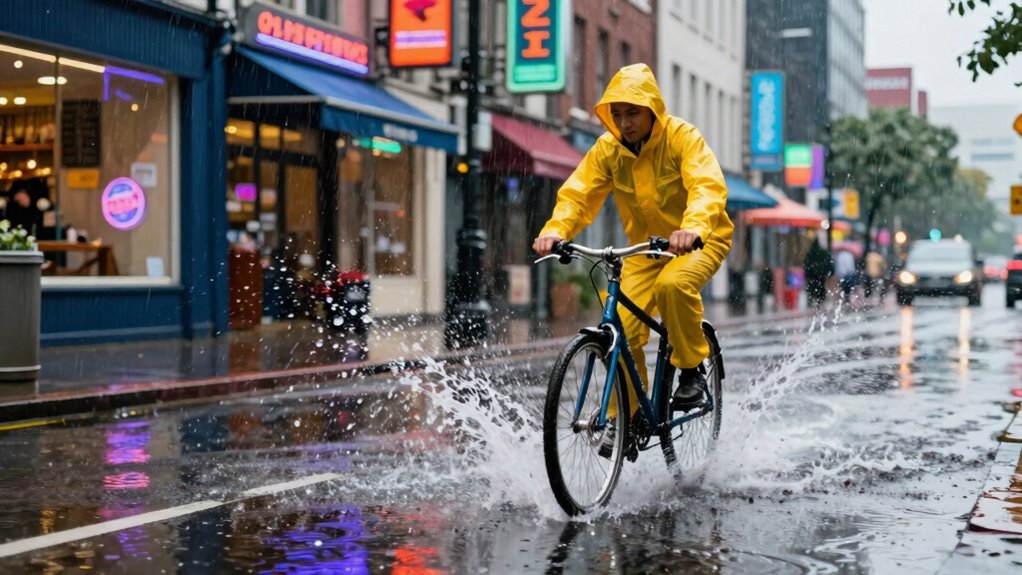

To ride through puddles without regret, first assess water depth by glancing down and choose a comfortable speed; slow down for better control. Wear waterproof gear, gloves, and a helmet with visor to stay dry and focused. Approach with steady momentum, avoiding sudden movements, and watch for hidden hazards like potholes or murky water. After crossing, check your brakes and tires. Keep these tips in mind, and you’ll boost your confidence—there’s more to master for safe puddle navigation ahead.

Get sports gear delivered free with Prime
- Fast, free delivery on millions of items
- Prime Video, Amazon Music and more included
- Member-only deals all year
Key Takeaways
- Assess water depth and hidden hazards before crossing to ensure safety.
- Slow down and maintain a steady, controlled speed to prevent slipping.
- Wear appropriate waterproof gear for comfort and better control.
- Keep a firm grip on handlebars and stay relaxed during the crossing.
- Post-cross, inspect brakes and tires for water or debris to ensure proper function.

Riding through puddles can be intimidating, especially if you’re worried about splashing your clothes or losing control. The first step to navigate puddles confidently is to assess the puddle’s depth quickly and accurately. Before you approach, glance down and judge the size and depth of the water. A shallow puddle might only come up to your wheels or tires, while a deeper one could hide hazards like potholes or debris. If you’re unsure, it’s better to err on the side of caution and avoid it altogether.
Assess puddle depth quickly to ride safely and avoid hidden hazards. When in doubt, choose caution.
Equally important is wearing appropriate riding gear. Waterproof jackets, pants, and boots help keep you dry and comfortable, reducing the distraction of wet clothes and allowing you to focus on your ride. Wear gloves with good grip, as wet handlebars can become slippery, making control more difficult. A helmet with a visor or goggles also helps protect your eyes from splashes and water spray, which can obscure your vision. Investing in gear designed for wet conditions can make a significant difference in how confident you feel when crossing puddles.
As you approach, slow down to gain better control and stability. Speeding through puddles increases the risk of losing traction or splashing debris onto yourself. When you reach the puddle, keep a firm grip on your handlebars and stay relaxed. Maintain a steady, moderate speed that allows you to smoothly cross without sudden movements. If the puddle is shallow, you might be able to ride straight through, but if it feels deeper or uncertain, consider easing off slightly to avoid splashing water onto your face or clothes.
Pay attention to the terrain beneath the water. Sometimes, water can hide uneven surfaces, potholes, or slick patches that could cause you to lose control. If you notice a change in the puddle’s consistency or if the water looks murky, it’s wise to proceed with caution or choose an alternative route if possible. Additionally, water depth assessment can help you determine whether it’s safe to cross or if you should wait. It’s also helpful to be aware of urban runoff and how it might affect water quality and stability in puddles. Being mindful of water quality can help you avoid potential health hazards associated with contaminated water. After crossing, check your brakes and tires to ensure they haven’t been affected by water or debris. Brakes can lose effectiveness if water has gotten into the pads or rotors, so a quick test can prevent surprises on your next stop.
Ultimately, riding through puddles without regret comes down to preparation, awareness, and caution. Maintaining biodiversity and adopting sustainable practices can also help reduce the environmental impact of urban runoff and water pollution, making puddle crossings safer for everyone. With the right gear, a quick assessment of the water, and a controlled approach, you can navigate wet conditions safely and confidently, turning what seems like a challenge into a simple part of your ride.
Products Worth Considering

GoPro LIT HERO Waterproof Action Camera with Built-In Light

GoPro HERO Compact Waterproof 4K Action Camera

GoPro HERO12 Black Waterproof Action Camera with 5.3K60 Video and 27MP Photos
As an affiliate, we earn on qualifying purchases.
Frequently Asked Questions
What Safety Gear Is Essential When Riding Through Puddles?
When riding through puddles, you should wear a helmet, gloves, and waterproof gear for safety and comfort. Don’t forget reflective clothing for visibility, especially in low light. Hydration tips are crucial—bring water to stay refreshed. Before riding, do bike maintenance by checking brakes and tires for safe traction. These safety gear essentials help you stay protected, comfortable, and prepared for unpredictable puddle splashes on your ride.
How Can I Tell if a Puddle Is Too Deep?
To tell if a puddle is too deep, you should assess its depth carefully. For example, if you see a puddle that reaches halfway up your tires, it’s risky; shallow puddles are safer. Use a stick or your foot to gauge the puddle’s depth before riding through. Conduct a quick risk assessment by considering the puddle’s size, the current weather, and your bike’s clearance to avoid unnecessary falls.
Does Riding Through Puddles Damage My Bike?
Riding through puddles can cause some damage if you’re not careful, especially to your bike’s components. It’s best to do regular bike maintenance to prevent issues like rust or water intrusion. While small puddles won’t harm your bike, deep or frequent puddle riding can lead to damage. Puddle avoidance is a smart strategy, but if you must ride through, do so slowly and avoid splashing water into sensitive parts.
How Do Weather Conditions Affect Puddle Riding?
Weather conditions greatly influence puddle riding, like how a sudden rain transforms a calm street into a splash zone. Heavy rain increases hydroplaning risks and causes larger puddles, making splash effects more intense. Wind can push water onto your gear, and temperature affects puddle depth. You might feel like you’re surfing on water, but reckless riding during storms amplifies risks. Stay cautious, adjust your speed, and avoid large puddles during adverse weather.
Are There Specific Bike Types Better for Puddle Riding?
If you want better puddle navigation, choose bikes with wider tires and good suspension, like mountain bikes or fat bikes. These bikes handle water and rough surfaces more effectively. Regular bike maintenance, especially tire checks and brake inspections, guarantees safe puddle riding. Opting for sturdy, well-maintained bikes helps you avoid slipping or damage, making puddle navigation smoother and more confident, even in challenging weather conditions.
Conclusion
Riding through puddles is like dancing with the rain—you embrace the splash and enjoy the moment. When you approach puddles confidently, you turn potential mishaps into a fun adventure, leaving regret behind. Remember, each splash is a small victory over fear, and your bike’s resilience mirrors your own. So, gear up, stay steady, and let the puddles be your dance floor—embrace the thrill and ride with confidence, knowing you’ve mastered the art of puddle riding.