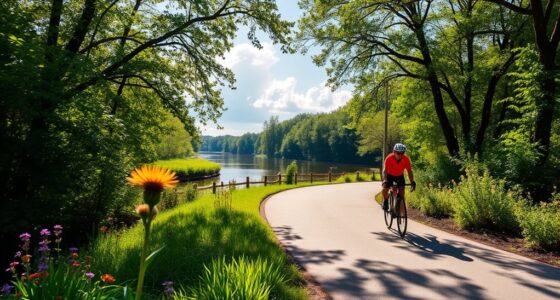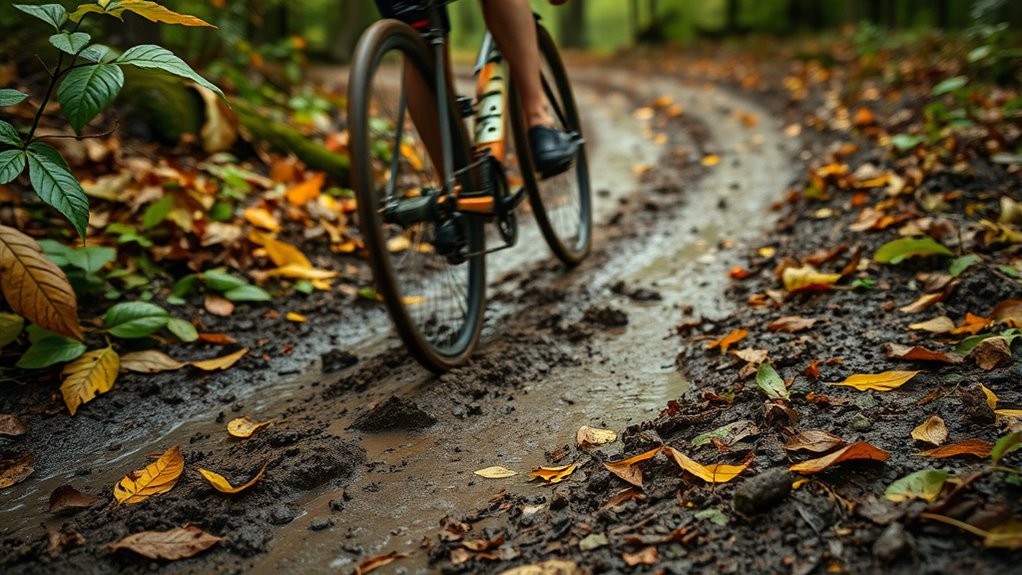
When riding through muddy and leaf-covered trails, stay relaxed and keep your body loose to adapt to changing traction. Choose firm ground edges over deep mud, and lean into turns while shifting your weight to maintain balance. Reduce your speed and keep a firm grip on slippery handlebars. Lower tire pressure slightly for better grip, and select stable lines to avoid hazards. For more tips on handling tricky terrain, continue exploring these essential techniques.
Key Takeaways
- Select firm, stable ground edges and avoid deep mud for better traction.
- Lower tire pressure by 10-15% to increase grip on muddy and leaf-covered surfaces.
- Shift body weight slightly back and lean into turns to maintain control.
- Keep a relaxed posture and avoid sudden movements to adapt to changing traction.
- Reduce speed when approaching wet leaves and muddy patches to prevent skidding.
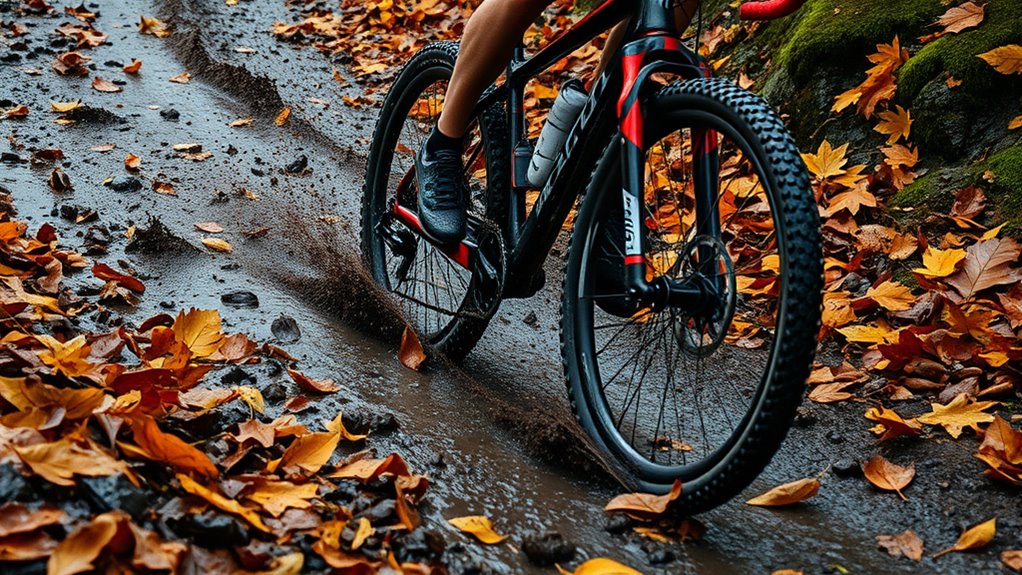
Riding through mud and wet leaves can be challenging, but with the right approach, you can navigate these tricky conditions safely and confidently. The key starts with proper bike maintenance. Before heading out, verify your bike is in top shape. Check your tires for adequate tread and correct pressure—worn tires lose grip quickly on slick surfaces. Clean your chain and drivetrain to prevent slippage and improve responsiveness. Lubricate moving parts to keep everything functioning smoothly, especially in damp conditions where rust and grime can cause issues. A well-maintained bike responds better to your commands, giving you more control over unpredictable terrain.
Equally important is your riding gear. Wear a helmet designed for wet conditions, with a visor to keep rain and debris out of your eyes. Consider investing in waterproof or moisture-wicking clothing that keeps you dry without sacrificing breathability. Gloves with good grip help you maintain control on wet handlebars, and sturdy, slip-resistant shoes give you better footing when dismounting or walking through muddy patches. Bright, reflective gear enhances visibility in low-light environments, which often accompany rainy or overcast days. Never underestimate the importance of your riding gear in maintaining safety and confidence while maneuvering through slippery surfaces.
When you start riding, adopt a relaxed yet attentive stance. Keep your hands on the handlebars with a light grip to absorb shocks and maintain control. Lower your tire pressure slightly—about 10-15% below normal—to increase traction and cushioning over uneven, muddy, or leaf-covered ground. Be prepared for sudden slips by keeping your weight centered and slightly back, especially when climbing or descending. When approaching wet leaves, reduce your speed to prevent skidding. Wet leaves are treacherous because they can hide puddles or slick patches that can cause you to lose grip unexpectedly.
Additionally, choosing a high-quality projector with good contrast and color accuracy can significantly enhance your visual awareness, helping you spot hazards early in low-light or foggy conditions.
As you navigate muddy sections, look for the firmest, most stable line. Avoid riding directly in the deep mud, which can cause your tires to sink or spin out. Instead, aim for the edges where the ground is firmer. Use your body weight to shift your bike’s balance—lean into turns and keep your body relaxed to adapt to changing traction. If you do start to slip, resist the urge to overcorrect; instead, ease off and straighten your handlebars gradually. Confidence is built through preparation and awareness, so stay alert, keep your bike in good shape, and wear your riding gear properly. With these steps, you’ll find yourself more capable of handling muddy trails and leaf-covered paths with safety and ease.
Frequently Asked Questions
How Can I Improve Traction on Muddy Trails?
To improve traction on muddy trails, start by lowering your tire pressure to increase the contact patch and grip. Choose trails with less mud or avoid the most slippery sections. Opt for tires with aggressive tread patterns designed for mud, and maintain a steady, controlled speed to prevent slipping. Proper trail selection and adjusting tire pressure help you stay stable and confident riding through challenging muddy conditions.
What Gear Is Best for Riding Wet Leaves?
To ride wet leaves effectively, you should wear gear that offers good leaf protection, like waterproof gloves and a helmet with a visor. Keep your tire pressure slightly lower to increase grip and absorb uneven surfaces better. Choose tires with deeper treads designed for slippery conditions. By combining proper gear, reducing your tire pressure, and selecting the right tires, you’ll improve your control and safety on wet leaves.
How Do I Prevent Slipping on Slippery Surfaces?
Imagine gripping a slick, shiny surface as tightly as you would a mountain trail. To prevent slipping, keep your tires well-maintained with proper tread for better traction. Wear protective clothing to stay secure and comfortable. Slow down in tricky spots, and use gentle, controlled movements. By combining good tire maintenance with protective gear, you create a safer riding experience, even on the most slippery surfaces.
What Safety Precautions Should I Take?
You should wear protective clothing like sturdy gloves and boots to stay safe. Always carry an emergency kit with essentials like a first aid kit, flashlight, and tools. Before riding, check your bike’s tires for proper grip and reduce speed on wet or muddy surfaces. Stay alert, avoid sudden movements, and keep a safe following distance. These precautions help prevent accidents and make sure you’re prepared for any slips or falls.
How Do Weather Conditions Affect Riding Safety?
Like a sailor steering treacherous seas, you must respect weather patterns for safe riding. Rain and fog reduce visibility and make trails slick, increasing your risk. Wind can blow debris onto your path, and sudden storms may force you off course. Stay informed about trail maintenance updates, as wet conditions can cause erosion or obstacles. Adjust your ride accordingly, wear appropriate gear, and always prioritize safety when weather turns unfavorable.
Conclusion
So, next time you ride through mud and wet leaves, remember you’re dancing with nature’s wild side. Embrace the slipping and sliding as part of the adventure, like riding a wave on a stormy sea. With each twist and turn, you’re carving your story into the unpredictable canvas of the trail. Trust your skills, stay alert, and let the thrill of the ride fuel your spirit. After all, it’s in the chaos that true riders shine brightest.