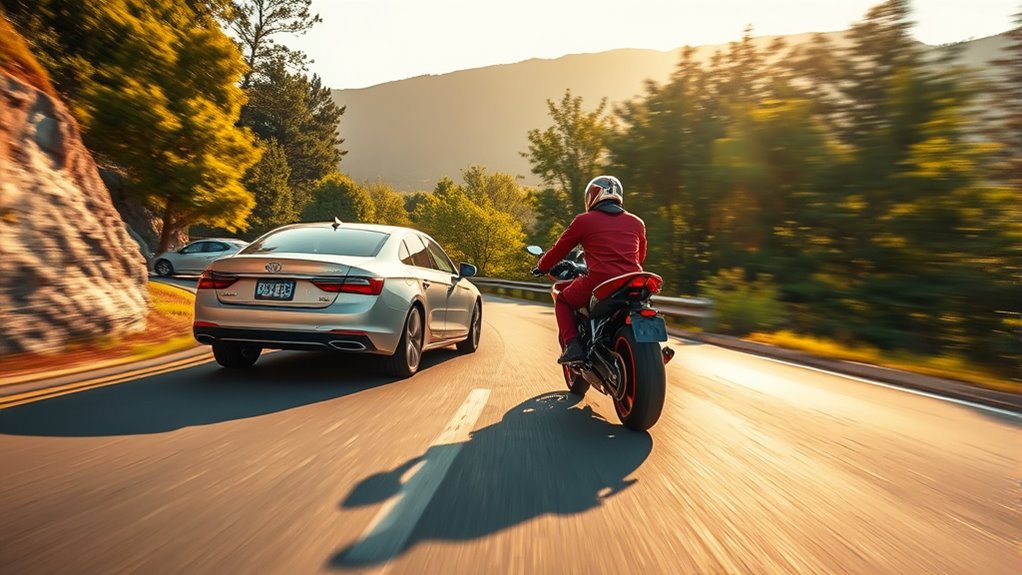

When overtaking, make certain you have a clear view of the road ahead, check mirrors and blind spots, and signal your intentions clearly. Only pass when road markings permit and there’s enough space for a safe maneuver. If you’re being overtaken, stay calm, maintain your lane, and keep your speed steady to help the other driver pass safely. Playing it safe keeps everyone secure—continue to learn how to master these essential skills for safer driving.
Key Takeaways
- Always ensure clear visibility and sufficient space before overtaking, checking mirrors and blind spots thoroughly.
- Recognize road markings: avoid overtaking across solid lines, and use signals when passing in permitted zones.
- Accelerate confidently to pass quickly and safely, then return to your lane smoothly after overtaking.
- Maintain steady speed and lane position when being overtaken, adjusting as necessary to give space safely.
- Regular vehicle maintenance, including mirrors and signals, enhances awareness and safety during overtaking maneuvers.
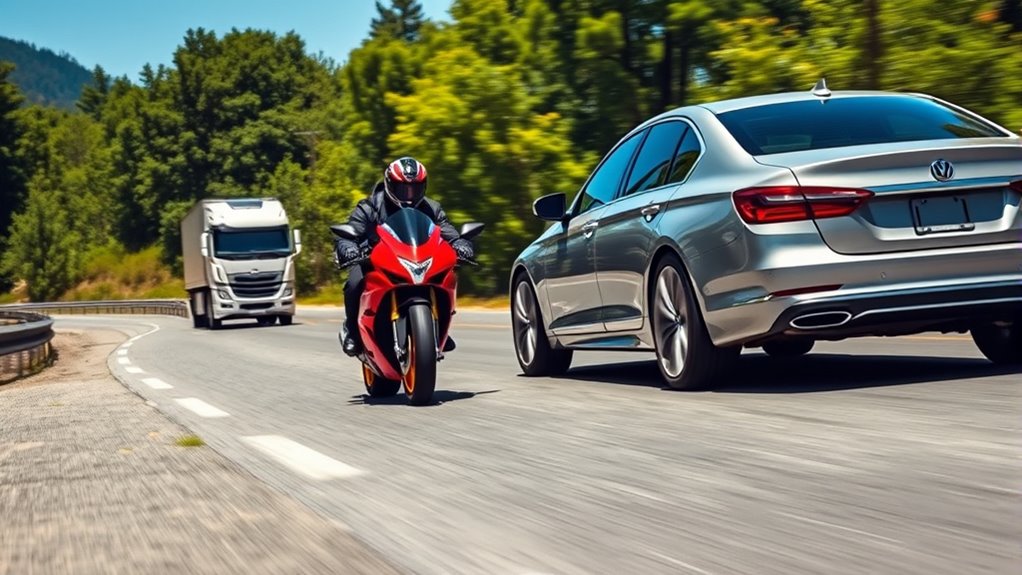
Have you ever wondered how to overtake another vehicle safely or how to handle being overtaken on the road? The key to a smooth and safe overtaking maneuver lies in understanding your surroundings and using the right techniques. Before you attempt to pass, make sure you have a clear view of the road ahead and that there’s enough space for you to complete the overtaking without rushing. It’s easy to overlook blind spots, those areas around your vehicle that aren’t visible in your mirrors. Always check your mirrors carefully and turn your head to look over your shoulder to eliminate these blind spots before moving out to overtake. This step helps you confirm that no vehicle is in your blind spot, preventing dangerous surprises.
Check mirrors and blind spots carefully before overtaking to ensure safety and prevent surprises.
Road markings play a essential role in guiding safe overtaking. Solid lines often indicate no passing zones, so never attempt to overtake across them. Broken or dashed lines, however, usually mean overtaking is permitted if it’s safe to do so. Always observe these markings closely, as they are there to protect you and other drivers. When the line is broken, signal your intention clearly with your indicators, and wait for a safe gap in oncoming traffic. Make sure you check both your mirrors and blind spots again before moving out to pass, and only do so when the road ahead is clear, and you have enough space to complete the overtaking maneuver smoothly.
Once you’ve decided it’s safe, accelerate confidently to pass the vehicle quickly but safely. Do not linger in the oncoming lane longer than necessary. Once you’ve overtaken, check your mirrors again and ensure you see the overtaken vehicle in your rearview mirror before pulling back into your lane. Maintaining a safe distance from the vehicle you’ve overtaken is crucial, so give yourself enough space to avoid potential accidents if the vehicle ahead suddenly brakes or swerves.
If another driver is overtaking you, stay calm and avoid any sudden moves. Maintain your lane position and keep your speed steady. Allow the other driver plenty of space by adjusting your speed if needed, especially if they’re approaching your blind spots. Remember, patience and awareness are your best tools in these situations. Respect road markings and be vigilant about blind spots at all times. Additionally, using proper vehicle maintenance, such as ensuring your mirrors and signals are functioning correctly, can significantly improve your awareness and safety during overtaking. By doing so, you’ll make overtaking safer for everyone on the road, reducing stress and preventing accidents.
Frequently Asked Questions
When Should I Avoid Overtaking Altogether?
You should avoid overtaking altogether when visibility is limited, such as in areas with blind spots or poor road markings. If you can’t see clearly ahead or if the road markings indicate no overtaking zones, it’s safer to wait. Also, avoid overtaking near intersections, bends, or on narrow roads. These situations increase the risk of collisions, so exercising caution helps keep everyone safe.
How Do Weather Conditions Affect Overtaking Safety?
Ever wondered how weather impacts your overtaking safety? Rainy visibility and foggy conditions markedly reduce your ability to see other vehicles and judge distances accurately. These conditions make overtaking riskier because your stopping distance increases, and you might not spot an approaching vehicle in time. Always slow down, increase your following distance, and avoid overtaking if visibility is poor. When in doubt, wait until conditions improve for a safer maneuver.
What Signals Should I Use When Overtaking?
When overtaking, you should use your turn indicators to signal your intentions clearly. Additionally, hand signals can be helpful if your indicators aren’t functioning or for extra communication with other drivers. Always make sure to signal well in advance, so others have enough time to react. This way, you ensure your overtaking maneuver is safe and understood, reducing the risk of accidents or misunderstandings on the road.
How Can I Tell if Another Driver Is About to Overtake Me?
You can often sense an overtaking attempt by paying attention to subtle cues. Improve your blind spot awareness, and watch for a vehicle’s headlight signals or slight movements in your mirrors. If you notice a driver gradually moving into your blind spot or flicking their headlights, they may be preparing to overtake. Staying alert and maintaining a safe speed helps you respond promptly and confidently to these signals.
Are There Special Rules for Overtaking Cyclists or Pedestrians?
When overtaking cyclists or pedestrians, you should give plenty of space and make sure it’s safe to pass. For cyclist overtaking, leave at least 1.5 meters of clearance, especially on narrow roads. Pedestrian overtaking requires slowing down and waiting for a clear gap, particularly at crossings or in shared zones. Always signal your intentions, stay alert, and be patient to avoid risking accidents or causing inconvenience.
Conclusion
Remember, safe overtaking keeps you in control, protecting both yourself and others on the road. Yet, being overtaken reminds you of humility and patience, accepting that everyone has their moment to lead. While confidence fuels your decision to pass, humility keeps you safe when others do. Striking this balance means respecting speed limits and respecting others’ space. In the end, safety isn’t just about winning the race; it’s about respecting the journey of everyone sharing the road.