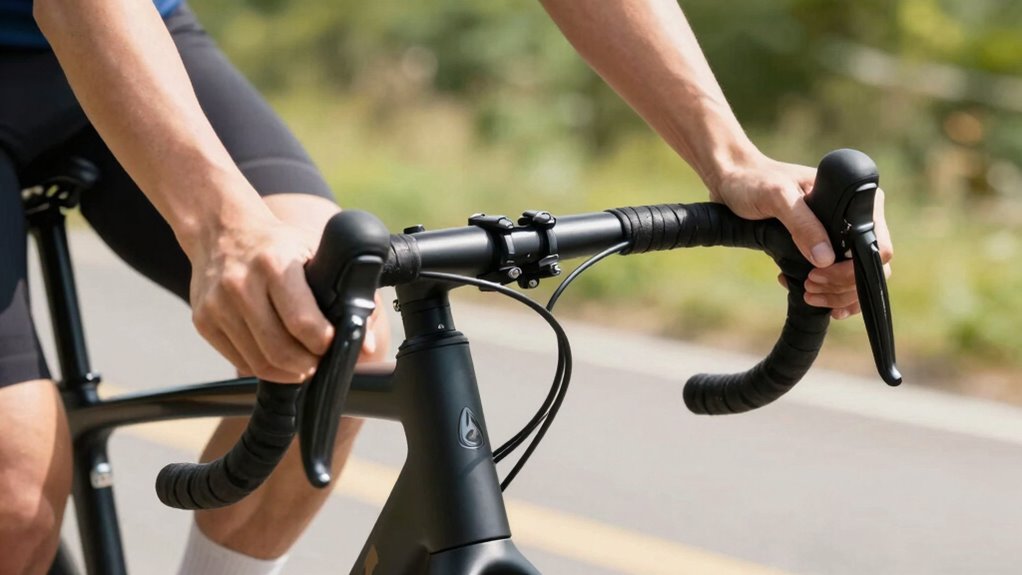

To set a comfortable handlebar height, sit on your bike in your usual riding position and adjust the handlebars so your arms are slightly bent without feeling stretched or cramped. Use spacers or an adjustable stem to fine-tune the height, and take short test rides to gauge comfort. Pay attention to any tension in your shoulders or neck, and make small tweaks for ideal fit. For more tips to maximize your comfort and performance, keep exploring these adjustments.

Get sports gear delivered free with Prime
- Fast, free delivery on millions of items
- Prime Video, Amazon Music and more included
- Member-only deals all year
Key Takeaways
- Sit on your bike in a natural riding position and adjust handlebars to feel relaxed without overstretching or hunching.
- Use spacers or adjustable stems to fine-tune handlebar height for personalized comfort.
- Ensure your arms are slightly bent, not fully extended or cramped, during the adjustment.
- Test ride after each adjustment to assess comfort and make small, incremental changes.
- Consider your riding style—upright for comfort, lower for performance—and adjust accordingly.

Finding the right handlebar height is essential for a comfortable and efficient ride. When you set your handlebars correctly, you reduce strain on your back, shoulders, and wrists, making longer rides more enjoyable. To achieve this, you need to contemplate ergonomic adjustments that match your body’s unique dimensions and riding style. The key is to strike a balance between comfort and performance, which means paying attention to your personal preferences.
Start by sitting on your bike in your usual riding position. Without riding, adjust the handlebars to a height that feels natural and relaxed. Your arms should be slightly bent, not fully extended or cramped tightly against your torso. If your handlebars are too high, you might feel overly stretched out, which can cause shoulder fatigue. Conversely, if they’re too low, you’ll tend to hunch over, leading to discomfort in your neck and lower back. Remember, ergonomic adjustments aren’t about following a strict rule but about customizing the setup to suit your body.
Adjust handlebars so your arms are slightly bent for comfort and proper posture.
Your personal preferences play a significant role in this process. Some riders prefer a more upright posture for comfort and visibility, especially on city bikes or commuter models. Others might opt for a more aggressive, forward-leaning position for speed and aerodynamics. Think about how you plan to ride most often—commuting, touring, or racing—and adjust accordingly. For casual rides, a higher, more relaxed handlebar position can prevent fatigue. If you’re into speed or performance, a slightly lower handlebar height might be better, but make sure it still feels comfortable for you.
Adjustments don’t have to be permanent; experiment with different heights to find what works best. Use spacers or adjustable stems to fine-tune the height, and take short test rides after each change. Pay attention to how your body feels during and after the ride. Do your shoulders feel tense? Is your neck strained? These are clues that you need to tweak the setup. Remember, small adjustments can make a big difference in comfort. Additionally, understanding ergonomic principles can help guide your adjustments to optimize comfort and efficiency. Incorporating proper bike fit techniques can also enhance your overall riding experience. Being aware of body positioning can further improve your riding posture and reduce discomfort. Recognizing the importance of adjustable components can give you more flexibility in customizing your bike to your needs. Furthermore, considering proper saddle height can complement handlebar adjustments for a more complete ergonomic setup.
Products Worth Considering

BowFlex Results Series SelectTech Adjustable Dumbbells (Pair)

Coleman SaluSpa Miami Energy-Efficient AirJet Inflatable Hot Tub, 2–4 Person

YETI Roadie 15 Hard Cooler
As an affiliate, we earn on qualifying purchases.
Frequently Asked Questions
Can Handlebar Height Affect My Cycling Speed?
Yes, handlebar height can affect your cycling speed. When you adjust the height for a ideal riding posture, you improve aerodynamic efficiency by reducing wind resistance. A higher handlebar might make you more upright, decreasing speed, while a lower one can streamline your position. Finding the right height balances comfort and performance, allowing you to ride efficiently without strain, ultimately boosting your overall cycling speed.
Is It Better to Have Adjustable or Fixed Handlebars?
Choosing between adjustable and fixed handlebars is like selecting a versatile tool for your ride. Adjustable handlebars let you fine-tune your position for comfort, especially with ergonomic grips and various handlebar styles, making your bike feel custom-made. Fixed handlebars are simpler and more lightweight, offering stability. If you value comfort and flexibility, go for adjustable; if you prefer a streamlined, hassle-free setup, fixed handlebars suit you better.
How Often Should I Check Handlebar Height Adjustments?
You should check your handlebar height every few rides or at least once a month to maintain ergonomic posture and riding efficiency. Regular adjustments guarantee your position stays comfortable and prevents strain or injury. After any long rides, rough terrain, or if you notice discomfort, re-evaluate the height. Keeping a consistent check helps you stay aligned and maximize your cycling performance while reducing fatigue.
Does Handlebar Height Impact My Wrist Comfort?
Ever wonder if your handlebar height affects wrist comfort? It definitely does. When your handlebars are at the right height, you promote ergonomic wrist positioning, reducing strain and preventing hand fatigue during long rides. If they’re too high or low, you might experience discomfort or pain. Ensuring a proper handlebar height supports your wrists naturally, making your cycling experience more comfortable and enjoyable while minimizing the risk of injury.
What Tools Are Needed to Change Handlebar Height?
To change your handlebar height, you’ll need basic tools like an Allen wrench or hex key, a bike maintenance stand (optional but helpful), and possibly a screwdriver. Check your bike’s components for specific tools required. Keep a complete tool kit handy, including adjustable wrenches and pliers, to loosen or tighten bolts. Proper tools guarantee a safe, efficient adjustment, making your ride more comfortable and your bike maintenance easier.
Conclusion
Once you’ve found that perfect handlebar height, it’s like tuning a fine instrument—every note and nuance aligned just right. Your bike becomes an extension of your body, gliding smoothly like a bird in flight. Remember, comfort isn’t a fixed point; it’s a journey of small adjustments leading to a ride that feels effortless and free. Keep tweaking until your handlebars sing in harmony with your ride—because the road’s most beautiful song is played with a comfortable, confident grip.