
To set your power and heart rate zones, start by estimating your maximum heart rate using formulas like 220 minus your age, or perform a max effort test for accuracy. For power, determine your Functional Threshold Power (FTP) through structured testing. Then, divide these numbers into 5 or 6 zones to target specific training goals, such as endurance or high-intensity efforts. If you want to fine-tune your zones and optimize your workouts, there’s more to learn below.
Key Takeaways
- Calculate maximum heart rate (220 minus age) and Functional Threshold Power (FTP) through structured tests.
- Divide MHR and FTP into 5 or 6 zones to tailor training intensities.
- Use heart rate monitors and power meters to accurately track effort during workouts.
- Adjust zones based on performance data and training goals for optimal progress.
- Regularly reassess zones to reflect fitness improvements and prevent overtraining.
Understanding your power and heart rate zones is vital for optimizing your training and achieving your fitness goals. When you know which zone you’re working in, you can tailor your workouts to improve endurance, build strength, or boost speed more effectively. One of the most efficient ways to do this is through interval training, which alternates periods of high effort with recovery. To make the most of interval training, you need to accurately perform zone calculation—that is, determine the specific heart rate or power ranges that correspond to each zone. This process guarantees that you’re training at the right intensity to meet your objectives.
Accurate zone calculation optimizes training intensity for better fitness results.
Zone calculation begins with understanding your maximum heart rate (MHR) and functional threshold power (FTP). Your MHR can be estimated using formulas like 220 minus your age, but for precision, it’s better to perform a max heart rate test or a power test to find your true maximum. Similarly, FTP is usually determined through a structured effort test, which gives you a solid baseline for your power zones. Once you have these numbers, you can divide them into zones—typically five or six—each representing a different level of exertion. For heart rate zones, this might mean 50-60% of MHR for recovery, 60-70% for endurance, and so on. For power zones, you might see a similar division based on your FTP.
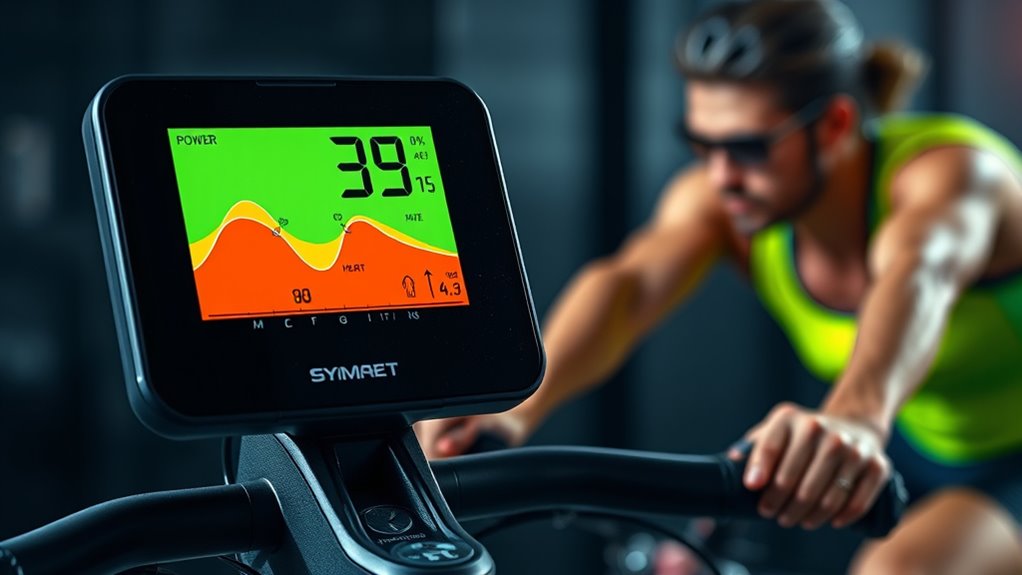
Knowing your zones allows you to craft targeted interval training sessions. For example, if you’re aiming to increase your aerobic capacity, you’ll spend more time in Zone 2 or 3, where your effort feels sustainable but challenging. To push your limits and improve anaerobic capacity, you’ll incorporate shorter, high-intensity intervals in Zones 4 or 5. Accurate zone calculation guarantees you’re not overtraining or undertraining, which can either lead to fatigue or insufficient progress. It’s vital to use reliable methods and tools—like heart rate monitors or power meters—to track your effort levels during workouts. Additionally, understanding benefits of proper zone training can help you stay motivated and ensure you’re progressing effectively.
As you become familiar with your zones, adjusting your training becomes easier. You can set specific goals for each session, ensuring your efforts align with your overall fitness plan. Whether you’re aiming for endurance, strength, or speed, understanding and applying your power and heart rate zones guides your workouts and maximizes results. Over time, you’ll notice improved performance and better energy management, all stemming from precise zone calculation and smart interval training. This knowledge empowers you to train smarter, not just harder, and ultimately reach your fitness potential more efficiently.
Frequently Asked Questions
How Do I Accurately Determine My Personal Power Zone?
To accurately determine your personal power zone, start with a power calibration test on your bike or trainer, ensuring your device is properly calibrated for precise readings. Monitor your heart rate variability during these efforts, as it helps identify your true maximum power and fatigue levels. Use this data to set realistic, individualized zones that reflect your fitness and performance, optimizing training effectiveness and progress over time.
Can Heart Rate Zones Change Over Time?
Like a river’s flow shifting with seasons, your heart rate zones can change over time. Heart rate fluctuations reflect your evolving fitness and training zone adaptation, so they aren’t static. As you progress, your resting and max heart rates may adjust, affecting zone boundaries. Regular re-evaluation ensures your training remains effective, helping you avoid plateau and continue improving. Stay attentive to these changes for peak performance.
What Equipment Is Needed to Monitor Power and Heart Rate?
To monitor power and heart rate, you’ll need training accessories like a power meter and a heart rate monitor. Wearable technology, such as a smartwatch or chest strap, provides accurate real-time data. These devices sync with your smartphone or bike computer, giving you instant feedback during workouts. Investing in reliable gear helps you track progress, optimize training, and stay motivated toward your fitness goals.
How Do I Adjust Zones for Different Training Goals?
Think of your zones like a playlist; you adjust the tempo for different moods. To tailor your training goals, perform zone calibration by testing your max power or heart rate, then update your zones accordingly. For endurance, focus on lower zones to build stamina. For speed, shift to higher zones. Customization guarantees your workouts meet your specific needs, helping you progress efficiently and stay motivated.
Are There Risks Associated With Training in Specific Zones?
Training in specific zones can pose risks like training injuries or overtraining risks if you push too hard for too long. Pushing into high-intensity zones without proper recovery increases injury chances, while staying in low zones too long might limit progress. To stay safe, listen to your body, incorporate rest days, and vary your zones. Properly managing your training intensity helps prevent injuries and reduces overtraining risks.
Conclusion
By understanding your power and heart rate zones, you’ll naturally find your rhythm—almost like your body and effort are in sync. It’s funny how, sometimes, just when you’re feeling your best, everything aligns perfectly. As you tune into these zones, you’ll notice progress sneaking up on you when you least expect it. So keep listening to your body and trust the process—sometimes, the best strides happen when you’re simply in the right zone at the right time.