
To maintain a smooth cadence on rolling terrain, focus on keeping a steady pedal rhythm that feels natural for you. Adjust your gear ratios proactively, shifting to lower gears on climbs and higher gears on descents to stay comfortable and avoid jerky motions. Relax your upper body and apply even force throughout each pedal stroke, engaging your core muscles. By practicing these techniques, you’ll ride more efficiently—continue exploring for more tips to optimize your cadence even further.
Key Takeaways
- Maintain a steady cadence by selecting appropriate gear ratios for each terrain change.
- Shift gears proactively before reaching steep inclines or declines to prevent cadence disruptions.
- Use smooth, gradual gear changes to avoid jerky movements and preserve momentum.
- Keep your upper body relaxed to facilitate consistent pedal strokes and reduce fatigue.
- Focus on applying even force throughout the pedal stroke, engaging core and leg muscles for efficiency.
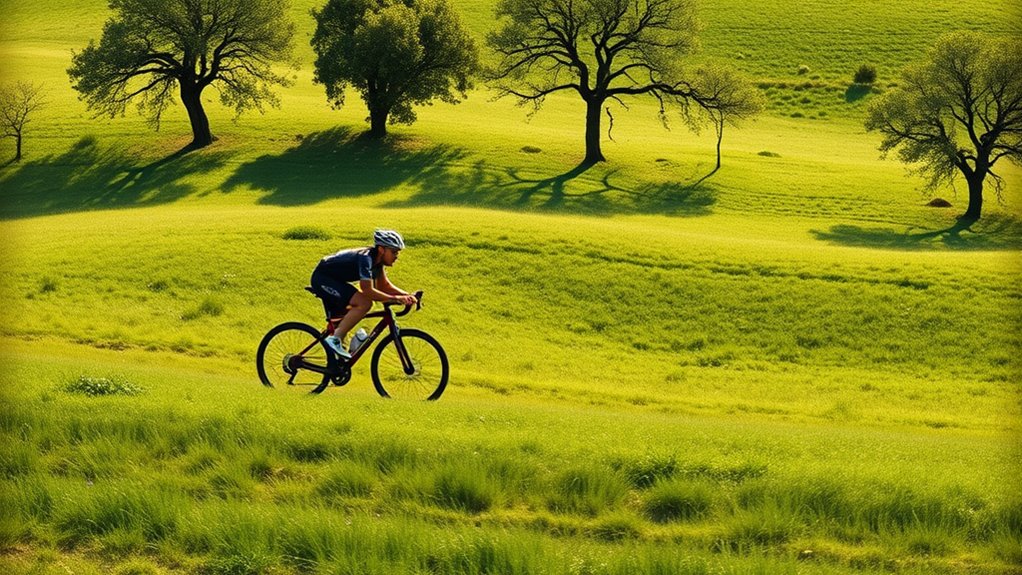
When riding on rolling terrain, maintaining a smooth cadence can considerably improve your efficiency and comfort. As you navigate gentle climbs and descents, your ability to keep a steady pedal rhythm helps conserve energy and reduces fatigue. One of the key factors in achieving this smooth cadence is understanding your gear ratios. Gear ratios determine how many times your pedals turn for each wheel rotation, directly affecting your pedaling effort and speed. By selecting appropriate gears, you can find a cadence that feels natural and sustainable, avoiding the jerky motions that come with constantly shifting or pushing too hard on your pedals.
Focusing on your pedal stroke is equally important. A smooth pedal stroke involves applying force evenly throughout the entire rotation, rather than just pushing down on the pedals. This means engaging your hamstrings, glutes, and core to create a fluid motion, which minimizes dead spots and reduces unnecessary strain. When your pedal stroke is efficient, your legs work with less wasted energy, making it easier to maintain a consistent cadence over varied terrain. It’s not just about spinning fast; it’s about finding a rhythm that allows you to pedal steadily without overexerting yourself on climbs or losing momentum on descents.
A smooth pedal stroke engages your hamstrings, glutes, and core for efficient riding over varied terrain.
Adjusting your gear ratios to match the terrain is crucial. When you encounter an incline, shifting to a lower gear allows you to pedal comfortably at your chosen cadence, rather than grinding or forcing yourself to push harder. Conversely, on downhill sections, shifting to a higher gear can help you maintain momentum without spinning out or losing control. Constantly changing gears to match terrain ensures your pedal stroke remains smooth, preventing sudden jerks or uneven power transfer that can disrupt your rhythm. Additionally, modern gear systems like automatic shifting can assist in maintaining optimal cadence seamlessly.
To develop a smooth cadence, pay attention to your breathing and overall body position. Relax your upper body and avoid stiffening your shoulders or gripping the handlebars too tightly. A relaxed posture facilitates a more natural pedal stroke and helps you sustain your cadence over longer distances. Practice shifting gears proactively before hitting challenging sections so you can maintain your rhythm rather than scrambling to find the right gear under pressure. Over time, this habitual awareness of gear ratios and pedal technique will become second nature, allowing you to ride more efficiently on rolling terrain with less fatigue and more enjoyment.
Frequently Asked Questions
How Does Cadence Affect Energy Expenditure on Hills?
Your cadence directly impacts your energy expenditure on hills. Maintaining a steady, ideal cadence allows you to use efficient climbing strategies and conserve energy. When you focus on smooth pedal biomechanics, you reduce unnecessary muscle fatigue and effort. By avoiding abrupt changes in cadence, you keep your muscles working efficiently, making hill climbing less tiring and more sustainable. Consistent cadence and proper technique help you climb hills with less energy and greater ease.
What Is the Ideal Cadence for Different Rider Levels?
You might think there’s a one-size-fits-all ideal cadence, but it varies with your skill level. Beginners should aim for a comfortable 70-90 rpm to improve bike ergonomics and develop efficient pedal technique. Experienced riders often push to 90-110 rpm to maximize efficiency on rolling terrain. Adjust your cadence based on how you feel, focusing on smooth pedal technique, and listen to your body’s cues to optimize energy use and comfort.
Can Cadence Adjustments Improve Overall Cycling Efficiency?
Yes, adjusting your cadence can improve your cycling efficiency. By maintaining an ideal pedal rhythm, you reduce muscle fatigue, allowing you to ride longer and more comfortably. Increasing cadence slightly can help you conserve energy, especially on rolling terrain, while lowering it may boost power for climbs. Experiment with different cadences to find the rhythm that keeps you feeling strong and efficient throughout your ride.
How Do Terrain Changes Influence Optimal Cadence Strategies?
Terrain changes require you to adapt your cadence for ideal efficiency and rider comfort. When facing rolling terrain, increase your cadence slightly to maintain momentum and reduce fatigue, allowing for smoother terrain adaptation. Conversely, on steeper inclines, lowering your cadence can help conserve energy. Adjusting your cadence based on terrain helps you stay comfortable, prevents overexertion, and keeps your riding more efficient over varied surfaces.
What Gear Ratios Support Smooth Cadence on Rolling Terrain?
Choosing gear ratios that support smooth cadence on rolling terrain keeps your momentum steady and your muscles happier. You want gear ratios that allow you to maintain a consistent cadence without forcing you to push hard or spin out. Typically, a mid-range gear, like a 50/34 chainring paired with a 11-28 cassette, offers the perfect balance. This setup helps you stay steady, confident, and ready for whatever the terrain throws at you.
Conclusion
Focusing on a smooth cadence while tackling rolling terrain can boost your efficiency and reduce fatigue. Studies show that maintaining a consistent cadence can improve running economy by up to 4%, helping you conserve energy on hilly routes. By adjusting your stride and staying relaxed, you’ll navigate rolling terrain more effortlessly. So, next time you hit those hills, keep your cadence steady and enjoy the smoother, more enjoyable run ahead.