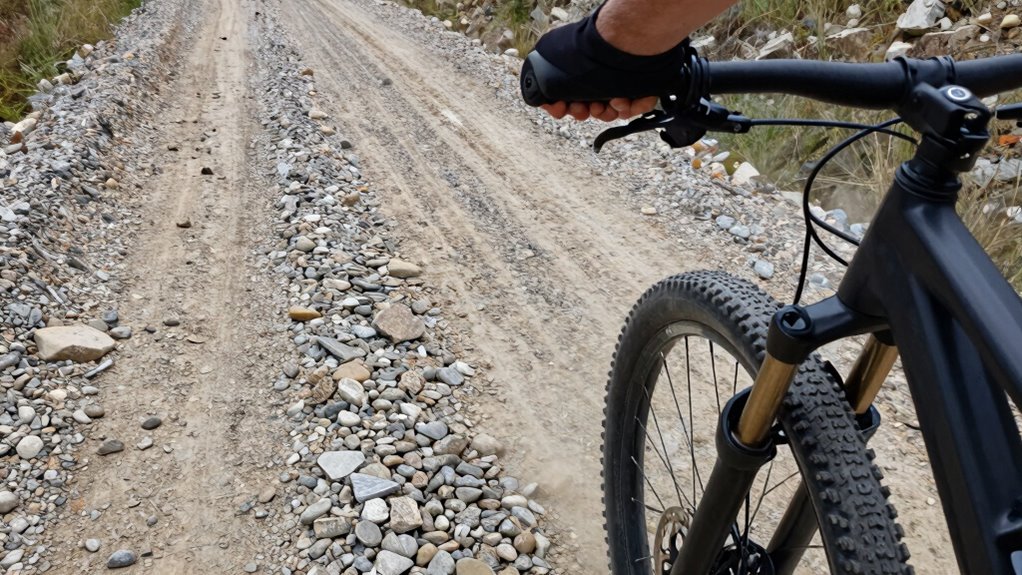
To stay comfortable on rough gravel roads, make sure your tires are properly inflated according to the manufacturer’s recommendation to absorb bumps better. Maintain a relaxed, upright posture with your elbows slightly bent and hands gently gripping the handlebars. Adjust your riding speed to match the terrain and stay alert to surface changes. Small tweaks in your technique and preparation can considerably enhance your comfort and control. Keep exploring to discover more tips for a smoother ride.

Get sports gear delivered free with Prime
- Fast, free delivery on millions of items
- Prime Video, Amazon Music and more included
- Member-only deals all year
Key Takeaways
- Properly inflate tires to the manufacturer’s recommended pressure for optimal shock absorption and control.
- Maintain an upright, relaxed riding posture to distribute weight evenly and reduce fatigue.
- Use flexible grip and react smoothly to terrain changes for better control and comfort.
- Continuously monitor and adapt to terrain conditions to adjust riding speed and technique accordingly.
- Check tire pressure and overall readiness before riding to ensure optimal comfort and safety on rough terrain.
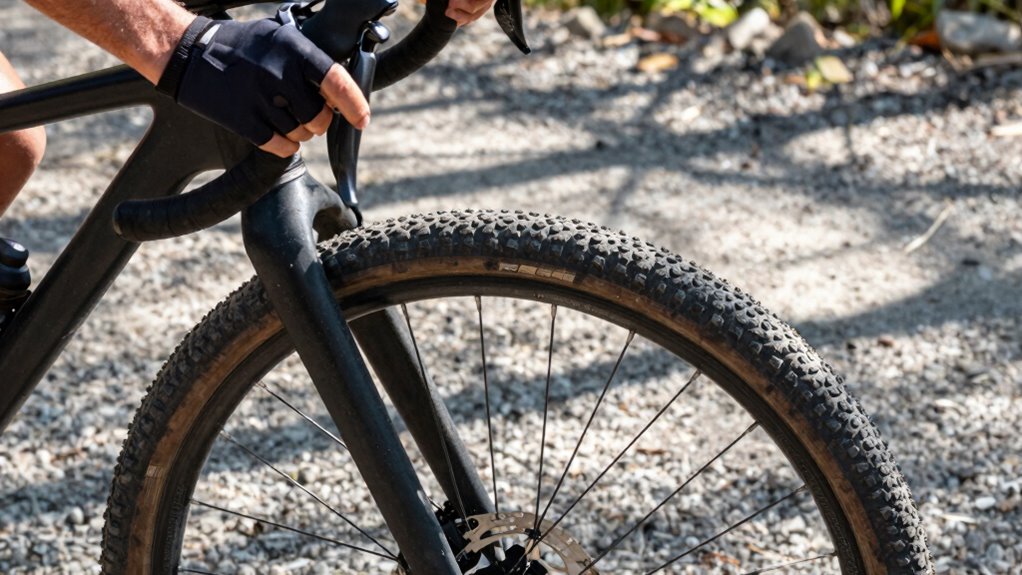
Driving on gravel roads can be rough, but staying comfortable doesn’t have to be. The key lies in paying attention to your tire pressure and your riding posture. Both play a crucial role in making your drive smoother and more enjoyable, especially on uneven surfaces. When your tires are properly inflated, they absorb more of the bumps and vibrations, reducing fatigue and discomfort. Under-inflated tires might seem like a good idea to increase grip, but they actually cause more bounce and instability, making your ride jarring rather than comfortable. Conversely, over-inflated tires can lead to a harsher ride because they don’t absorb shocks well. You want to find that sweet spot—usually around the manufacturer’s recommended pressure—so your tires can cushion the rough terrain while maintaining good control.
Proper tire pressure ensures a smoother, more comfortable ride on rough gravel roads.
Your riding posture also makes a significant difference. Sitting upright with a relaxed but firm grip on the handlebars helps in distributing your weight evenly and absorbing shocks naturally through your arms and core. Slouching or leaning heavily forward can cause strain on your back and neck, making the ride uncomfortable over time. Keep your elbows slightly bent and your hands relaxed to better respond to the road’s imperfections. When you maintain a good posture, your body acts as a natural suspension system, dampening some of the harsh impacts from the gravel. This not only keeps you more comfortable but also improves your control and reduces fatigue. Proper tire pressure and riding posture are essential for a smooth ride over uneven terrain.
Another aspect to consider is your overall riding technique. Instead of gripping the handlebars tightly, allow your arms to be flexible and move with the terrain. This dynamic approach helps you react quickly to bumps and dips, preventing sudden jarring movements. Adjust your riding speed to match the conditions—slower speeds give you more control and reduce the impact on your body. When you’re mindful of your tire pressure and riding posture, you create a more comfortable experience, even on the roughest gravel. Small adjustments can make a big difference, so take the time to check your tires before heading out and consciously adopt a relaxed, upright riding stance. Being aware of road conditions and how they affect your ride can help you make better decisions in real time, further enhancing your comfort.
A well-prepared ride also involves understanding how terrain types influence ride quality and safety, helping you adapt your approach accordingly. In the end, staying comfortable on gravel roads comes down to preparation and awareness. Proper tire pressure cushions the bumps, and a good riding posture keeps your body relaxed and responsive. Together, these habits help you enjoy your ride without unnecessary discomfort or fatigue, making even the most challenging gravel roads more manageable.
Products Worth Considering

Garmin Index BPM Smart Blood Pressure Monitor

Coleman Skydome 4-Person Tent with Full-Fly Weather Vestibule

Garmin vívoactive 5 GPS Smartwatch, 42 mm, Black
As an affiliate, we earn on qualifying purchases.
Frequently Asked Questions
What Clothing Is Best for Rough Gravel Roads?
You should wear layered clothing made from breathable fabrics to stay comfortable on rough gravel roads. Layering allows you to adjust your insulation as temperatures change, while breathable fabrics help wick away sweat and keep you dry. Opt for moisture-wicking shirts, lightweight jackets, and durable, flexible pants. Don’t forget a hat and sunglasses for sun protection, and consider gloves to shield your hands from rough surfaces and vibrations.
How Do I Prevent My Vehicle From Skidding?
Picture your vehicle as a skilled dancer on a slippery stage. To prevent skidding, you need to master the grip. Check your tire pressure regularly—keeping it just right guarantees better contact with the road. Activate your traction control system to help your vehicle respond smoothly when the surface gets tricky. These tools work together, giving you confidence and control, so you glide across gravel like a dance pro.
Should I Carry Extra Tires or Repair Kits?
You should carry a repair kit and spare tires to handle emergencies on rough gravel roads. Tire maintenance is essential, so regularly check your tires for damage and proper inflation. Having extra tires or a repair kit enhances emergency preparedness, ensuring you’re ready for flats or blowouts that can happen unexpectedly. This way, you can quickly fix or replace tires, maintaining safety and comfort during your journey.
How Often Should I Check My Vehicle During the Trip?
Don’t wait until the wheels fall off—check your vehicle regularly, ideally every 1-2 hours or when stopping for breaks. Consistent vehicle maintenance is key to road safety, helping you spot loose bolts, tire pressure issues, or fluid leaks early. Keep an eye on your gauges and listen for unusual sounds. Staying proactive guarantees you navigate rough gravel roads safely and comfortably, avoiding surprises that can turn into big headaches.
What Are Signs of Vehicle Suspension Issues?
You’ll notice suspension issues if your vehicle feels uneven or bouncy, especially over rough terrain. During suspension inspection, look for signs like excessive shock absorber wear and fluid leaks. If your steering feels loose or the ride becomes jarring, these are clear signs you need to address suspension problems. Regularly checking these components guarantees smoother rides and keeps you safe, especially on challenging gravel roads.
Conclusion
So, next time you hit those rough gravel roads, remember that your comfort is within your control. Think of your ride as a dance—your body and the road moving in harmony. By choosing the right tires, adjusting your suspension, and staying relaxed, you’ll glide over the stones instead of fighting them. Embrace these tips, and you’ll turn a bumpy journey into a smooth adventure—proof that even the roughest roads can lead to the most rewarding destinations.