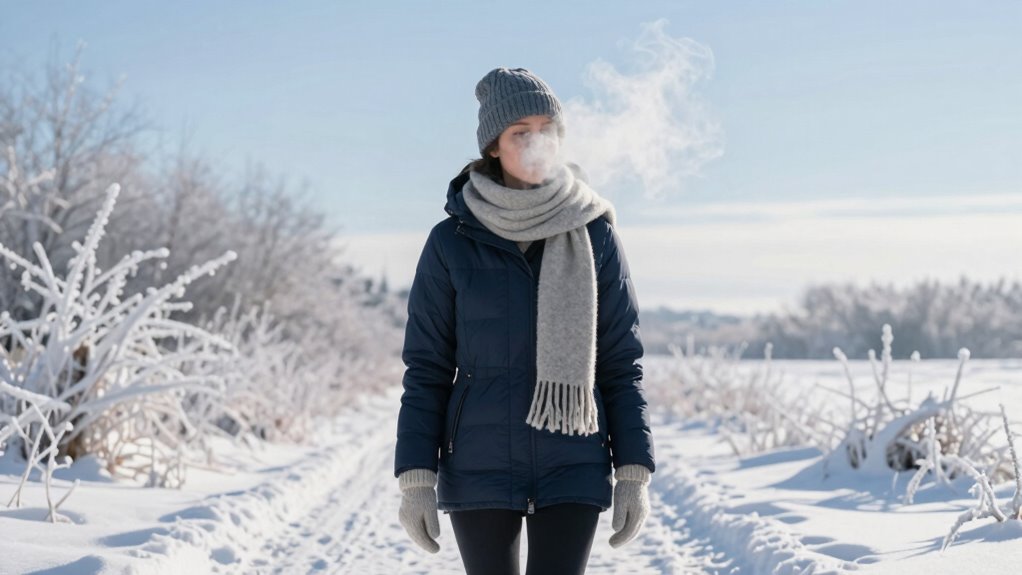

To stay warm without overdressing, focus on smart layering using moisture-wicking base layers, insulating mid-layers, and waterproof shells when needed. Pay attention to your extremities by wearing thermal gloves, hats, and socks to keep heat in. Adjust your clothing based on activity and weather, removing layers indoors or in milder conditions to avoid overheating. Balancing ventilation with insulation helps keep you comfortable; continue exploring these tips to master staying warm efficiently.

Get sports gear delivered free with Prime
- Fast, free delivery on millions of items
- Prime Video, Amazon Music and more included
- Member-only deals all year
Key Takeaways
- Use effective layering: wear a moisture-wicking base, insulating middle, and waterproof outer shell for warmth and flexibility.
- Incorporate thermal accessories like gloves, hats, and neck gaiters to retain heat without bulk.
- Prioritize ventilation to prevent overheating and sweating, adjusting layers as activity levels change.
- Choose insulated, waterproof footwear and thermal socks to keep extremities warm without excess clothing.
- Adapt clothing based on activity and environment, removing unnecessary layers to avoid overheating.
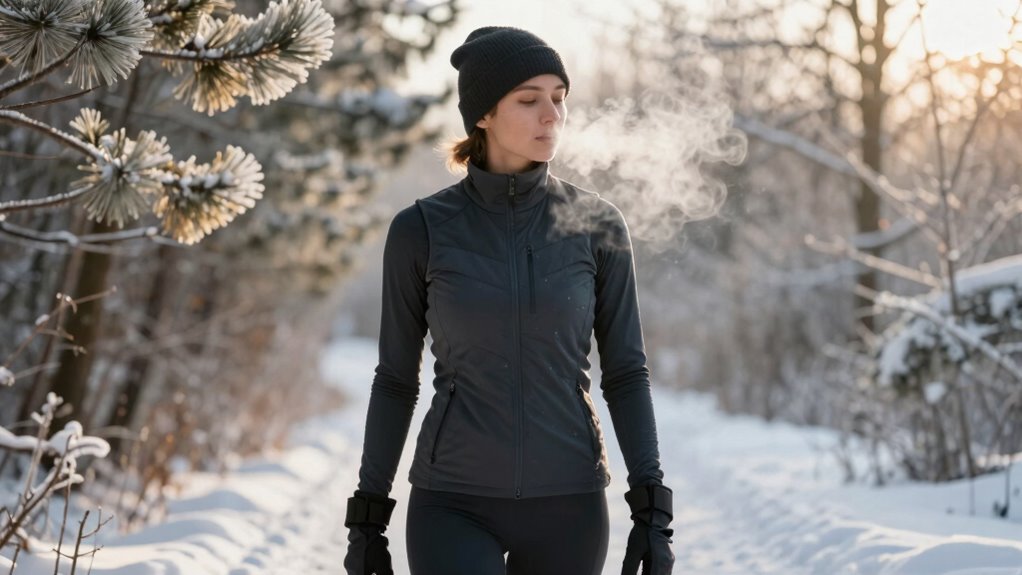
When the weather turns chilly, it’s tempting to pile on layers, but overdressing can lead to discomfort and overheating. The key to staying warm without feeling weighed down is mastering layering techniques. Instead of simply adding bulky clothes, focus on choosing pieces that work together efficiently. Start with a moisture-wicking base layer that keeps sweat away from your skin. This helps maintain a dry, warm feeling and prevents you from getting chilled if you happen to sweat. Over that, add an insulating layer like a fleece or a light wool sweater. These materials traps body heat without adding excessive bulk. Finally, top it off with a waterproof or windproof shell if you anticipate harsher weather, but avoid layering too many outer garments, which can restrict movement and cause overheating.
Thermal accessories are your secret weapon to staying cozy. Items like thermal gloves, hats, and neck gaiters are small, effective ways to prevent heat loss in vulnerable areas. A simple, well-fitted beanie can keep most of your head warm, and since much heat escapes through your head, this makes a noticeable difference. Thermal gloves insulate your hands without sacrificing dexterity, helping you stay comfortable during outdoor activities. Neck gaiters or scarves provide an extra layer of warmth around your neck, which is vital because heat loss often occurs there. These accessories are lightweight and easy to adjust, allowing you to regulate your temperature easily without removing your entire outfit. Recognizing the importance of biodiversity, incorporating natural insulation materials like wool, which is derived from sheep, can also enhance your layering strategy sustainably. Using natural insulation options not only keeps you warm but also supports environmentally friendly choices. Additionally, paying attention to ventilation can help prevent overheating during active pursuits by allowing excess heat to escape. Proper ventilation techniques can improve overall comfort and prevent sweating that might lead to chills later.
You should also pay attention to your footwear. Choose insulated, waterproof shoes or boots that keep your feet dry and warm. Thick socks made of wool or thermal materials complement your footwear, providing additional insulation. Remember, keeping your extremities warm is just as important as your core. If you’re inside or in milder weather, you can remove some outer layers or thermal accessories to avoid overheating. The goal is to balance insulation with breathability, ensuring you don’t get too hot and sweaty, which can lead to feeling colder later. Additionally, layering techniques such as adjusting your clothing based on activity level can help optimize your warmth and comfort throughout your outdoor experience.
Products Worth Considering

GoPro HERO Compact Waterproof 4K Action Camera

GoPro HERO12 Black Waterproof Action Camera with 5.3K60 Video and 27MP Photos

GoPro LIT HERO Waterproof Action Camera with Built-In Light
As an affiliate, we earn on qualifying purchases.
Frequently Asked Questions
What Fabrics Retain Heat Best in Cold Weather?
You’ll want fabrics with excellent thermal insulation, like wool and fleece, to keep heat close. Merino wool is especially effective because it traps warmth even when damp. Also, consider moisture-wicking fabrics such as synthetic fibers or polyester blends, which pull sweat away from your skin to prevent chill. Combining these materials helps retain heat efficiently, keeping you warm without the bulk or overheating.
How Can Layering Help Prevent Overheating?
Think of layering as your superhero suit—each layer adds thermal insulation while preventing overheating. You can stay warm without sweating by choosing moisture management fabrics that wick away sweat and keep you dry. Starting with a moisture-wicking base, add an insulating mid-layer, then a breathable outer shell. This strategy allows temperature regulation, prevents overheating, and keeps you comfortable in varying conditions—just like a modern-day knight, but with better tech!
Are There Specific Accessories That Boost Warmth Effectively?
Yes, certain accessories act as insulation accessories and provide thermal enhancements that boost warmth effectively. You should consider wearing thermal gloves, insulated hats, and scarves made from wool or fleece, which trap heat and keep cold air out. Heated insoles or hand warmers also offer targeted warmth. These accessories work together to improve insulation, ensuring you stay comfortably warm without needing heavy clothing.
How Does Body Movement Influence Warmth Retention?
When you move or exercise, your body generates more heat, which helps retain warmth. Body movement increases circulation, spreading body heat more evenly and preventing cold spots. Regular activity keeps your muscles warm, making it easier to stay comfortable in cooler temperatures. So, by staying active and engaging in movement, you naturally boost your body heat, reducing the need for heavy layers while still keeping warm and cozy.
What Common Mistakes Lead to Overdressing?
You might unknowingly tip the balance of thermal insulation and breathability, leading to overdressing. Common mistakes include piling on excessive layers, which traps moisture and hampers airflow, or choosing overly thick fabrics that compromise breathability. Instead, focus on selecting adaptable clothing that maintains a proper balance, allowing your body to breathe while providing adequate insulation. This approach keeps you warm without overheating, ensuring comfort and efficiency in temperature regulation.
Conclusion
By choosing your layers wisely and paying attention to your body’s signals, you can enjoy the crisp air without feeling overwhelmed. Think of dressing as a gentle dance—each piece adding just enough warmth to keep you cozy without smothering your comfort. Embrace this balance, and you’ll find yourself gliding through chilly days with ease, feeling as light as a breeze. With a little mindful planning, staying warm becomes a quiet art you master effortlessly.