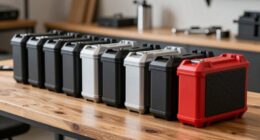
To use a torque wrench properly, make sure it’s calibrated regularly for accurate readings. Set the desired torque and apply force smoothly until the wrench clicks or signals that you’ve reached the correct tightness. Store it in a clean, dry place, and avoid impacts or extreme temperatures. Clean the tool after use to keep it functioning well. Following these tips guarantees safety and reliability—continue exploring these best practices to get the most from your torque wrench.
Key Takeaways
- Always calibrate your torque wrench regularly to ensure accurate torque application and maintain safety.
- Store the wrench in a clean, dry place and set it to the lowest setting when not in use.
- Use the correct torque setting for each fastener, referencing manufacturer specifications.
- Clean the wrench after use with a soft cloth and avoid harsh chemicals to preserve its calibration.
- Apply steady, even pressure during operation and avoid sudden jerks to achieve precise tightening.

Using a torque wrench correctly is essential to guarantee your fasteners are tightened to the proper specifications, preventing damage or failure. To achieve this, you need to understand how to keep your tool in ideal condition through proper calibration techniques. Calibration ensures that your torque wrench provides accurate readings, which is critical for safety and quality. Regularly calibrate your wrench according to the manufacturer’s guidelines, typically every few months or after heavy use. Use calibration techniques such as utilizing a calibration tester or sending your wrench to a professional calibration service. These methods verify that the torque readings are precise, allowing you to trust your tool during critical tasks.
Proper calibration of your torque wrench ensures accurate readings, safety, and tool longevity.
When it comes to calibration, pay attention to the method that best fits your needs. Mechanical torque wrenches often require a torque tester, where you apply known force and compare the readings. Digital or electronic wrenches might have self-calibration features or need to be tested with certified equipment. It’s crucial to keep records of calibration dates and results, enabling you to track the wrench’s accuracy over time. Proper calibration not only increases the reliability of your work but also extends the lifespan of your tool.
Storage best practices also play a significant role in maintaining your torque wrench’s accuracy. Always store your wrench in a clean, dry environment to prevent rust and corrosion. Keep it in a protective case or on a designated shelf, away from extreme temperatures and humidity. If your wrench has an adjustable setting, gently set it to its lowest torque value when not in use, as this minimizes strain on the internal components. Avoid dropping or knocking the wrench, as impacts can alter its calibration and damage internal mechanisms.
Furthermore, make it a habit to clean your torque wrench after each use, especially if it’s been exposed to dirt, grease, or moisture. Use a soft cloth and avoid harsh chemicals that could damage internal parts. If your wrench has a storage slot or a specific place for the calibration certification, always return it there. Proper storage practices prevent accidental damage and help you maintain consistent accuracy. Remember, a well-maintained and correctly stored torque wrench ensures precise tightening every time, reducing the risk of fastener failure and safeguarding your work and equipment. By adhering to calibration techniques and storage best practices, you guarantee that your torque wrench remains a reliable tool for years to come.
Frequently Asked Questions
How Often Should I Calibrate My Torque Wrench?
You should calibrate your torque wrench at least once a year to guarantee ideal wrench accuracy. If you frequently use it or work on critical projects, consider calibrating every 3 to 6 months. Regular calibration helps maintain consistent torque output, preventing over-tightening or under-tightening. Keep track of calibration dates, and don’t ignore signs of inaccurate readings, as this can compromise the safety and reliability of your work.
Can I Use a Torque Wrench for Loosening Bolts?
Did you know many professionals recommend against using a torque wrench for bolt removal? You can technically use it for loosening bolts, but it’s not ideal. Torque wrenches are precision tools designed for tightening, and using them for bolt removal can damage the mechanism. Instead, try alternative tools like a breaker bar or impact wrench. They provide more leverage and are built for bolt removal, saving your torque wrench from unnecessary wear.
What Types of Torque Wrenches Are Best for Automotive Work?
For automotive work, digital models and beam types of torque wrenches are best. Digital models offer precise digital readouts, making them easy to set and read, ideal for sensitive tasks. Beam types are simple, reliable, and durable, perfect for routine tightening. You should select based on your needs: digital for accuracy and ease, beam for straightforward, dependable performance. Both types help guarantee you tighten bolts correctly, preventing over-tightening or damage.
Is It Safe to Use a Torque Wrench With Gloves On?
Using a torque wrench with gloves on is like trying to hold a slippery fish—it’s possible but can compromise your grip. For glove safety, choose gloves that enhance grip without slipping, ensuring you maintain control. Avoid thick or loose gloves that can interfere with your ability to feel the torque. Proper grip enhancement helps you apply accurate force safely and effectively, preventing accidents or damage during your work.
How Do Temperature Changes Affect Torque Wrench Accuracy?
Temperature fluctuation can impact your torque wrench’s accuracy, making it less reliable if it’s exposed to extreme heat or cold. To guarantee precise measurements, you should adjust your calibration frequency based on temperature changes and how often you use the tool. Store your wrench in a controlled environment, and regularly check its calibration, especially after significant temperature shifts, to maintain accuracy and safety during use.
Conclusion
Now that you know how to use a torque wrench properly, you’re equipped to tighten bolts with the precision of a master mechanic. Remember, a little effort goes a long way—failing to use it correctly could turn your project into a total disaster, like a house of cards ready to collapse. So, keep your wrenches calibrated and your technique sharp. With these tips, you’ll be the hero of your DIY adventures, ensuring everything stays perfectly secure and never, ever loose!