Caffeine can boost your athletic performance by enhancing alertness, focus, and endurance, helping you push through physical barriers. To get the best benefits, time your intake earlier in the day, as late doses can impair your sleep, which is essential for recovery and energy. Always stay hydrated, since caffeine’s mild diuretic effect can lead to dehydration if not managed carefully. Learn how to optimize your use for maximum results by understanding more about its strategic use.
Key Takeaways
- Caffeine boosts alertness, focus, stamina, and endurance, helping athletes push through physical barriers.
- Consuming caffeine late in the day can impair sleep, so timing is crucial for recovery and performance.
- Proper sleep is essential for recovery, energy, hormonal balance, and overall athletic performance.
- Moderate caffeine intake has a mild diuretic effect but generally does not cause dehydration if hydration is maintained.
- Strategic caffeine use, combined with adequate hydration and appropriate timing, maximizes performance benefits and minimizes risks.
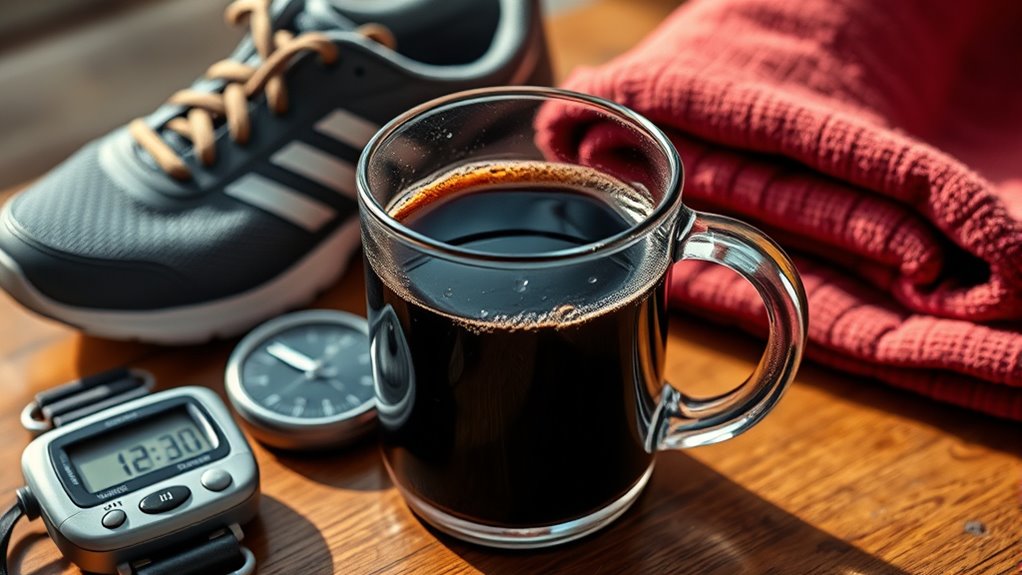
Have you ever wondered how caffeine boosts athletic performance? It’s a common question among athletes and fitness enthusiasts alike. Caffeine is known to enhance alertness, reduce perceived exertion, and increase stamina, but its effects go beyond just waking you up. To truly harness caffeine’s benefits, you need to understand how it interacts with your body’s key factors, like sleep quality and hydration importance. These elements are essential for peak performance, and caffeine’s influence on them can determine whether it helps or hinders your progress.
First, think about sleep quality. Caffeine is a stimulant that blocks adenosine receptors in your brain, which helps you stay alert and focused. However, consuming caffeine too late in the day can interfere with your ability to fall asleep or reduce sleep quality overall. Poor sleep can impair recovery, decrease energy levels, and diminish your athletic performance. If you want to use caffeine effectively, it’s necessary to time your intake carefully—preferably in the morning or early afternoon—to avoid disrupting your sleep cycle. Good sleep quality ensures your body recovers properly and maintains the energy needed for intense workouts or competitions. Additionally, proper sleep is linked to better hormonal regulation, which can enhance overall athletic output.
Hydration importance is another key aspect to evaluate. Caffeine has a mild diuretic effect, meaning it can increase urine production and potentially lead to dehydration if consumed excessively. While moderate caffeine intake doesn’t necessarily cause dehydration for most people, neglecting hydration altogether can impair your performance and recovery. Dehydration reduces blood volume, makes your muscles cramp more easily, and hampers nutrient delivery to tissues. When using caffeine as a performance aid, it’s essential to balance your intake with adequate water consumption. Staying well-hydrated supports your cardiovascular health, keeps your muscles functioning properly, and ensures you maximize the benefits of caffeine without risking dehydration.
Understanding the balance between caffeine’s performance-enhancing effects and its impact on sleep quality and hydration importance is key. You don’t need to eliminate caffeine entirely; instead, use it strategically—avoiding late-afternoon doses and pairing it with proper hydration. This approach allows you to stay alert and energized during your workouts while maintaining the rest and recovery your body needs. Paying attention to these factors guarantees that caffeine becomes a tool to boost your performance without unintended consequences. When used thoughtfully, caffeine can be a powerful ally in your athletic journey, helping you push through barriers and achieve your goals more efficiently.
Frequently Asked Questions
How Does Caffeine Affect Different Types of Athletic Performance?
Caffeine boosts your athletic performance by improving muscle endurance and aerobic capacity. It helps delay fatigue, allowing you to train longer and harder. For endurance activities like running or cycling, caffeine increases your ability to sustain effort. It also enhances alertness and focus, giving you a mental edge. However, effects vary individually, so start with small doses to see how your body reacts and avoid negative side effects.
Are There Long-Term Health Risks Associated With Regular Caffeine Use?
Yes, there are potential health risks and long-term effects from regular caffeine use. You might experience issues like increased heart rate, anxiety, or sleep disturbances if you consume too much over time. Prolonged high intake could lead to dependence or withdrawal symptoms. To minimize risks, it’s best to moderate your caffeine consumption and pay attention to how your body responds, ensuring you don’t develop adverse health effects.
What Are the Best Times to Consume Caffeine for Optimal Performance?
To optimize performance, you should time your caffeine intake strategically. Consuming caffeine about 30 to 60 minutes before your activity helps you reach peak performance, as it takes that long to hit peak blood levels. Incorporate timing strategies like avoiding caffeine late in the day to prevent sleep disruptions. By aligning your caffeine intake with your workout or task, you maximize alertness and endurance effectively.
Can Caffeine Tolerance Reduce Its Effectiveness Over Time?
Ever wonder if caffeine loses its punch over time? Yes, tolerance buildup can reduce its effectiveness, making you need more for the same boost. Regular use may cause withdrawal effects like headaches or fatigue if you suddenly stop. To maintain performance, consider cycling your caffeine intake or taking breaks to reset your sensitivity. This way, you can keep enjoying its benefits without falling into a tolerance trap.
How Does Caffeine Interact With Other Supplements or Medications?
Caffeine can interact with other supplements and medications, affecting drug interactions and medication absorption. You should be cautious, as caffeine may enhance stimulant effects or interfere with the effectiveness of certain drugs like antibiotics or heart medications. It can also alter how your body absorbs specific nutrients. To stay safe, always consult your healthcare provider before combining caffeine with other substances, especially if you’re on medication or taking supplements regularly.
Conclusion
Remember, a little caffeine can gently boost your performance, helping you push just beyond your usual limits. It’s like a friendly nudge that keeps you alert and energized without tipping into overdrive. Use it wisely, and it can become a subtle partner in your journey to achieve more. Just keep an eye on how it makes you feel—after all, sometimes the smallest adjustments lead to the biggest gains. Stay balanced, stay sharp.