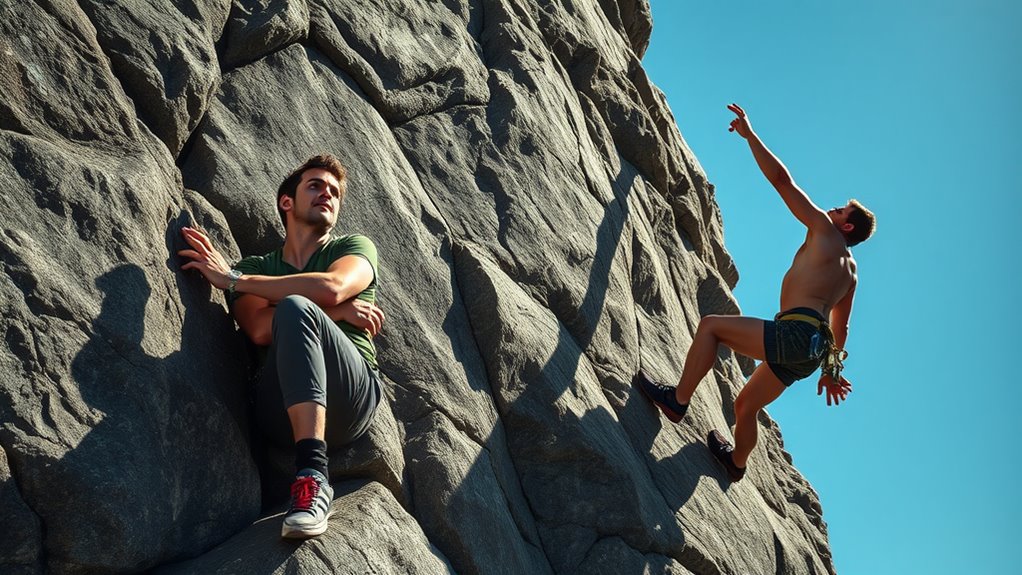

Choosing between seated and standing climbing depends on your fitness level, the climb type, and your safety preferences. Seated climbing provides greater stability and control, making it ideal for beginners or when you want to reduce fatigue. Standing climbing engages more muscles, boosts cardiovascular effort, and offers more dynamic movements for experienced climbers seeking intensity. To make certain of safety and get the most out of each position, it’s important to follow proper safety measures—continue so you can discover how to optimize your climb.
Key Takeaways
- Seated climbing offers greater stability and control, ideal for beginners or those with limited strength.
- Standing climbing engages more muscle groups and increases cardiovascular effort for a more intense workout.
- Choice depends on fitness level, climb type, and personal comfort, with safety precautions essential in both positions.
- Standing climbing allows for dynamic movements, while seated provides easier balance and reduces fatigue.
- Proper safety measures are crucial regardless of position to prevent injuries and ensure a safe climbing experience.

Climbing can be performed in various positions, with seated and standing methods offering distinct advantages and challenges. Seated climbing often provides greater stability and control, making it suitable for beginners or those with limited strength, while standing climbing engages more muscle groups and can increase cardiovascular effort. The choice between these positions may depend on the climber’s fitness level, the type of climb, and personal comfort. Additionally, incorporating proper safety measures during both seated and standing climbing is essential to prevent injuries and ensure a safe experience.
Frequently Asked Questions
How Does Seated Climbing Impact Long-Term Joint Health?
Seated climbing generally reduces joint strain and muscle fatigue, helping preserve your long-term joint health. By sitting, you put less stress on your knees and hips, minimizing wear and tear over time. This position also allows you to focus on controlled movements, decreasing the risk of injury. However, it might limit muscle engagement, so balancing seated climbs with other forms of exercise is key to maintaining healthy joints long-term.
Which Climbing Style Is More Suitable for Beginners?
As a beginner, seated climbing is more suitable because it offers greater climbing comfort and helps you focus on basic technique adaptation. It allows you to maintain better balance and reduces fatigue, making it easier to learn fundamental moves. Standing climbing can be more physically demanding and less stable initially, so starting seated helps build confidence and strength before progressing to more advanced styles.
Are There Specific Injuries Associated With Seated or Standing Climbing?
You should be aware that seated climbing might increase fall risk due to less stability, especially if you’re not experienced. Standing climbing can lead to muscle strain, particularly in your legs and back, if you overexert or use improper technique. Both styles have potential injury risks, so always focus on proper form and safety gear. Listening to your body helps prevent strains and minimizes fall risk, ensuring safer climbs.
How Do Different Climbing Shoes Affect Seated Versus Standing Techniques?
Your climbing shoe fit and shoe flexibility critically influence your seated and standing techniques. A snug fit enhances precision and control in seated climbs, where delicate foot placements are vital. Flexible shoes allow for better movement and comfort in both methods, especially during standing climbs that require extended foot holds. Choosing the right fit and flexibility helps you adapt your technique efficiently, reducing fatigue and improving overall performance in either climbing style.
Can Switching Between Seated and Standing Improve Overall Climbing Performance?
Switching between seated and standing climbs is like shifting gears in a car; it boosts your muscle engagement and enhances energy efficiency. When you alternate, you target different muscle groups, preventing fatigue and improving overall performance. This dynamic approach keeps you adaptable on the wall, allowing you to conserve energy for essential moments. So, yes, varying your technique can sharpen your skills and help you climb more effectively.
Conclusion
Whether you prefer seated or standing climbing, each has its benefits. Standing can increase your power and quickness, while seated offers better control and endurance. Did you know that studies show climbers who switch between both techniques improve their overall strength and efficiency by 30%? So, don’t stick to just one style—mix them up to maximize your skills and stay versatile on the wall. Keep experimenting, and you’ll see your climbing progress soar.