
To improve your gravel handling and fitness, focus on practicing bike control on various terrains like loose gravel, sharp turns, and inclines. Maintain a steady cadence, scan ahead for hazards, and adjust your speed based on terrain conditions. Build strength and endurance by dedicating time to regular rides that challenge your stability and reaction time. Keep refining your skills and fitness levels to conquer tougher trails more confidently—discover strategies to boost your skills even further.
Key Takeaways
- Practice riding on varied gravel terrains to enhance bike control and handling skills.
- Focus on maintaining balanced posture, leaning into turns, and steady cadence for better stability.
- Incorporate handling drills like obstacle navigation and sharp turns to improve reaction time.
- Build endurance gradually through consistent rides, adjusting intensity for fitness development.
- Prioritize proper bike setup, nutrition, and hydration to sustain performance and recovery during gravel rides.
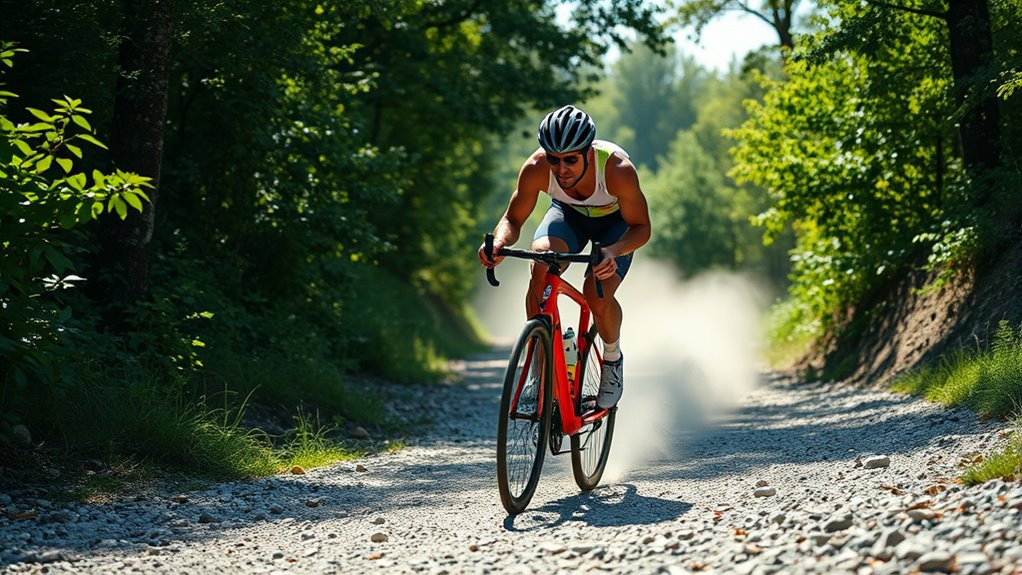
Are you ready to take your cycling skills to the next level? Tackling gravel requires more than just a sturdy bike; it demands the right bike gear, effective nutrition strategies, and sharpened handling skills. Before hitting the rugged trails, ensure your bike gear is optimized for performance and durability. Invest in wider tires with appropriate tread for gravel, which offer better grip and shock absorption. Consider a drop bar for versatility and control, and make sure your bike’s suspension or tire pressure is set to handle uneven terrain smoothly. Protective gear like a helmet, gloves, and padded shorts aren’t just optional—they’re essential for safety and comfort on unpredictable surfaces. When it comes to handling gravel, your skills matter as much as your gear. Practice bike control by riding in varied conditions—loose gravel, sharp turns, slight inclines—to develop confidence and stability. Keep your weight balanced, leaning into turns and maintaining a steady cadence to avoid wobbling or slipping. Handling rough terrain requires anticipation; scan ahead for obstacles like loose stones or ruts, and adjust your speed accordingly. These skills come with consistent practice, so dedicate time to riding on gravel surfaces to build muscle memory and improve your reaction time. Additionally, understanding the bedroom environment can help you create a comfortable space to rest and recover after challenging rides.
Nutrition strategies are equally critical for maintaining energy and endurance during long gravel rides. Proper fueling before, during, and after your ride keeps fatigue at bay and ensures your body recovers efficiently. Before hitting the trail, consume a carbohydrate-rich meal to top off your glycogen stores—think oatmeal, bananas, or energy bars. During your ride, hydrate regularly by sipping water or electrolyte drinks, especially if you’re riding in hot weather. Keep energy levels steady with portable snacks like gels, nuts, or dried fruit, which are easy to carry and digest on the go. It’s essential to listen to your body; if you start feeling sluggish or shaky, it’s a sign to refuel. After your ride, prioritize protein intake along with complex carbs to rebuild muscles and replenish energy stores. Incorporate foods like lean meats, yogurt, or smoothies to aid recovery. Combining these nutrition strategies with your improved handling skills and the right bike gear will boost your confidence and stamina on gravel. The more you prepare and practice, the more natural handling becomes, and you’ll find yourself tackling rougher terrains with ease. Remember, gravel riding isn’t just about endurance; it’s about mastering control and fueling your body for the challenges ahead. With the right gear, smart nutrition, and dedicated practice, you’ll elevate your gravel riding experience and conquer trails you once thought impossible.
Frequently Asked Questions
What Are the Best Shoes for Gravel Training?
You should choose gravel training shoes with a snug shoe fit to prevent slipping and blisters. Look for shoes that offer excellent sole grip, especially on loose or uneven surfaces, to enhance stability. Opt for lightweight, breathable materials to keep your feet comfortable during long rides. Prioritize shoes that balance support and flexibility, ensuring you stay agile and secure while handling rugged terrain.
How Often Should I Train on Gravel?
You should aim for gravel training about two to three times a week, giving your body enough time to adapt while avoiding overuse. Maintaining a consistent training frequency helps boost your skills and fitness, but it’s essential to listen to your body for injury prevention. Balance your gravel sessions with rest days, and gradually increase intensity to stay safe and improve steadily.
What Should I Eat Before a Gravel Ride?
Before a gravel ride, you should eat a balanced meal rich in carbs and moderate protein about 1-2 hours beforehand. Focus on nutrition timing to guarantee sustained energy without stomach discomfort. Hydration strategies are equally important; drink water or a sports drink to stay hydrated. Avoid heavy, greasy foods that can cause discomfort. This approach helps you maintain energy and hydration, so you can perform your best on the trail.
How Do I Prevent Flats on Gravel Trails?
Think of your tires as shields against the unexpected. To prevent flats on gravel trails, focus on tire puncture prevention by choosing durable tires and maintaining proper pressure. Trail surface awareness is key—scan ahead for sharp rocks, glass, or thorns that could puncture your tires. Keep your tires well-inflated and inspect them regularly. By staying vigilant and prepared, you turn potential hazards into mere illusions on your gravel journey.
Can Beginners Safely Start Gravel Training?
Yes, beginners can safely start gravel training if you take it slow and build your trail endurance gradually. Focus on learning mountain biking skills, such as proper braking and bike handling, to stay safe on rough surfaces. Start with easier trails, wear protective gear, and listen to your body. As your confidence grows, you can tackle more challenging gravel routes, improving your fitness and handling skills over time.
Conclusion
As you embrace gravel training, remember it’s a journey carved from resilience and passion. Like a river weaving through rocks, your progress may twist and turn, but every pedal stroke builds strength and confidence. Keep pushing your limits, stay adaptable, and let the road teach you patience. With consistent effort, you’ll forge a path through the gravel—an unbreakable trail of growth that leads to both fitness and self-discovery.