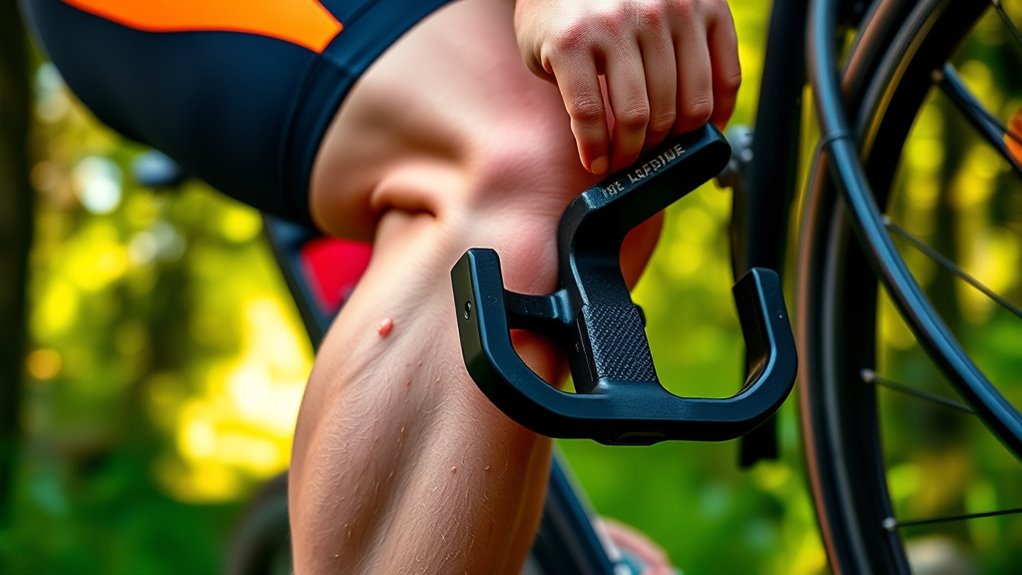
If you have knee pain on the bike, start by checking your saddle height—make certain it allows a slight knee bend (about 25-35°) at the bottom of your pedal stroke. Also, review your saddle fore-aft position, handlebar height, and cleat alignment to make sure your foot tracks straight and knees stay in line. Make sure your pedals are positioned correctly over your ankle, and adjust as needed. Keep exploring these key areas for lasting relief and better comfort.
Key Takeaways
- Verify saddle height to ensure a slight knee bend (~25-35°) at the bottom of the pedal stroke.
- Check pedal and cleat alignment so knees track straight and avoid inward or outward movement.
- Adjust saddle fore-aft position for optimal body comfort and proper knee tracking during pedaling.
- Confirm handlebar height and position to reduce unnecessary knee stress and maintain proper posture.
- Ensure crank arm length suits your height and leg length for correct knee angles and efficient pedaling.
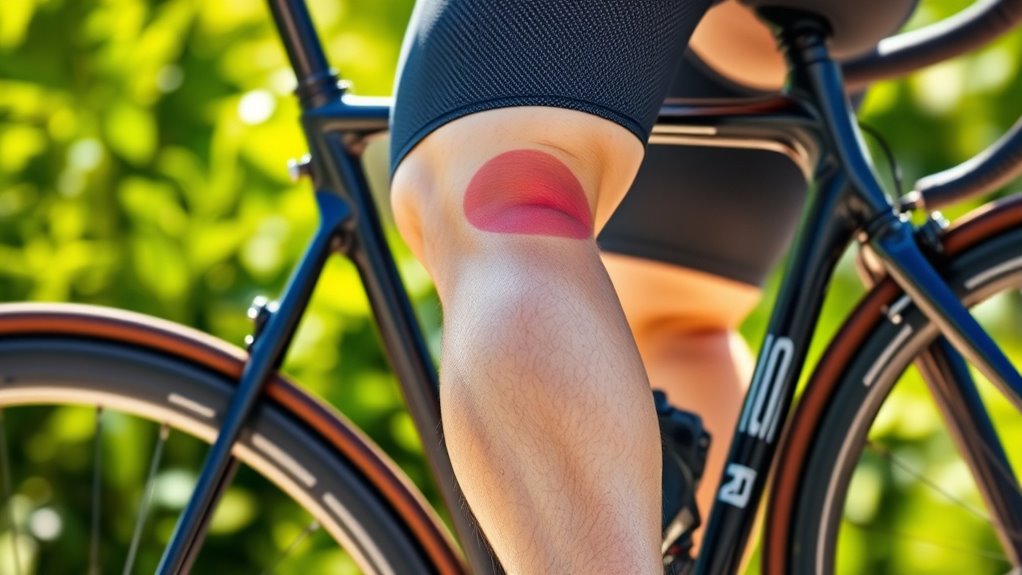
Ever wondered why your knees hurt after a ride? It’s frustrating to finish a cycling session and feel that nagging discomfort, especially when you’re enthusiastic to hit the roads again. Many times, knee pain isn’t about overexertion; it’s about how your body interacts with your bike. The key to preventing or easing this pain often lies in checking your bike fit and making sure proper pedal alignment. These factors play a vital role in how your knees handle the workload during every pedal stroke.
First, consider your bike fit. If your seat height is too low or too high, it can cause unnecessary strain on your knees. When your saddle is too low, your knee remains bent throughout the pedal stroke, increasing stress on the joint. Conversely, if it’s too high, you may overreach or lose control, which also puts strain on your knees. Adjusting your saddle height so that your knee has a slight bend—about 25 to 35 degrees—at the bottom of the pedal stroke is a good starting point. Proper bike fit also involves adjusting saddle fore-aft position and handlebar height to ensure your body is in a comfortable, efficient position, minimizing undue knee stress.
Proper bike fit with correct saddle height reduces knee strain and enhances riding comfort.
Next, check your pedal alignment. Pedals should be positioned so that they allow your foot to be directly over the pedal axle when you’re in your riding position. Misaligned pedals can cause your knees to track inward or outward during pedaling, which leads to uneven load distribution and pain. If your cleats are angled incorrectly or if your pedals aren’t aligned properly with your foot, it can force your knees into unnatural positions. Take the time to examine your pedal and cleat setup. Most cycling shoes have adjustable cleats—ensure they’re positioned so your feet are pointing straight ahead and your knees track in line with your toes during pedaling.
Additionally, pay attention to your pedal stroke. Smooth, efficient pedal movement reduces knee strain. If you notice your knees wobbling or buckling inward, it’s a sign that your pedal alignment or fit might need adjustment. Sometimes, simply loosening your cleats, rotating them slightly, and then tightening them again can improve alignment. It’s also worth considering whether your crank arms are the correct length for your height and leg length, as improper crank length can influence knee angle and discomfort.
Frequently Asked Questions
Can Bike Shoes Influence Knee Pain During Cycling?
Yes, bike shoes can influence knee pain by affecting shoe alignment and foot positioning. Poorly fitted shoes or incorrect cleat placement can cause misalignment, putting extra strain on your knees. Make sure your shoes fit well and your cleats are positioned correctly to promote proper foot alignment. This helps distribute pressure evenly, reducing knee discomfort and improving your overall cycling experience.
How Does Pedal Stroke Technique Affect Knee Discomfort?
Your pedal stroke technique greatly impacts knee discomfort by influencing pedal stroke efficiency and muscle engagement. When you pedal smoothly, avoiding excessive upstrokes or downstrokes, you reduce unnecessary strain. Focus on maintaining a consistent cadence and proper pedal alignment to guarantee even muscle engagement. This helps distribute workload evenly across your muscles, decreasing knee stress. Improving your technique can make a significant difference in reducing pain and enhancing your cycling comfort.
What Role Does Proper Bike Fit Play in Preventing Knee Issues?
A proper bike fit is vital for preventing knee issues. You should guarantee your bike saddle height is correct so your knee remains slightly bent at the bottom of each pedal stroke. Additionally, adjusting crank arm length can reduce strain; longer arms may cause overextension. When these elements are optimized, you reduce undue stress on your knees, improve comfort, and enjoy smoother, pain-free rides.
Are Certain Riding Terrains More Likely to Cause Knee Pain?
Certain riding terrains can definitely increase your risk of knee pain. Rough, uneven surfaces put extra strain on your knees, especially if you’re not prepared or your bike fit isn’t perfect. Terrain considerations like gravel, rocky trails, or steep climbs demand more from your knees and can cause discomfort if you’re not cautious. Always adapt your riding style and check your bike setup to minimize the impact of different riding surface impacts.
When Should I See a Doctor for Cycling-Related Knee Pain?
You should see a doctor if you experience persistent knee pain or swelling that doesn’t improve after a few days of rest. Also, seek medical help if the pain worsens, limits your cycling ability, or is accompanied by instability or sharp discomfort. Promptly consulting a healthcare professional guarantees proper diagnosis and treatment, preventing further injury and helping you get back to riding comfortably.
Conclusion
So, next time your knee protests mid-ride, remember—it might just be your bike’s way of saying, “Hey, I need a little adjustment too.” Irony’s sweet, isn’t it? You pedal furiously to stay fit, only to ignore the simple fixes that could keep you pain-free. Don’t let neglect turn your ride into a painful chore. Check your setup, make those tweaks, and enjoy the ride—your knees will thank you, even if they’re secretly rolling their eyes.