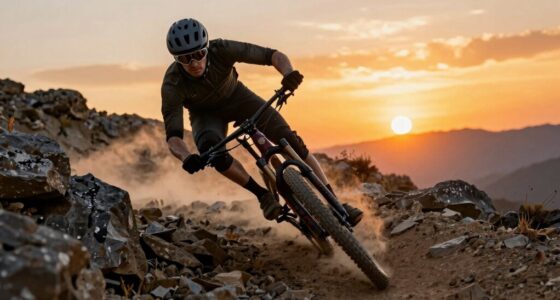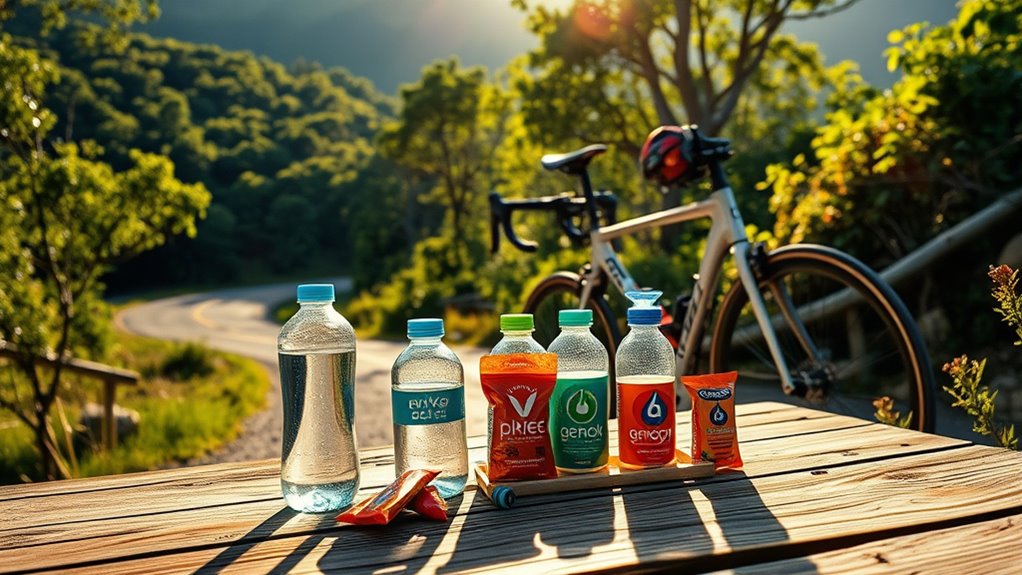

To fuel a long ride effectively, plan your intake by the hour. Start with water or electrolyte drinks before you begin, then sip small amounts every 15-20 minutes during your ride to stay hydrated. Eat quick-energy sources like gels or chews every 45 minutes to an hour to maintain blood sugar, and include snacks with protein or healthy fats for longer periods. Keep an eye on signs of dehydration or fatigue, and explore further strategies to stay energized throughout your ride.

Get sports gear delivered free — and shop member deals
- Fast, free delivery on millions of items
- Access to Prime Big Deal Days deals on October 6–7
- Prime Video, Amazon Music and more included
Key Takeaways
- Consume small amounts of water or electrolyte drinks every 15-20 minutes during the ride.
- Plan to eat quick-acting carbs like gels or chews every 45-60 minutes to maintain energy.
- Incorporate balanced snacks with protein or healthy fats for longer rides to sustain stamina.
- Adjust hydration and nutrition based on ride duration, intensity, and personal needs.
- Practice your fueling strategy during training to optimize performance and prevent energy dips.
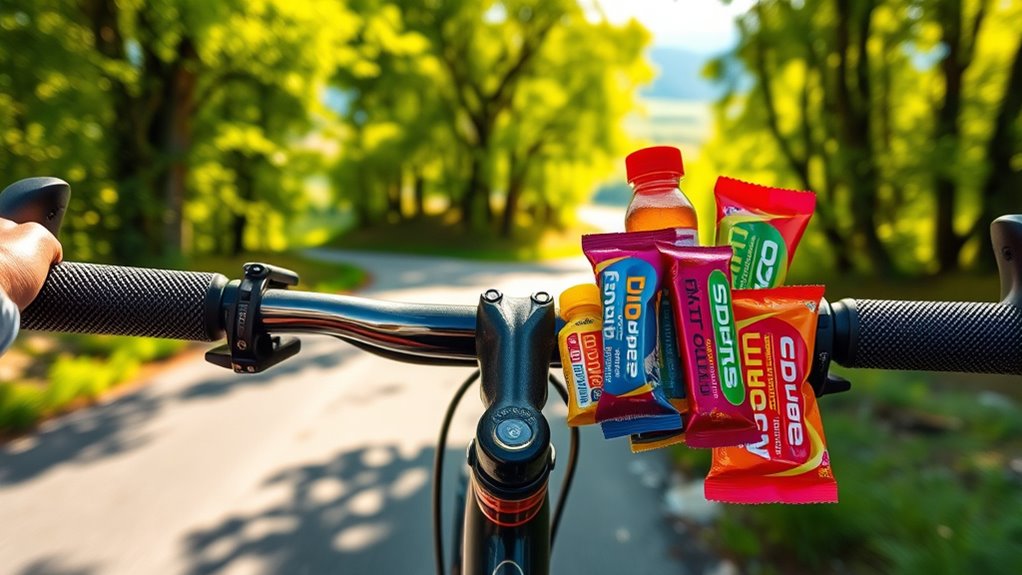
Ever wondered how to fuel your body for those extended rides? The key lies in understanding your hydration strategies and snack timing. Staying properly hydrated isn’t just about drinking water occasionally; it’s about establishing a steady intake that keeps you energized without weighing you down. Before your ride, start with a glass of water or an electrolyte-rich beverage to prime your system. During the ride, aim to sip small amounts frequently—every 15 to 20 minutes—rather than gulping large amounts at once. This helps your body absorb fluids more efficiently and prevents dehydration, which can sap your strength and impair your concentration. As the miles add up, pay attention to how you feel; if you notice signs of dehydration like dry mouth or dizziness, increase your fluid intake accordingly. On longer rides, incorporating electrolyte tablets or drinks can replenish salts lost through sweat, maintaining your balance and preventing cramping. Incorporating proper hydration techniques supports overall performance and helps avoid issues like dehydration, which can severely impact your ride.
Snack timing is equally *vital* for maintaining energy levels. Instead of waiting until you’re hungry or exhausted, plan your snacks at regular intervals—roughly every 45 minutes to an hour. This steady intake of calories keeps your blood sugar stable and prevents sudden energy dips. Start with easily digestible carbs before you even begin, like a banana or a small energy bar, to top off your glycogen stores. As you ride, opt for quick-acting sources such as gels, chews, or dried fruit, which deliver fast energy without weighing you down. Incorporate some protein or healthy fats in your snacks if your ride extends beyond two hours; these help sustain you over the long haul. Timing your snacks strategically also helps you avoid the dreaded “bonk,” where your energy drops sharply because your body runs out of fuel. Remember, everyone’s needs are different, so experiment during training rides to discover what works best for you.
Combine your hydration strategies with smart snack timing, and you’ll create a reliable system to keep your energy steady. Don’t forget to listen to your body—if you feel sluggish or overly full, adjust your intake accordingly. Staying ahead of your needs rather than reacting to fatigue will make your long rides more enjoyable and less stressful. With consistent hydration and well-timed snacks, you’ll maintain your stamina, mental clarity, and overall performance from start to finish. Proper fueling isn’t just about what you eat; it’s about planning and executing each part of your ride with intention, ensuring you arrive at the finish line feeling strong and accomplished.
As an affiliate, we earn on qualifying purchases.
Frequently Asked Questions
How Much Water Should I Drink During Long Rides?
During long rides, you should aim to drink about 16-24 ounces of water every hour, depending on your sweat rate and conditions. Your hydration strategies should include sipping water regularly rather than gulping it all at once. Follow water intake guidelines that prioritize staying ahead of thirst to prevent dehydration. Remember, staying properly hydrated enhances your endurance and recovery, so listen to your body and adjust as needed.
Are Energy Gels Better Than Solid Snacks?
Energy gels are convenient, quick-digesting options, but solid snack benefits include sustained energy release and better satiety. If you prefer alternatives, try energy gel alternatives like chews or bars that provide similar quick carbs with added nutrients. You might find that combining gels with solid snacks balances your energy needs, prevents fatigue, and keeps your stomach comfortable during long rides. Choose what works best for your digestion and energy levels.
When Should I Start Fueling During a Ride?
Imagine your race pacing as a finely tuned engine—fuel it early and consistently. You should start fueling when your ride hits about 45 minutes to an hour, especially if you’re using advanced bike equipment designed for endurance. This prevents hitting the wall and keeps energy levels steady. Don’t wait until you’re starving; start fueling proactively to maintain peak performance and avoid unnecessary fatigue.
What if I Experience Stomach Issues While Riding?
If you experience stomach issues while riding, focus on maintaining electrolyte balance and digestive comfort. Slow down your intake, sip fluids gradually, and switch to easily digestible foods like bananas or electrolyte drinks. Avoid greasy or high-fiber foods that can upset your stomach. Pay attention to your body’s signals, and if symptoms persist, consider stopping briefly to rest and rehydrate, helping your digestion recover and reducing discomfort.
Can I Use Sports Drinks for Hydration Instead of Water?
Yes, you can use sports drinks for hydration instead of water, but be mindful of electrolyte balance and carbohydrate intake. Sports drinks help replenish lost electrolytes and provide quick carbs, which are essential during long rides. However, they often contain sugar, so monitor your intake to avoid stomach issues. Combining water with moderate sports drinks can optimize hydration and energy levels without overloading on sugar.
Conclusion
Keep fueling your ride, keep fueling your progress. Plan your nutrition to sustain your energy, to maintain your focus, to conquer every mile. Listen to your body’s signals, hydrate when you’re thirsty, eat when you’re hungry, rest when you’re tired. With proper fuel, you’ll ride stronger, longer, further. Remember, your nutrition isn’t just about calories; it’s about power, endurance, and victory. Stay fueled, stay focused, and enjoy every mile of your long ride.
NFL season / tailgating Picks
team gear
As an affiliate, we earn on qualifying purchases.