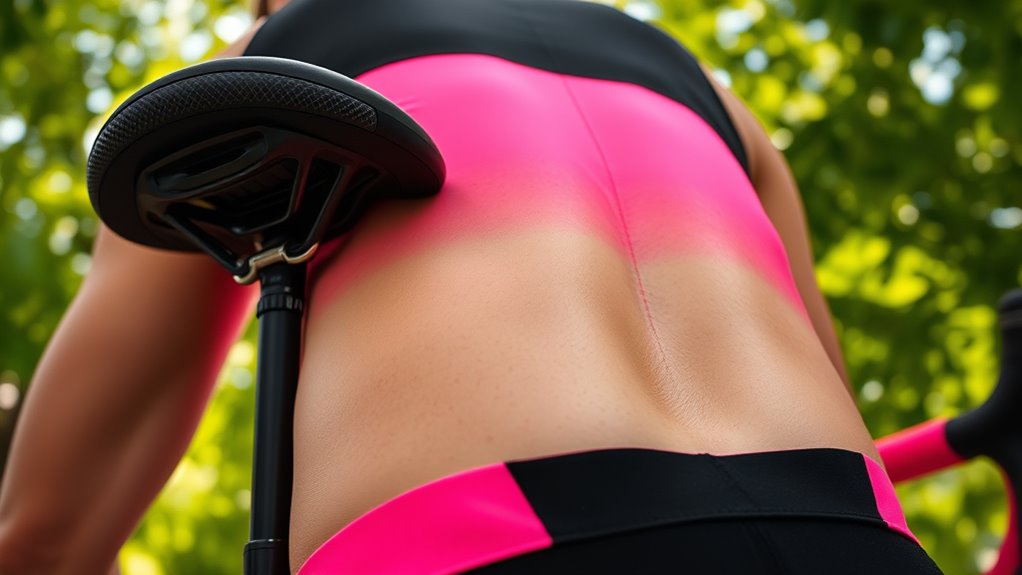

To relieve lower back pain as a cyclist, focus on maintaining proper riding posture by keeping your shoulders relaxed and your spine neutral. Adjust your saddle height and tilt to guarantee comfort and proper support. Strengthen your core with exercises like planks or bridges, which help stabilize your spine during rides. Incorporating regular stretches and breaks can also ease tension. Keep exploring these tips to discover more ways to enjoy pain-free cycling.
Key Takeaways
- Strengthen core muscles with exercises like planks and bridges to stabilize the spine during cycling.
- Adjust saddle height and tilt for proper alignment, reducing lumbar strain.
- Maintain proper riding posture by keeping shoulders relaxed and spine neutral.
- Take regular breaks to stretch back and hips, preventing stiffness and overuse.
- Incorporate flexibility exercises such as spinal twists and cat-cow stretches for better mobility.
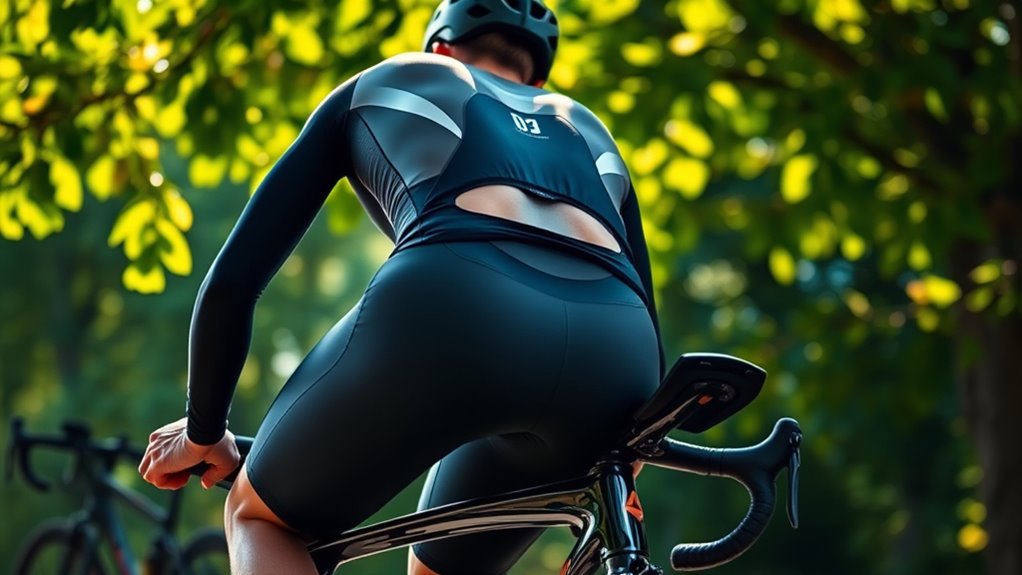
Cyclists often experience lower back pain due to prolonged periods of riding and improper posture. When you spend hours on your bike without proper support or alignment, it puts unnecessary strain on your lumbar region. To combat this, focusing on core strengthening becomes essential. A strong core acts as a stabilizer for your entire body, helping you maintain proper posture and reducing the load on your lower back. Incorporate exercises like planks, bridges, and abdominal workouts into your routine to build that stability. These exercises don’t just improve your overall strength; they also help you stay upright and balanced during long rides. When your core is engaged, you’re less likely to slump forward or overreach, which are common causes of back pain.
Another critical factor in alleviating lower back discomfort is saddle adjustments. Many cyclists neglect how their saddle height and angle impact their posture. If your saddle is too high or too low, you’ll unconsciously compensate by shifting your pelvis or rounding your back, leading to strain. Proper saddle positioning allows your hips to move freely and keeps your spine in a neutral position. Adjust your saddle height so that when your foot is at the bottom of the pedal stroke, your knee is slightly bent. This position ensures efficient pedaling and minimizes undue pressure on your lower back. Additionally, check the saddle tilt—aim for a level or slightly nose-down position to prevent sliding forward and causing your lower back to arch excessively.
Proper saddle height and tilt are key to maintaining a neutral spine and preventing lower back strain during cycling.
Beyond just saddle adjustments, paying attention to your riding posture is crucial. Keep your shoulders relaxed, your elbows slightly bent, and your head aligned with your spine. Avoid collapsing your chest or arching your back excessively. By maintaining a neutral spine, you distribute forces evenly and reduce fatigue and discomfort in your lower back muscles. Regularly taking breaks during long rides to stretch your back and hips can also prevent stiffness and soreness. Incorporate gentle stretches like cat-cow or spinal twists to keep your muscles flexible.
Ultimately, combining core strengthening exercises with precise saddle adjustments creates a robust foundation for a more comfortable ride. These measures not only help prevent lower back pain but also improve your overall cycling performance. Being proactive about your posture and support systems ensures you can enjoy longer, pain-free rides while protecting your back from future injuries. Remember, small changes in your setup and routine can make a significant difference in how your back feels after each ride.
Frequently Asked Questions
Can Specific Stretches Prevent Lower Back Pain During Cycling?
Yes, specific stretches can help prevent lower back pain during cycling. Incorporate stretching routines that target your core, hamstrings, and hip flexors to improve muscle flexibility. These routines loosen tight muscles, reduce strain, and support proper posture on your bike. Regular stretching keeps your muscles balanced, decreases stiffness, and enhances comfort, making it easier to maintain proper alignment and avoid lower back pain during your rides.
How Often Should I Take Breaks to Protect My Back?
You should take breaks every 20 to 30 minutes during cycling to protect your back. During these breaks, stand up and stretch, focusing on maintaining an ergonomic saddle and proper posture. This helps reduce strain on your lower back and prevents muscle fatigue. Adjust your bike setup if needed, and listen to your body’s signals. Regular breaks promote better spinal health and keep you comfortable on long rides.
Are There Bike Modifications to Reduce Lower Back Strain?
Yes, you can reduce lower back strain by adjusting your bike setup. Opt for a bike saddle that offers proper support and is positioned correctly to keep your spine aligned. Also, tweak your handlebar height—raising it slightly can decrease forward lean and back pressure. These modifications help you maintain a more comfortable posture, minimizing strain and fatigue during rides.
What Are Early Signs of Serious Lower Back Injury?
If you experience persistent back pain, tingling, numbness, or weakness in your legs, these are early signs of a serious lower back injury. Injury symptoms often include sharp pain, loss of mobility, or difficulty controlling bladder or bowel functions. Don’t ignore these warning signs; seek medical attention promptly. Recognizing these symptoms early can prevent further damage and guarantee proper treatment for your back health.
Does Core Strength Training Improve Cycling Back Comfort?
Yes, core strength training markedly improves your cycling back comfort. By enhancing core stability, you support your lower back better, reducing strain during long rides. It also aids in posture correction, helping you maintain proper alignment on the bike. Incorporate targeted exercises to strengthen your core muscles, and you’ll notice decreased discomfort, increased endurance, and a more enjoyable cycling experience. Consistent core work truly makes a difference in back health.
Conclusion
Think of your lower back as the saddle of your journey—steady, supportive, and essential. When you care for it, you keep your ride smooth and effortless. Small stretches and proper posture are your tools, like a well-oiled chain, ensuring your ride remains seamless. Prioritize your back’s health, and it’ll carry you further, faster. Remember, a strong back is the foundation of every adventure—so nurture it, and enjoy the road ahead with confidence.