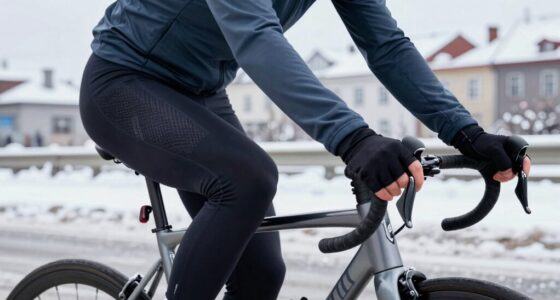
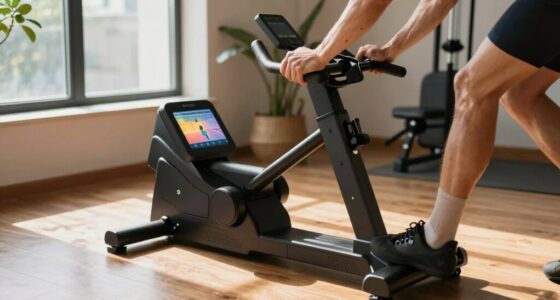
As a master cyclist, adjusting your recovery involves tuning your training intensity to avoid overexertion and listening closely to your body’s signals. Incorporate rest days and active recovery like gentle cycling or stretching to help muscles repair. Focus on good nutrition with protein, carbs, and hydration to optimize recovery. Monitoring how you feel after rides allows you to tweak your routine for better results. Keep exploring these strategies to enjoy consistent cycling without setbacks.
Listen free for 30 days with Audible
Thousands of audiobooks and originals — cancel anytime.
As an affiliate, we earn on qualifying purchases.
Key Takeaways
- Tailor training intensity and incorporate rest days based on body signals to prevent overtraining.
- Use active recovery methods like gentle cycling and stretching to enhance muscle repair.
- Prioritize nutrition with protein, hydration, and timely post-ride meals to support recovery.
- Monitor signs of fatigue or soreness and adjust training plans accordingly.
- Incorporate proper sleep and recovery techniques to optimize overall cycling performance and longevity.

Have you ever wondered how cycling remains a passion well into later years? The secret often lies in how you adjust your recovery routines to match your changing body. As a masters cyclist, your training intensity requires careful management because your body’s response to exercise shifts over time. High-intensity rides can be beneficial, but pushing too hard without proper recovery can lead to setbacks. That’s why balancing training intensity is essential. You need to listen to your body, reducing effort when fatigue creeps in, and incorporating rest days into your schedule. It’s not about avoiding hard workouts altogether but about pacing yourself and making sure your muscles have time to repair and adapt.
Nutrition strategies play a pivotal role in optimizing recovery. As you age, your body’s ability to recover from strenuous efforts diminishes slightly, making it indispensable to fuel your body properly. Focus on consuming a well-rounded diet rich in lean proteins, healthy fats, and complex carbohydrates. Protein, in particular, helps repair muscle tissue damaged during rides, so incorporate sources like chicken, fish, beans, or dairy into your meals. Hydration is equally important—water aids in flushing out toxins and replenishing lost fluids. Post-ride nutrition should include a mix of carbs and proteins to kickstart muscle recovery and replenish glycogen stores.
Proper fueling with lean proteins and hydration is key to effective recovery as you age.
Additionally, consider timing your nutrition to maximize recovery. Eating something within 30 to 60 minutes after cycling ensures your muscles get the nutrients they need when they’re most receptive. A smoothie with fruit and protein powder, a turkey sandwich, or Greek yogurt with nuts can be effective options. Supplements like omega-3 fatty acids and antioxidants can help reduce inflammation and soreness, making recovery smoother. Remember, recovery isn’t just about what you eat but also how you rest. Adequate sleep, along with active recovery days—like gentle cycling or stretching—helps your body heal more efficiently. Incorporating proper recovery techniques such as foam rolling and massage can further enhance muscle repair and reduce stiffness.
Monitoring your body’s responses and adjusting your routine accordingly is essential. If you notice persistent soreness or fatigue, it’s a sign to dial back your training intensity and prioritize recovery. Over time, you’ll learn to recognize the signals your body sends and adapt your nutrition and training plans accordingly. As a masters cyclist, your goal isn’t just to push harder but to train smarter. Proper recovery, fueled by tailored nutrition strategies and balanced training intensity, keeps you riding strong and enjoying cycling for many years to come.
As an affiliate, we earn on qualifying purchases.
Frequently Asked Questions
How Does Age Affect Recovery Time for Masters Cyclists?
As you age, your recovery time increases due to age-related stiffness and hormonal changes. You might notice longer recovery periods after intense rides because your muscles take more time to repair. Hormonal shifts can also reduce recovery efficiency, making it important to include proper rest, stretching, and nutrition. Listening to your body and adjusting your training accordingly helps manage these age-related effects and keeps you cycling comfortably.
What Specific Recovery Techniques Benefit Older Cyclists?
To benefit from recovery, focus on hydration strategies and sleep hygiene. Drink plenty of fluids post-ride to replace lost electrolytes, and avoid caffeine or alcohol close to bedtime. Prioritize consistent sleep patterns, creating a cool, dark environment to improve rest quality. Incorporating gentle stretching or foam rolling can also help reduce muscle stiffness. These techniques enhance recovery, helping you feel fresh and ready for your next ride.
Should Masters Cyclists Modify Their Training Intensity?
Yes, you should modify your training intensity. As a master cyclist, reducing training intensity helps prevent overtraining and allows your body to recover properly. Pay attention to recovery duration; incorporating rest days and lighter sessions guarantees your muscles repair and adapt effectively. By adjusting your training intensity and allowing adequate recovery, you’ll maintain performance, reduce injury risk, and enjoy cycling longer and healthier.
How Can Nutrition Optimize Recovery for Masters Cyclists?
Your recovery can skyrocket with smart nutrition! Prioritize nutrient timing by eating carbs and protein right after riding to jumpstart muscle repair. Stay ahead with proper hydration strategies—drink plenty of water and electrolytes to replace lost fluids. This combo accelerates healing, reduces soreness, and keeps you ready for the next ride. Don’t underestimate the power of good nutrition; it’s your secret weapon for ideal recovery and peak performance.
Are There Any Common Injuries Affecting Masters Cyclists’ Recovery?
You might notice common injuries like joint stiffness and muscle soreness that can slow your recovery. To combat this, focus on gentle stretching and proper hydration to reduce stiffness. Rest days are vital, and applying ice or heat can ease soreness. Listening to your body helps prevent overtraining. Incorporating massage or foam rolling promotes circulation, speeding up recovery and keeping you riding strong.
Conclusion
As a masters cyclist, mastering recovery is like tending a delicate garden—you must nurture it with patience and care to see it flourish. Listen to your body’s whispers and adjust your routines accordingly, turning setbacks into stepping stones. Remember, each ride is a brushstroke on your lifelong masterpiece. Embrace the journey with resilience, knowing that proper recovery will keep your passion burning brighter with every mile, transforming your cycling story into a legend of perseverance.
Fall Picks
fall essentials
As an affiliate, we earn on qualifying purchases.