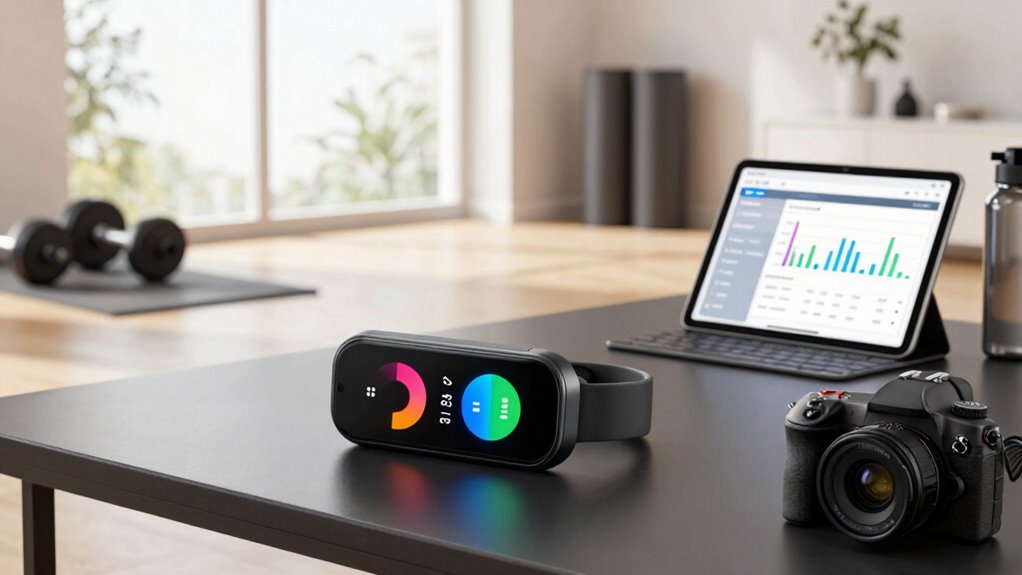

During indoor workouts, tracking your heart rate helps you stay in the ideal intensity zone for your goals, while monitoring workout duration and effort keeps you consistent. Regularly check your equipment for safe, accurate performance, and optimize your environment to stay focused and motivated. Tracking progress over time using apps or journals reveals patterns and helps refine your routines. Keep an eye on these metrics to boost your results—continue to explore for more tips.

Get sports gear delivered free — and shop member deals
- Fast, free delivery on millions of items
- Access to Prime Big Deal Days deals on October 6–7
- Prime Video, Amazon Music and more included
Key Takeaways
- Heart rate to maintain optimal intensity and prevent overexertion.
- Workout duration and effort levels for consistency and progress tracking.
- Equipment performance and calibration to ensure accurate readings and safety.
- Indoor environment factors like space and ventilation to enhance workout quality.
- Progress metrics such as improvements in heart rate, endurance, and strength over time.
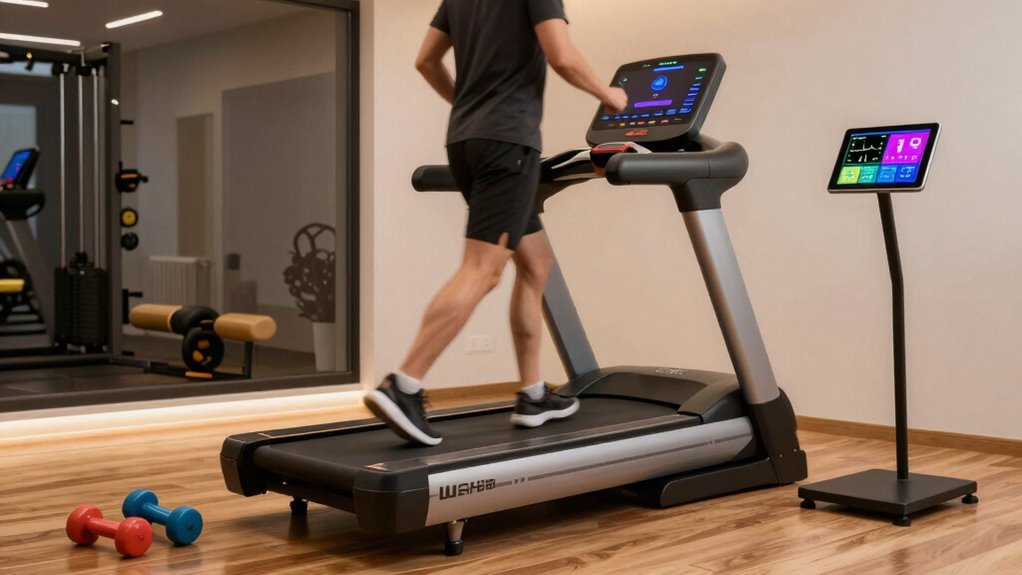
Indoor workouts can be highly effective, but to get the most out of your efforts, it’s essential to track key metrics. When you’re exercising indoors, it’s easy to focus solely on completing your session, but paying attention to specific data points can help you optimize your routines and boost progress. One important metric to monitor is your heart rate. Keeping track of your pulse helps ensure you’re exercising within the right intensity zone, whether you’re aiming for fat burning, endurance, or high-intensity training. A heart rate monitor or fitness app makes this easy, and it provides instant feedback, so you can adjust your effort on the fly.
Monitoring your heart rate ensures you stay in the optimal zone for your fitness goals.
Another critical metric is your workout duration and intensity. Recording how long you exercise and the level of effort you put in helps you maintain consistency and set realistic goals. Over time, you’ll be able to see patterns and make adjustments to either increase your challenge or allow for adequate recovery. This is especially important when you’re training indoors, where the environment can sometimes lead you to overtrain or undertrain if you’re not mindful. Incorporating training logs can help you track these variables more effectively and stay motivated. Additionally, tracking recovery periods can ensure you’re giving your body enough time to rest and adapt, preventing burnout and injury. Establishing a routine of consistent tracking can also help identify training plateaus, enabling you to make informed changes to your workout plan. Employing proper tracking methods can further enhance your progress by providing clear insights into your training patterns.
Tracking equipment maintenance is often overlooked but equally essential. Indoor workouts rely heavily on your equipment, whether it’s a treadmill, stationary bike, or weights. Regularly inspecting and maintaining your gear ensures safety and longevity, preventing unexpected breakdowns that could disrupt your progress. Clean your equipment regularly, check for loose parts, and make necessary repairs. Proper maintenance also means your equipment operates smoothly, giving you accurate readings of your performance metrics and reducing the risk of injury. Additionally, understanding the importance of equipment calibration can help ensure your device readings remain accurate over time.
When it comes to outdoor activity, you might naturally consider variables like terrain and weather, but these factors don’t come into play indoors. Instead, focus on setting up your space for peak performance—clear enough for safe movement, with adequate ventilation and a non-slip surface. These environmental considerations can influence your workout quality just as much as your equipment’s condition. Creating an optimal workout environment can also boost your motivation and focus during each session.
Finally, don’t forget to track your progress over time. Keeping a workout journal or using tracking apps allows you to see improvements, identify plateaus, and adjust your routines accordingly. In indoor workouts, where distractions are fewer, this kind of data can be particularly motivating. By paying close attention to your heart rate, workout duration, equipment maintenance, and environmental setup, you maximize your indoor training efficiency and get closer to your fitness goals with each session.
heart rate monitor for indoor workouts
As an affiliate, we earn on qualifying purchases.
As an affiliate, we earn on qualifying purchases.
Frequently Asked Questions
How Often Should I Update My Indoor Workout Metrics?
You should update your indoor workout metrics after each session to accurately track your progress. Monitor your calorie burning and workout duration consistently, ideally after every workout, to stay motivated and identify areas for improvement. If you’re working on specific goals, consider updating metrics weekly or bi-weekly to assess trends. Regular updates help you adjust your routines effectively, ensuring continuous progress and preventing plateaus.
Can I Track All Metrics With a Basic Fitness Device?
Yes, you can track most metrics with a basic fitness device, especially if it has essential workout accessories like heart rate monitors or step counters. Many devices also offer fitness app compatibility, allowing you to sync data seamlessly. While advanced metrics may require specialized equipment, a basic device covers key stats like calories burned and activity duration, making it a practical choice for general indoor workout tracking.
Do Different Workouts Require Tracking Different Metrics?
Imagine your workout as a symphony—each movement plays a different tune. Yes, different workouts require tracking different metrics because workout variety influences which data is most valuable. For example, cardio sessions focus on heart rate and calories, while strength training emphasizes reps and weight. Equipment impact also matters; using weights versus a treadmill alters which metrics help you gauge progress effectively. Tailoring your tracking keeps your fitness melody harmonious.
How Do I Interpret My Heart Rate Zones Accurately?
To interpret your heart rate zones accurately, first determine your maximum heart rate, usually by subtracting your age from 220. Then, identify your zones: moderate, vigorous, and peak, based on percentages of this max. When your heart rate falls within a zone, it indicates your workout intensity level. Monitoring these zones helps you adjust your effort to meet fitness goals and optimize training effectiveness.
Are There Any Metrics I Should Ignore During Indoor Workouts?
Think of some metrics as noisy background chatter—better ignored to focus on your true rhythm. You can safely ignore metrics like equipment calibration issues or data privacy concerns during your workout, as they don’t directly impact your performance. Instead, stay tuned to heart rate, pace, and calories burned. These are your guiding stars, helping you steer your efforts without distractions from technical hiccups or privacy worries.
Conclusion
By keeping an eye on these key metrics, you’ll turn your indoor workouts into a well-charted adventure rather than a shot in the dark. Tracking your heart rate, calories, and pace helps you steer clear of plateaus and stay motivated. Think of these metrics as your workout’s compass — guiding you through the terrain of your fitness journey with clarity and purpose. Stay attentive, and watch your progress flourish like a garden in full bloom.
NFL season / tailgating Picks
team gear
As an affiliate, we earn on qualifying purchases.