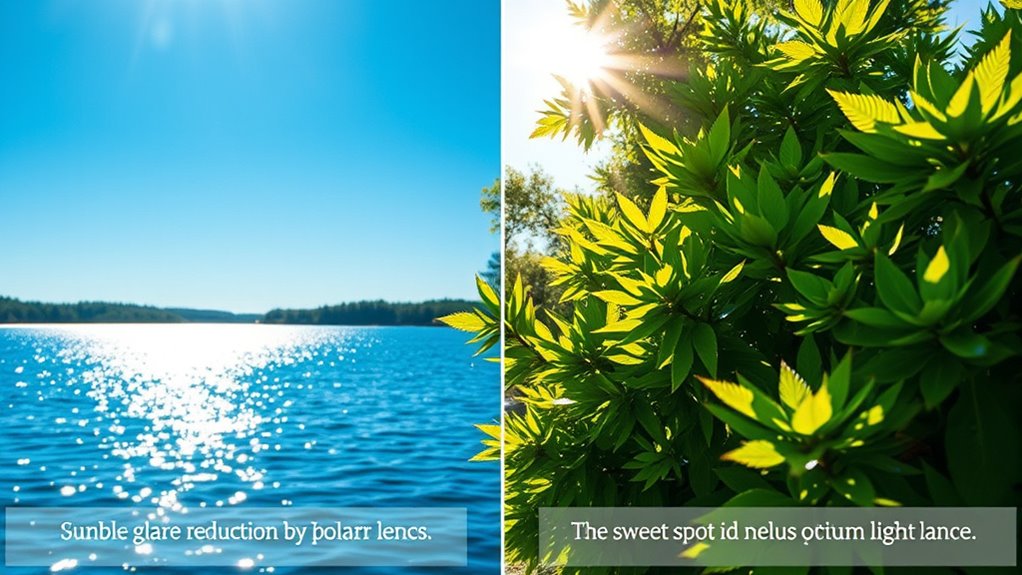
Choose polarized lenses when you need to reduce glare during water sports, driving, or snowy conditions, as they block reflected light and enhance visibility. Opt for sweet spot lenses for everyday indoor use or activities where glare isn’t a concern, offering clear, accurate colors without added layers. Each type serves different needs, so knowing when to use them can improve your comfort and safety. Keep exploring to find out which option suits your lifestyle best.
Key Takeaways
- Use polarized lenses for water sports, driving, or snowy environments to reduce glare and enhance safety.
- Opt for sweet spot lenses for everyday indoor activities or when cost-effective, clear vision is sufficient.
- Choose polarized lenses for outdoor activities requiring maximum glare reduction and enhanced contrast.
- Select sweet spot lenses when budget, simplicity, and natural color perception are priorities.
- Consider durability and coatings; polarized lenses often have stronger coatings for active outdoor use.

When choosing the right eyewear lenses, understanding the difference between polarized and sweet spot designs can considerably impact your visual experience. Both options serve unique purposes and offer distinct advantages, so knowing when to use each can improve comfort, clarity, and safety in various situations. One of the key factors to ponder is lens durability. Polarized lenses are typically made with a special filter that blocks reflected glare, which can sometimes make them more susceptible to scratches if not coated properly. However, high-quality polarized lenses often come with durable coatings that enhance their lifespan. Sweet spot lenses, on the other hand, usually focus on enhancing clarity and color accuracy without the added layers of polarization, often making them slightly less prone to surface damage. When comparing these lenses, it’s prudent to check their lens durability and how well they stand up to daily wear and tear, especially if you lead an active lifestyle or spend long hours outdoors. Additionally, understanding the impact of market growth and technological advancements can help inform your choice, as newer materials and coatings continue to improve lens performance and longevity. Price comparison is another essential aspect that influences your choice. Generally, polarized lenses tend to be more expensive than sweet spot lenses due to the complex manufacturing process involved in adding the polarization filter. This additional cost can be justified if glare reduction and eye protection are your top priorities, especially for activities like driving or water sports. Sweet spot lenses are often more budget-friendly, making them an attractive option if you’re looking for clear vision without the extra expense. However, the price difference also reflects quality and durability; investing in polarized lenses might save you money in the long run by providing better protection and lasting longer with proper care. Knowing when to use each type of lens depends on your specific needs. If you spend a lot of time near water, snow, or driving, polarized lenses are your best bet—they cut through glare and improve visibility, reducing eye strain and enhancing safety. For everyday use or indoor activities, sweet spot lenses can offer excellent clarity and color fidelity without the higher price tag. Additionally, if you’re concerned about lens durability, consider the coatings and materials used in each type; high-quality polarized lenses often come with scratch-resistant coatings that extend their lifespan. Ultimately, your choice should balance your budget, lifestyle, and the environments in which you’ll be wearing your eyewear, ensuring you get the most out of your investment and enjoy superior vision every time.

Foliful 3 Pack Polarized Sports Sunglasses for Men, Mens Sunglasses Wrap Around UV400 Protection for Cycling Fishing Driving
- UV Protection and Clear Vision: Blocks harmful UV rays with HD polarized lenses
- Premium Materials and Durability: Scratch-resistant lenses and lightweight frame
- Comfortable Fit: Non-slip rubber nose pads and secure design
As an affiliate, we earn on qualifying purchases.
As an affiliate, we earn on qualifying purchases.
Frequently Asked Questions
Can Polarized Lenses Be Used for Night Driving?
Polarized lenses aren’t ideal for night driving because their tinting diminishes visibility in low light conditions. They are designed to block glare from reflective surfaces, which is helpful during daytime. For night driving, opt for lenses with minimal tint or clear lenses to enhance visibility and safety. Avoid tinted lenses, including polarized ones, to make certain you see clearly in dark conditions and respond quickly to hazards.
Are Sweet Spot Lenses Suitable for Water Sports?
Sweet spot lenses aren’t ideal for water sports because they don’t reduce glare as effectively as polarized lenses. During water sports, you need lenses that cut through reflections off the water surface to improve visibility. Plus, look for lenses with high durability to withstand water exposure and activity-related impacts. Using sweet spot lenses in water sports can compromise your safety and performance, so opt for polarized lenses instead.
How Do Polarized and Sweet Spot Lenses Differ in UV Protection?
You’ll find that polarized lenses often have advanced UV filtering, blocking more harmful rays with improved lens technology. Sweet spot lenses also provide UV protection, but they focus more on enhancing color and clarity without necessarily blocking as much UV. When choosing, consider your activity; if UV protection is your priority, polarized lenses usually offer superior blocking, protecting your eyes better during outdoor adventures.
Do Polarized Lenses Distort Screen Visibility?
You might think polarized lenses distort screen visibility, but ironically, they usually reduce glare without messing with your screens. Their durability is solid, so they’re worth the cost if you value clear views. While some cheap versions might cause minor issues, quality polarized lenses are designed to minimize distortion, making them a smart investment—especially when you consider how much you’ll appreciate glare-free vision in bright conditions.
Are There Specific Activities Better Suited for Sweet Spot Lenses?
You’ll find sweet spot lenses ideal for activities like running or cycling, where quick, clear vision is essential. They offer excellent UV protection and glare reduction without the distortion sometimes caused by polarized lenses. You’ll appreciate how they enhance contrast and clarity during outdoor sports, making them perfect for dynamic activities. Use sweet spot lenses when you need reliable, sharp vision and protection from harmful rays, especially in bright sunlight.
Conclusion
So, next time you’re stuck choosing between polarized and sweet spot lenses, remember: one’s for glare and adventure, the other for comfort and style. Don’t overthink it—just pick what makes you look cooler while potentially avoiding that pesky sunglasses tan. After all, whether you see the world clearly or just look good doing it, you’re the real winner. Now go on, make your eyes happy, and maybe, just maybe, impress someone with your lens wisdom.