
To guarantee smooth shifting and prolong your drivetrain’s life, replace your chain first when it shows wear, then assess the cassette for damage or wear and replace if necessary, and finally check your chainrings for bent or worn teeth. Doing it in this order prevents unnecessary strain on new parts and keeps your gear ratios correct. If you want a smoother ride and better performance, follow these steps—you’ll discover more tips along the way.
Key Takeaways
- Replace the chain first if it shows signs of wear to prevent accelerated wear on other components.
- Assess the cassette for wear and replace it after the chain if necessary to maintain proper gear ratios.
- Check the chainrings for damage or excessive wear, replacing them after the cassette for optimal shifting.
- Replacing parts in this order minimizes unnecessary wear and ensures smooth, reliable gear operation.
- Properly matched and maintained components enhance performance, prolong component lifespan, and improve riding experience.

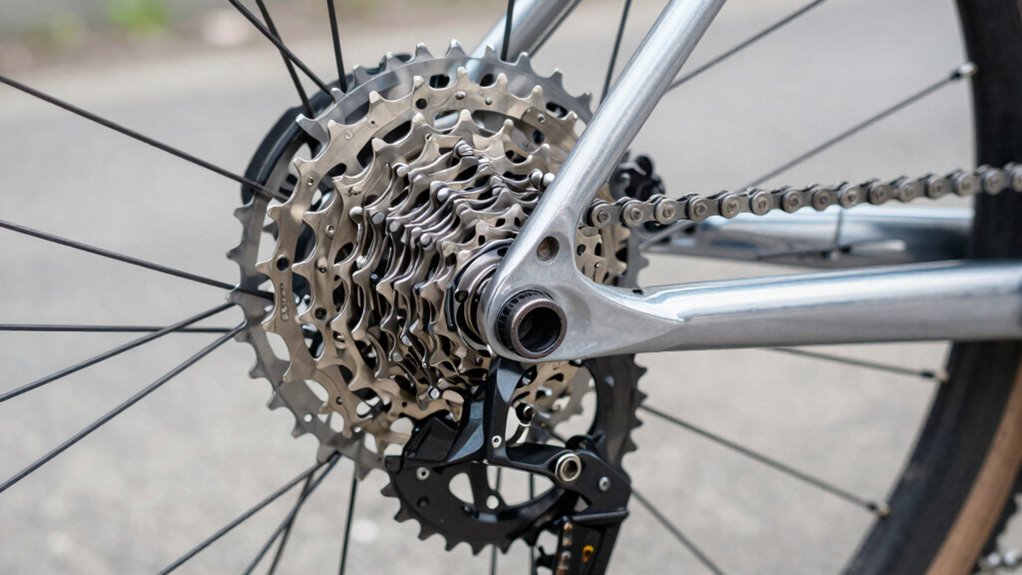
Cassette chain chainrings are essential components that directly impact your bike’s shifting performance and overall efficiency. When you’re riding, smooth gear changes rely heavily on the correct interplay between these parts. Understanding how they work together helps you optimize your bike’s performance, especially when it’s time for replacements. One of the key factors to consider is gear ratios, which define how many rotations of the pedals result in a rotation of the wheel. Proper gear ratios ensure you can ride efficiently across varied terrains, whether you’re climbing hills or sprinting on flats. When replacing parts, you want to pay attention to matching the gear ratios of your cassette, chain, and chainrings. Mismatched gear ratios can cause skipping, slipping, or uneven wear, making your ride less smooth and more tiring. To avoid these issues, it’s vital to assess your current setup and select compatible replacements that maintain the desired gear range. Maintaining proper gear ratios is essential for ensuring smooth shifting and efficient power transfer during your rides.
In addition to choosing the right gear ratios, regular maintenance tips can prolong the lifespan of your cassette, chain, and chainrings. Keep your chain clean and well-lubricated to prevent dirt buildup, which accelerates wear and hampers shifting. Checking for chain stretch is also critical; a stretched chain can cause poor engagement with your cassette and chainrings, resulting in skipping or slipping. If you notice your chain elongating, replace it before it damages the other components. When inspecting your chainrings, look for bent or worn teeth, which can cause chain drops and inconsistent shifting. Cleaning your cassette periodically with degreaser and a brush helps remove grime that can hinder smooth gear changes, and replacing worn cogs prevents chain skipping. Proper tension and alignment are essential, so ensure your derailleur is correctly adjusted to facilitate smooth, accurate shifts.
Starting with the correct replacement order makes your maintenance process more effective. Typically, you’ll want to replace the chain first if it’s worn, then move on to the cassette if it shows significant signs of wear. After that, check the chainrings for damage or wear, replacing them as necessary. This order minimizes unnecessary wear on new parts and keeps your drivetrain functioning smoothly. Remember, matching your parts’ specifications and maintaining proper gear ratios are vital for optimal shifting and efficiency. When you follow these maintenance tips and replacement order, your bike will perform better, last longer, and provide a more enjoyable riding experience. Taking the time to understand how these components work together ensures you stay ahead of wear issues and enjoy seamless gear transitions every time you hit the road.
Frequently Asked Questions
How Do I Determine the Correct Replacement Order for My Specific Bike?
You determine the correct replacement order by checking your bike’s gear compatibility and replacement intervals. First, identify your current cassette, chain, and chainrings to ensure new parts match your drivetrain. Then, replace components in the recommended order—usually cassette, then chain, then chainrings—to avoid issues. Regularly inspect and replace parts based on wear and usage to maintain smooth shifting and prolong your bike’s lifespan.
Can I Replace Cassette, Chain, and Chainrings Individually or Together?
Yes, you can replace individual components like the cassette, chain, and chainrings, but following the proper replacement sequence is essential for maximum performance. Start with the chainrings if they’re worn, then replace the chain to match the new chainrings, and finally install the new cassette. This order minimizes wear and prolongs your drivetrain’s lifespan, ensuring smooth shifting and efficient power transfer. Always check compatibility before replacing each component.
What Tools Are Necessary for Replacing Each Component?
Oh, the thrill of bike maintenance! To replace each component, you’ll need specific tools: a cassette lockring tool and chain whip for the cassette, a chain tool for the chain, and Allen wrenches for chainrings. Don’t forget lube application afterward, and cable adjustment to keep everything running smoothly. These simple tools transform a formidable task into a satisfying fix, ensuring your ride stays silky and responsive.
How Often Should I Replace These Components for Optimal Performance?
You should replace your cassette, chain, and chainrings based on wear patterns, typically every 2,000 to 3,000 miles, but check for signs like skipping or poor shifting. Keep an eye on your lubrication schedule; properly lubricated components last longer. Regular inspections help spot early wear, ensuring smooth performance. When you notice significant wear or shifting issues, it’s time for replacement to maintain peak cycling efficiency.
Are There Compatibility Issues Between Different Brands or Models?
Yes, there can be compatibility issues between different brands or models. You should always check brand compatibility because some components, like Shimano and SRAM, may not work seamlessly together. Model differences also matter; newer chains or cassettes might not fit older chainrings properly. To avoid problems, stick with the same brand and compatible models whenever possible, and consult manufacturer specifications before mixing components.
Conclusion
Following the proper replacement order—cassette, then chain, and finally chainrings—ensures smooth shifting and prolongs your drivetrain’s lifespan. This sequence supports the theory that addressing wear components in the right order prevents unnecessary strain on new parts. While some believe replacing chainrings first is better, evidence shows that starting with the cassette minimizes chain skip and enhances overall performance. Trust the proven order for a reliable, efficient upgrade every time.