When deciding whether to patch or replace a tire, consider the damage’s size, location, and severity. Minor punctures in the tread might be repairable if they don’t compromise the internal structure, but sidewall damage or large, deep cuts often mean replacing the tire. Age and wear also play a role; tires over six years or with significant tread wear should probably be substituted. If you want to ensure safety and longevity, understanding these signs helps you make the right call.
Key Takeaways
- Repair small, localized damages like punctures within safety specifications; replace for extensive or sidewall damage.
- Consider tire age; over 6-10 years, replacement is safer regardless of visible condition.
- Damage near the tread center is often repairable; sidewall or structural damage usually requires replacement.
- Tires with significant tread wear or aging rubber should be replaced to maintain safety and performance.
- Regular inspections and professional assessment help determine whether patching or replacing is appropriate.
Understanding Tire Damage Types and Severity

Understanding the different types of tire damage and how severe they are is essential for determining whether you can repair or need to replace a tire. Damage often originates during tire manufacturing, where quality control affects durability. Rubber compounds used in tires influence how well they withstand impacts, cuts, or punctures. For example, a small puncture in the tread might be repairable if the tire isn’t severely compromised, but sidewall damage is usually more serious. Recognizing these damage types helps you assess whether the tire is still safe to use. Damage severity varies based on location, size, and the tire’s construction. Proper understanding of tire manufacturing and Rubber compounds enables you to make informed decisions about repairs or replacements, ensuring your safety on the road. Additionally, knowing the water resistance of tires can help determine their performance in wet conditions and influence your replacement decisions. Being aware of wear patterns can also indicate underlying issues that might require attention before deciding to replace the tire.
Signs That Indicate a Tire Needs Repair or Replacement

Knowing what signs to look for can help you determine whether your tire needs repairs or a full replacement. One key indicator is uneven wear, which can stem from poor tire design or manufacturing quality issues, signaling that the tire isn’t functioning properly. Visible damage like cuts, punctures, or sidewall bulges also point to the need for replacement. Cracks or dry rot on the sidewall suggest aging and deterioration, often exacerbated by manufacturing flaws or environmental exposure. Additionally, if your tire loses air quickly despite proper inflation, it’s a sign that repair might not suffice. Pay close attention to unusual vibrations or noises while driving, which could indicate internal damage or other safety concerns. Recognizing these signs early can save you money and ensure your safety on the road. Advancements in Business are also being explored to develop smarter tire manufacturing processes, potentially improving quality control and safety standards.
The Importance of Tread Depth in Decision-Making

Tread depth plays a crucial role in determining whether your tire can keep you safe on the road or if it’s time for a replacement. Adequate tread depth ensures proper traction, especially in wet conditions, reducing the risk of accidents. As tread wear progresses, your tires become less effective, increasing stopping distances and decreasing control. To gauge tread depth, use a simple coin test or a tread depth gauge. Proper safety standards are essential to ensure your tires meet legal and performance requirements. Regularly inspecting your tires and understanding quality assessment can help you make informed replacement decisions and maintain optimal safety. Additionally, understanding the second trimester of pregnancy can help new mothers better prepare for bodily changes and health considerations. Moreover, embracing a creative practice mindset—such as exploring different methods to check tread depth—can make routine maintenance more engaging and effective. Incorporating automated insights into your maintenance routine can also help identify when your tires are nearing the end of their service life.
Repairable vs. Non-Repairable Damage
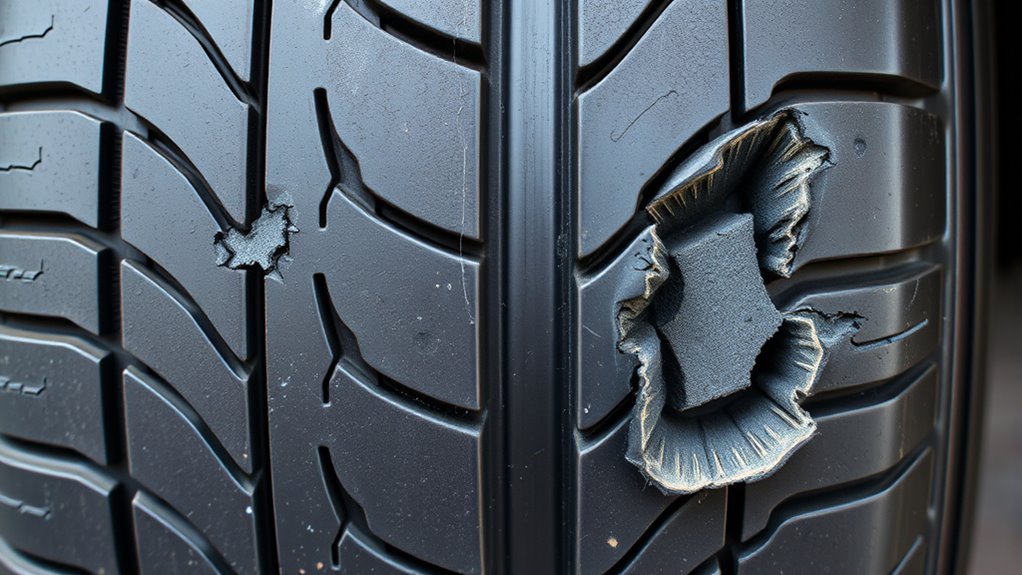
Not all tire damage is the same; some can be repaired, while others require complete replacement. Repairable damage typically includes punctures in the tread area that are within the tire’s specifications, as confirmed by the tire branding. Small cuts, punctures, or sidewall damage usually aren’t fixable. If the damage is deep or affects the internal structure, replacing the tire is essential for safety. Additionally, maintaining proper inflation pressure helps prevent damage that might be repairable now but could worsen over time. Regular tire inspections by a professional can help identify damage early and determine the best course of action. Knowing the types of damage that are repairable versus non-repairable can help you make informed decisions about your tires. Proper maintenance, including correct inflation, can extend the lifespan of your tires and prevent unnecessary replacements. Ensuring that your tire repairs are performed following safety standards helps maintain optimal performance and safety. Always have your tire inspected by a professional to assess whether it’s safe to patch. Remember, attempting to repair damage outside recommended guidelines can compromise tire integrity and safety, making replacement the best choice. For optimal safety, consider trustworthy tire brands that adhere to safety standards and provide reliable products.
The Role of Age and Wear in Tire Retirement
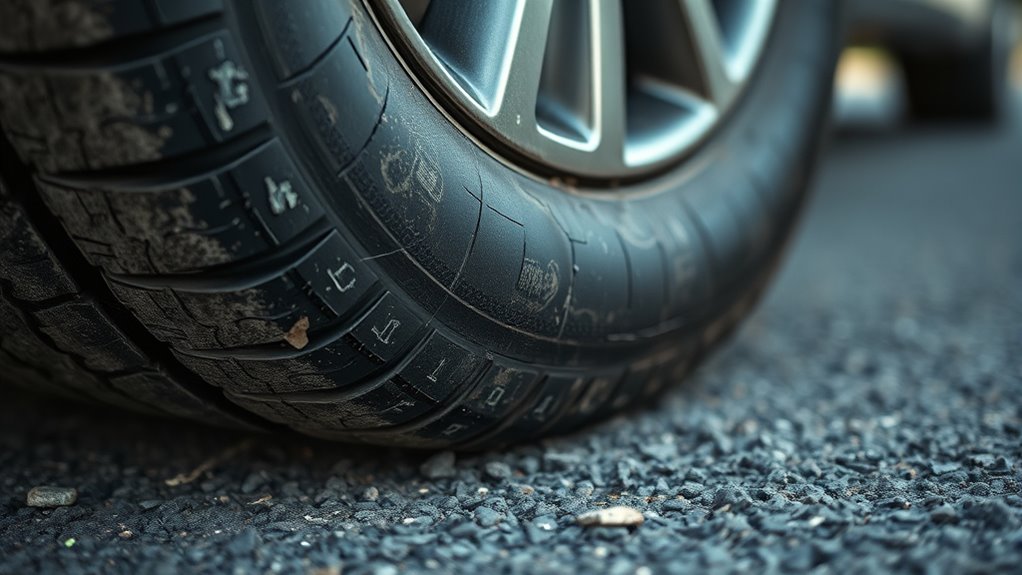
As your tire ages, the materials can degrade, making them more prone to failure even if they look fine. You should also pay attention to tread wear indicators, which show when the tire’s grip is compromised. Recognizing these signs helps you decide when it’s time to retire your tire for safety.
Age-Related Material Degradation
Over time, the materials in a tire naturally weaken and degrade due to exposure to environmental elements and regular use. As your tire ages, you might notice tire color changes, such as fading or yellowing, which signal breakdown of the rubber compounds. Age-related degradation also causes sidewall bulges, where the internal structure weakens and creates a visible deformity. These issues compromise the tire’s integrity, increasing the risk of blowouts or sudden failure. Even if the tread looks fine, the rubber’s elasticity diminishes, making the tire less safe. Recognizing these signs early helps prevent accidents. Ultimately, understanding that age-related material degradation affects tire safety is critical to deciding when to retire a tire, whether through patching or replacement.
Tread Wear Indicators
Tread wear indicators are small, raised bars located within the grooves of your tire’s tread. These indicators provide a quick visual cue to assess your tire’s condition through tread depth analysis. When the tread wears down to the level of these bars, it signals that the tire’s tread depth has reached the minimum safe limit—usually 2/32 of an inch. At this point, your tire’s ability to grip the road diminishes, especially in wet conditions. Regularly checking the tread wear indicators helps you determine if your tire needs replacement or if it still has some life left. Relying solely on these indicators simplifies the process but always consider other factors like age and overall wear to decide when it’s time to retire your tire. Additionally, tire age plays a crucial role in determining safety, as rubber deteriorates over time regardless of tread wear. Being aware of rubber deterioration can help prevent unexpected tire failures. Monitoring vehicle maintenance and performing regular inspections are also important in maintaining overall safety on the road. Proper storage can help extend the lifespan of your tires, especially when they are not in use for extended periods.
When Patching Is a Cost-Effective Solution
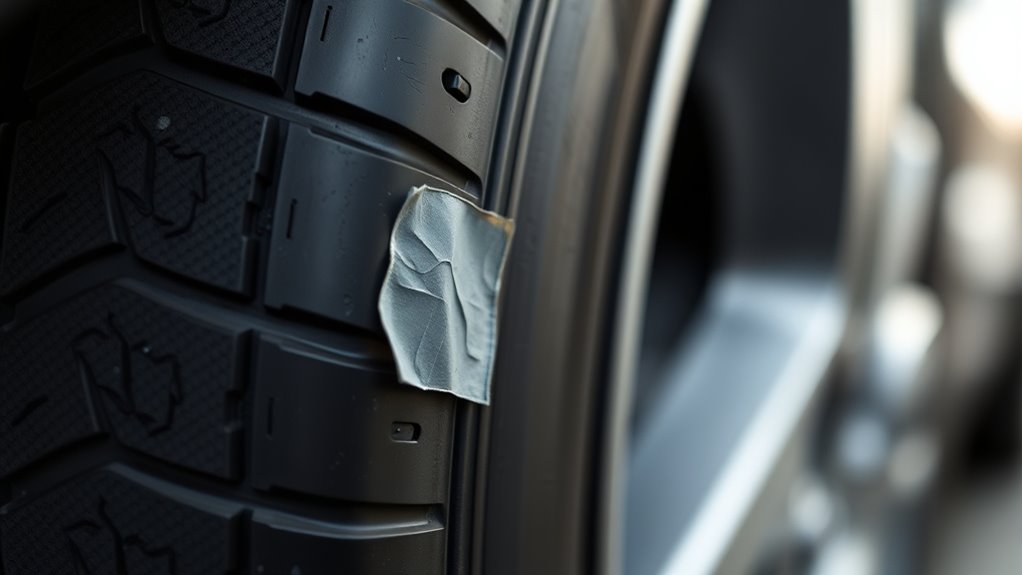
Wondering if patching your tire makes sense? Patching is cost-effective when the damage is minor and located away from the sidewall, especially if the tire maintains proper inflation. Consider these factors:
- The puncture is small, less than ¼ inch, and not in the sidewall or near sidewall bulges.
- The tire has no significant sidewall bulges or cracks that compromise safety.
- The damage is on the tread area, and the patch can fully cover the puncture.
- You can maintain proper tire inflation after patching, ensuring ideal performance.
If the sidewall shows bulges or the damage is extensive, patching might not be enough. In such cases, replacing the tire is safer and more cost-effective long-term.
Risks Associated With Reusing Damaged Tires

Reusing damaged tires can compromise their structural integrity, increasing the chance of sudden failures. You also face a higher risk of blowouts, which can lead to accidents. Additionally, the tread becomes less durable, reducing your tire’s overall safety and lifespan. When tires are worn or damaged, they may no longer provide the necessary support and stability, which is essential for a safe and comfortable bedroom environment, especially when incorporating natural materials and rustic decor to create a cozy farmhouse style.
Structural Integrity Compromise
When a tire sustains damage, its structural integrity can be compromised, posing serious safety risks if you choose to reuse it. Damage like sidewall bulges or bead damage weakens the tire’s core strength, increasing the risk of failure. Reusing compromised tires can lead to dangerous blowouts or loss of control.
Consider these points:
- Sidewall bulges indicate internal damage, reducing flexibility and strength.
- Bead damage affects the seal between the tire and rim, risking air loss.
- Cracks or cuts can propagate under stress, weakening the structure.
- Repaired areas may not restore full integrity, especially with deep damage.
If any of these signs are present, replacing the tire is the safest choice.
Increased Blowout Risk
Damaged tires substantially increase the risk of blowouts, especially when their structural integrity has been compromised. Reusing a tire with visible damage or internal flaws weakens its material composition, making it more prone to sudden failure under pressure. Even if a patch temporarily seals a leak, underlying damage might still cause a blowout at high speeds or under heavy loads. Additionally, neglecting to replace a compromised tire can void your manufacturer warranty, leaving you unprotected if failure occurs. Relying on repairs rather than replacement risks not only your safety but also potential costs from accidents or further damage. Ultimately, when a tire’s integrity is compromised, replacing it is the safest choice to minimize blowout risks and ensure reliable performance on the road.
Reduced Tread Durability
Even minor damage to a tire’s tread can considerably weaken its grip on the road, reducing overall durability and safety. Reusing damaged tires risks further tread deterioration, which can lead to decreased traction and increased wear. When contemplating repair options, keep in mind that tire manufacturing quality varies, impacting how well a tire withstands damage. Ignoring tread issues can also harm your vehicle’s brand reputation if accidents occur.
Important factors to consider include:
- The extent of tread damage—more severe issues often require replacement.
- The tire’s age and overall condition—older tires may not benefit from patches.
- Manufacturer guidelines—some brands recommend replacing damaged tires entirely.
- Safety risks—reduced tread durability compromises grip, especially in wet conditions.
How to Assess a Tire’s Overall Condition

Evaluating a tire’s overall condition involves a thorough visual and tactile inspection to identify signs of wear, damage, or aging. Check the tire’s color coding—often marked on the sidewall—to verify it matches the current season’s requirements, especially if you switch between summer and winter tires. Look for uneven tread wear, cracks, bulges, or cuts that signal internal damage. Feel the tread surface for smoothness or roughness; excessive smoothness indicates worn-out rubber. Also, examine the sidewalls for discoloration or cracking, which suggest aging or exposure to harsh elements. Seasonal tire switching can help maintain ideal condition, but if your tires show signs of deterioration despite proper care, it’s time to assess whether they need replacing or professional inspection.
Professional Inspection: Why It Matters

A professional inspection can spot hidden damage that might go overlooked. This helps guarantee your tires are safe and reliable on the road. Skipping this step could put you at risk of accidents or breakdowns.
Identifying Hidden Damage
Hidden damage in tires can be tricky to spot with the naked eye, which is why professional inspections are essential. A trained technician can detect issues like irregular tire pressure, which may indicate internal damage, or subtle sidewall cracks that compromise integrity. During an inspection, look for these signs:
- Uneven tread wear patterns
- Cracks or cuts on the sidewall
- Sudden loss of tire pressure
- Bulges or blisters indicating internal damage
Identifying these warning signs early can prevent dangerous blowouts or failure. Remember, some damage isn’t visible without specialized tools or expertise. Regular professional inspections ensure your tires are safe, extend their lifespan, and help you decide whether to patch or replace. Don’t overlook hidden damage—stay proactive for safer driving.
Ensuring Proper Safety
Regular professional inspections are essential because they guarantee your tires are safe and in good condition before any issues become serious. During an inspection, the technician checks tire inflation to ensure your tires aren’t under- or over-inflated, which can affect safety and tire lifespan. They also examine wheel alignment, as misalignment can cause uneven wear and compromise handling. Properly inflated tires and correct wheel alignment minimize the risk of blowouts, loss of control, and premature tire replacement. A professional inspection provides peace of mind, knowing your tires are functioning at their best. It’s a proactive step that helps identify potential problems early, ensuring your safety on the road and extending the life of your tires. Don’t skip regular checkups—they’re crucial for safe driving.
Making the Final Call: Repair or Replace

Deciding whether to repair or replace a tire depends on its current condition and how much life it has left. You should consider factors like tread depth, visible damage, and overall tire health. When evaluating, keep in mind that tire branding can influence quality and longevity, guiding your decision. Repairing may be suitable for minor issues, but replacing is often better for safety and performance. Additionally, consider the environmental impact; repairing extends tire life and reduces waste.
To make an informed choice:
- Assess the extent of damage and its location.
- Check the tire’s age and tread wear.
- Review tire branding for durability insights.
- Weigh environmental benefits of repair versus replacement.
Frequently Asked Questions
How Long Does a Typical Tire Repair Last Before Needing Replacement?
A typical tire repair usually lasts between 6 months to a year, depending on your driving habits and road conditions. While repairs can restore tire longevity and offer durable fixes, they might not match the durability of a new tire. Keep an eye on your tire’s condition, and if you notice recurring issues or significant wear, it’s best to replace the tire to guarantee safety and peak performance.
Can Patching a Tire Restore Its Original Safety Standards Fully?
You might wonder if patching a tire fully restores its safety standards. While a patch provides a temporary fix, it doesn’t guarantee the tire’s original safety. Patches can compromise safety if the damage is extensive or near the sidewall. For maximum safety, consider replacing the tire if the repair isn’t in a safe zone or if the damage is significant. Don’t risk safety compromise with a patch that might not hold long-term.
Are There Specific Tire Brands More Suitable for Patching?
Imagine you’re considering patching a tire on your favorite ride. Generally, premium brands like Michelin or Continental tend to be more suitable for patching because their tires often withstand repairs better due to higher-quality materials. Budget options, however, may not provide the same reliability after patching. So, if you want a durable fix, sticking to reputable brands can give you peace of mind, but always consult a professional first.
What Are the Legal Regulations Regarding Patched Versus Replaced Tires?
You should know that legal restrictions on patched versus replaced tires vary by location. Patch legality generally depends on tire condition and repair type; some jurisdictions allow patches for minor damage, but not for severe wear or sidewall damage. Always check local regulations, as improper patching can lead to legal issues and safety risks. When in doubt, consulting a professional ensures your repairs are compliant and safe for road use.
How Does Driving Style Affect the Decision to Patch or Replace a Tire?
Your driving habits and tire wear patterns directly influence whether you should patch or replace a tire. If you drive gently and notice a small puncture in the tread, patching might suffice. However, if you have aggressive driving habits, frequent hard braking, or uneven wear, replacing the tire is safer. Pay attention to how your tires wear and adjust your decision accordingly to guarantee safety and peak performance.
Conclusion
Ultimately, knowing when to patch or replace your tire can save you from a catastrophe on the road. Don’t let hidden damage turn your trusted wheels into ticking time bombs—your safety depends on it. Regular inspections and honest assessments are your best tools to avoid a blowout of epic proportions. When in doubt, remember: a well-maintained tire isn’t just a piece of rubber; it’s your vehicle’s lifeline—treat it with the respect it deserves.