
To protect your bike from winter road salt, start by cleaning it thoroughly after each ride with a bike-specific cleaner and soft brush, paying special attention to crevices and hard-to-reach areas. Apply a protective wax or sealant to create a barrier against corrosion, and regularly lubricate your chain with winter-specific lubricant. Store your bike in a dry, sheltered space or cover it to prevent exposure to moisture. Keep your bike in top shape by learning more about winter maintenance and protection techniques.
Key Takeaways
- Clean your bike thoroughly after each winter ride using a gentle, bike-specific cleaner and soft brush.
- Apply a protective wax or sealant to create a barrier against salt and moisture.
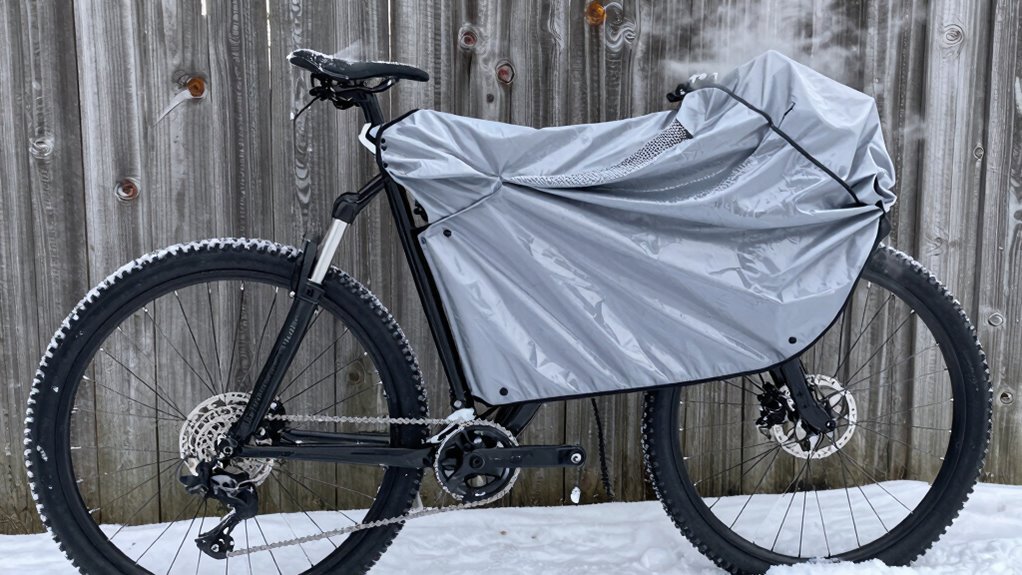
- Store your bike in a dry, sheltered area or cover it with a weatherproof cover.
- Regularly lubricate moving parts with winter-specific lubricant to prevent corrosion.
- Avoid riding on heavily salted roads and clean the bike promptly if exposure occurs.
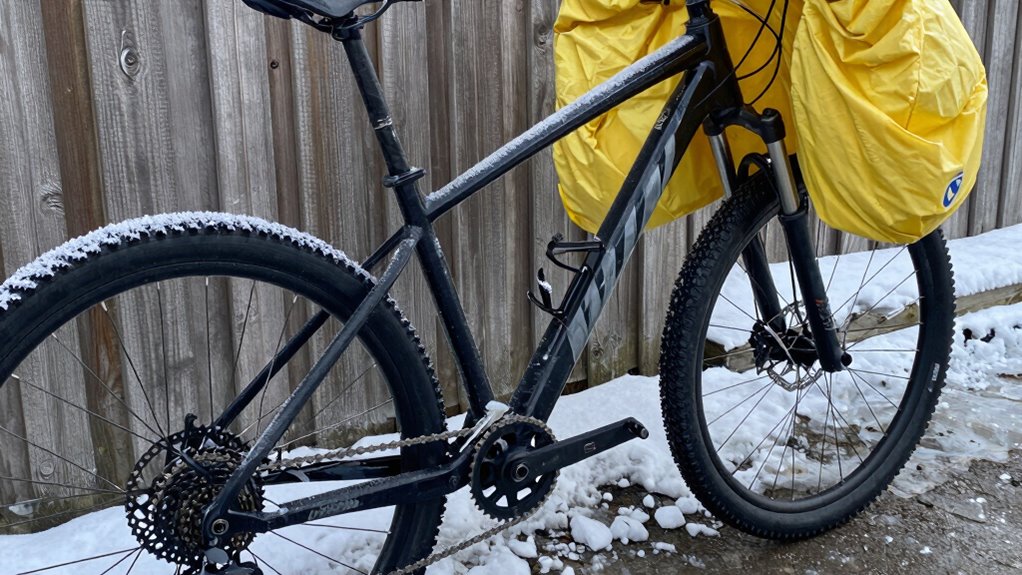
Winter’s harsh conditions can quickly damage your bike, especially with the widespread use of road salt to melt ice. Salt is corrosive and can eat away at your bike’s frame, chain, and other metal components if you don’t take proper precautions. To keep your bike in good shape through the winter, you need to prioritize bike cleaning and salt prevention. These steps will help you avoid costly repairs and prolong your bike’s lifespan.
Start by giving your bike a thorough cleaning after every ride in winter. Salt and grime tend to cling to the frame, chain, gears, and brake components. Use a gentle bike-specific cleaner and a soft brush to scrub away salt deposits, paying close attention to crevices and hard-to-reach areas. Rinse your bike with water but avoid using high-pressure hoses, which can force salt into bearings and other sensitive parts. Once clean, dry your bike thoroughly with a cloth or compressed air to prevent moisture from lingering and causing rust. Incorporating proper cleaning techniques can also help you spot early signs of corrosion before they worsen. Regularly inspecting your bike for signs of wear and corrosion can catch issues early and prevent major damage. Additionally, storing your bike in a dry environment can significantly reduce the risk of rust formation.
Thoroughly clean and dry your bike after winter rides to prevent salt and rust buildup.
Salt prevention is equally important. Before heading out, consider applying a protective coating, like a bike-specific wax or sealant, to act as a barrier against salt and moisture. This layer can make subsequent cleaning easier and reduce corrosion risk. Additionally, regularly lubricate the chain and moving parts with a high-quality, winter-specific lubricant. This creates a protective film that repels moisture and salt, keeping parts moving smoothly. Using corrosion-resistant materials for replacement parts can also provide added protection during the winter months. Protecting vulnerable areas of your bike with additional coatings or sealants can further enhance its resistance to corrosion. Moreover, choosing rust-proof components when replacing parts can provide long-term benefits during harsh winter conditions.
When you’re not riding, store your bike in a dry, sheltered location. Exposure to the elements accelerates corrosion, so a garage or shed is ideal. If indoor storage isn’t an option, invest in a weatherproof bike cover to shield your bike from snow, rain, and salt spray. During rides, try to avoid roads that are heavily salted or plowed. If you must ride on salted roads, plan to clean and inspect your bike more frequently afterward. Being mindful of road salt application can help you anticipate when extra maintenance is needed.
Incorporating these practices into your winter routine will considerably reduce salt-related damage. Bike cleaning after each ride removes harmful deposits before they cause corrosion, and salt prevention measures create a barrier that minimizes salt’s contact with metal parts. By taking proactive steps, you’ll keep your bike in top condition, ensuring it’s ready to ride once spring arrives. Proper maintenance not only preserves your bike’s appearance but also extends its functional life, saving you money and frustration in the long run. Recognizing the importance of biodiversity and sustainable practices can also inspire eco-friendly choices in your cycling routine and beyond.
bike-specific cleaner and soft brush set
As an affiliate, we earn on qualifying purchases.
As an affiliate, we earn on qualifying purchases.
Frequently Asked Questions
Can I Use Regular Soap to Clean My Bike After Winter?
You can use regular soap for bike detailing after winter, but it’s better to choose cleaning agents specifically designed for bikes. Regular soap might not remove stubborn salt or grime effectively and could harm your bike’s finish over time. Opt for a bike-specific cleaner that’s gentle yet effective. This guarantees your bike stays protected, clean, and ready for riding, especially after exposure to winter road salt.
How Often Should I Apply Protective Coatings During Winter?
You should apply a protective coating at least once a month during winter—think of it as armor that keeps your bike from turning into a rusty relic. The application frequency depends on how harsh the weather gets; more frequent coats provide better defense. Regularly reapply a seasonal coating after rides through slushy, salty streets to guarantee your bike stays pristine and protected against winter’s relentless assault.
Is It Better to Store My Bike Indoors or Outdoors in Winter?
Storing your bike indoors is better during winter because it shields your bike from outdoor exposure to moisture, salt, and harsh temperatures. Indoor storage keeps the bike dry and prevents rust, corrosion, and damage caused by winter elements. If indoor storage isn’t an option, make sure to cover your bike with a weatherproof cover and keep it in a sheltered spot. This minimizes the risks associated with outdoor exposure during cold, salty months.
Will Winter Biking Damage My Bike’s Paint?
Winter biking can cause paint damage if you’re not careful—studies show that salt accelerates bike frame corrosion, which can harm your paint. To keep your bike’s finish intact, follow paint preservation tips like washing your bike after rides and applying protective coatings. While winter riding is great, taking these steps helps prevent damage, ensuring your bike stays looking good and lasts longer despite exposure to harsh conditions.
Are There Specific Lubricants for Winter Road Conditions?
Yes, there are specific lubricants for winter conditions. You should use winter-specific lubricants, which are designed to perform well in cold temperatures, preventing your bike’s parts from seizing or rusting. Salt-resistant lubricants are essential too, as they protect your bike from the corrosive effects of road salt. Applying these lubricants regularly helps maintain smooth operation and prolongs your bike’s lifespan during harsh winter rides.
Conclusion
By taking these simple steps, you’ll keep your bike shining bright through winter’s chaos. Think of your bike as a delicate treasure that needs guarding against the icy storms and salty seas of the road. With regular cleaning, proper storage, and a little love, your bike will thank you with many smooth rides ahead. Don’t let winter’s harsh touch rust your passion—protect it, cherish it, and enjoy the journey no matter the season.