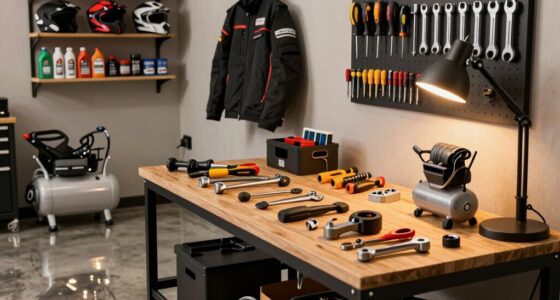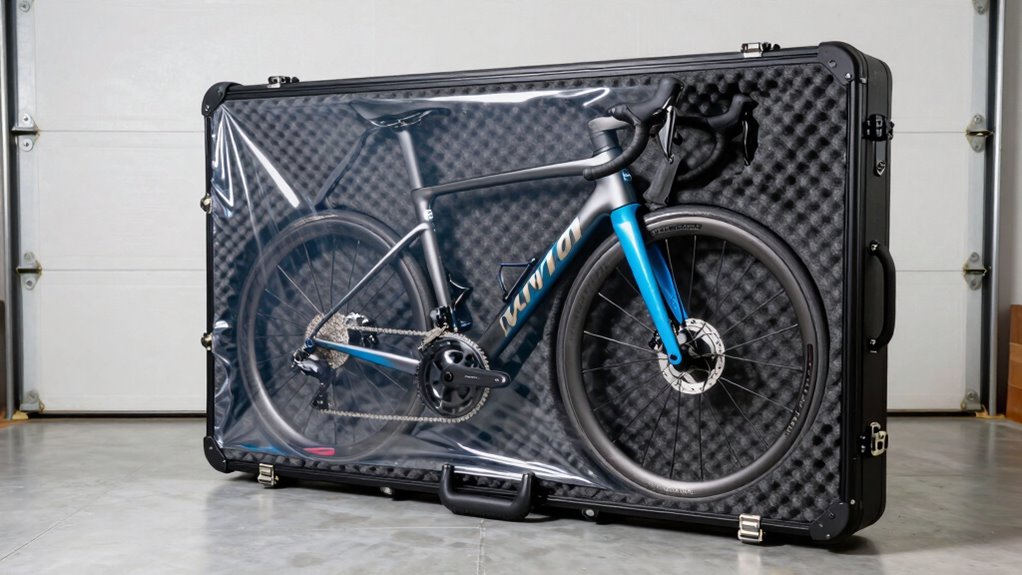

To protect your expensive bike during transport and storage, use a sturdy, padded case and secure it with high-quality straps. Lock the bike to a sturdy structure and cover it with weatherproof, lockable covers to guard against elements and theft. At home, reinforce storage areas with heavy-duty locks, security cameras, and concealed storage spots. Regularly inspect your security measures. For more detailed tips, discover how to keep your bike safe from start to finish.

Get sports gear delivered free with Prime
- Fast, free delivery on millions of items
- Prime Video, Amazon Music and more included
- Member-only deals all year
Key Takeaways
- Use a sturdy, padded bike case and secure the bike with high-quality straps during transport.
- Lock the bike with heavy-duty locks to immovable structures when stored at home or facilities.
- Cover the bike with weatherproof, lockable covers to prevent damage and theft during transit.
- Remove high-value components and store them separately to reduce theft risk when not in use.
- Regularly inspect and maintain security measures, ensuring locks and alarms are functional and effective.
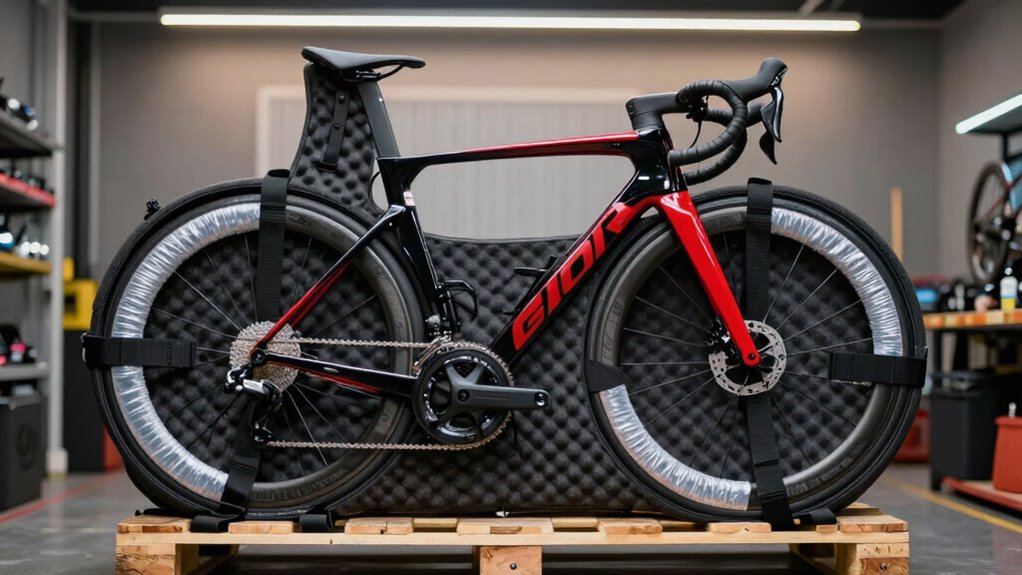
Transporting and storing expensive bikes requires careful preparation to prevent damage and theft. When you’re moving or storing a high-value bicycle, prioritizing bike security and theft prevention becomes essential. The first step is choosing a secure transportation method. Use a sturdy bike box or a professional-grade bike case designed to absorb shocks and prevent scratches. Make sure the case is properly padded, especially around sensitive areas like the frame and wheels. Securing the bike with high-quality straps or tie-downs inside the case keeps it stable during transit, reducing the risk of movement that could lead to damage.
When it comes to transporting your bike, always opt for a trusted courier service with experience handling delicate items. If you’re driving your own vehicle, consider parking in well-lit, secure areas and avoid leaving the bike unattended for long periods. Covering your bike with a lockable, weatherproof cover adds an extra layer of protection against the elements and prying eyes. Always lock your bike securely to a fixed, immovable object when storing it temporarily outside, using high-quality locks that are resistant to cutting or picking. Additionally, proper handling techniques can further reduce the risk of accidental damage during transit.
Storing your bike at home or in a storage facility calls for additional security measures. Invest in a heavy-duty lock, such as a U-lock or chain lock, and secure the bike to a solid, immovable structure. Avoid leaving your bike in easily accessible areas or places where it can be viewed from outside, as visibility can invite theft. If you store your bike in a garage or shed, reinforce doors and windows, and consider installing security cameras or alarm systems for extra theft prevention. Regularly inspecting your bike and its storage environment is crucial; security measures like surveillance can greatly deter theft and help you keep an eye on your valuable possession. Additionally, adequate security involves ensuring all locks and security devices are in good working order and properly installed, and taking steps to prevent theft by removing or concealing high-value components when possible. Make sure locks are functioning properly and that the bike is still securely fastened. Keep your bike out of sight from windows or doors to minimize temptation for opportunistic theft. When not in use for extended periods, consider removing high-value components like wheels, seats, or electronic devices, and store them separately in a safe location. This reduces the risk of theft even if someone gains access to the main bike.
As an affiliate, we earn on qualifying purchases.
Frequently Asked Questions
What Are the Best Insurance Options for High-Value Bikes?
You should explore specialized insurance policies designed for high-value bikes, which often cover theft, damage, and theft during transport. Additionally, guarantee your bike maintenance records are up-to-date, as they can help validate your claim. Consider insuring your bike through dedicated cycling insurance providers or add a rider to your existing policy. Comparing coverage options and premiums helps you find the best fit for protecting your valuable investment.
How Do Climate Conditions Affect Bike Storage Safety?
Climate conditions greatly impact bike storage safety. High humidity can cause rust and corrosion, so you should use humidity control measures like dehumidifiers or silica gel packs. Temperature fluctuations can lead to frame warping or tire damage, making temperature regulation crucial. Keep your bike in a climate-controlled environment, avoiding extreme heat or cold, and guarantee proper ventilation to protect your investment from climate-related damage.
Are Specialized Bike Covers Necessary for Long-Term Storage?
Specialized bike covers are highly recommended for long-term storage because they offer better cover durability and protection against dust, moisture, and UV rays. Before covering, you should perform bike cleaning to remove dirt and grime that could cause corrosion. A high-quality cover guarantees your bike stays in top condition, especially if it’s stored for extended periods. Using the right cover combined with regular cleaning maintains your bike’s value and safety.
How Often Should I Inspect My Bike During Storage?
You should inspect your bike at least once every month during storage. Research shows that regular bike maintenance can extend a bike’s lifespan by up to 50%. Use proper storage techniques, like keeping your bike in a dry, cool place and covering it with a breathable cover. During inspections, check for rust, tire pressure, and loose bolts, ensuring your bike stays in top condition and ready to ride.
What Security Measures Prevent Theft During Transport?
To prevent theft during transport, you should use secure locking mechanisms on your bike and guarantee all locks are high-quality and tamper-resistant. Additionally, installing GPS tracking devices allows you to monitor your bike’s location in real-time, providing peace of mind and quick recovery if theft occurs. Combining these security measures greatly reduces risks during transit, keeping your expensive bike safe throughout the journey.
Conclusion
So, next time you’re hauling your prized bike or stashing it away, remember: all that high-tech padding and careful planning are just in case the universe decides to throw a wrench. Because honestly, nothing says “I love my bike” like wrapping it in bubble wrap, only to realize you’re better off just keeping it in your living room. Ah, the irony—sometimes the best protection is simply avoiding the chaos altogether.
Halloween Picks
halloween
As an affiliate, we earn on qualifying purchases.