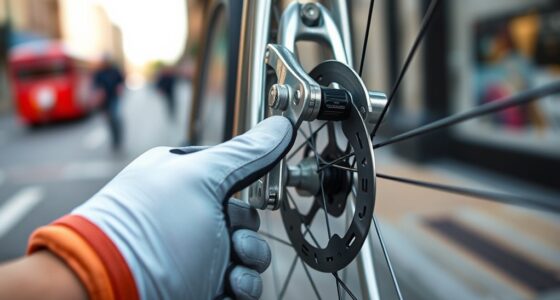
Bigger brakes, with larger rotors, improve your stopping power by increasing surface area, helping dissipate heat better, and reducing brake fade during heavy or prolonged braking. They’re especially helpful if you tow heavy loads, drive aggressively, or navigate hilly terrain, as they keep braking consistent and safer. However, larger rotors add weight and may require upgraded parts. Curious about when bigger brakes truly make a difference? Keep exploring to find out more.
Key Takeaways
- Bigger rotors increase surface area for better heat dissipation, reducing brake fade during aggressive driving.
- Larger rotors provide more consistent braking performance under heavy loads or hilly terrain.
- They improve overall braking power and control, especially in high-performance or towing scenarios.
- Excessively large rotors can add weight and impact handling, so size should match driving needs.
- Proper maintenance and compatible components are essential to maximize the benefits of bigger rotors.
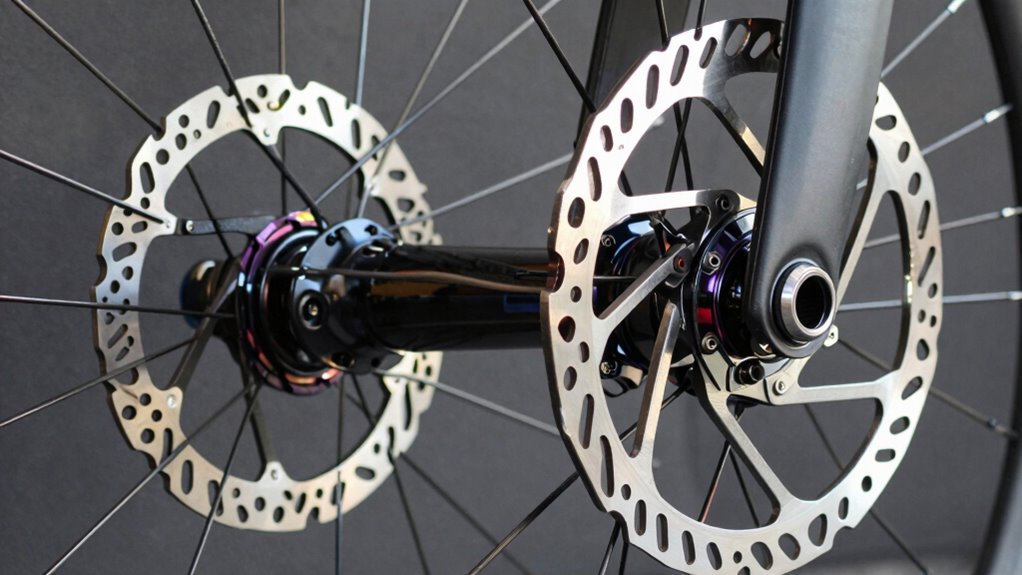
Understanding rotor sizes is vital because they directly impact your vehicle’s braking performance. When you choose larger rotors, you’re fundamentally giving your braking system more surface area to work with, which can greatly improve stopping power. Larger rotors dissipate heat more efficiently, reducing the risk of brake fade during prolonged or aggressive braking. Brake fade occurs when your brakes overheat, causing a decrease in friction and braking effectiveness. By opting for bigger rotors, you help prevent this issue, especially if you frequently drive in hilly areas or engage in spirited driving. Additionally, larger rotors tend to wear more evenly over time, extending their lifespan and maintaining consistent braking performance. Proper maintenance, such as ensuring your braking system components are compatible with larger rotors, is essential to maximize their benefits. However, it’s important to understand that bigger isn’t always better. While larger rotors can handle more heat and resist brake fade, they also come with some drawbacks. For instance, increasing rotor size can add weight to your vehicle’s unsprung mass, which might negatively affect ride quality, handling, and acceleration. Furthermore, larger rotors often require upgraded calipers and other supporting components, which can be more costly and complex to install. You should also be aware that bigger rotors can lead to increased rotor wear if the braking system isn’t properly maintained or if the rotors are subjected to excessive stress. Over time, uneven or aggressive driving can accelerate rotor wear, making it necessary to replace or resurface them sooner. This wear can compromise braking efficiency, especially if the rotors become warped or scored. Choosing the right rotor size depends on your driving habits and vehicle use. If you regularly tow heavy loads or participate in high-performance driving, larger rotors can give you better control and reduce brake fade. Conversely, if you mostly drive in the city with light braking demands, stock-sized rotors are often sufficient and more economical. It’s also vital to ensure your braking system components are compatible with larger rotors; otherwise, you risk uneven wear or reduced effectiveness. Proper maintenance, including regular inspection and timely replacement of brake pads and rotors, guarantees your braking system performs at its best regardless of rotor size. Remember, the goal is to find a balance between performance, durability, and driving comfort, so consider your specific needs before opting for larger rotors.
Frequently Asked Questions
Can Larger Rotors Fit All Vehicle Models Easily?
Larger rotors don’t fit all vehicle models easily due to fitment challenges. You’ll need to check your vehicle’s specifications carefully before upgrading. Some models have limited space or specific caliper designs that may not accommodate bigger rotors. Fortunately, aftermarket options exist that address these fitment issues, offering specialized brackets and adapters. Always verify compatibility and consider professional installation to guarantee safe and effective braking performance.
Do Bigger Brakes Increase Stopping Distance?
Bigger brakes don’t increase your stopping distance—in fact, they help reduce it by improving heat dissipation and preventing brake fade. When you upgrade to larger rotors, your brakes stay cooler during intense driving, maintaining consistent performance. This means you can stop faster and more safely, especially during high-speed or repeated braking. So, bigger brakes actually enhance your stopping power, making your driving safer and more reliable.
How Do Rotor Sizes Affect Brake Pedal Feel?
Bigger rotors improve brake pedal feel by providing better heat dissipation, reducing brake fade during heavy use. This means your pedal stays more responsive, allowing for precise pedal modulation. When you press the brake pedal, you’ll notice a firmer, more consistent feel, especially during spirited driving or repeated stops. Larger rotors help prevent fade, ensuring your pedal response remains predictable and confident, enhancing overall braking control.
Are Bigger Rotors More Prone to Warping?
Bigger rotors aren’t necessarily more prone to warping; in fact, they often handle heat better, with up to 30% improved heat dissipation. While their increased weight can put extra stress on the hub, proper design and materials minimize warping risks. So, if you’re concerned about brake longevity, larger rotors can be a smart choice, especially for high-performance or heavy-duty driving, as they reduce heat buildup that causes warping.
What’s the Maintenance Difference Between Small and Large Rotors?
You’ll find that larger rotors generally require more maintenance, especially since they can demand specific caliper compatibility and may lead to higher rotor costs. Larger rotors tend to stay cooler and resist warping, but when they do need servicing, expect more effort and expense. Smaller rotors are easier to maintain and cheaper, but may wear faster under heavy use. Always check caliper compatibility before upgrading to larger rotors.
Conclusion
Understanding rotor sizes can truly transform your riding experience. Bigger brakes offer up to 20% more stopping power, giving you confidence on steep descents or crowded trails. Remember, choosing the right rotor size isn’t just about performance—it’s about safety and peace of mind. Next time you upgrade, consider that riders with larger rotors report a 15% reduction in brake fade during intense rides. Bigger really can be better when it comes to brakes!