
To service your shock air can, start by inspecting for leaks, cracks, or corrosion, and check if it holds pressure well. Use an appropriate air compressor to recharge the can to manufacturer-specified pressures, avoiding overinflation. Tighten or replace damaged parts, clean the area, and examine air lines, fittings, and valves for leaks. Regular maintenance helps prevent issues and prolongs suspension life. Keep exploring how proper care can improve your ride and safety.
Key Takeaways
- Regularly inspect for leaks, cracks, or corrosion to ensure the air can functions properly.
- Use a compatible air compressor to recharge the air can to manufacturer-recommended pressure levels.
- Check and tighten air lines, fittings, and valves to prevent leaks and maintain system integrity.
- Replace worn or damaged shock air can and associated components promptly to ensure smooth ride quality.
- Monitor vehicle handling and ride stability, and perform routine maintenance for optimal suspension performance.
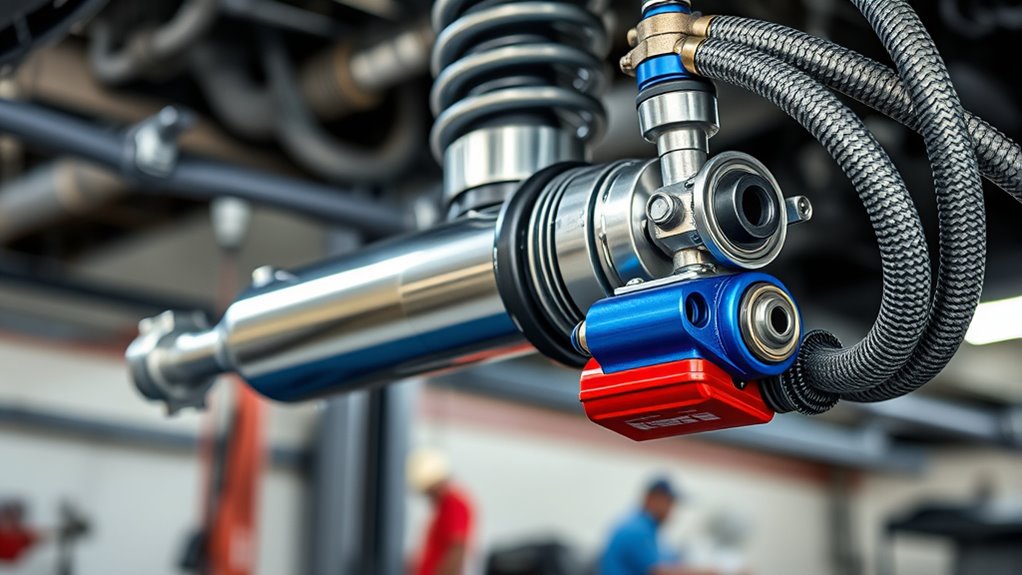
Have you ever wondered how to properly maintain and use an air can? If you’re dealing with vehicles that feature air suspension or shock absorbers, understanding the basics of shock air can service is essential. An air can, often called an air shock or shock absorber, plays a pivotal role in your vehicle’s suspension system. It helps absorb bumps, reduce vibrations, and maintain ride comfort. When these components are in good condition, your vehicle handles smoothly, and your ride remains stable. But over time, air can services become necessary to keep everything functioning properly.
Proper maintenance of air can ensures smooth rides and prolongs suspension system life.
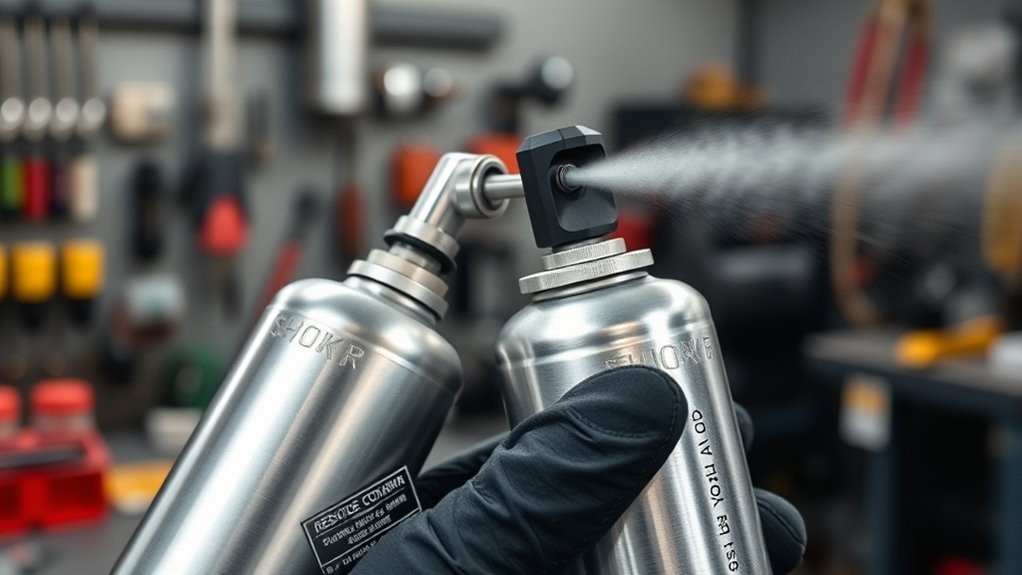
The first step in shock air can service involves inspecting the air can itself. Look for any signs of leaks, cracks, or corrosion. A leaking air can won’t provide the necessary cushioning, leading to a rough ride and uneven tire wear. If you notice that the air can isn’t holding pressure, it’s probably time for a recharge or replacement. You’ll need a compatible air compressor and some basic tools to perform this task. Connecting the compressor to the air can’s valve stem, you can add air until the manufacturer’s recommended pressure is reached. Be careful not to overinflate, as too much pressure can cause additional damage or reduce the shock absorber’s effectiveness.
Once the air can is properly inflated, it’s important to check the entire air suspension system for leaks and damage. This includes inspecting the air lines, fittings, and valves connected to the air can. Any loose or damaged parts should be tightened or replaced. Maintaining a clean system is also essential; dirt and debris can compromise the seals and cause leaks. Regularly cleaning the area around your shock absorber and air suspension components helps prolong their lifespan and guarantees top performance.
In addition to air pressure, you should also pay attention to the shock absorber’s movement. If you notice excessive bouncing, swaying, or if your vehicle feels unstable, the shock air can might be worn out or damaged. In such cases, you might need to replace the shock absorber altogether. This process often involves removing the old unit and installing a new one with proper alignment. Always follow your vehicle manufacturer’s guidelines and torque specifications to guarantee safety and proper function.
Furthermore, staying informed about industry insights and breakthroughs can help you understand emerging technologies like smart systems and digital management that could enhance your vehicle’s suspension performance in the future.
Frequently Asked Questions
How Often Should I Service My Shock Air Can?
You should service your shock air can every 50 to 100 hours of riding or at least once a year to maintain ideal shock performance. Regularly check for signs of leaks or damage, and consider air can replacement if it shows significant wear. Proper maintenance ensures your shock functions smoothly, providing better control and comfort on the trail. Staying consistent with these intervals keeps your suspension working efficiently.
What Are Signs of a Failing Shock Air Can?
You might notice signs of a failing shock air can, like leakage or unusual noises, which often happen when the can’s seal breaks down. If you hear knocking or hissing sounds during rides, it’s a clear indicator something’s wrong. These coincidences suggest your shock air can isn’t functioning properly. Address these issues promptly, as ignoring them can lead to decreased ride comfort and potential damage to your suspension system.
Can I Service the Shock Air Can Myself?
You can attempt a DIY repair of the shock air can if you have proper tools and experience, but for maximum safety and performance, professional servicing is recommended. Servicing the air can involves precise procedures that guarantee proper sealing and functionality. If you’re unsure or inexperienced, it’s best to leave it to a professional to avoid damaging the component or compromising your vehicle’s safety.
What Tools Are Needed for Shock Air Can Maintenance?
You might think you need professional servicing for air can replacement, but with the right tools, you can do it yourself. You’ll need a wrench, safety gloves, and possibly a valve core removal tool. Always follow safety procedures and consult your shock’s manual. Proper maintenance guarantees your suspension performs efficiently, saving you money and time. Just be cautious and precise to avoid damaging components during shock air can service.
Are There Any Safety Precautions for Shock Air Can Handling?
Yes, there are safety precautions you should follow when handling a shock air can. Always wear safety gear, including gloves and eye protection, to prevent injury from accidental discharge or debris. Follow proper handling procedures by ensuring the can is depressurized before servicing and working in a well-ventilated area. Handle with care to avoid punctures or leaks, and keep the can upright during use. Always follow manufacturer instructions for safe maintenance.
Conclusion
Now that you know the basics of shock air can service, you’re ready to breathe new life into your suspension system. Picture yourself gently filling the can, the cool air flowing smoothly like a invigorating breeze through a forest. With each careful adjustment, you’re restoring balance and support, ensuring your ride feels just right. Keep these simple steps in mind, and you’ll enjoy a smoother, more confident journey every time you hit the road or trail.