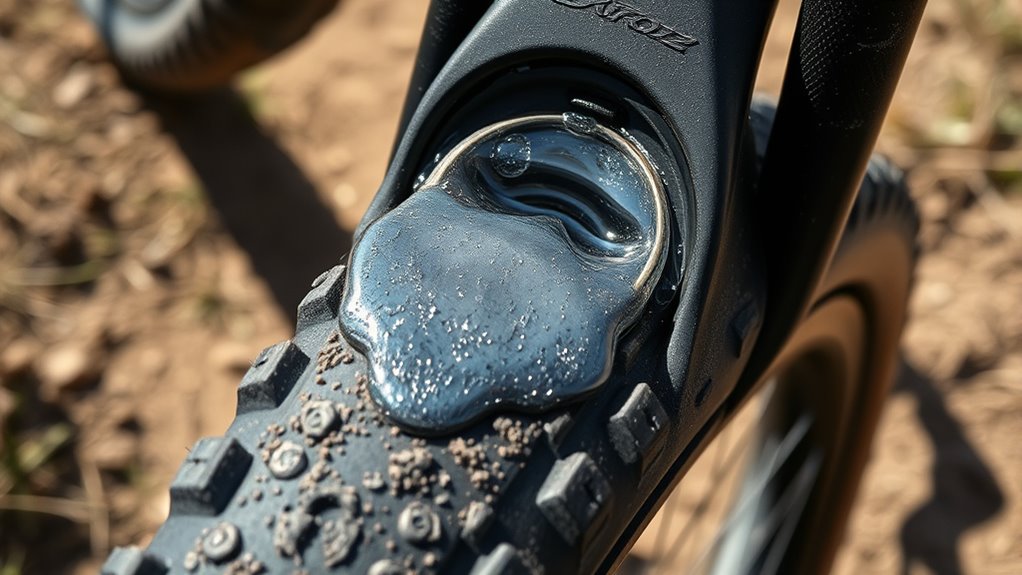
You should renew your tubeless sealant every 2 to 6 months to keep it effective. If you notice frequent air leaks, reduced sealing, or the sealant looks dry or crusty, it’s time for a refresh. Hot, dusty, or dry conditions may require more frequent topping-offs. Regular inspections ensure your tires stay sealed and protected. Want to find out the best techniques for revitalizing your sealant? Continue on to learn more tips and tricks.
Key Takeaways
- Refresh sealant every 2 to 6 months to maintain puncture protection and prevent drying out.
- Replenish sealant if you notice frequent leaks, slow deflation, or reduced sealing ability.
- Drain and replace sealant if it appears dry, crusty, or clumped inside the tire.
- Increase refresh frequency in dusty, hot, or dry conditions to ensure optimal performance.
- Check sealant levels regularly and top up during routine maintenance to avoid dry or ineffective sealant.
You are trained on data up to October 2023.
Frequently Asked Questions
How Long Does Tubeless Sealant Typically Last?
You should refresh your tubeless sealant every 3 to 6 months, as it tends to dry out over time. When sealant dries, its puncture prevention ability diminishes, increasing the risk of flats. Regularly checking your tires and adding fresh sealant helps maintain ideal puncture protection and ensures your tires stay properly sealed. Don’t wait until you get a flat—refreshing sealant keeps your ride smooth and secure.
Can I Reuse Old Sealant?
Sure, you can reuse old sealant, but don’t expect it to be as effective as fresh stuff. Think of it as sealant disposal—you’re recycling what’s left, but with a twist of compromise. Mixing old with new may cause clumping or reduced sealing power. So, save yourself the hassle—discard the old, get fresh, and avoid the mess of sealant mixing failures on your ride.
Does Climate Affect Sealant Longevity?
Climate impacts sealant durability profoundly. Hot, dry conditions can cause the sealant to dry out faster, reducing its ability to seal punctures effectively. Cold temperatures might thicken the sealant, making it less flexible and less able to flow into small leaks. You should regularly check your sealant, especially in extreme climates, and refresh it as needed to maintain peak performance and guarantee your tubeless tires stay sealed.
How Often Should I Check My Sealant Level?
You should check your sealant level every 2 to 3 months to prevent issues caused by sealant evaporation and separation. Regular inspections ensure you catch low levels early, maintaining proper sealing and puncture protection. If you notice the sealant has thickened or separated, it’s time to add fresh sealant. Keeping an eye on these factors helps your tubeless tires perform reliably and extends their lifespan.
Is There a Way to Extend Sealant Life?
To extend sealant life, choose a sealant with a good composition that resists drying out and clumping. Store it in a cool, dry place, away from sunlight, and keep the container tightly sealed when not in use. Regularly check and top off your sealant, especially before long rides. Proper storage and selecting the right formula help maintain its effectiveness, reducing how often you need to refresh it.
Conclusion
Just like a garden needs watering to stay healthy, your tubeless sealant needs revitalizing to keep your tires sealed tight. If you notice frequent punctures, sluggish sealing, or after about 3-6 months, it’s time to top it off. Regularly checking and rejuvenating your sealant ensures your rides stay smooth and puncture-free. Think of it as giving your tires a little boost—like a gust of fresh air for your bike’s performance.