To keep your tubeless sealant working well, you should refresh it every 2 to 6 months, depending on your riding conditions and signs of drying or thickening. If you notice frequent leaks, slow puncture seals, or low sealant levels, it’s time to top it off or fully replace it. In cases of persistent leaks or clogged valves, a complete change is best. Knowing when to renew or replace ensures reliable puncture repair—here’s what you need to know next.
Key Takeaways
- Refresh sealant every 2-6 months to maintain optimal puncture sealing performance.
- Refill or top off sealant when tires lose pressure more frequently or sealant appears rubbery or dried out.
- Fully replace sealant if persistent leaks, clogged valves, or inability to seal punctures occur despite topping off.
- Inspect sealant level periodically, especially for frequent riders or in harsh environmental conditions.
- Clean and empty tires before refilling to ensure effective sealing and prevent buildup or clogs.

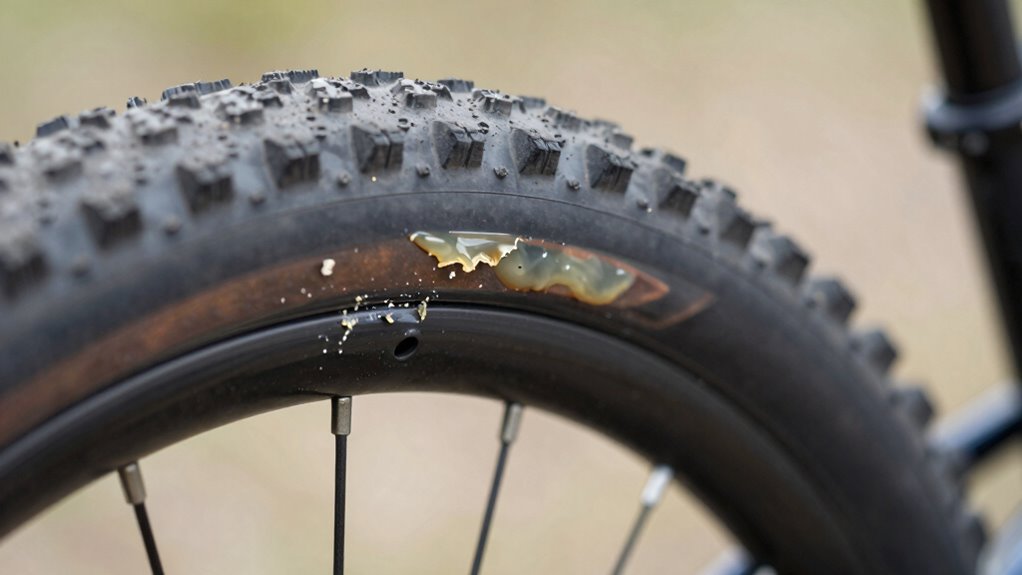
Have you ever experienced a flat tire during a ride and wondered if there’s an easier way to fix it? Tubeless sealant has become a game-changer, offering quick fixes and reducing the need for carrying spare tubes. But knowing when to refresh or replace this sealant is vital for maintaining its effectiveness. Sealant longevity varies based on riding conditions, climate, and tire type, but generally, it lasts between two to six months. Over time, the sealant dries out, becoming less sticky and less capable of sealing punctures effectively. If you notice that your tires are losing pressure more frequently or the sealant has become rubbery and thick, it’s a sign that it’s time for a refill or replacement.
Refill frequency depends on how often you ride, the terrain, and the environment. If you’re an everyday rider or tackling rough trails regularly, you’ll need to check and top off your sealant more often—perhaps every couple of months. Conversely, infrequent riders might get away with a longer interval but should still inspect their tires before rides. It’s a good habit to periodically remove the tire and inspect the sealant level, especially if you notice slow leaks or difficulty sealing punctures. Just keep in mind that even if the sealant looks liquid and fresh, it might have lost some of its sealing power, so a refill might be necessary even without visible signs of drying. Additionally, the effectiveness of the sealant can be impacted by the type of tire and rim, so understanding tire and rim compatibility is crucial for optimal performance.
When it’s time to replace the sealant altogether, it’s best to do so thoroughly. Completely empty the tire, clean out any residual sealant, and add fresh sealant. This ensures you’re starting with a clean, effective product that can seal future punctures efficiently. Keep in mind that some sealants have additives that can clog valves or cause buildup, so cleaning the valve before refilling is recommended. Regular maintenance extends the lifespan of your tubeless setup, minimizes flats, and guarantees reliable performance. If you notice persistent leaks or difficulty sealing new punctures even after refilling, it might be a sign that the sealant has degraded beyond simple rejuvenation, and replacing it entirely is the best way to go.
Frequently Asked Questions
How Long Does Tubeless Sealant Typically Last Before Drying Out?
You’ll find that tubeless sealant typically lasts about 2 to 6 months before drying out, depending on conditions. As the sealant’s shelf life approaches, it begins to dry out, reducing its effectiveness. You should check the sealant regularly, especially if you notice slower puncture sealing. When it’s dry or past its shelf life, it’s time to add fresh sealant to guarantee your tires stay well-sealed and protected on your ride.
Can I Use Any Sealant Brand Interchangeably?
Did you know that over 60% of cyclists switch sealant brands without issues? You can generally use different brands interchangeably, but sealant compatibility matters. Some brands have unique formulas that may not blend well, reducing effectiveness. Always check label recommendations. To avoid problems, stick to the same brand if possible, or verify the new sealant’s ingredients are compatible. This way, you keep your tubeless setup reliable and puncture-resistant.
What Are Signs That Sealant Has Gone Bad?
If your sealant has deteriorated, you’ll notice it’s less effective at sealing punctures and may appear dry or clumpy. You might hear air escaping or see the sealant hardening inside the tire. These signs indicate it’s time to refresh or replace the sealant. As it deteriorates, it loses its ability to seal effectively, especially during a tire puncture, risking flats and reduced performance.
Is It Safe to Top off Sealant Without Removing the Tire?
You can safely top off sealant without removing the tire if the sealant remains compatible with your existing type. Imagine a quick splash of fresh liquid sealing tiny leaks—no need to dismount the tire. However, if the sealant has dried out or thickened, it’s best to remove the tire for a thorough cleaning and proper reapplication. Consider tire removal to guarantee ideal sealing and avoid mixing incompatible sealants, which can compromise performance.
How Often Should I Check Sealant Levels During Rides?
You should check your sealant levels at least every couple of rides, especially if you’re riding rough terrain. Keep an eye on your tire pressure, as a sudden loss often signals a puncture or low sealant. During rides, periodically inspect your tires for visible sealant or signs of leaks to guarantee quick puncture repair. Regular checks help maintain peak performance and prevent flats, keeping your ride smooth and safe.
Conclusion
Remember, tubeless sealant is your bike’s silent guardian, constantly working behind the scenes. When it starts to dry out or fails to seal punctures, it’s time for a refresh or replacement—think of it as giving your tire a much-needed boost. Keep an eye on its appearance and performance, and don’t let it become the weak link in your ride. With fresh sealant, your bike stays ready to conquer any trail, like a trusty steed at your side.