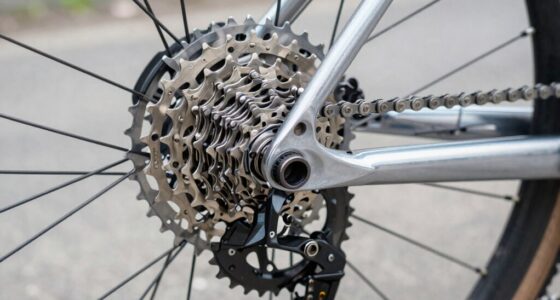
Your cassette wears unevenly because of poor maintenance like dirt buildup, improper lubrication, and misalignment, which increase friction and cause certain teeth to deteriorate faster. Aggressive shifting places extra stress on specific parts, speeding up wear. Material fatigue from regular use weakens gear teeth over time, especially where forces are uneven. Using better shifting techniques and keeping your drivetrain clean can help prevent this. To discover more about fixing uneven cassette wear, keep exploring the details.

Get sports gear delivered free — and shop member deals
- Fast, free delivery on millions of items
- Access to Prime Big Deal Days deals on October 6–7
- Prime Video, Amazon Music and more included
Key Takeaways
- Improper lubrication causes increased friction, leading to uneven gear tooth wear.
- Misalignment of the drivetrain results in uneven force distribution across the cassette.
- Aggressive shifting under load concentrates stress on specific gears, accelerating localized wear.
- Material fatigue weakens gear teeth over time, causing uneven deterioration.
- Dirt, grime, and lack of maintenance hinder lubrication, increasing the risk of uneven wear.

If you’ve noticed that some cassettes wear out unevenly, you’re not alone. It’s a common issue that can leave you puzzled about why certain gears seem to degrade faster than others. The answer often lies in a combination of lubrication issues and material fatigue. When your cassette isn’t properly lubricated, the metal parts don’t glide smoothly, which causes uneven wear patterns. Friction increases, especially on the gears that experience the most contact, leading to accelerated deterioration in specific spots while other parts remain relatively intact. Over time, this uneven friction wears down the teeth, making shifting less smooth and the cassette less reliable. Proper lubrication practices are essential to prevent excess friction and uneven wear. Material fatigue also plays a significant role in uneven wear. Cassettes are made from metals or composites designed to withstand repeated stress, but no material is immune to the effects of fatigue. Continuous use causes tiny cracks to form within the metal, especially around the teeth where stress is concentrated. These cracks grow over time, weakening the structure of the gear teeth. If a particular section of the cassette experiences more force—say, during aggressive shifting or riding on rough terrain—that area will fatigue faster, leading to uneven degradation. This process can be subtle at first, but eventually, it results in noticeable wear disparities across the cassette. Additionally, material properties influence how quickly a cassette wears down under stress, making some materials more prone to uneven deterioration than others. Ensuring optimal drivetrain alignment can also help minimize uneven stress distribution and prolong the life of your cassette. Regularly inspecting and adjusting your drivetrain setup ensures forces are more evenly distributed, further reducing uneven wear.
Uneven cassette wear results from poor lubrication and material fatigue, causing friction, gear degradation, and unreliable shifting over time.
Another factor that contributes to uneven wear is the way you shift gears. Rapid or aggressive shifting puts extra stress on specific parts of the cassette, which can exacerbate material fatigue and cause uneven wear patterns. If you tend to shift under load or don’t allow the derailleur to settle into gear properly, certain teeth may bear more force than others. This uneven distribution of stress accelerates fatigue in those areas, causing them to wear down quicker than the rest. Proper shifting technique can help distribute forces more evenly across the cassette and prolong its lifespan. Additionally, improper maintenance can worsen lubrication issues, further increasing friction and uneven wear. Dirt, grime, and old lubricant can build up, creating a barrier that prevents proper lubrication from reaching the gear surfaces. This increases friction and accelerates material fatigue, especially in the high-stress zones. Regular cleaning and timely lubrication help mitigate these problems, promoting even wear and extending the life of your cassette. To further reduce uneven wear, consider inspecting your drivetrain components regularly for signs of wear and replacing parts promptly to prevent stress concentrations on specific areas. Being mindful of drivetrain cleanliness can significantly impact how evenly your cassette wears over time.
In the end, uneven wear on your cassette isn’t just about age; it’s a combination of mechanical stress, lubrication practices, and the inherent fatigue of materials. Paying attention to proper shifting techniques, maintaining clean and well-lubricated components, and replacing worn parts when needed can help ensure your cassette wears evenly and performs reliably for longer.
As an affiliate, we earn on qualifying purchases.
Frequently Asked Questions
Can Cassette Wear Be Reversed or Repaired?
Cassette wear can’t be fully reversed, but you can improve its condition with proper tape cleaning techniques to remove dirt and magnetic tape degradation. If the tape is severely damaged, transferring the audio to a digital format is your best option. Regularly cleaning your cassette player and storing tapes properly helps prevent further wear. While repairs are limited, these steps preserve your recordings and extend their lifespan.
How Does Cassette Quality Affect Wear Patterns?
Your cassette’s quality plays a subtle role in its wear patterns. Higher-quality tapes resist tape degradation better over time, thanks to superior materials that reduce uneven wear. Conversely, lower-quality tapes, influenced by material choices, tend to develop irregular wear more quickly. These differences affect how smoothly your tape plays and how evenly it ages. Choosing better-quality cassettes can help guarantee a more consistent performance and longevity.
Is It Better to Store Cassettes Vertically or Horizontally?
Storing cassettes vertically is better for tape storage, as it helps prevent warping and uneven wear. Keep them upright on shelves to maintain their shape and avoid pressure points that cause damage. Proper shelf organization guarantees easy access and reduces the risk of accidentally dropping or mishandling. Avoid stacking cassettes horizontally for long periods, as this can lead to uneven wear and potential distortion over time.
Do Different Tape Brands Wear Differently?
Yes, different tape brands wear differently. You’ll notice variations in tape longevity and brand durability, depending on the manufacturer’s quality. Higher-quality brands often use better materials and manufacturing processes, resulting in more even wear and longer-lasting tapes. Cheaper options might wear out faster or develop uneven degradation over time. To get the most out of your cassettes, opt for reputable brands known for their durability and consistent performance.
How Often Should I Replace My Cassette Tapes?
Your cassette tapes can last for years, but once you notice tape degradation or playback issues, it’s time to replace them—think of it as saving your precious recordings from imminent disaster. Generally, replace tapes every 10-20 years with proper storage and regular playback maintenance. If you experience uneven wear or sound quality loss, don’t wait—early replacement guarantees your recordings stay pristine and your listening experience remains exceptional.
Conclusion
If you notice your cassette wearing unevenly, don’t ignore it—your gear is crying out for help. Left unchecked, this tiny component could give out faster than a rocket ship at launch, leaving you stranded in silence. Regular maintenance, proper shifting, and avoiding aggressive riding can extend its lifespan. Treat your cassette like a precious jewel, and it’ll reward you with smooth rides and fewer surprises, making every pedal stroke feel like flying on the wings of perfection.
NFL season / tailgating Picks
team gear
As an affiliate, we earn on qualifying purchases.