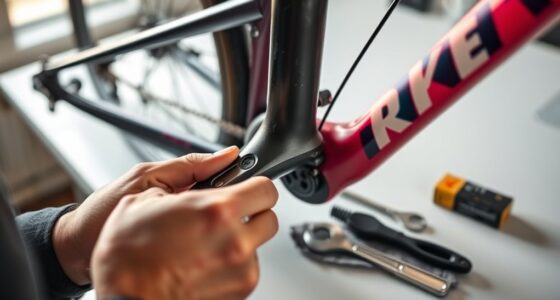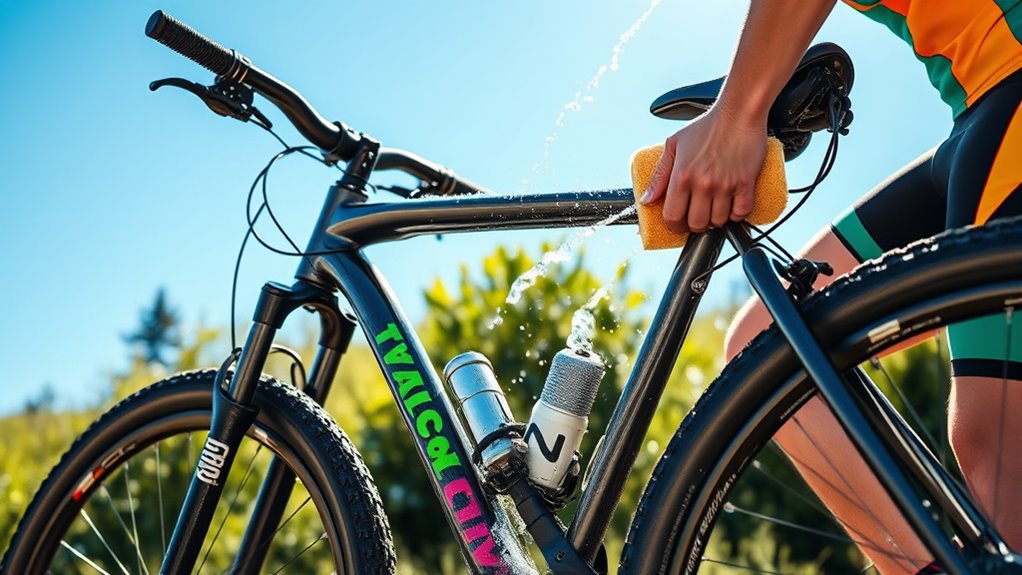

To wash your bike the right way, start by using gentle, bike-specific cleaners or biodegradable soap diluted properly to lift dirt without damaging your bike’s finish. Apply the cleaner with a soft sponge or microfiber cloth, focusing on hard-to-reach spots, and avoid harsh household products. Rinse thoroughly with water, then dry completely with a microfiber towel or compressed air to prevent rust. Caring for your bike this way keeps it in top shape; learn more to perfect your technique.
Key Takeaways
- Use bike-specific or biodegradable soap, diluted properly, to gently clean without damaging surfaces.
- Apply cleaning products with a soft cloth or sponge, focusing on hard-to-reach areas, to prevent scratches.
- Rinse thoroughly and dry with microfiber towels or compressed air to avoid water spots and rust.
- Lubricate moving parts after cleaning to maintain performance and prevent corrosion.
- Regularly clean and dry your bike in a sheltered area to prolong its lifespan and keep it looking new.
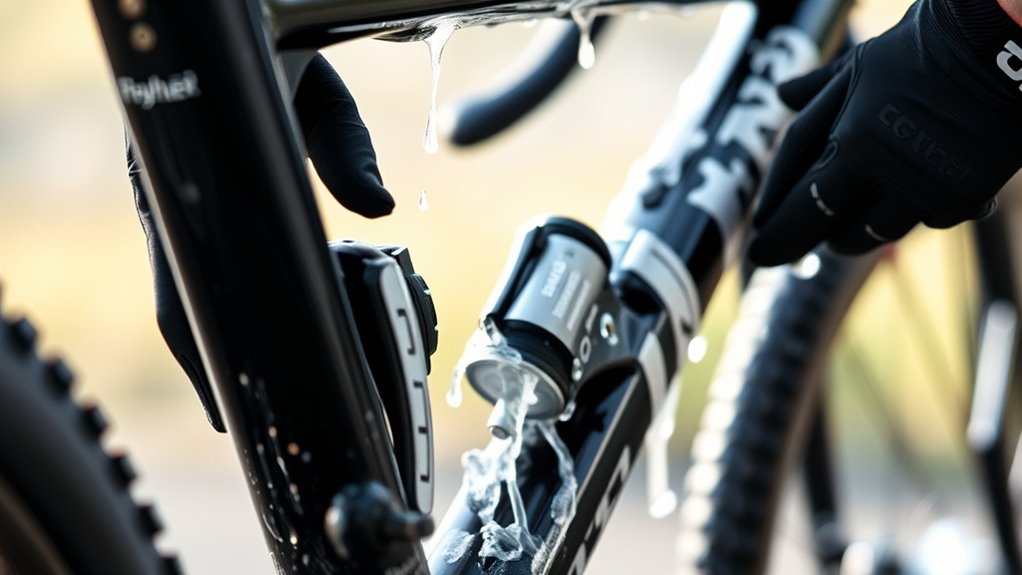
Ever wonder how to clean your bike effectively without causing damage? The key lies in choosing the right detergent and mastering proper drying techniques. When it comes to detergent selection, you want a solution that cuts through grime without harming your bike’s delicate components or paint. Regular household cleaners or dish soaps might seem convenient, but they can be too harsh and strip away protective coatings or damage rubber and plastic parts. Instead, opt for a bike-specific cleaner or a gentle, biodegradable soap designed for delicate surfaces. These products are formulated to lift dirt without leaving residue or causing corrosion. Always dilute your cleaner according to the instructions—using too much can be just as problematic as using too little, leading to streaks or ineffective cleaning. After applying the cleaner, use a soft sponge or microfiber cloth to gently scrub away dirt, paying attention to hard-to-reach areas like chain stays and under the saddle. Remember, aggressive scrubbing can scratch the paint or damage components, so gentle pressure is best. Additionally, selecting pressureless cleaning methods helps prevent damage to sensitive parts.
Drying techniques are just as important as the cleaning process. Leaving your bike wet can lead to rust and corrosion, especially on metal parts and fasteners. After rinsing off the soap and dirt, avoid air drying in direct sunlight, as this can cause water spots or rapid evaporation that leaves residue behind. Instead, use clean, dry microfiber towels or soft cloths to pat the bike dry. For areas prone to water retention, like chain links and gears, a compressed air can help blow out excess water from tight spots. This ensures thorough drying and reduces the risk of rust. Once the bike is dry, consider applying a light coat of lubricant to the chain and moving parts to protect against moisture. Proper drying techniques not only preserve your bike’s appearance but also extend its lifespan by preventing corrosion.
Frequently Asked Questions
How Often Should I Wash My Bike?
You should wash your bike every few rides or at least once a month, depending on riding conditions. During cleaning, take time for bike waxing to protect the frame and inspect your tires for wear or damage. Regular washing prevents dirt buildup, which can affect performance. Plus, it’s a good opportunity to spot issues early, ensuring your bike stays in top shape and rides smoothly every time.
Can I Use a Pressure Washer on My Bike?
You can use a pressure washer on your bike, but be cautious of pressure washer risks. High pressure can damage sensitive components or force water into bearings and hubs. To avoid this, use the lowest pressure setting and keep the nozzle at a safe distance. Focus on proper bike washing techniques by rinsing gently and avoiding direct spray on delicate parts. This helps keep your bike clean without risking damage.
What Type of Soap Is Best for Bike Cleaning?
For bike cleaning, you should use bike soap recommendations that are gentle and effective. Look for eco-friendly cleaning agents to protect your bike and the environment. These soaps are specially formulated to remove dirt without damaging your paint or components. Avoid harsh detergents or household cleaners, which can harm your bike’s finish. Using the right bike soap guarantees a thorough clean while keeping your bike in top condition and being kind to the planet.
Should I Remove the Bike Chain Before Washing?
Think of your bike as a trusted friend. Removing the chain before washing shows respect and helps clean every nook. You should definitely remove the chain for a thorough clean and easier access to grime. Plus, it’s a great chance to apply lubrication tips afterward. This simple step keeps your bike running smoothly and extends its life. So, take off the chain, wash carefully, and give your bike the care it deserves.
How Do I Dry My Bike Properly After Washing?
After washing your bike, you should dry it thoroughly with a clean, soft cloth to prevent rust and water spots. Pay special attention to areas around the chain and gears. Once dry, apply bike polish to safeguard the frame and enhance shine. Don’t forget to check your tires and do some tire maintenance if needed. Proper drying ensures your bike stays in top shape and ready for your next ride.
Conclusion
Now that you know the proper process, you can confidently clean your bike with care and consistency. Remember, a spotless saddle and shining spokes not only boost your bike’s beauty but also boost its longevity. By following these simple steps, you’ll prevent problems and prolong performance. So, stay steady, scrub smartly, and savor your shining, spotless cycle. Keep your cleaning routine consistent, and your bike will thank you with every ride!