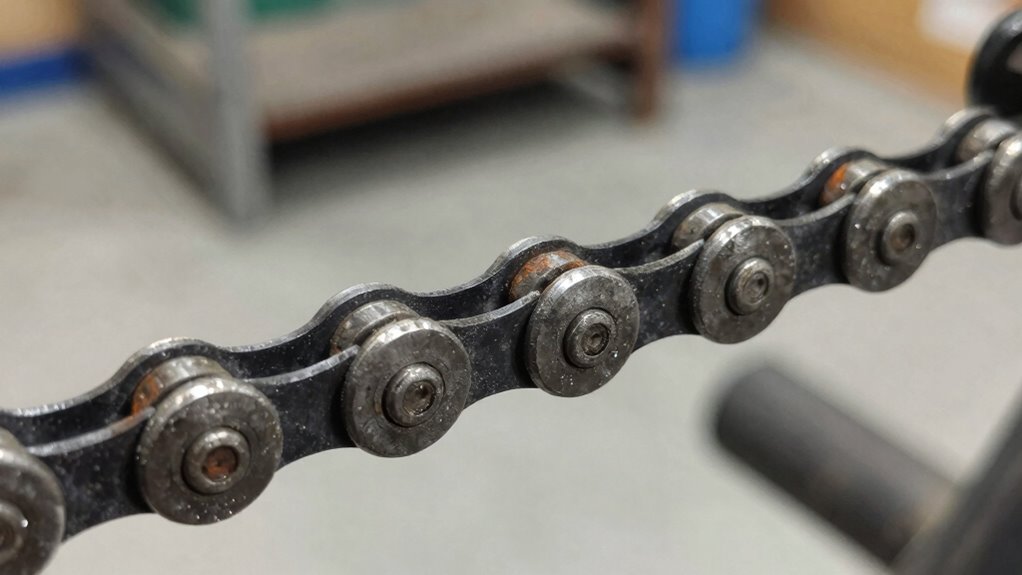

Many riders believe chain wear is an abrupt event, but it’s actually a slow process that can be monitored with simple tools. Replacing your chain early when wear indicators show, ideally before it stretches too much, saves you money by preventing damage to your cassette and chainrings. Waiting too long can lead to costly repairs. Understanding the true signs of wear helps you avoid unnecessary expenses—keep exploring to learn how to spot them accurately.
Key Takeaways
- Chain wear is a gradual process; regular inspections prevent unnecessary early replacements.
- Using a chain wear indicator helps determine the optimal time to replace, saving money on costly drivetrain damage.
- Replacing a chain before excessive wear occurs maintains shifting performance and extends component life.
- Ignoring chain wear can lead to damage of cassette and chainrings, increasing repair costs.
- Proper maintenance, including cleaning and lubrication, prolongs chain life and delays the need for replacement.
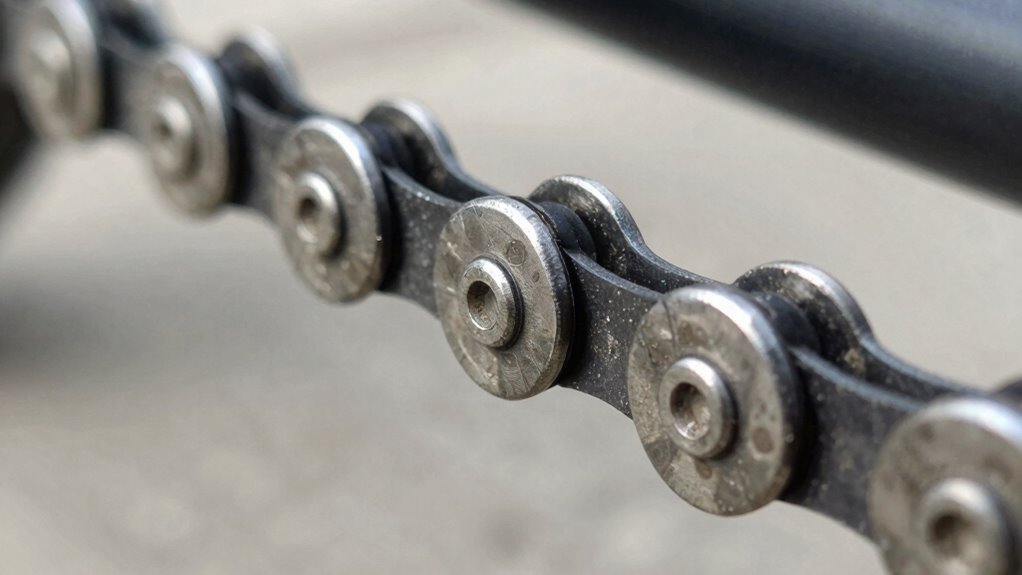
Many cyclists believe that chain wear is either an immediate sign of needing a replacement or something that can be ignored until it causes drivetrain issues. This misconception often leads to unnecessary replacements or, worse, waiting too long and risking damage to other components. Understanding how to evaluate chain longevity and establishing proper maintenance routines can make a crucial difference in your bike’s performance and your wallet.
First, it’s important to recognize that chain wear isn’t an abrupt event but a gradual process. Your chain stretches over time as the pins and rollers wear down from friction and use. This stretching affects how well the chain meshes with the cassette and chainrings, which can lead to poor shifting, increased wear on other drivetrain parts, and ultimately, costly repairs. Regularly checking your chain’s condition helps you determine whether it’s nearing the end of its lifespan or still has plenty of life left. Many cyclists underestimate the value of routine inspections, but consistent maintenance routines, including chain checks, can extend chain longevity and save money.
Using a chain wear indicator tool is one of the simplest ways to assess whether your chain needs replacing. These inexpensive tools slide into the links and measure the amount of stretch. If the indicator shows considerable wear, it’s time to replace the chain before other parts suffer unnecessary wear. Waiting until your drivetrain begins to skip or shift poorly is a sign that the chain has already caused damage, which might require replacing more than just the chain. Conversely, replacing the chain too early, before it’s worn out, wastes money and resources. By monitoring chain wear with a proper tool and adhering to maintenance routines, you optimize chain longevity and keep your drivetrain running smoothly.
Another key aspect of maintenance routines is keeping your chain clean and lubricated. Dirt, grime, and old lubricant accelerate wear, causing the chain to stretch faster and reducing its lifespan. A simple routine of cleaning your chain after rides and applying appropriate lubricant can greatly extend its service life. Additionally, inspecting your chain for kinks, stiff links, or damage during regular maintenance helps catch issues early. These small checks prevent problems from snowballing into expensive repairs or premature replacements. Moreover, using high-quality projector technology and understanding their features can help you visualize your progress and maintenance needs more effectively.
Frequently Asked Questions
How Often Should I Check My Chain for Wear?
You should check your chain for wear every 300 to 500 miles or after rough rides. Regularly clean your chain to prevent dirt buildup that accelerates sprocket wear. During inspections, look for stiff links or slack, and use a chain wear indicator tool to measure elongation. Catching early signs of wear helps you replace the chain before sprocket damage occurs, saving you money and ensuring smooth riding.
Can I Extend Chain Life With Regular Lubrication?
Yes, regular lubrication can extend your chain’s life. Use proper lubrication techniques, applying lubricant evenly to avoid over-application that attracts dirt. Incorporate chain cleaning methods, like removing dirt and grime before lubing, to prevent accelerated wear. Consistent maintenance reduces friction and rust, helping your chain stay smooth and durable longer. Remember, clean and well-lubricated chains perform better and save you money by delaying replacement.
Are There Specific Tools for Measuring Chain Wear Accurately?
You can’t just eyeball chain wear; you need specific tools to get it right. A chain gauge or wear indicator is essential, acting like a litmus test for your chain’s health. These tools measure elongation accurately, so you know when it’s time to replace your chain before it causes more damage. Investing in a quality chain gauge ensures you don’t get caught with your pants down—saving you money in the long run.
What Impact Does Riding Terrain Have on Chain Longevity?
Riding terrain directly impacts your chain durability. Rough, rocky, or muddy trails cause more wear, leading to quicker chain elongation and potential damage. Conversely, smooth, paved surfaces are gentler, extending your chain’s lifespan. If you frequently ride challenging terrain, expect to replace your chain sooner. To maximize chain durability, regularly inspect it and adjust your riding habits based on terrain conditions, saving you money and ensuring smoother rides.
Is Chain Replacement Necessary After a Minor Stretch?
Don’t fall for chain stretch myths—minor stretch isn’t an automatic sign you need a replacement. You could be fooled by replacement misconceptions, thinking a slight stretch demands immediate change. Instead, measure your chain’s length or use a chain checker tool; if it exceeds the recommended stretch, then replace it. Riding on a slightly stretched chain can cause more wear on your cassette and chainrings, costing you more in the long run.
Conclusion
Now that you know the truth about chain wear, you can confidently decide when to replace it. Imagine your bike gliding smoothly over the road, gears shifting seamlessly like a well-oiled machine. By replacing your chain at the right time, you prevent costly damage and keep your ride whisper-quiet beneath you. So, don’t wait for the squeal—trust your eyes and save money, turning every ride into a silky-smooth adventure.