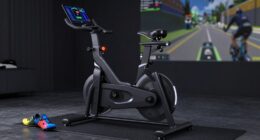
The best indoor bike trainer for most riders is the Saris M2, which pairs electromagnetic resistance with smart-training features. For a simpler, quieter-feeling fluid option, the Saris Fluid2 is a strong alternative, while the ThinkRider X2Max suits riders seeking a smart trainer without moving to a wheel-off setup. The main tradeoffs are smart control versus simplicity, fluid versus magnetic resistance, and convenience versus bike compatibility. A basic magnetic stand can cover occasional indoor rides, but it gives up the changing resistance and connected training features of smart models. Read on for how all 12 options compare and which type best fits your bike, space, and riding plans.

Get sports gear delivered free with Prime
- Fast, free delivery on millions of items
- Prime Video, Amazon Music and more included
- Member-only deals all year
Complete the kit



Key Takeaways
- The Saris M2 is the strongest all-round choice in this lineup for riders who want smart electromagnetic resistance without buying a direct-drive trainer.
- The Saris Fluid2 prioritizes a more progressive resistance feel over app-controlled workouts, making it a better fit for straightforward training than connected sessions.
- The ThinkRider X2Max is the smart-training alternative among the listed stands, while the magnetic models focus on simpler, less connected indoor riding.
- Wheel and axle compatibility deserves an early check: the CXWXC 26–29-inch and 700C model states its wheel range, but buyers should verify the fitting details for any trainer before ordering.
- Foldable magnetic stands favor storage and basic use, while fluid and smart options add a more training-focused ride at the cost of greater setup or feature complexity.
| Alpcour Foldable Magnetic Bike Trainer Stand |  | Best for Storage and Travel | Resistance mechanism: Magnetic | Resistance settings: 6 | Compatible wheel sizes: 26–28 in and 700c; 29 in also listed | VIEW LATEST PRICE | See Our Full Breakdown |
| FDW Magnetic Indoor Bike Trainer Stand |  | Best for Higher Weight Capacity | Model: FDW-M8 | Resistance mechanism: Magnetic | Resistance settings: 5 | VIEW LATEST PRICE | See Our Full Breakdown |
| Sportneer Magnetic Indoor Bike Trainer Stand |  | Best for Easy Resistance Changes | Model: TY-JS007-C | Resistance mechanism: Magnetic | Resistance settings: 6 | VIEW LATEST PRICE | See Our Full Breakdown |
| Magnetic Indoor Bike Trainer Stand |  | Best for Broad Wheel Compatibility | Resistance type: Magnetic | Resistance levels: 6 | Compatible wheel sizes: 26–29 in, including 700c | VIEW LATEST PRICE | See Our Full Breakdown |
| ThinkRider X2Max Smart Bike Trainer |  | Best Smart Trainer | Resistance mechanism: Electromagnetic | Power: Up to 2000 W | Power meter error: ±2% | VIEW LATEST PRICE | See Our Full Breakdown |
| CXWXC Magnetic Bike Trainer for Indoor Cycling, 26–29-Inch and 700C Wheels |  | Best for Adjustable Resistance on a Budget | Brand: CXWXC | Model: MT-04YELLOW | Resistance: 6 magnetic resistance levels | VIEW LATEST PRICE | See Our Full Breakdown |
| Yaheetech Magnetic Bike Trainer Stand for Indoor Riding |  | Best for Simple, Stable Indoor Sessions | Brand: Yaheetech | Material: Alloy steel | Resistance mechanism: Magnetic | VIEW LATEST PRICE | See Our Full Breakdown |
| CXWXC Magnetic Bike Trainer for Indoor Cycling |  | Best for High-Capacity, Foldable Training | Brand: CXWXC | Model: MT-04RED | Resistance: 6 adjustable magnetic levels | VIEW LATEST PRICE | See Our Full Breakdown |
| Alpcour Fluid Bike Trainer Stand for Indoor Riding |  | Best for Progressive Fluid Resistance | Brand: Alpcour | Model: APC-BTSFBK | Material: Stainless steel | VIEW LATEST PRICE | See Our Full Breakdown |
| VEVOR Foldable Magnetic Bike Trainer with 6 Resistance Levels |  | Best for a Steel-Frame Six-Level Trainer | Brand: VEVOR | Model: HS-QX-009AK | Resistance mechanism: Magnetic | VIEW LATEST PRICE | See Our Full Breakdown |
| Saris Fluid2 Indoor Bike Trainer |  | Best for a Smooth, Simple Ride | Resistance mechanism: Fluid | Bike compatibility: Hybrid, mountain, and road bikes | Frame material: Aluminum | VIEW LATEST PRICE | See Our Full Breakdown |
| Saris M2 Smart Indoor Electromagnetic Bike Trainer |  | Best Smart Wheel-On Pick | Resistance mechanism: Electronic electromagnetic | Connectivity: ANT+ FE-C and Bluetooth | Accuracy: ±5% | VIEW LATEST PRICE | See Our Full Breakdown |
| indoor bike trainer | Resistance mechanism | Compatible wheel sizes | Dimensions | Model |
|---|---|---|---|---|
| Alpcour Foldable Magnetic Bike | Magnetic | 26–28 in and 700c; 29 in also listed | 21.5 × 19 × 16.5 in | — |
| FDW Magnetic Indoor Bike Train | Magnetic | 66 cm to 700c (69 cm) | 19.6 × 17.7 × 21.6 in | FDW-M8 |
| Sportneer Magnetic Indoor Bike | Magnetic | — | 22 × 22 × 15.5 in | TY-JS007-C |
| Magnetic Indoor Bike Trainer S | — | 26–29 in, including 700c | — | — |
| ThinkRider X2Max Smart Bike Tr | Electromagnetic | — | — | — |
| CXWXC Magnetic Bike Trainer fo | — | 26–29 inches, including 700C | — | MT-04YELLOW |
| Yaheetech Magnetic Bike Traine | Magnetic | 26–28 inches and 700C | 23.8 × 21.5 × 14.8 inches | — |
| CXWXC Magnetic Bike Trainer fo | — | 26–29 inches, including 700C | — | MT-04RED |
| Alpcour Fluid Bike Trainer Sta | Fluid | 26–29 inches and 700C | 19 × 19 × 18 inches | APC-BTSFBK |
| VEVOR Foldable Magnetic Bike T | Magnetic | 26–29 inches and 700C | 23.23 × 21.85 × 16.14 inches | HS-QX-009AK |
| Saris Fluid2 Indoor Bike Train | Fluid | — | 22 x 7 x 20 inches | — |
| Saris M2 Smart Indoor Electrom | Electronic electromagnetic | — | 22 × 20 × 9 inches | — |
More Details on Our Top Picks
Alpcour Foldable Magnetic Bike Trainer Stand
The Alpcour stands out for riders who want a straightforward magnetic trainer that folds away between sessions. Its six resistance settings offer one more adjustment than the FDW Magnetic Indoor Bike Trainer Stand, while the included carrying bag and front wheel riser make moving and setting it up more convenient. Compatibility covers common road and mountain bike sizes, though wheel fit should be checked carefully: the listing gives a range of 26–28 inches and 700c, alongside a separate 29-inch entry. At 9.34 kg, it is easier to carry than the 19.3-pound Sportneer, but its stated load capacity is lower than the FDW’s. Tire noise can still be noticeable, so this is a better fit for riders with smooth tires and a place to manage vibration than for those expecting a quiet smart-training setup.
Pros:- Six resistance settings provide a useful range for basic indoor workouts.
- Foldable stainless steel frame and included carrying bag simplify storage and transport.
- Front wheel riser is included, so it does not need to be sourced separately.
- Designed for both road and mountain bikes.
Cons:- Tire and resistance noise may be noticeable indoors.
- Wheel-size listings are not fully consistent, so some buyers may need to verify fit before purchase.
- Its listed 150–250 lb load-capacity range is less reassuring than the FDW’s stated 300 lb maximum.
Best for: Road or mountain bike owners who need a foldable trainer with a carrying bag for seasonal storage or occasional travel.
Not ideal for: Riders seeking app-connected workouts, very quiet operation, or a clearly specified fit for an unusual wheel size.
- Resistance mechanism:Magnetic
- Resistance settings:6
- Compatible wheel sizes:26–28 in and 700c; 29 in also listed
- Compatible bike types:Mountain and road bikes
- Material:Stainless steel
- Dimensions:21.5 × 19 × 16.5 in
- Weight:9.34 kg
- Included accessories:Front wheel riser block and carrying bag
Our verdict“Choose the Alpcour if a portable, foldable magnetic stand matters more than smart features or a higher stated load limit.”
FDW Magnetic Indoor Bike Trainer Stand
The FDW is a practical pick for riders who want a foldable magnetic stand with a stated 300 lb capacity. That limit is higher than the Alpcour’s listed range and the ThinkRider X2Max’s 240 lb capacity, though the FDW gives up smart connectivity and the X2Max’s gradient simulation. Five resistance settings cover basic changes in effort, and the unit is rated at 60 dB or less at its lowest setting; that figure does not promise the same sound level at harder resistance. Its steel frame folds for storage, but at 17.6 pounds it is not as light as the Alpcour. Fit is listed for a narrow wheel range from 66 cm to 700c, so I would check the bike’s wheel size before buying. The short 90-day warranty is another reason to treat this as a simple, budget-minded setup rather than a long-term feature-rich system.
Pros:- Stated maximum supported weight of 300 lb exceeds the Alpcour’s listed range.
- Five resistance settings support basic workout variation.
- Folding steel frame helps with storage and transport.
- Noise level is specified as up to 60 dB at the first resistance setting.
Cons:- The noise rating applies to the lowest resistance setting, not necessarily harder efforts.
- Listed wheel compatibility is narrower and should be checked against the bike.
- The 90-day warranty is shorter than the one-year coverage listed for the Sportneer and ThinkRider X2Max.
Best for: Riders who already own a compatible road or mountain bike and want a folding trainer with a higher stated weight limit.
Not ideal for: Cyclists who want app-connected training, quieter effort at higher resistance, broad wheel compatibility, or a longer warranty.
- Model:FDW-M8
- Resistance mechanism:Magnetic
- Resistance settings:5
- Compatible wheel sizes:66 cm to 700c (69 cm)
- Maximum supported weight:300 lb
- Item weight:17.6 lb
- Dimensions:19.6 × 17.7 × 21.6 in
- Warranty:90 days
Our verdict“Pick the FDW for a basic folding trainer with a higher stated load limit, but skip it if you want connected workouts or broader fit guidance.”
Sportneer Magnetic Indoor Bike Trainer Stand
The Sportneer’s strongest distinction among the wheel-on magnetic options is its handlebar-mounted resistance remote: riders can change among six levels without getting off the bike. That is more convenient during a workout than adjusting resistance manually, and it gives this model an edge over the Alpcour, which also has six levels but no remote listed. A wide base and adjustable anti-slip feet are aimed at steadier riding, while the quick-release lever, skewer, and front wheel block make setup more complete. The tradeoff is fit: the listed wheel range covers 26–28 inches or 700C, and bikes with thru-axles need a separate non-standard version and adapter. Tire choice matters too; rough mountain-bike tread can add noise, so the FDW may be a simpler match for riders prioritizing a stated low-setting noise figure. The Sportneer is a useful conventional trainer, not a connected smart unit like the ThinkRider X2Max.
Pros:- Six resistance levels are controlled from a handlebar-mounted remote.
- Wide base and adjustable anti-slip feet support a steadier setup.
- Includes a front wheel block, quick-release skewer, and resistance remote.
- One-year warranty is longer than the FDW’s 90-day coverage.
Cons:- Thru-axle bikes require a separate non-standard version and adapter.
- Tire type can affect noise, with slick or road tires recommended.
- It lacks the ANT+ and Bluetooth training connectivity offered by the ThinkRider X2Max.
Best for: Road-bike riders who want to adjust resistance from the handlebars and value a stable stand with setup accessories included.
Not ideal for: Thru-axle bike owners who do not want to source a compatible version or adapter, and riders using rough tires who need quieter sessions.
- Model:TY-JS007-C
- Resistance mechanism:Magnetic
- Resistance settings:6
- Wheel compatibility:26–28 in or 700C
- Load capacity:300 lb
- Item weight:19.3 lb
- Dimensions:22 × 22 × 15.5 in
- Included components:Trainer stand, resistance remote, front wheel block, and skewer
- Warranty:1 year
Our verdict“Choose the Sportneer if you want convenient handlebar resistance control on a compatible quick-release bike, rather than a smart trainer.”
Magnetic Indoor Bike Trainer Stand
This folding magnetic stand is a strong fit for households with bikes across a broad stated wheel range: 26–29 inches, including 700c. That range is wider than the Sportneer’s listed 26–28-inch or 700C fit, while the included handlebar resistance control makes its six levels convenient to change mid-ride. A stated 330 lb maximum is also higher than the 300 lb figures listed for the FDW and Sportneer. Those advantages come with less detail about the product itself: the supplied specifications do not name its material, weight, or dimensions, which makes storage and construction harder to compare. Noise is the clearer concern. Rough mountain-bike tires may create considerable sound and vibration, so smooth tires or a carpet may be needed. Unlike the ThinkRider X2Max, this is a conventional wheel-on trainer without listed ANT+ or Bluetooth connectivity.
Pros:- Listed fit spans 26–29-inch wheels, including 700c.
- Six resistance levels can be adjusted from the handlebars.
- Folding design supports storage between rides.
- Stated maximum supported weight of 330 lb is higher than the FDW and Sportneer figures.
Cons:- Rough mountain-bike tires may cause considerable noise and vibration.
- Product data does not specify material, item weight, or dimensions.
- No ANT+ or Bluetooth connectivity is listed, unlike the ThinkRider X2Max.
Best for: Riders with a 26–29-inch or 700c bike who want handlebar resistance control and a higher stated supported weight.
Not ideal for: People who need detailed construction and storage measurements, app-connected workouts, or a quiet setup with knobby tires.
- Resistance type:Magnetic
- Resistance levels:6
- Compatible wheel sizes:26–29 in, including 700c
- Maximum supported weight:330 lb
- Handlebar resistance control:Included
- Frame design:Folding
Our verdict“Consider this stand if its 26–29-inch fit and 330 lb stated capacity match your needs, but look elsewhere for detailed specs or smart training.”
ThinkRider X2Max Smart Bike Trainer
The ThinkRider X2Max is the clear choice here for software-guided indoor training, rather than simple resistance from a wheel-on stand. Its electromagnetic resistance connects through ANT+ and Bluetooth, works with Zwift, and supports simulated gradients up to 18%; listed power reaches 2000 W with ±2% meter error. That gives workouts a more structured feel than the Alpcour, FDW, or Sportneer can offer, but it also brings setup requirements those simpler stands avoid. A cassette is not included, so buyers need to account for that before mounting a bike. The stated 240 lb load capacity is below the 300 lb ratings for the FDW and Sportneer, and the listed wheel size is 26 inches. At about 58 dB at 30 km/h, it has a stated noise figure, though that measurement is tied to a specific speed. Choose it for connected training, not for the easiest or most universally compatible setup.
Pros:- ANT+ and Bluetooth connectivity supports compatible cycling software, including Zwift.
- Simulates gradients up to 18% for structured virtual rides.
- Power output reaches 2000 W, with listed power meter error of ±2%.
- Electromagnetic resistance offers capabilities absent from the lineup’s basic magnetic stands.
Cons:- Cassette is not included and must be sourced separately.
- Listed load capacity of 240 lb is below the FDW and Sportneer’s 300 lb figures.
- Noise figure is specified at 30 km/h, so it does not describe every riding condition.
Best for: Cyclists who use Zwift or other ANT+/Bluetooth training software and want simulated gradients and measured power.
Not ideal for: Riders seeking a low-complexity trainer, those above the listed 240 lb capacity, or anyone unwilling to source a cassette separately.
- Resistance mechanism:Electromagnetic
- Power:Up to 2000 W
- Power meter error:±2%
- Simulated gradient:Up to 18%
- Connectivity:ANT+ and BLE
- Noise level:About 58 dB at 30 km/h
- Load capacity:240 lb
- Cassette:Not included
- Warranty:1 year
Our verdict“Choose the ThinkRider X2Max if connected workouts, power data, and gradient simulation matter more than simple setup and broad fit flexibility.”
CXWXC Magnetic Bike Trainer for Indoor Cycling, 26–29-Inch and 700C Wheels
I’d shortlist this CXWXC if you want six handlebar-adjustable resistance levels without switching to a fluid trainer. That control makes it easier to change effort mid-ride than on the Yaheetech Magnetic Bike Trainer, which has a single resistance setting. Its foldable frame and included riser block also make setup and storage more straightforward. The listed 330-pound capacity is higher than Yaheetech’s 265-pound limit, though the trainer’s wheel-on design still brings tire noise into the equation. Smooth tires are the better match; rough mountain bike tread may produce substantial noise and vibration indoors. I’d choose the Alpcour Fluid Bike Trainer instead if you want resistance that rises naturally with pedaling speed, but this CXWXC offers more direct control over preset levels.
Pros:- Six resistance levels adjust from the handlebars
- Folding frame is easier to store or carry
- Compatible with 26–29-inch and 700C wheels
- Includes a quick-release skewer and front wheel riser block
Cons:- Rough mountain bike tires may create substantial noise and vibration
- Wheel-on magnetic resistance is less progressive than the Alpcour fluid trainer
Best for: Riders with a compatible quick-release bicycle who want handlebar-controlled resistance levels and a folding trainer for home storage.
Not ideal for: Mountain-bike owners who plan to keep rough tires on the bike, or riders seeking progressive fluid resistance or a quiet direct-drive setup.
- Brand:CXWXC
- Model:MT-04YELLOW
- Resistance:6 magnetic resistance levels
- Resistance adjustment:Handlebar-mounted control
- Compatible wheel sizes:26–29 inches, including 700C
- Maximum supported weight:330 lb
- Frame:Foldable
- Included components:Quick-release skewer, front wheel riser block, user guide, setup tools
Our verdict“Choose this CXWXC for convenient handlebar-adjusted resistance and broad wheel compatibility, provided tire noise suits your indoor space.”
Yaheetech Magnetic Bike Trainer Stand for Indoor Riding
The Yaheetech suits riders who want a straightforward magnetic stand rather than several resistance settings to manage. Its single setting is a clear limitation beside the six-level CXWXC and VEVOR trainers, but adjustable non-slip feet help level the stand on uneven floors, while shock-absorbing fittings are intended to buffer resonance. The alloy-steel frame and 13.8-pound weight make this a substantial, movable option, although its 265-pound load capacity is lower than the 330-pound limit listed for both CXWXC models and the VEVOR. It requires a rear quick-release axle; a thru-axle adapter is not included. Tire-to-roller friction can also be noisy, so I’d pair it with slick tires and a carpet rather than expect a quiet ride.
Pros:- Adjustable non-slip feet help level the stand
- Alloy-steel frame provides a stable base
- Shock-absorbing fittings help buffer resonance
- Includes a quick-release skewer
Cons:- Only one resistance setting is listed
- Thru-axle adapters are not included
- Wheel-to-trainer friction can produce noise
Best for: Riders with a rear quick-release bike who want a stable, uncomplicated trainer for steady indoor sessions.
Not ideal for: Riders who need multiple resistance settings, use a thru-axle bike without an adapter, or need a trainer with a higher stated load capacity.
- Brand:Yaheetech
- Material:Alloy steel
- Resistance mechanism:Magnetic
- Resistance settings:1
- Compatible wheel sizes:26–28 inches and 700C
- Bike compatibility:Rear quick-release axles
- Load capacity:265 lb
- Weight:13.8 lb
- Dimensions:23.8 × 21.5 × 14.8 inches
Our verdict“Pick the Yaheetech for a stable, basic quick-release setup, but choose a six-level CXWXC or VEVOR if you want adjustable resistance.”
CXWXC Magnetic Bike Trainer for Indoor Cycling
This red CXWXC is the high-capacity foldable pick in this group: it supports up to 330 pounds, offers six resistance levels, and fits a range of common wheel sizes. Those traits closely match the yellow CXWXC MT-04YELLOW, so the useful distinction here is not a different training system but the specific color and model designation. Both are more adjustable than the single-setting Yaheetech, while neither offers the Alpcour fluid trainer’s speed-responsive resistance. The handlebar control is handy for changing effort without stopping, and the riser block and quick-release skewer reduce the number of extras to source. The main compromise is familiar for wheel-on magnetic trainers: tread noise can dominate, particularly with mountain-bike tires, and smooth tires or a carpet may help.
Pros:- Six resistance levels adjust from the handlebar
- Folding design helps with storage and transport
- Supports up to 330 pounds
- Includes a quick-release skewer and front wheel riser block
Cons:- Mountain-bike tires may be loud indoors
- A carpet or smoother tire may be needed to reduce vibration
- Offers preset magnetic levels rather than progressive fluid resistance
Best for: Riders who want a foldable magnetic trainer with six handlebar-adjustable levels and a stated 330-pound capacity.
Not ideal for: People choosing between the two CXWXC models on performance alone, or riders who need quiet training with rough-tread tires.
- Brand:CXWXC
- Model:MT-04RED
- Resistance:6 adjustable magnetic levels
- Resistance adjustment:Handlebar control
- Compatible wheel sizes:26–29 inches, including 700C
- Maximum supported weight:330 lb
- Foldable:Yes
- Included components:Quick-release skewer, front wheel riser block, user guide, setup tools
Our verdict“Choose this CXWXC if its red MT-04 model is the version you prefer; its core training features closely mirror the yellow CXWXC.”
Alpcour Fluid Bike Trainer Stand for Indoor Riding
The Alpcour stands apart from the magnetic trainers here because its fluid resistance increases as you pedal faster. That creates a more natural-feeling change in effort than the preset levels on either CXWXC model or the VEVOR, which may suit riders who want to build intensity without adjusting a handlebar control. The foldable stainless-steel frame, dual-lock system, anti-slip pads, and carrying bag make it a more storage- and transport-minded package than the Yaheetech steel stand. It supports up to 300 pounds, below the 330-pound capacities listed for the CXWXC and VEVOR. Wheel fit is limited to the stated 26–29-inch and 700C sizes, and although noise reduction is claimed, no noise level is supplied. I’d favor this for progressive resistance, not as a guaranteed quiet-room solution.
Pros:- Fluid resistance increases with pedaling speed
- Foldable frame supports storage and portability
- Includes a dual-lock system and anti-slip pads
- Carrying bag and front wheel riser block are included
Cons:- Maximum load capacity is 300 pounds, below the CXWXC and VEVOR listings
- Compatible only with the specified wheel sizes
- No noise level is provided to substantiate the noise-reduction claim
Best for: Road and mountain-bike riders with compatible wheels who prefer resistance that rises naturally with pedaling speed.
Not ideal for: Riders outside the listed wheel sizes, those needing a stated 330-pound capacity, or anyone requiring verified noise-level information.
- Brand:Alpcour
- Model:APC-BTSFBK
- Material:Stainless steel
- Resistance mechanism:Fluid
- Compatible wheel sizes:26–29 inches and 700C
- Dimensions:19 × 19 × 18 inches
- Load capacity:300 lb
- Warranty:2 years
- Included components:Front wheel riser block, carrying bag
Our verdict“Choose the Alpcour if progressive fluid resistance matters more to you than the preset levels offered by the magnetic trainers.”
VEVOR Foldable Magnetic Bike Trainer with 6 Resistance Levels
The VEVOR combines a six-level magnetic system with a Q235 carbon-steel frame, making it a direct alternative to the two CXWXC trainers. All three list support for 26–29-inch and 700C wheels and a 330-pound capacity; the supplied information does not establish a major performance difference between them. VEVOR’s stated 17.3-pound weight and measured dimensions help buyers plan where the folded stand will live, while the included extended quick-release lever and front riser block cover key setup pieces. Compared with the Alpcour fluid trainer, this model offers preset resistance rather than effort that rises with speed. The product is described as designed for quieter home training, but no noise measurement is given, so I wouldn’t select it on quietness alone. Compatibility is also restricted to the listed wheel sizes.
Pros:- Six magnetic resistance levels provide preset effort options
- Q235 carbon-steel frame folds for storage or transport
- Includes an extended quick-release lever and front wheel riser block
- Supports up to 330 pounds
Cons:- Compatible only with the specified wheel sizes
- Preset magnetic levels do not offer the Alpcour’s speed-responsive fluid resistance
- No measured noise level is supplied
Best for: Riders with a compatible 26–29-inch or 700C bike who want a foldable, steel-frame magnetic trainer with preset resistance levels.
Not ideal for: Riders with wheel sizes outside the listed range, or buyers who prefer fluid resistance that changes with pedaling speed.
- Brand:VEVOR
- Model:HS-QX-009AK
- Resistance mechanism:Magnetic
- Resistance levels:6
- Frame material:Q235 carbon steel
- Compatible wheel sizes:26–29 inches and 700C
- Load capacity:330 lb (150 kg)
- Item weight:17.3 lb
- Dimensions:23.23 × 21.85 × 16.14 inches
Our verdict“Choose the VEVOR for a foldable steel-frame trainer with six resistance settings, and favor the Alpcour if progressive fluid resistance is your priority.”
Saris Fluid2 Indoor Bike Trainer
The Saris Fluid2 suits riders who want a quieter, road-like indoor session without adding a smart resistance system. Its progressive fluid resistance increases naturally as you pedal harder, while the balanced flywheel aims to keep the ride smooth. Compared with the Saris M2, the Fluid2 has a simpler setup and lighter, foldable frame, but it does not provide the M2’s built-in app connectivity or electronically controlled resistance. You can use Zwift or Rouvy with a separately purchased speed or cadence sensor, though that setup tracks your ride rather than controlling resistance. Its wheel-on design is convenient, but the single listed resistance setting offers less direct adjustment than magnetic trainers with multiple levels. Choose it for straightforward indoor riding, not highly interactive training.
Pros:- Progressive fluid resistance creates a more natural-feeling increase in effort as pedaling speed rises.
- Smooth, quiet operation is suited to regular indoor sessions.
- Foldable frame and 7.3-pound weight make it easier to store and move than the Saris M2.
- Can pair with Zwift or Rouvy through a separately sold speed or cadence sensor.
Cons:- A speed or cadence sensor must be purchased separately for app use.
- Does not offer the M2’s ANT+ FE-C or Bluetooth connectivity and electronic resistance control.
- One listed resistance setting gives less adjustment flexibility than trainers with multiple manual levels.
Best for: Road, hybrid, or mountain-bike riders who want a smooth wheel-on trainer for steady indoor rides and compact storage.
Not ideal for: Riders who want app-controlled resistance or direct smart-trainer connectivity without buying a separate sensor.
- Resistance mechanism:Fluid
- Bike compatibility:Hybrid, mountain, and road bikes
- Frame material:Aluminum
- Weight:7.3 pounds
- Dimensions:22 x 7 x 20 inches
- Resistance settings:1
- Warranty:Limited lifetime
Our verdict“Choose the Fluid2 for a smooth, foldable wheel-on trainer, but pick the Saris M2 if you want direct smart-app connectivity.”
Saris M2 Smart Indoor Electromagnetic Bike Trainer
The Saris M2 is the stronger fit for riders who want app-connected training without removing the rear wheel. Its ANT+ FE-C and Bluetooth connectivity lets compatible cycling apps communicate with the trainer, unlike the Saris Fluid2, which needs a separate sensor and does not provide electronic resistance control. The M2 is also Zwift certified and includes a one-month Rouvy subscription, making it the more ready-to-connect choice in this Saris pair. The tradeoff is a heavier, 20-pound steel-frame unit and a stated resistance accuracy of ±5%; it also produces 69 dB of noise at 20 mph. Compared with basic magnetic stands such as the Sportneer Magnetic Indoor Bike Trainer Stand, its app links add interactive training, but bring more setup and electronic complexity.
Pros:- ANT+ FE-C and Bluetooth support direct connection to compatible cycling apps.
- Zwift certified for app-based indoor training.
- Rear-wheel-on setup avoids removing the bike’s wheel for each session.
- Includes a steel quick-release skewer and one-month Rouvy subscription.
Cons:- At 20 pounds, it is substantially heavier than the Saris Fluid2 and less convenient to move.
- Specified resistance accuracy is ±5%, rather than exact power measurement.
- Produces 69 dB of noise at 20 mph.
Best for: Cyclists who want a wheel-on trainer that connects directly to Zwift or other ANT+ FE-C and Bluetooth training apps.
Not ideal for: Riders seeking the lightest, simplest trainer for occasional use, or those who need especially quiet operation at higher speeds.
- Resistance mechanism:Electronic electromagnetic
- Connectivity:ANT+ FE-C and Bluetooth
- Accuracy:±5%
- Noise level:69 dB at 20 mph
- Weight:20 pounds
- Dimensions:22 × 20 × 9 inches
- Wheel size:29 inches
- Load capacity:300 lbs
- Warranty:Limited lifetime
Our verdict“Pick the M2 if app-connected resistance matters more than low weight and minimal setup; choose the Fluid2 for a simpler, lighter ride.”
How We Picked
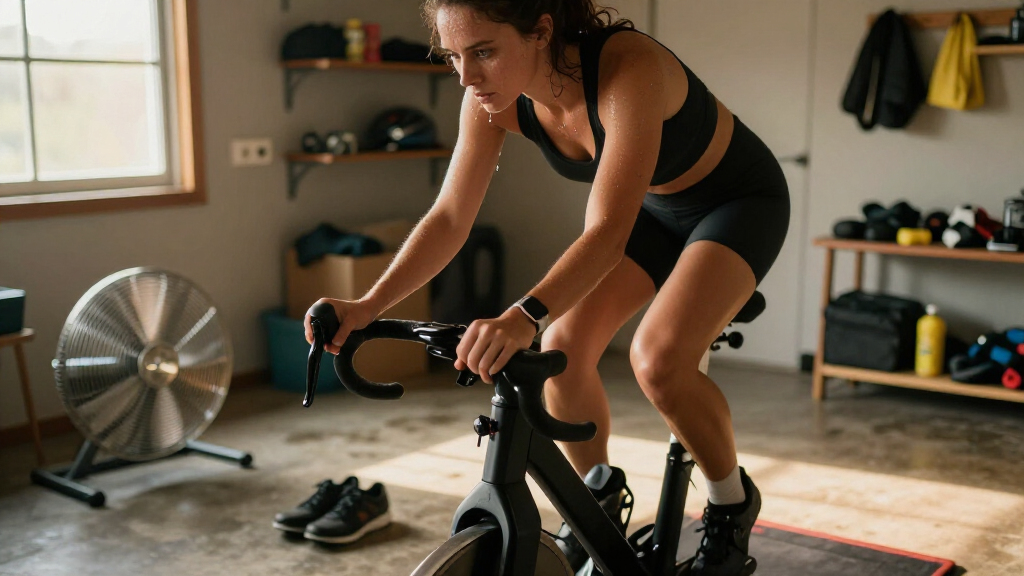
I ranked these indoor bike trainers by how well they match distinct home-riding needs, rather than treating every stand as interchangeable. The main criteria were resistance type and ride control, compatibility with common bike and wheel setups, setup and storage demands, stated smart-training capabilities, and the likely upkeep involved. I also weighed how much the trainer’s features matter for the rider: connectivity carries more weight for structured training, while uncomplicated setup and folding design matter more for occasional use.
The Saris M2 ranks highest for its blend of smart control and everyday usability; the Saris Fluid2 follows for riders who want fluid resistance without a connected system. The ThinkRider X2Max earns a distinct place for smart-focused buyers, while the remaining magnetic models are differentiated by stated fit, folding design, and their role as simpler entry options. Because listed specifications do not establish every bike’s fit or noise level, I treat compatibility and real-world setup as items buyers should verify rather than make unsupported performance claims.
| indoor bike trainer | Resistance mechanism | Model |
|---|---|---|
| Alpcour Foldable Magnetic Bike | Magnetic | — |
| FDW Magnetic Indoor Bike Train | Magnetic | FDW-M8 |
| Sportneer Magnetic Indoor Bike | Magnetic | TY-JS007-C |
| Magnetic Indoor Bike Trainer S | — | — |
| ThinkRider X2Max Smart Bike Tr | Electromagnetic | — |
| CXWXC Magnetic Bike Trainer fo | — | MT-04YELLOW |
| Yaheetech Magnetic Bike Traine | Magnetic | — |
| CXWXC Magnetic Bike Trainer fo | — | MT-04RED |
| Alpcour Fluid Bike Trainer Sta | Fluid | APC-BTSFBK |
| VEVOR Foldable Magnetic Bike T | Magnetic | HS-QX-009AK |
| Saris Fluid2 Indoor Bike Train | Fluid | — |
| Saris M2 Smart Indoor Electrom | Electronic electromagnetic | — |
Factors to Consider When Choosing Best Indoor Bike Trainers
Before choosing a trainer, match it to the rides you actually plan to do and the bike you already own. A connected workout setup calls for different features than a compact stand for occasional spinning. These checks can prevent common mismatches that a product name or resistance label alone will not reveal.
Match Resistance Type to Your Training
Magnetic trainers are straightforward and suit riders who want indoor pedaling without a connected training setup. Fluid resistance typically increases as you pedal harder, which can make effort changes feel more gradual, but it does not provide the same app-controlled resistance experience as a smart trainer. Smart electromagnetic models can respond to compatible workouts, a useful feature for intervals or structured plans. A common mistake is paying for connectivity when you only want occasional steady rides. Decide whether changing resistance through an app is part of your routine before giving it priority.
Check Bike, Wheel, and Axle Compatibility
Fit is not guaranteed by wheel size alone. Confirm your wheel diameter, tire type, rear axle or quick-release setup, and any adapters the trainer requires. The CXWXC model listing support for 26–29-inch and 700C wheels offers a stated range, but that does not answer every axle or frame-fit question. Some bikes may also need a compatible trainer tire or a separate adapter. Check your bike’s specifications against the trainer’s current fit instructions before buying, especially if your bike has a thru-axle or unusual frame design. A bargain stand is no bargain if it cannot securely hold your bike.
Decide How Much Smart Connectivity You Will Use
Smart features matter when they change your workout, not just because an app can connect. Look for the specific communication protocols and training platforms you need, then confirm that your devices support them. A smart trainer can add controlled resistance and workout data, while a basic magnetic or fluid model may be enough for self-directed rides. Buyers sometimes assume every “smart” trainer works with every app or device; compatibility can vary by model and software. If you mainly follow videos or ride at a steady effort, simpler equipment may be easier to live with.
Plan for Noise, Vibration, and Your Riding Space
Trainer noise includes more than the resistance unit. Tire contact, drivetrain condition, floor vibration, and cadence all affect what you and nearby people hear. A mat can help limit vibration and protect flooring, but it cannot make every setup silent. Check where the trainer will sit, how close it is to shared walls, and whether you can leave it assembled. If storage is a priority, a foldable stand can be easier to put away, though folding design alone does not determine how quiet it will be. Keep a fan and a stable surface in your setup plan as well.
Compare Setup Convenience With Ride Stability
A quick setup is valuable only if the bike is secure. Check how the trainer attaches to the rear wheel, whether resistance adjustments are simple to reach, and whether the stand can be leveled on your floor. A compact folding frame helps with storage, while a heavier or more substantial setup may be preferable for hard efforts. Buyers who switch bikes often should pay particular attention to adjustment steps and adapter needs. For occasional low-intensity riding, a simple stand may be entirely adequate. For frequent training, a fiddly setup can become a reason to skip sessions.
Think About Ongoing Wear and Accessories
Wheel-on trainers put the tire in direct contact with the resistance unit, so tire choice and pressure can affect wear and ride consistency. A dedicated trainer tire may be useful for frequent indoor use, but confirm that it fits your wheel and trainer. Keep the drivetrain clean and check the trainer’s instructions for roller pressure and maintenance. Also account for practical extras such as a front-wheel riser, mat, fan, and any required axle adapter. Comparing the full setup—not just the trainer—can reveal whether a simpler or smarter model better suits your routine.
Frequently Asked Questions
Can I use a regular road or hybrid bike on these trainers?
Many wheel-on trainers work with common road and hybrid bikes, but compatibility depends on wheel size, rear axle, tire, and the trainer’s mounting system. Check the exact model instructions rather than assuming a standard bike will fit. Some trainers need an adapter for thru-axles, and some setups work best with a smooth trainer tire. The CXWXC listing that specifies 26–29-inch and 700C wheels provides a useful starting point, but buyers still need to check axle fit. If you cannot confirm compatibility, ask the manufacturer before ordering.
Is a smart trainer worth choosing over a basic magnetic trainer?
A smart trainer makes the most sense if you plan to use compatible apps, structured workouts, or resistance control that responds to a training session. The Saris M2 and ThinkRider X2Max are the smart-oriented choices in this group, while the magnetic stands are simpler options for self-directed rides. Smart features add setup and compatibility questions, so check app support and device connections before making the choice. If you mainly want to pedal while watching a show, a basic model may cover your needs with less complexity. Choose based on the workouts you expect to do regularly, not features you may never use.
Will a wheel-on trainer damage my bike tire?
Contact with a trainer roller can wear a regular tire faster than ordinary road riding, particularly with frequent sessions or excessive roller pressure. A trainer-specific tire may reduce wear and noise, but it must match your wheel and trainer. Follow the manufacturer’s setup directions and avoid tightening the roller more than recommended. Keep tire pressure consistent if you want repeatable ride feel. If indoor training will be frequent, include tire replacement or a dedicated wheel in your planning.
Which kind of trainer is better for an apartment?
No resistance category guarantees a quiet apartment setup. Tire and drivetrain noise, floor vibration, cadence, and nearby walls all affect what others hear. A mat and a well-maintained bike can help reduce vibration and mechanical noise, but they will not remove it entirely. Look for clear noise information from the manufacturer and consider asking about return terms if noise is a deciding factor. If you ride early or late, placing the trainer away from shared walls and using a smooth, clean tire can help.
Do I need a separate trainer tire, mat, or front-wheel riser?
These accessories are not required for every rider, but each addresses a different setup issue. A trainer tire can help when regular indoor sessions are wearing down your road tire; a mat can protect flooring and limit vibration; and a front-wheel riser can level the bike when the rear wheel sits on the trainer. Check whether the trainer includes any accessories and whether the riser matches your wheel size. Confirm tire and axle compatibility before buying extras. For occasional use, start with the trainer’s setup instructions and add accessories only where they solve a real problem.
Conclusion
For the best overall balance, choose the Saris M2 if you want smart electromagnetic resistance in a wheel-on setup. The Saris Fluid2 is the best pick for simple, fluid-resistance training, while the ThinkRider X2Max is the smart alternative for buyers drawn to its connected training approach. Beginners and occasional riders should focus on a compatible magnetic stand, such as a foldable Alpcour or VEVOR model, rather than paying for smart functions they may not use. For buyers whose priority is stated wheel-size coverage, check the CXWXC 26–29-inch and 700C model against their axle and bike details. Before choosing any trainer, confirm fit and plan for the tire, noise, and space requirements of a wheel-on setup.
NFL season / tailgating Picks
team gear
As an affiliate, we earn on qualifying purchases.