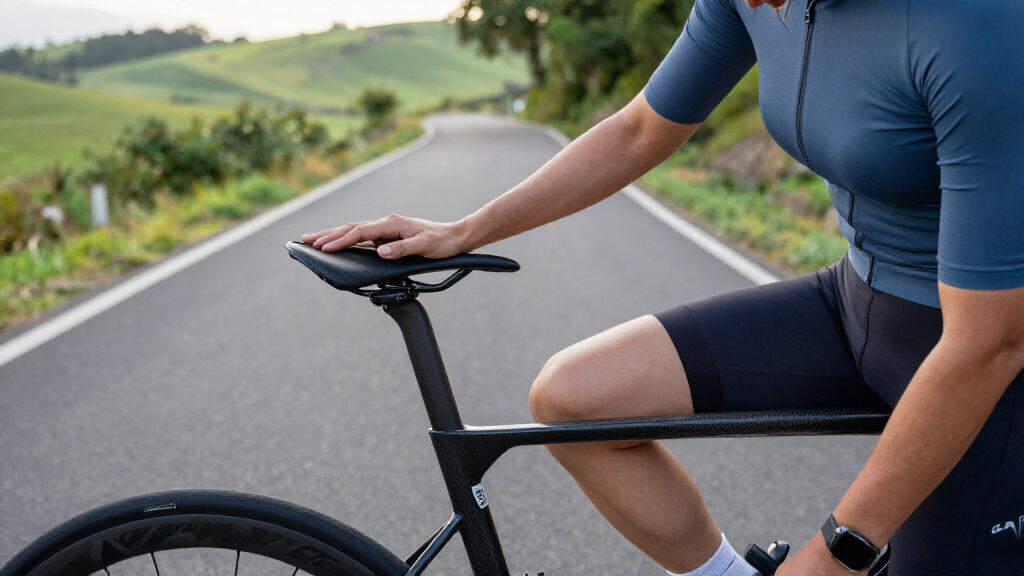
For most road riders seeking a minimalist racing saddle, I’d start with the Fizik Vento Argo R1 Light for its short-nose shape and race-focused design. The Fizik Vento Antares is a strong alternative for riders who prefer a more traditional profile, while the Fabric Scoop Race Team Flat suits cyclists who want a simple, flat platform. The main tradeoffs are short-nose freedom versus room to shift position, firm support versus added padding, and lightweight construction versus extra features. Saddle width and body position matter as much as the model name, so the lightest option is not automatically the best fit. Read on for how all 12 compare and which rider each one suits.

Get sports gear delivered free with Prime
- Fast, free delivery on millions of items
- Prime Video, Amazon Music and more included
- Member-only deals all year
Complete the kit


Key Takeaways
- Short-nose shapes define the most race-focused choices: the Vento Argo R1 Light and Vento Argo R1 Carbon prioritize a compact front profile, while the Arione models offer more room to move along the saddle.
- The Vento Argo R1 Light is the clearest overall pick for riders wanting a road-racing shape without stepping up to the carbon version.
- Fabric’s two titanium-rail models serve different riding styles: the Scoop Flat favors a flat, mobile perch, while the Line Race Team Shallow has a more shaped profile.
- Not every minimalist-looking saddle is a road-racing specialist: the Transiro Aeris targets triathlon positioning, and the Sport Gel Flow leans toward extra comfort features.
- Construction and intended use separate premium from practical options: carbon-focused and 3D-printed models offer distinct design approaches, while simpler race saddles may suit more riders and setups.
| Fizik Vento Antares Road Bike Low-Profile Performance Saddle |  | Best Overall | Brand: Fizik | Model: Vento Antares | Material: Carbon fiber | VIEW LATEST PRICE | See Our Full Breakdown |
| Fabric Line Race Team Shallow Titanium Bike Saddle |  | Best Value for Mixed-Terrain Racing | Brand: Fabric | Model: FSD-21 | Dimensions: 142 × 282 mm | VIEW LATEST PRICE | See Our Full Breakdown |
| ROCKBROS 3D Printed Ventilated Bike Saddle |  | Best for Ventilation and Customization | Brand: ROCKBROS | Weight: 177 g for the Premium Black option | Surface: 3D-printed lattice | VIEW LATEST PRICE | See Our Full Breakdown |
| Selle Italia Sport Gel Flow Bike Saddle |  | Best for Riders Wanting More Padding | Brand: Selle Italia | Model: Sport Gel Flow | Cover: Duro-Tek | VIEW LATEST PRICE | See Our Full Breakdown |
| Fizik Arione R1 Saddle |  | Best for Long, Flexible Race Positions | Brand: Fizik | Model: Arione R1 | Weight: 6.56 oz | VIEW LATEST PRICE | See Our Full Breakdown |
| Fabric Scoop Race Team Flat Titanium Bike Saddle |  | Best for Forward-Leaning Versatility | Model: Scoop Race Team Flat Titanium (FSD-11) | Dimensions: 282 mm L × 142 mm W | Weight: 238 g | VIEW LATEST PRICE | See Our Full Breakdown |
| Fizik Tempo Argo R5 Road Saddle |  | Best for Endurance Road Comfort | Model: Tempo Argo R5 | Bike type: Road bike | Shell: Carbon-reinforced nylon | VIEW LATEST PRICE | See Our Full Breakdown |
| Fizik Vento Argo R1 Light Road Cycling Saddle, Black, 140mm |  | Best for Lightweight Road Racing | Model: Vento Argo R1 Light | Width: 140 mm | Shell: Carbon-reinforced nylon | VIEW LATEST PRICE | See Our Full Breakdown |
| Fizik Transiro Aeris Long Distance R5 Triathlon Saddle |  | Best for Long-Distance Triathlon | Model: Transiro Aeris Long Distance R5 | Bike type: Triathlon | Weight: 218 g | VIEW LATEST PRICE | See Our Full Breakdown |
| Selle San Marco Shortfit 2.0 3D Racing Saddle |  | Best for Zoned 3D Support | Model: Shortfit 2.0 3D Racing | Rail material: Xsilite | Shell: Carbon-fiber-reinforced | VIEW LATEST PRICE | See Our Full Breakdown |
| Fizik Vento Argo R1 Carbon Short-Nose Road Cycling Saddle |  | Best for Aggressive Road Racing | Bike type: Road | Saddle type: Short-nose racing saddle | Shell: Carbon-reinforced nylon | VIEW LATEST PRICE | See Our Full Breakdown |
| Fizik Vento Arione R5 Bike Saddle |  | Best for Position-Shifting Riders | Bike type: Universal | Shell: Carbon-reinforced nylon | Rail material: S-Alloy | VIEW LATEST PRICE | See Our Full Breakdown |
| minimalist racing saddle | Model | Weight | Maximum weight capacity | Warranty |
|---|---|---|---|---|
| Fizik Vento Antares Road Bike | Vento Antares | 0.13 kg | 110 kg | 2-year manufacturer warranty |
| Fabric Line Race Team Shallow | FSD-21 | Approximately 238 g | 120 kg | — |
| ROCKBROS 3D Printed Ventilated | — | 177 g for the Premium Black option | 250 kg | 2 years |
| Selle Italia Sport Gel Flow Bi | Sport Gel Flow | 8 oz | — | 2 years |
| Fizik Arione R1 Saddle | Arione R1 | 6.56 oz | — | 1-year manufacturer warranty |
| Fabric Scoop Race Team Flat Ti | Scoop Race Team Flat Titanium (FSD-11) | 238 g | 120 kg | — |
| Fizik Tempo Argo R5 Road Saddl | Tempo Argo R5 | 1.2 lb | 100 kg | 2 years |
| Fizik Vento Argo R1 Light Road | Vento Argo R1 Light | — | — | 2-year manufacturer warranty |
| Fizik Transiro Aeris Long Dist | Transiro Aeris Long Distance R5 | 218 g | 120 kg | — |
| Selle San Marco Shortfit 2.0 3 | Shortfit 2.0 3D Racing | — | 72 kg | — |
| Fizik Vento Argo R1 Carbon Sho | — | — | — | 2 years |
| Fizik Vento Arione R5 Bike Sad | — | — | 350 lb | 2 years |
More Details on Our Top Picks
Fizik Vento Antares Road Bike Low-Profile Performance Saddle
The Vento Antares is my strongest all-around pick for a minimalist racing setup because its low-profile shape pairs a full-carbon shell and rails with an ergonomic cutout. That combination favors a direct, stable feel while giving pressure-sensitive areas more clearance. Its flatter, wider nose also gives riders room to shift forward and back during hard efforts, unlike the more fixed-feeling shape of the Fizik Arione R1. Double-density foam adds some support, but this is still a firm performance saddle rather than a plush option. The carbon construction may transmit more chatter on rough roads, and the low padding will not suit riders who want cushioning to compensate for an uncertain fit. I’d choose it for fast road riding where low weight and movement matter more than softness.
Pros:- Full-carbon shell and rails keep the design light and performance-oriented.
- Ergonomic cutout is intended to relieve pressure in sensitive areas.
- Flatter, wider nose supports movement fore and aft.
- Double-density foam adds support without a bulky profile.
Cons:- Firm, low-profile padding may feel too sparse for riders seeking plush comfort.
- Stiff carbon construction can pass more impact from rough terrain.
Best for: Road racers and performance-focused riders who want a light, low-profile saddle with room to adjust position during efforts.
Not ideal for: Riders who prefer generous cushioning or regularly ride rough roads where a stiff carbon structure may feel harsh.
- Brand:Fizik
- Model:Vento Antares
- Material:Carbon fiber
- Weight:0.13 kg
- Maximum weight capacity:110 kg
- Dimensions:14 × 8 × 4 in
- Color:Black
- Warranty:2-year manufacturer warranty
Our verdict“Choose the Vento Antares for a light, adaptable road-racing saddle; skip it if cushioning and rough-road comfort lead your priorities.”
Fabric Line Race Team Shallow Titanium Bike Saddle
The Fabric Line Race Team Shallow makes sense for riders who want a restrained shape without committing to an all-carbon build. Its hollow titanium rails and flexible nylon base keep the construction performance-minded, while the bonded waterproof microfiber cover is a practical advantage for bikes that see gravel or changing weather. At 238 g, it is heavier than the ROCKBROS 3D Printed Saddle listing, but its specified 142 × 282 mm dimensions and shallow profile make the fit easier to evaluate before buying. The tradeoff is that 142 mm is not a universal width, and the shallow shape may not work with every riding posture. I’d favor it over more specialized road-only options for riders who split time across road, gravel, and mountain bikes.
Pros:- Hollow titanium rails balance strength with a relatively light build.
- Waterproof microfiber cover suits bikes exposed to wet conditions.
- Flexible nylon base allows the foam to provide a less rigid ride.
- Specified dimensions help buyers compare saddle fit before purchase.
Cons:- The 142 mm width may not suit riders who need a broader support platform.
- Shallow profile may not match every posture or preferred saddle shape.
- At approximately 238 g, it is not the lightest choice in this lineup.
Best for: Riders who want one shallow-profile saddle for road, gravel, or mountain bikes and value a weather-resistant cover over the lightest possible build.
Not ideal for: Riders who need a wider fit, prefer a strongly curved saddle, or are prioritizing minimum weight above all else.
- Brand:Fabric
- Model:FSD-21
- Dimensions:142 × 282 mm
- Weight:Approximately 238 g
- Rail material:Hollow titanium
- Rail diameter:7 mm
- Cover and base:Waterproof microfiber cover; flexible nylon base
- Maximum weight capacity:120 kg
- Compatible bike types:Gravel, mountain, and road bikes
Our verdict“Pick the Fabric for versatile, weather-ready riding across several bike types, provided its 142 mm width fits you.”
ROCKBROS 3D Printed Ventilated Bike Saddle
The ROCKBROS 3D Printed Saddle takes a different route from conventional minimalist saddles: its hollow lattice surface is built around airflow and zoned support rather than a simple foam profile. That may appeal to riders who run hot or want cushioning arranged across distinct contact areas. Compared with the Fabric Line Race Team Shallow, ROCKBROS offers more material and rail configurations, but that choice makes it important to check which version is being sold. The listed 177 g weight applies to the Premium Black option, not necessarily every setup. Carbon-fiber and chromoly rails, plus nylon and carbon-fiber base options, can change the final feel and weight. It is a more experimental pick than the straightforward Antares, and the unusual lattice design may not suit riders who want a familiar, continuous saddle surface.
Pros:- 3D-printed hollow lattice is designed to promote airflow and heat dissipation.
- Segmented PU cushioning targets support across different contact zones.
- Carbon-fiber and chromoly rail options allow different build priorities.
- Mounting holes for bike lights and scale marks support setup and accessory placement.
Cons:- The listed 177 g weight applies only to the Premium Black option.
- Rail and base materials vary by configuration, so the exact build needs checking.
- The lattice surface may feel unfamiliar to riders used to a continuous cover.
Best for: Road, triathlon, and cyclocross riders seeking airflow-focused construction and willing to verify rail and base materials before ordering.
Not ideal for: Buyers who want a conventional saddle shape, a clearly consistent weight across configurations, or a simple no-variation specification.
- Brand:ROCKBROS
- Weight:177 g for the Premium Black option
- Surface:3D-printed lattice
- Cushion:Segmented shock-absorbing PU composite
- Rail options:12K twill carbon fiber or chromoly steel
- Base options:Nylon or carbon fiber
- Maximum weight capacity:250 kg
- Compatible bike types:Cyclocross, road, and triathlon
- Warranty:2 years
Our verdict“Choose ROCKBROS if airflow and build customization matter more than a traditional saddle feel or uniform specifications.”
Selle Italia Sport Gel Flow Bike Saddle
The Selle Italia Sport Gel Flow is the comfort-leaning choice in a group otherwise focused on low weight, sleek profiles, and race positioning. Its gel layer, extra padding, and Flow cutout provide more cushioning and pressure relief than the firmer Fizik Vento Antares. That makes it a better fit for riders building endurance comfort into a minimalist setup, rather than chasing the most stripped-back feel. A Duro-Tek cover and steel-alloy rails also point toward durable everyday use, though they give up the carbon-focused construction found on the Antares and Arione R1. The available product details do not list dimensions or fit choices, so buyers have less information for matching saddle width. I’d select it for added cushioning, but not for riders whose main goal is a clearly specified, ultra-light racing shape.
Pros:- Gel layer and Flow cutout target pressure-sensitive areas.
- Extra padding offers a more cushioned feel than the Vento Antares.
- Duro-Tek cover and steel-alloy rails are suited to durable use.
- Listed weight is 8 oz.
Cons:- More padding makes it less stripped-back than the carbon-focused racing options.
- Saddle dimensions and fit options are not specified in the provided details.
Best for: Endurance-minded road riders who want a pressure-relief cutout and more padding than a firm, low-profile racing saddle provides.
Not ideal for: Racers focused on minimum weight or buyers who need published dimensions and fit options to confirm saddle width.
- Brand:Selle Italia
- Model:Sport Gel Flow
- Cover:Duro-Tek
- Padding:Gel layer and extra padding
- Cutout:Flow anatomic cutout
- Rail material:Carbon-iron steel alloy
- Rail diameter:7 mm
- Weight:8 oz
- Warranty:2 years
Our verdict“Choose the Sport Gel Flow if extra cushioning matters more than a minimal race build or precisely documented fit.”
Fizik Arione R1 Saddle
The Fizik Arione R1 suits riders who want a long, flat platform for shifting position, rather than the more centered support of a compact or cutout-led saddle. Its Wing Flex shell is designed to move where the thighs meet the saddle, which may help maintain leg clearance during an aggressive pedaling style. Compared with the Vento Antares, the Arione R1 emphasizes length and flexibility more than a low-profile cutout and broader nose. Its carbon-fiber outer construction and 6.56-ounce listed weight fit a race-focused build, but the flat shape can feel poorly matched to riders who prefer a curved seat that guides them into one position. The listing also gives a one-year warranty, shorter than the Antares’s two-year coverage. I’d reserve it for flexible riders who know they like a long, flat saddle.
Pros:- Long, flat profile allows multiple riding positions.
- Wing Flex technology is designed to accommodate thigh movement.
- Carbon-fiber construction supports a lightweight performance build.
- Listed weight is 6.56 oz.
Cons:- Flat shape may not suit riders who prefer a curved saddle.
- Its flexible-riding design may not match riders who stay in one position.
- One-year manufacturer warranty is shorter than the Vento Antares warranty.
Best for: Flexible road racers who move between positions and prefer a long, flat saddle with room to adjust fore and aft.
Not ideal for: Riders who favor a curved or position-holding saddle, or who want the cutout and specified pressure-relief design of the Vento Antares.
- Brand:Fizik
- Model:Arione R1
- Weight:6.56 oz
- Model number:74B5SWSA09F04
- Materials:Composite glass, nylon, Kium, and black Microtex
- Outer material:Carbon fiber
- Bike type:Road bike
- Weight capacity:120 kg
- Warranty:1-year manufacturer warranty
Our verdict“Choose the Arione R1 if you are flexible and want a long, flat platform; look elsewhere if you need a curved, position-guiding shape.”
Fabric Scoop Race Team Flat Titanium Bike Saddle
The Fabric Scoop Race Team Flat Titanium is a strong fit for riders who want a simple, low-profile shape across road, gravel, and mountain bikes. Its flat profile gives riders room to shift position during hard efforts, while hollow titanium rails and a flexible nylon base keep the design light without relying on a complex structure. Compared with the short-nose Fizik Tempo Argo R5, the Scoop has a longer, flatter platform rather than a more supported, upright-oriented shape. The waterproof microfiber cover also suits bikes exposed to changing weather. The tradeoff is fit: riders who prefer a contoured saddle or spend most of their time upright may find its aggressive posture less accommodating.
Pros:- Flat shape supports an aggressive forward-leaning posture and allows movement along the platform
- Hollow titanium rails help balance low weight with a durable rail construction
- Flexible nylon base adds compliance without a bulky saddle profile
- Waterproof microfiber cover suits bikes ridden in wet or changeable conditions
Cons:- Flat profile may feel less supportive to riders who prefer a contoured saddle
- Aggressive positioning may be uncomfortable for riders who sit more upright
Best for: Road, gravel, and mountain riders who favor a forward-leaning position and want one lightweight saddle for several bike types
Not ideal for: Riders who prefer a scooped or contoured platform, or who ride mainly in an upright position
- Model:Scoop Race Team Flat Titanium (FSD-11)
- Dimensions:282 mm L × 142 mm W
- Weight:238 g
- Rails:7 mm hollow titanium
- Base:Nylon
- Cover:Waterproof microfiber
- Maximum weight capacity:120 kg
- Compatible bike types:Gravel, mountain, and road
Our verdict“Choose the Scoop if you want a light, weather-ready flat saddle for a forward riding position across road, gravel, or mountain bikes.”
Fizik Tempo Argo R5 Road Saddle
The Fizik Tempo Argo R5 brings a more supportive, endurance-minded approach to a minimalist short-nose shape. Its generous sit-bone support and progressive foam are intended to take the edge off long road rides, while the cut-out addresses soft-tissue pressure. Flexible shell edges give the saddle some movement under the inner thighs rather than a rigid, locked-in feel. Compared with the more race-focused Fizik Vento Argo R1 Light, the Tempo is better suited to a relatively upright position and sustained comfort than low, high-output efforts. That broader comfort focus means it is not the lightest or most stripped-down option here, and its two listed widths may not match every rider’s fit needs.
Pros:- Short nose and ergonomic cut-out are designed to reduce soft-tissue pressure
- Progressive Type 2 foam and broad sit-bone support suit longer road rides
- Flexible shell edges accommodate inner-leg movement
- More upright-friendly design than the performance-focused Vento Argo R1 Light
Cons:- Only two listed widths may limit fit options
- Short-nose shape may not suit riders accustomed to a longer saddle
- Its comfort-focused build is less specialized for aggressive racing positions
Best for: Road riders who spend hours in a moderately upright position and want short-nose support with pressure relief
Not ideal for: Racers seeking a very low-profile, aggressive saddle or riders whose sit-bone width falls outside the 150 mm and 160 mm options
- Model:Tempo Argo R5
- Bike type:Road bike
- Shell:Carbon-reinforced nylon
- Rail material:Carbon or K:ium alloy
- Padding:Progressive Type 2 foam
- Available widths:150 mm or 160 mm
- Weight:1.2 lb
- Maximum weight capacity:100 kg
- Warranty:2 years
Our verdict“Pick the Tempo Argo R5 for long road rides in a moderate posture, but look to the Vento Argo R1 Light for a more aggressive race setup.”
Fizik Vento Argo R1 Light Road Cycling Saddle, Black, 140mm
For riders who prioritize a low, aerodynamic position, the Fizik Vento Argo R1 Light is the most race-specific road choice in this group. Its short nose and large central cut-out support a stable forward posture while addressing pressure where a conventional saddle can feel intrusive. The carbon rails and injected EVA padding are aimed at a responsive, low-profile feel rather than plush cushioning. Compared with the Fizik Tempo Argo R5, this model is better matched to intense efforts and a more aggressive position; the Tempo’s progressive foam and more upright-friendly design make it the more forgiving endurance pick. The compromise is versatility: limited padding and specialized geometry may feel harsh or awkward for casual, touring, or upright riding.
Pros:- Carbon rails and a reinforced nylon shell create a performance-oriented, low-profile platform
- Short-nose shape suits aggressive aerodynamic positioning
- Large central cut-out targets soft-tissue pressure relief
- Stable design is aimed at control during hard efforts
Cons:- Low-profile padding may feel too firm for casual or upright riding
- Specialized racing geometry offers less versatility for touring
- The listed 140 mm width may not suit riders needing a broader platform
Best for: Road racers and fast group riders who use an aggressive aerodynamic position and want a firm, responsive short-nose saddle
Not ideal for: Casual road riders, tourers, or riders seeking substantial cushioning for upright riding
- Model:Vento Argo R1 Light
- Width:140 mm
- Shell:Carbon-reinforced nylon
- Rails:Carbon
- Padding:Injected EVA foam
- Weight capacity:350 lb
- Warranty:2-year manufacturer warranty
- Color:Black
Our verdict“Choose the Vento Argo R1 Light for firm, aerodynamic road racing support, not for relaxed rides where extra cushioning matters more.”
Fizik Transiro Aeris Long Distance R5 Triathlon Saddle
The Fizik Transiro Aeris Long Distance R5 is the clearest choice here for triathletes who spend long stretches rotated forward over the bars. Its split nose is designed to ease pressure in that position, while the firm support favors a stable platform over plush, general-purpose comfort. The optional rear bottle-cage link can also help riders build a race setup around hydration needs, though the link is an extra part rather than an included feature. Compared with the road-focused Vento Argo R1 Light, the Transiro is shaped around sustained aerodynamic triathlon riding rather than short, high-intensity road efforts. Its narrower purpose is also its main limitation: riders who want one saddle for casual road use or varied positions may prefer the more adaptable Fabric Scoop.
Pros:- Split nose is designed to relieve pressure in a forward aerodynamic position
- Firm platform supports balance during long triathlon rides
- Lightweight construction suits a performance-focused setup
- Optional rear link allows a water-bottle cage to be mounted behind the saddle
Cons:- Rear bottle-cage mounting depends on an optional link
- Triathlon-specific shape is less versatile for riders who change position often
- Firm support may not suit riders who prefer softer cushioning
Best for: Triathletes training or racing over long distances in a sustained aerodynamic position, especially those planning rear-mounted hydration
Not ideal for: Road riders seeking an all-purpose saddle, or buyers who need rear bottle mounting without purchasing an optional link
- Model:Transiro Aeris Long Distance R5
- Bike type:Triathlon
- Weight:218 g
- Shell:Carbon-reinforced nylon
- Rail material:S-Alloy
- Padding:Gel
- Maximum weight capacity:120 kg
- Mounting feature:Optional rear water-bottle cage link
Our verdict“Choose the Transiro Aeris R5 for long-distance triathlon riding and forward-position support, especially if its optional hydration mount fits your setup.”
Selle San Marco Shortfit 2.0 3D Racing Saddle
The Selle San Marco Shortfit 2.0 3D Racing stands apart through its 3D-printed cover, which is intended to vary support and absorption across the saddle rather than rely on one uniform padding feel. Its short length and large central cut-out suit riders who rotate their pelvis forward on climbs and fast sections, while the rear platform offers support during that movement. Compared with the Fizik Vento Argo R1 Light, this model emphasizes zoned cushioning instead of a simpler injected-EVA feel. That added construction complexity comes with a fit caveat: the listed size range is narrow, and the stated 72 kg maximum capacity excludes many riders. Its aggressive geometry also makes it a poor match for relaxed or upright riding.
Pros:- 3D-printed cover is designed to provide progressive, zoned absorption
- Short shape and central cut-out suit aggressive riding positions
- Rear support accommodates riders who rotate their pelvis while pedaling
- Carbon-fiber-reinforced shell supports a performance-focused build
Cons:- Maximum stated weight capacity of 72 kg excludes many riders
- Listed 140–155 mm size range may not fit riders who need a wider saddle
- Aggressive geometry is less suited to neutral or upright positions
Best for: Lighter road racers who rotate their pelvis forward and want differentiated cushioning zones under an aggressive position
Not ideal for: Riders over the stated 72 kg capacity, those with wider sit bones, or anyone seeking a neutral upright saddle
- Model:Shortfit 2.0 3D Racing
- Rail material:Xsilite
- Shell:Carbon-fiber-reinforced
- Cover:Microfell
- Padding:Biofoam
- Size range:140–155 mm
- Maximum weight capacity:72 kg
- Color:Black
Our verdict“Choose the Shortfit 2.0 3D if you fit its weight and width limits and want zoned support for an aggressive, forward-rotated road position.”
Fizik Vento Argo R1 Carbon Short-Nose Road Cycling Saddle
The Vento Argo R1 Carbon is the most purpose-built pick here for riders who hold a forward, aerodynamic position and want a short nose that supports stability there. Its carbon rails and stiff carbon-reinforced nylon shell favor a direct, responsive feel, while the pressure-analysis-developed cutout and low-profile foam target support rather than plushness. Compared with the longer, flatter Vento Arione R5, the Argo gives up fore-and-aft room in favor of a more focused short-nose platform. That makes it a stronger match for a fixed race posture, but less adaptable for riders who shift position often. The lean padding also means rough roads may feel more pronounced. I’d choose it for performance-focused road riding, not casual comfort or an upright fit.
Pros:- Short-nose shape supports a forward racing position.
- Carbon rails and a stiff shell are designed for efficient power transfer.
- Low-profile foam favors a responsive, connected feel.
- Pressure-analysis-developed cutout provides targeted relief.
Cons:- Aggressive positioning may not suit relaxed or upright riding.
- Firm, low-profile padding offers less cushioning over rough surfaces.
- Shorter platform provides less fore-and-aft movement than the Vento Arione R5.
Best for: Road racers and fast group riders who maintain a forward, aerodynamic posture and prefer firm, responsive support.
Not ideal for: Riders who sit upright, move frequently along the saddle, or want thick cushioning for rough roads.
- Bike type:Road
- Saddle type:Short-nose racing saddle
- Shell:Carbon-reinforced nylon
- Rails:Carbon
- Padding:Type 1 low-profile foam
- Cutout:Ergonomic pressure-analysis-developed cutout
- Dimensions:13 x 6.5 x 6.5 in
- Warranty:2 years
Our verdict“Choose the Vento Argo R1 Carbon if your priority is stable, responsive support in an aerodynamic road-racing position.”
Fizik Vento Arione R5 Bike Saddle
The Vento Arione R5 suits riders who want a streamlined racing saddle but value room to reposition more than a short-nose design allows. Its extended, flat platform supports fore-and-aft movement, which can help when changing effort or posture during a ride. Compared with the short-nose Vento Argo R1 Carbon, this Arione offers more length and flexibility in where you sit, but its S-Alloy rail and less race-specific construction are a more durability-oriented choice than the Argo’s carbon rails. The flat profile keeps the shape minimal and supports an aerodynamic posture, though riders who need a distinctly contoured seat may find it less guiding. The product data lists both a gel pad and low-profile foam; buyers should check the exact version details if padding type matters to their fit.
Pros:- Extended platform allows fore-and-aft movement.
- Flat, streamlined shape accommodates an aerodynamic riding posture.
- Carbon-reinforced nylon shell balances support with durability.
- S-Alloy rail offers a durable alternative to the Argo R1 Carbon’s carbon rails.
Cons:- Flat profile may feel insufficiently contoured for riders who want more positional guidance.
- S-Alloy rails are less race-focused than carbon rails on the Vento Argo R1 Carbon.
- Listed pad and foam descriptions may leave the exact cushioning specification unclear.
Best for: Road riders who alternate between seated positions and want a flat, extended platform for adjusting fore and aft.
Not ideal for: Riders who prefer a sculpted saddle that guides their position, or racers seeking the more focused short-nose feel and carbon rails of the Vento Argo R1 Carbon.
- Bike type:Universal
- Shell:Carbon-reinforced nylon
- Rail material:S-Alloy
- Pad type:Gel
- Dimensions:13 x 9.5 x 5 in
- Color:Black
- Maximum weight capacity:350 lb
- Warranty:2 years
Our verdict“Pick the Vento Arione R5 if you want a minimalist, flat saddle with more room to shift than a short-nose racing model provides.”
How We Picked
I compared each saddle against the needs implied by minimalist racing: a streamlined profile, support suited to a forward riding position, and a design that avoids unnecessary bulk without treating thin padding as an automatic advantage. I also weighed shape and use case—short-nose versus longer profiles, flat versus shaped platforms, and road racing versus triathlon—because those differences change how freely a rider can move and where support lands.
The ranking favors race relevance, fit versatility, and a clear buyer use over premium materials alone. That puts the Vento Argo R1 Light first as a focused road-racing choice, while the Antares and Fabric Scoop Flat offer alternatives for riders who prefer different saddle shapes. Specialized models rank lower for general road use, not because they lack merit, but because their geometry or added comfort features suit narrower needs. A saddle’s fit still depends on rider anatomy, width, and bike position; the ranking is a starting point, not a substitute for those checks.
| minimalist racing saddle | Rail material | Padding | Shell |
|---|---|---|---|
| Fizik Vento Antares Road Bike | — | — | — |
| Fabric Line Race Team Shallow | Hollow titanium | — | — |
| ROCKBROS 3D Printed Ventilated | — | — | — |
| Selle Italia Sport Gel Flow Bi | Carbon-iron steel alloy | Gel layer and extra padding | — |
| Fizik Arione R1 Saddle | — | — | — |
| Fabric Scoop Race Team Flat Ti | — | — | — |
| Fizik Tempo Argo R5 Road Saddl | Carbon or K:ium alloy | Progressive Type 2 foam | Carbon-reinforced nylon |
| Fizik Vento Argo R1 Light Road | — | Injected EVA foam | Carbon-reinforced nylon |
| Fizik Transiro Aeris Long Dist | S-Alloy | Gel | Carbon-reinforced nylon |
| Selle San Marco Shortfit 2.0 3 | Xsilite | Biofoam | Carbon-fiber-reinforced |
| Fizik Vento Argo R1 Carbon Sho | — | Type 1 low-profile foam | Carbon-reinforced nylon |
| Fizik Vento Arione R5 Bike Sad | S-Alloy | — | Carbon-reinforced nylon |
Factors to Consider When Choosing Best Minimalist Racing Saddles
Before choosing from the lineup, I’d treat fit and riding position as the starting point, then compare shape, rail material, and intended use. These broader checks can prevent a common mistake: buying a saddle because it looks minimal or race-ready, then discovering its profile conflicts with the way you sit and pedal.
Match Saddle Shape to How You Move
A short-nose saddle can make it easier to ride forward and keep pressure manageable when you rotate your pelvis toward an aerodynamic position. A longer profile gives more fore-and-aft room for riders who shift during climbs, efforts, or changes in cadence. Neither shape is inherently faster for every rider; the useful question is whether you tend to stay planted or reposition often. A frequent mistake is choosing a short nose solely because it appears modern, without checking whether its support area works with your posture. If possible, compare shapes on the same bike and in a similar riding position. That keeps a familiar saddle length from becoming a misleading stand-in for fit.
Choose Width Around Support, Not Appearance
Saddle width affects whether your sit bones are supported, especially when your riding position changes the angle of your pelvis. A narrow racing shape can reduce bulk, but too narrow a platform may leave pressure concentrated in the wrong area. A wider option is not automatically more comfortable either, since excess width can interfere with thigh movement. Use a fit measurement or a reputable fitting process as a starting point, then account for your bike position and flexibility. Avoid assuming that a model’s listed width tells the whole story: the saddle’s shape and usable support area matter too. When choosing between close sizes, fit guidance from the manufacturer or a qualified fitter is more useful than guessing from another saddle’s dimensions.
Treat Padding as a Support Choice, Not a Comfort Score
Minimal padding can keep a saddle firm and predictable under hard pedaling, but a thin surface does not guarantee comfort. Support depends on the platform, pressure distribution, riding posture, and how long you stay in one position. Gel or a 3D-printed surface may appeal to riders seeking a different feel, yet added material can change weight and the way the saddle responds. A common error is selecting the softest option for long rides without checking whether it supports the rider’s posture. Likewise, choosing the firmest model for racing can be a poor fit if pressure builds during steady efforts. Prioritize stable support over softness or a low-profile appearance alone.
Spend More Only for a Benefit You Can Use
Carbon rails and advanced surface construction can make a saddle more appealing to riders focused on weight and race equipment, but they do not correct a poor shape match. Rail material can also affect compatibility with a seatpost clamp, so check the clamp’s approved rail dimensions and installation requirements before buying. Titanium-rail models offer a different balance for buyers who want race-oriented construction without selecting a carbon-rail option. If your bike setup is already comfortable, an upgrade makes sense when a specific change—such as weight, shape, or fit—solves a real need. Paying for premium materials just for the label may offer little practical gain. Put fit and mounting compatibility ahead of material prestige.
Buy for the Position You Actually Ride
A road-racing saddle and a triathlon saddle can look similarly streamlined while serving very different postures. A triathlon-specific design is built around a forward position and may not feel natural on a road bike when the rider sits farther back. Before choosing a specialist model, think about your longest rides, event position, and how much time you spend on the nose of the saddle. Beginners often benefit from a shape that suits their current posture rather than one intended for an aggressive position they rarely use. If your setup changes across bikes, check that the saddle serves the position on the bike where it will be mounted. Specialization is useful when it matches your riding, not simply because the product is labeled for racing.
Plan for Fit Changes and Break-In
A saddle swap can alter effective height and how far forward or back you sit, even when the new model seems close in size. Record your current saddle height and setback before making changes, then adjust in small steps rather than changing several bike-fit variables at once. Give yourself time to assess comfort across more than one short ride, but do not ignore persistent numbness or pain in the hope that a saddle will eventually feel right. A return or demo policy can reduce the risk of committing to a shape that does not suit you. Keep the saddle level as a starting point unless your fit calls for another angle. Careful setup makes comparisons fairer and helps distinguish a fit issue from a model issue.
Frequently Asked Questions
Is a short-nose saddle a better choice for road racing?
It can suit riders who spend much of a ride in a forward, rotated position, since the compact nose may make that posture easier to hold. It is not automatically faster or more comfortable for every rider. Cyclists who frequently move fore and aft may prefer a longer profile such as the Arione designs in this lineup. Compare the shape while holding your usual riding position rather than judging it by appearance. Fit, width, and support matter more than nose length by itself.
Should I choose the carbon-rail Vento Argo over the Vento Argo R1 Light?
Choose between them based on the value you place on the carbon-focused build and on your seatpost’s clamp compatibility, not on an assumption that carbon improves fit. The R1 Light is the more straightforward pick for riders who want a race-oriented short-nose shape without making rail material the deciding factor. The carbon version makes more sense when minimizing equipment weight is a clear goal and the bike is approved for its rails. Check the seatpost maker’s installation guidance before fitting either model. If the shapes do not match your body and position, the material difference will not solve that problem.
Can I use the Transiro Aeris on a regular road bike?
You can mount a triathlon saddle on a road bike if the seatpost clamp is compatible, but its intended posture may feel unusual on a conventional road setup. The Transiro Aeris is aimed at riders who spend time in a forward triathlon position, where saddle support and contact points differ from a more upright road posture. Consider how you sit on the bike before choosing it, especially if you move around on the saddle during climbs or long rides. For general road use, the Vento and Arione options are more directly aligned with the roundup’s road-racing focus. A fit check can help determine whether the triathlon shape suits your setup.
Is a gel or 3D-printed saddle a sensible choice for minimalist racing?
It can be, if the surface and support pattern suit your riding position and comfort needs. The Selle Italia Sport Gel Flow and ROCKBROS 3D-printed model use different approaches from the more plainly race-focused profiles, so their appeal is not simply low weight or minimal shape. Added cushioning or a complex surface may change how pressure feels, but neither guarantees relief from discomfort. Riders seeking the most stripped-back race profile may prefer a simpler saddle shape. Compare the intended use and fit before treating gel or 3D construction as an automatic upgrade.
How do I know whether I need a flat saddle or a more shaped profile?
A flat platform can suit riders who like to shift position and manage their own fore-aft placement, while a more shaped saddle may provide a clearer sitting area. Your flexibility, pelvic rotation, and riding habits all influence which feels stable. The Fabric Scoop Race Team Flat and Fabric Line Race Team Shallow illustrate that even saddles from one brand can favor different movement patterns. Do not choose based only on whether you describe yourself as an aggressive rider. If possible, test both profiles or use a fitting service, then compare them at the same saddle height and setback.
Conclusion
For a single road-racing pick, I’d choose the Fizik Vento Argo R1 Light as the best overall option: it delivers a focused short-nose format without making premium rail construction the whole decision. For best value, the Fabric Scoop Race Team Flat is the practical choice for riders who want a simple platform and room to move. The Fizik Vento Argo R1 Carbon is my premium recommendation for riders prioritizing a carbon-focused build after confirming clamp compatibility. Beginners should start by comparing the Fizik Vento Antares or Fabric Scoop Flat against their current posture, rather than jumping straight to the most specialized shape. For specific needs, choose the Transiro Aeris for a triathlon position, the Sport Gel Flow for a comfort-oriented feature set, or an Arione if you want more fore-and-aft room. The best minimalist saddle is the one whose shape supports your position; material and appearance come after fit.