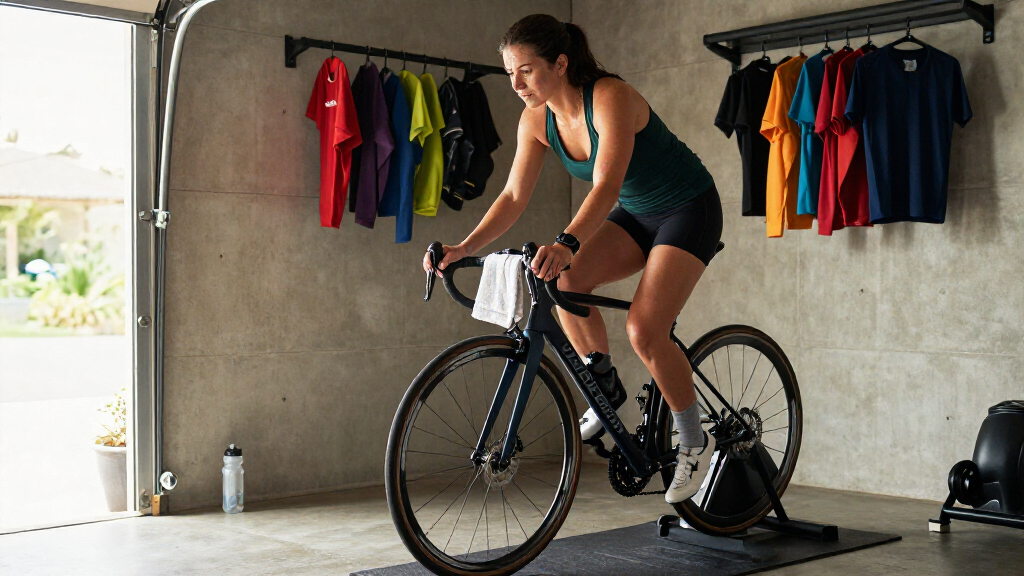

The best indoor cycling trainer for most riders is the Wahoo KICKR CORE 2 with Zwift Cog and Click: it pairs direct-drive ride quality with a simpler virtual-shifting setup. For a more immersive premium ride, the Garmin Tacx NEO 3M adds motion features, while the Sportneer magnetic trainer is a simpler wheel-on choice for riders who do not need app-controlled resistance. The main tradeoffs are direct-drive quiet and realism versus wheel-on convenience, plus how much smart functionality and setup flexibility you actually need. Compatibility, bike fit, and whether a cassette or Zwift Cog is included can change which model makes sense. Continue reading for my full comparison of 13 trainers and the buyer details that separate them.

Get sports gear delivered free with Prime
- Fast, free delivery on millions of items
- Prime Video, Amazon Music and more included
- Member-only deals all year
Complete the kit



Key Takeaways
- The Wahoo KICKR CORE 2 with Zwift Cog and Click leads for most buyers because its direct-drive design and virtual shifting reduce setup friction without moving into the premium feature tier.
- Direct-drive models dominate the connected-training choices, but they vary in included drivetrain setup: some arrive with a Zwift Cog and Click, while others list an 11-speed cassette.
- Premium Garmin Tacx NEO models serve riders who value a more immersive ride; the NEO 3M is the standout for motion features, while the NEO 2T offers a less feature-heavy premium alternative.
- Wheel-on trainers remain useful for simpler, occasional indoor riding, but buyers give up some of the convenience and ride characteristics that make direct-drive models appealing for frequent training.
- The lineup includes cycling shoes as well as trainers: adidas The Indoor Cycling Shoe is riding gear, not a resistance trainer, so it should not be compared as a substitute for the trainer models.
| ThinkRider X2Max Smart Bike Trainer |  | Best for Steep Virtual Climbs | Resistance mechanism: Electromagnetic | Maximum power output: Up to 2,000 W | Power accuracy: ±2% | VIEW LATEST PRICE | See Our Full Breakdown |
| Wahoo KICKR CORE 2 Smart Bike Trainer with Zwift Cog and Click |  | Best for Straightforward Zwift Setup | Trainer type: Direct-drive | Compatibility: 8- to 13-speed bikes | Maximum power: 1,800 W | VIEW LATEST PRICE | See Our Full Breakdown |
| Saris M2 Smart Indoor Electromagnetic Bike Trainer |  | Best Wheel-On Option | Trainer type: Wheel-on smart trainer | Resistance mechanism: Electronic | Resistance accuracy: ±5% | VIEW LATEST PRICE | See Our Full Breakdown |
| Garmin Tacx Nēra Indoor Smart Trainer with Zwift Cog and Click |  | Best Premium Ride Feel | Trainer model: Tacx Nēra, model 010-04825-60 | Compatibility: 8- to 13-speed bikes | Connectivity: Wi-Fi | VIEW LATEST PRICE | See Our Full Breakdown |
| adidas The Indoor Cycling Shoe |  | Best Indoor Cycling Shoe Add-On | Product type: Indoor cycling shoe | Brand: adidas | Fit designation: Unisex | VIEW LATEST PRICE | See Our Full Breakdown |
| Wahoo KICKR CORE 2 Smart Bike Trainer with 11-Speed Cassette |  | Best Value Direct-Drive Smart Trainer | Trainer type: Direct-drive indoor bike trainer | Maximum power: 1,800 W | Power accuracy: ±2% | VIEW LATEST PRICE | See Our Full Breakdown |
| Garmin Tacx NEO 3M Smart Trainer |  | Best for Realistic Road Feel | Trainer type: Direct-drive smart trainer | Maximum power output: 2,200 W | Power accuracy: 1% | VIEW LATEST PRICE | See Our Full Breakdown |
| Sportneer Magnetic Indoor Bike Trainer for 26–28-Inch and 700C Wheels |  | Best Simple Wheel-On Trainer | Wheel compatibility: 26–28 inches or 700C | Rear axle compatibility: 4.92–6.57 inches | Resistance levels: 6 | VIEW LATEST PRICE | See Our Full Breakdown |
| Wahoo KICKR V6 Direct-Drive Smart Bike Trainer with 11-Speed Cassette |  | Best for High-Output Training | Drive type: Direct drive | Maximum resistance: 2,200 W | Power accuracy: ±1% | VIEW LATEST PRICE | See Our Full Breakdown |
| Elite Avanti Smart Trainer – Direct Drive Indoor Cycling Trainer with Zwift Cog and Click |  | Best for Cassette-Free Zwift Shifting | Power accuracy: ±1% | Maximum power output: 2,100 W | Maximum gradient simulation: 18% | VIEW LATEST PRICE | See Our Full Breakdown |
| Garmin Tacx Nēra Indoor Smart Trainer |  | Best for a More Natural Ride Feel | Brand and model: Garmin Tacx Nēra | Model number: 010-02418-60 | Item type: Cycling trainer | VIEW LATEST PRICE | See Our Full Breakdown |
| COOSPO T10 Belt-Driven Direct Drive Indoor Bike Trainer |  | Best for High-Power Training on a Budget-Conscious Setup | Drive type: Belt-driven direct drive | Maximum power: 2200W | Power accuracy: ±2% | VIEW LATEST PRICE | See Our Full Breakdown |
| Garmin Tacx NEO 2T Smart Trainer |  | Best Premium Pick for Quiet, Responsive Resistance | Model number: T2875.60 | Resistance: Magnetic, 32 neodymium magnets | Foldable: Yes | VIEW LATEST PRICE | See Our Full Breakdown |
| indoor cycling trainer | Connectivity |
|---|---|
| ThinkRider X2Max Smart Bike Tr | ANT+ and BLE |
| Wahoo KICKR CORE 2 Smart Bike | Wi-Fi |
| Saris M2 Smart Indoor Electrom | ANT+ FE-C and Bluetooth |
| Garmin Tacx Nēra Indoor Smart | Wi-Fi |
| adidas The Indoor Cycling Shoe | — |
| Wahoo KICKR CORE 2 Smart Bike | Built-in Wi-Fi |
| Garmin Tacx NEO 3M Smart Train | Wi-Fi, Ethernet, ANT+, Bluetooth |
| Sportneer Magnetic Indoor Bike | — |
| Wahoo KICKR V6 Direct-Drive Sm | 2.4 GHz Wi-Fi |
| Elite Avanti Smart Trainer | Wi-Fi 2.4GHz, Bluetooth Smart, ANT+ FE-C |
| Garmin Tacx Nēra Indoor Smart | Built-in Wi-Fi |
| COOSPO T10 Belt-Driven Direct | Bluetooth FTMS, ANT+ FE-C |
| Garmin Tacx NEO 2T Smart Train | ANT+, Bluetooth |
More Details on Our Top Picks
ThinkRider X2Max Smart Bike Trainer
The ThinkRider X2Max makes the most sense for riders who want steep simulated climbs without moving to a higher-end model. Its 18% gradient simulation exceeds the Wahoo KICKR CORE 2’s listed 1,800 W maximum-power figure in raw output, though the two specs measure different things and do not establish which trainer climbs better. ANT+ and BLE support provide options for connecting to cycling apps such as Zwift. The I-beam frame is designed to steady the trainer during hard efforts, while its listed noise level is about 58 dB at 30 km/h. The tradeoff is a cassette-free setup: unlike the KICKR CORE 2 bundle, this one requires a separate cassette. I’d also check bike and wheel fit carefully, since the listed wheel size is 26 inches.
Pros:- Simulates gradients up to 18% for challenging virtual climbs.
- ANT+ and BLE connectivity supports compatible cycling software.
- I-beam triangular frame is designed for stability during harder efforts.
- Power output is listed up to 2,000 W.
Cons:- Cassette is not included, adding a separate setup requirement.
- The listed wheel size is 26 inches, so buyers should verify compatibility with their bike.
- At 35.2 pounds, it is not a lightweight trainer to move frequently.
Best for: Indoor riders who prioritize steep virtual climbs, ANT+ and BLE connectivity, and a stable frame, and are prepared to source a cassette separately.
Not ideal for: Riders who want a ready-to-use direct-drive bundle or whose bike setup does not match the listed 26-inch wheel specification.
- Resistance mechanism:Electromagnetic
- Maximum power output:Up to 2,000 W
- Power accuracy:±2%
- Maximum simulated slope:18%
- Connectivity:ANT+ and BLE
- Noise level:About 58 dB at 30 km/h
- Listed wheel size:26 inches
- Load capacity:240 pounds
- Cassette:Not included
Our verdict“Choose the X2Max if steep simulated climbs matter more than an included cassette and you have confirmed your bike fits.”
Wahoo KICKR CORE 2 Smart Bike Trainer with Zwift Cog and Click
The Wahoo KICKR CORE 2 is the clearest fit for riders who want a direct-drive setup with Zwift controls already in the box. Its pre-installed Cog and Click provide virtual shifting and control, while support for 8- to 13-speed bikes gives it broader stated drivetrain compatibility than a setup tied to one cassette choice. Wi-Fi supports pairing and automatic updates, a useful convenience compared with the ThinkRider X2Max’s ANT+ and BLE connection options. The CORE 2 is rated to 1,800 W, below the X2Max’s listed 2,000 W, but that difference matters most to riders pushing very high power rather than everyday training. The main catch is bike compatibility: it is designed for 8- to 13-speed bikes, and Wi-Fi features depend on an active network.
Pros:- Zwift Cog and Click are included for virtual shifting and control.
- Supports bikes with 8- to 13-speed drivetrains.
- Wi-Fi supports pairing and automatic updates.
- Electronic resistance is designed to provide a smooth, road-like feel.
Cons:- Wi-Fi updates require an active network.
- Compatibility is limited to the stated 8- to 13-speed range.
- Its listed maximum power is lower than the ThinkRider X2Max’s.
Best for: Zwift riders with an 8- to 13-speed bike who want a direct-drive trainer with virtual shifting hardware included.
Not ideal for: Riders without an active Wi-Fi network, or those whose bike falls outside the stated 8- to 13-speed compatibility.
- Trainer type:Direct-drive
- Compatibility:8- to 13-speed bikes
- Maximum power:1,800 W
- Connectivity:Wi-Fi
- Resistance mechanism:Electronic load
- Included shifting hardware:Zwift Cog and Click
- Weight:13.6 kg
- Frame material:Alloy steel
- Warranty:2 years
Our verdict“Pick the KICKR CORE 2 for a ready-to-use Zwift direct-drive setup if your bike is compatible and Wi-Fi is available.”
Saris M2 Smart Indoor Electromagnetic Bike Trainer
The Saris M2 suits riders who want smart resistance but prefer to leave the rear wheel on the bike. That wheel-on design is simpler to set up than the direct-drive Wahoo KICKR CORE 2, which requires the bike to connect directly to the trainer, though it does not offer the same direct-drive arrangement. ANT+ FE-C and Bluetooth provide app connections for workouts and virtual riding. The M2 includes a steel quick-release skewer, which helps with setup on compatible frames, and its alloy-steel construction supports a listed load capacity of 300 pounds. The tradeoff is measurement precision: its stated resistance accuracy is ±5%, looser than the ThinkRider X2Max’s ±2%. It is also rated at 69 dB at 20 mph, so it may be a poor match for noise-sensitive households.
Pros:- Wheel-on setup avoids removing the bike’s rear wheel.
- ANT+ FE-C and Bluetooth support compatible indoor cycling apps.
- Includes a steel quick-release skewer.
- Listed load capacity is 300 pounds.
Cons:- Resistance accuracy is specified as ±5%, less precise than the ThinkRider X2Max’s stated ±2%.
- Noise is listed at 69 dB at 20 mph.
- The provided wheel-size and bike-type details may not cover every setup, so fit should be checked.
Best for: Riders who want app-connected indoor workouts while keeping their bike’s rear wheel installed.
Not ideal for: Riders who prioritize tighter stated resistance accuracy or need a quieter trainer for shared living spaces.
- Trainer type:Wheel-on smart trainer
- Resistance mechanism:Electronic
- Resistance accuracy:±5%
- Connectivity:ANT+ FE-C and Bluetooth
- Noise level:69 dB at 20 mph
- Listed wheel size:29 inches
- Load capacity:300 pounds
- Weight:20 pounds
- Warranty:Limited lifetime
Our verdict“Choose the Saris M2 if keeping your bike’s rear wheel on matters more than quieter operation or tighter stated resistance accuracy.”
Garmin Tacx Nēra Indoor Smart Trainer with Zwift Cog and Click
The Garmin Tacx Nēra is the premium pick here for riders who value a more natural feel over easy portability. Its built-in multidirectional motion allows movement as you ride, a feature the Wahoo KICKR CORE 2 description does not list. The included Zwift Cog and Click add virtual shifting and menu control, while Wi-Fi and auto-calibration support app use with accurate power and cadence data. Garmin specifies accuracy within 1%, a tighter stated figure than the ThinkRider X2Max’s ±2%. That level of ride feel and data accuracy comes with real compromises: the Nēra weighs 54.5 pounds, making it much less convenient to move than the 13.6 kg CORE 2, and its full virtual riding features depend on an active Zwift or ROUVY membership. Check compatibility too, since it is listed for 8- to 13-speed bikes.
Pros:- Built-in multidirectional motion supports a more dynamic riding feel.
- Power and cadence accuracy are specified within 1%, with auto-calibration.
- Zwift Cog and Click are included for virtual shifting and control.
- Foldable legs support storage when the trainer is not in use.
Cons:- At 54.5 pounds, it is heavy to move or store.
- Full virtual riding features require an active Zwift or ROUVY membership.
- Compatibility is limited to 8- to 13-speed bikes.
Best for: Dedicated virtual cyclists who want multidirectional trainer movement, accurate power and cadence data, and included Zwift controls.
Not ideal for: Riders who need a lightweight, frequently moved trainer or do not want virtual riding features tied to a Zwift or ROUVY membership.
- Trainer model:Tacx Nēra, model 010-04825-60
- Compatibility:8- to 13-speed bikes
- Connectivity:Wi-Fi
- Power and cadence accuracy:Within 1%
- Motion:Built-in multidirectional movement
- Included controls:Zwift Cog and Zwift Click
- Weight:54.5 pounds
- Storage feature:Foldable legs
- Warranty:1-year limited warranty
Our verdict“Choose the Tacx Nēra if an immersive moving ride feel and precise data outweigh its heavy build and membership requirements.”
adidas The Indoor Cycling Shoe
The adidas Indoor Cycling Shoe is the only footwear option in this lineup, so it fills a different role from trainers such as the Saris M2 and Wahoo KICKR CORE 2. Its synthetic upper and synthetic-rubber sole are described as durable, while the lightweight build is intended to support comfort during intense indoor sessions. The unisex design may suit riders looking for a straightforward shoe rather than a trainer with app control or adjustable resistance. The product details provided do not specify cleat compatibility, closure type, or sizing guidance, so I would verify those before buying for a particular bike or pedal system. It cannot replace a trainer: this is an accessory for riders who already have compatible indoor cycling equipment, not a way to create an indoor setup on its own.
Pros:- Synthetic construction is described as durable.
- Synthetic-rubber sole provides a purpose-built cycling shoe base.
- Lightweight design is intended for comfort during high-intensity sessions.
- Unisex design broadens the intended fit range.
Cons:- It is a shoe, not an indoor cycling trainer.
- Cleat compatibility and closure details are not provided in the supplied product data.
- The listed color option is limited to White/Silver-White.
Best for: Indoor cyclists who need a lightweight unisex shoe and have confirmed its fit and compatibility with their pedal system.
Not ideal for: Buyers seeking a complete indoor cycling trainer, or riders who need confirmed cleat compatibility and detailed fit information before purchase.
- Product type:Indoor cycling shoe
- Brand:adidas
- Fit designation:Unisex
- Outer material:Synthetic
- Sole material:Synthetic rubber
- Color:White/Silver-White
- Origin:Made in the USA or imported
Our verdict“Consider this shoe only as an accessory after confirming its fit and pedal compatibility; it does not replace a trainer like the Saris M2.”
Wahoo KICKR CORE 2 Smart Bike Trainer with 11-Speed Cassette
The Wahoo KICKR CORE 2 is a practical step up from wheel-on trainers like the Sportneer Magnetic Indoor Bike Trainer: its direct-drive setup and smooth resistance give structured indoor rides a more road-like feel, without requiring the highest power ceiling in this group. It supports up to 1,800 watts and a 16% simulated grade, which suits most training sessions but falls short of the steeper climbs and higher output available from the KICKR V6 or Garmin Tacx NEO 3M. Built-in Wi-Fi handles pairing and automatic updates, while compatibility across 8- to 13-speed bikes offers flexibility. The included 11-speed cassette gets some riders started quickly, but others may need a different cassette to match their drivetrain. I’d pick it for dependable smart training, not premium motion features.
Pros:- Direct-drive resistance delivers a smooth, road-like feel for indoor workouts.
- Built-in Wi-Fi supports pairing and automatic updates.
- Compatible with 8- to 13-speed bikes.
- Includes an 11-speed cassette and cassette spacer.
Cons:- The included 11-speed cassette may not match the bike’s drivetrain.
- Automatic updates require an active Wi-Fi network.
- Its 1,800-watt ceiling and 16% grade are below the KICKR V6 and Tacx NEO 3M.
Best for: Riders who want a direct-drive smart trainer for regular structured workouts and whose bike uses, or can accommodate, the included 11-speed cassette.
Not ideal for: Riders seeking the highest grade simulation, premium motion features, or a setup that matches a non-11-speed drivetrain without cassette changes.
- Trainer type:Direct-drive indoor bike trainer
- Maximum power:1,800 W
- Power accuracy:±2%
- Maximum simulated grade:16%
- Connectivity:Built-in Wi-Fi
- Compatible speeds:8 to 13 speed
- Included cassette:11-speed
- Dimensions:20.4 × 23 × 18.5 in
Our verdict“Choose the KICKR CORE 2 for capable direct-drive training and broad drivetrain compatibility without needing the higher performance ceiling of Wahoo’s KICKR V6.”
Garmin Tacx NEO 3M Smart Trainer
The Garmin Tacx NEO 3M is the choice here for riders who care as much about how an indoor ride feels as about its power numbers. Its multidirectional motion plates allow some side-to-side movement, while virtual flywheel effects simulate surfaces such as gravel and cobblestones—features the Wahoo KICKR V6 does not list. With 1% power accuracy, up to 2,200 watts, and gradients up to 25%, it also offers more headroom for hard efforts and steep virtual climbs than the KICKR CORE 2. The pre-installed 11-speed cassette and no-calibration design simplify setup. The cost of this immersive approach is a substantial 52-pound frame; app-dependent features may also require a compatible device and paid subscription. I’d reserve it for committed riders who will use those extras.
Pros:- Multidirectional motion plates add movement that can be switched on or off.
- Virtual flywheel simulates road surfaces including cobblestones and gravel.
- Power accuracy is specified at 1%, including at low outputs.
- Pre-installed 11-speed cassette and no calibration simplify initial setup.
Cons:- At 52 pounds, it is cumbersome to move despite its built-in handle.
- Some training and surface features depend on a compatible device and may involve a paid app.
- Its extensive feature set is more than casual riders may need.
Best for: Dedicated indoor cyclists who want motion and simulated road-surface effects alongside precise power data and steep-climb support.
Not ideal for: Casual riders or anyone who needs to move and store a trainer often, or who does not want app-dependent features.
- Trainer type:Direct-drive smart trainer
- Maximum power output:2,200 W
- Power accuracy:1%
- Maximum gradient:25%
- Connectivity:Wi-Fi, Ethernet, ANT+, Bluetooth
- Cassette:11-speed, pre-installed
- Item weight:52 lb
- Warranty:1 year limited
Our verdict“Choose the Tacx NEO 3M if realistic motion and road-surface simulation matter more to you than portability and a straightforward setup.”
Sportneer Magnetic Indoor Bike Trainer for 26–28-Inch and 700C Wheels
The Sportneer Magnetic Indoor Bike Trainer keeps the setup simple: clamp in a compatible rear wheel, choose among six handlebar-controlled resistance levels, and ride. That makes it a more basic alternative to direct-drive models such as the Wahoo KICKR CORE 2, which can connect to training apps and control resistance for structured sessions. Sportneer’s wide base, adjustable anti-slip feet, quick-release lever, and included front wheel block make it a practical option for riders who want a straightforward indoor stand rather than a connected training system. Its fit is tied to specified wheel and rear-axle dimensions, though, and the product data advises slick or road tires because tread and tire material affect noise. Thru-axle bike owners need a separate version and adapter, so this is best for compatible bikes and uncomplicated workouts.
Pros:- Six resistance levels can be adjusted with a handlebar-mounted remote.
- Includes a front wheel block and quick-release skewer for setup.
- Wide base and five adjustable anti-slip feet support stability.
- Fits specified 26–28-inch and 700C wheels.
Cons:- Does not provide the smart connectivity or controlled workouts of the KICKR CORE 2.
- Noise varies by tire tread and material; slick or road tires are recommended.
- Thru-axle bikes require a separate non-standard version and adapter.
Best for: Road-bike owners with compatible 26–28-inch or 700C wheels who want manually adjustable indoor resistance without smart-training features.
Not ideal for: Riders who want app-controlled workouts, precise power data, quiet operation with knobby tires, or a direct fit for a thru-axle bike.
- Wheel compatibility:26–28 inches or 700C
- Rear axle compatibility:4.92–6.57 inches
- Resistance levels:6
- Resistance mechanism:Magnetic
- Load capacity:300 lb
- Dimensions:22 × 22 × 15.5 in
- Item weight:19.3 lb
- Included components:Trainer stand, resistance remote, front wheel block, quick-release skewer
Our verdict“Choose Sportneer if your bike fits its wheel and axle requirements and you want simple manual resistance rather than connected training.”
Wahoo KICKR V6 Direct-Drive Smart Bike Trainer with 11-Speed Cassette
The Wahoo KICKR V6 is the stronger fit for riders who push high power or want more headroom for steep virtual climbs. It reaches 2,200 watts and a 20% simulated grade, compared with the KICKR CORE 2’s 1,800 watts and 16%, and specifies ±1% power accuracy with automatic calibration. Its high-inertia flywheel and AXIS feet add a more dynamic ride feel than the simpler Sportneer wheel-on stand, which has manual resistance rather than app-controlled smart features. Wi-Fi supports data transfer to a computer, tablet, or phone. That capability comes with a practical tradeoff: the 22 kg direct-drive unit is not easy to shift around, and its listed Wi-Fi connection is limited to 2.4 GHz. I’d choose it over the CORE 2 for demanding training, not merely for occasional spinning.
Pros:- Provides up to 2,200 W of resistance and simulates grades up to 20%.
- Specified ±1% power accuracy with automatic calibration.
- AXIS feet allow side-to-side movement for a more dynamic ride feel.
- Wi-Fi supports connections to computers, tablets, and smartphones.
Cons:- The 22 kg unit can be cumbersome to move or store.
- Listed Wi-Fi connectivity is limited to 2.4 GHz.
- Its higher power and grade capacity may be unnecessary for casual indoor riding.
Best for: Performance-focused cyclists who train at high power, use virtual climbs, and want precise readings with automatic calibration.
Not ideal for: Riders who need a lightweight trainer to move regularly, or whose workouts do not call for more power and gradient capacity than the KICKR CORE 2 provides.
- Drive type:Direct drive
- Maximum resistance:2,200 W
- Power accuracy:±1%
- Maximum simulated grade:20%
- Connectivity:2.4 GHz Wi-Fi
- Included cassette:11-speed
- Flywheel weight:16 lb
- Item weight:22 kg
Our verdict“Pick the KICKR V6 over the CORE 2 if your training makes use of its higher output, steeper gradients, and automatic calibration.”
Elite Avanti Smart Trainer – Direct Drive Indoor Cycling Trainer with Zwift Cog and Click
The Elite Avanti stands apart from the cassette-equipped Wahoo KICKR V6 by including the Zwift Cog and Click for virtual shifting, so riders can change gears in Zwift without relying on a conventional cassette. Its 24 virtual gears and 10Hz data transmission support responsive app-based sessions, while optical torque sensing provides ±1% power accuracy. Triple connectivity—Wi-Fi, Bluetooth, and ANT+—also gives it more connection options than the Wi-Fi-only setup listed for the KICKR V6. The tradeoff is that virtual shifting suits Zwift-centered riders best; cyclists who prefer traditional gearing may find the Cog less appealing. It accommodates road, gravel, and mountain bikes with included axle adapters, but its 13 kg frame is still a substantial piece of indoor equipment. I’d choose it for app-first versatility, not cassette-first simplicity.
Pros:- Includes Zwift Cog and Click with 24 virtual gears.
- Optical torque sensing provides specified ±1% power accuracy.
- Wi-Fi, Bluetooth, and ANT+ support a broad range of devices and apps.
- Includes quick-release and thru-axle adapters for several bike styles.
Cons:- Virtual shifting is most useful for riders committed to Zwift and may not suit traditional cassette users.
- The 13 kg trainer is not especially light to move.
- Full smart functionality requires a power source.
Best for: Zwift-focused riders who want virtual shifting, precise power readings, and compatibility with road, gravel, or mountain bikes.
Not ideal for: Cyclists who prefer using a traditional cassette and gears, or who want a lighter trainer for frequent transport.
- Power accuracy:±1%
- Maximum power output:2,100 W
- Maximum gradient simulation:18%
- Connectivity:Wi-Fi 2.4GHz, Bluetooth Smart, ANT+ FE-C
- Virtual gears:24 via Zwift Cog
- Drivetrain compatibility:8–12 speed (Shimano, SRAM, Campagnolo)
- Axle compatibility:130–135mm QR, 142×12mm thru-axle
- Trainer weight:13 kg
Our verdict“Choose the Avanti if you want a versatile, app-connected trainer built around Zwift virtual shifting rather than a conventional cassette.”
Garmin Tacx Nēra Indoor Smart Trainer
The Tacx Nēra is the pick for riders who want some side-to-side movement rather than the fixed feel of a conventional direct-drive setup. Its multidirectional motion is intended to make indoor efforts feel more natural, while stated power and cadence accuracy within 1% gives structured workouts a precise data foundation. Built-in Wi-Fi adds a straightforward connection route to compatible platforms, and the pre-installed cassette cuts down on initial setup compared with the COOSPO T10, which requires a separately purchased cassette. The tradeoff is its 54.5-pound weight: foldable legs and an integrated handle help with storage, but do not make it a light trainer to carry. I’d favor it over a more conventional option when ride feel matters more than easy room-to-room moving; race mode features also depend on compatible apps or regional availability.
Pros:- Multidirectional movement aims to create a more natural ride feel than a fixed trainer.
- Stated power and cadence accuracy within 1%, with automatic calibration.
- Built-in Wi-Fi supports connection to compatible training platforms.
- Pre-installed cassette, foldable legs, and integrated handle simplify setup and storage.
Cons:- At 54.5 pounds, it can be cumbersome to transport.
- Race mode and Zwift Ready options depend on compatible apps or regional availability.
Best for: Riders who prioritize a more lifelike, moving feel for indoor training and want a cassette-ready setup with Wi-Fi connectivity.
Not ideal for: Cyclists who need to carry a trainer up stairs or move it often, or who want every race-mode feature available without app or regional limits.
- Brand and model:Garmin Tacx Nēra
- Model number:010-02418-60
- Item type:Cycling trainer
- Weight:54.5 pounds
- Length:24.76 inches
- Power and cadence accuracy:Within 1%
- Connectivity:Built-in Wi-Fi
- Included components:Trainer with pre-installed cassette, power cable, quick-release skewer, adapters, 5 mm hex key, hardware, and documentation
- Warranty:1-year limited warranty
Our verdict“Choose the Tacx Nēra if ride movement and a ready-to-ride cassette matter more than keeping trainer weight low.”
COOSPO T10 Belt-Driven Direct Drive Indoor Bike Trainer
The COOSPO T10 stands out for riders who want high resistance capacity and structured-workout control without relying on the more premium Garmin feature set. It delivers up to 2200W, simulates gradients up to 15%, and uses automatic ERG mode to hold a target power as cadence changes. Its belt-driven design is intended to keep power transfer smooth and reduce mechanical wear, while Bluetooth FTMS and ANT+ FE-C connect it to compatible training apps. Compared with the Garmin Tacx Nēra, the T10 gives up the Nēra’s stated within-1% accuracy for ±2% accuracy, but its listed power ceiling is higher. Setup has a real catch: no cassette is included, and SRAM XDR needs a separate freehub; Micro Spline cassettes are not directly compatible. I’d choose it for hard intervals and app-based training, not for a ready-out-of-the-box drivetrain.
Pros:- Up to 2200W resistance supports demanding intervals and simulated climbs.
- Automatic ERG mode adjusts resistance to maintain target power as cadence changes.
- Belt-driven design is intended to reduce noise and mechanical wear.
- Bluetooth FTMS and ANT+ FE-C support compatible training platforms.
Cons:- Cassette must be purchased separately.
- SRAM XDR requires an additional freehub body, and Micro Spline cassettes are not directly compatible.
- Its stated ±2% power accuracy is less precise than the Tacx Nēra’s stated within-1% figure.
Best for: Structured-workout riders who want high resistance capacity, automatic ERG control, and Bluetooth or ANT+ app connectivity, and already know their cassette requirements.
Not ideal for: Cyclists who want a complete drivetrain setup in the box, use a Micro Spline cassette, or need SRAM XDR compatibility without buying an additional freehub.
- Drive type:Belt-driven direct drive
- Maximum power:2200W
- Power accuracy:±2%
- Maximum simulated gradient:15%
- Connectivity:Bluetooth FTMS, ANT+ FE-C
- Weight:16 kg
- Axle compatibility:5 × 130/135 mm QR; 12 × 142/148 mm thru-axle
- Cassette compatibility:Shimano 8–12 speed; SRAM 8–11 speed; XDR requires a separate freehub
- Warranty:12 months
Our verdict“Pick the COOSPO T10 for high-power app training if you are prepared to source a compatible cassette and any needed freehub.”
Garmin Tacx NEO 2T Smart Trainer
The Tacx NEO 2T is the premium choice here for riders who value responsive resistance, quiet operation, and broad device support. Its redesigned internals and stronger magnets are intended to reduce slipping during hard sprints, while reduced vibration and internal air-displacement noise help keep indoor sessions less disruptive. ANT+ and Bluetooth support compatible apps and devices across iOS, Android, macOS, and Windows, and the included adapters cover several quick-release and thru-axle standards. Compared with the COOSPO T10, the NEO 2T is a more polished fit for riders prioritizing quiet and platform flexibility, while the T10 lists a specific 2200W capacity and automatic ERG mode. The NEO 2T’s 47.4-pound frame still makes moving it a chore, and wireless training features need a compatible device or app. Its foldable design helps with storage, but this is best treated as a mostly stationary trainer.
Pros:- Redesigned internals and stronger magnets support responsive resistance during hard efforts.
- Reduced vibration and internal air-displacement noise help limit ride noise.
- ANT+ and Bluetooth work with compatible devices and apps across major operating systems.
- Included adapters support several quick-release and thru-axle standards.
Cons:- At 47.4 pounds, it is cumbersome to carry or reposition.
- Wireless features require a compatible device or training app.
- Its included Tacx Premium software access lasts one month, rather than providing ongoing software access.
Best for: Dedicated indoor cyclists who want quiet, responsive resistance, multi-platform connectivity, and axle adapters for different bikes.
Not ideal for: Riders who need a lightweight trainer to move frequently or who expect wireless features to work without a compatible phone, computer, or training app.
- Model number:T2875.60
- Resistance:Magnetic, 32 neodymium magnets
- Foldable:Yes
- Connectivity:ANT+, Bluetooth
- Compatible operating systems:iOS, Android, macOS, Windows
- Weight:47.4 pounds
- Compatible axles:130 mm QR, 135 mm QR, 12 × 142 mm thru-axle, 12 × 142 mm Boost
- Included accessories:Front wheel support, power cable, quick-release and thru-axle skewers, axle adapters, Shimano/SRAM freehub, one month of Tacx Premium software
Our verdict“Choose the Tacx NEO 2T for a quiet, responsive setup that can stay assembled, provided its weight and app requirement suit your space.”
How We Picked
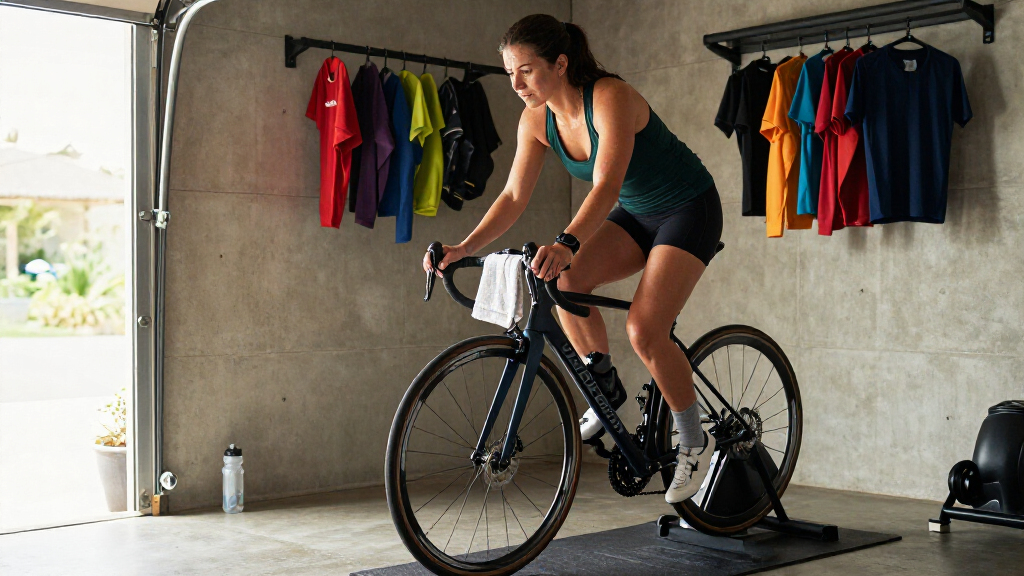
I ranked these options around the needs that shape an indoor-training purchase: ride type, smart functionality, bike compatibility, setup burden, and build purpose. Direct-drive trainers generally rank ahead for riders who train often or use virtual cycling apps because they remove the rear wheel from the equation. Wheel-on models can still suit occasional use or a lower-complexity setup, while their wheel and tire fit requirements make them a less flexible match for some riders. I also looked at what the named configurations include, since a Zwift Cog and Click setup is not interchangeable with an 11-speed cassette for every drivetrain or riding preference.
The order reflects the intended buyer, not a claim that every rider needs the most advanced unit. The CORE 2 with Cog and Click takes the lead as a strong balance of smart-training practicality and approachable setup; premium NEO models rank for riders seeking added ride features. The lineup’s simpler magnetic option ranks for a different kind of use, while the adidas shoe is identified separately because it is footwear rather than a trainer. I favor products whose stated format and accessories make their role clear, and I treat compatibility and included hardware as meaningful limits rather than minor details.
Factors to Consider When Choosing Best Indoor Cycling Trainers
Before choosing a model, decide how you will ride, what bike you will connect, and how much setup you want to manage. A trainer’s headline smart features matter less if the axle, cassette, or shifting format does not suit your bike.
Direct-Drive or Wheel-On: Match the Trainer to Your Routine
A direct-drive trainer replaces the bike’s rear wheel at the trainer, while a wheel-on model presses a roller against the tire. For frequent sessions, direct drive can reduce tire wear concerns and simplify consistent use, but it asks for more initial setup and drivetrain compatibility checks. Wheel-on models can be easier to store with a bike ready to ride, though tire pressure and roller contact can affect how the setup feels. A common mistake is choosing by convenience alone, then discovering that repeated mounting and adjustment makes regular workouts less appealing. If riding indoors is occasional, a simpler wheel-on unit may be enough; for structured sessions or app-based riding, direct drive is often the more suitable format.
Check Bike and Drivetrain Compatibility Before Buying
Confirm the trainer supports your bike’s axle standard, rear spacing, and frame type before focusing on app features. Direct-drive models also need a compatible cassette or virtual-shifting arrangement, and an included 11-speed cassette does not automatically suit every bike. A Zwift Cog and Click configuration changes how shifting works, so check that it fits the apps and riding style you plan to use. Buyers often overlook second-bike use: a trainer that works with one road bike may need extra parts or adjustments for another bike. Read the product configuration closely, then compare it with the bike manufacturer’s specifications rather than assuming “smart trainer” means universal fit.
Choose Smart Features Around Your Training Habits
Smart resistance and app connectivity are useful when workouts need to adjust effort automatically or when virtual routes and group rides keep you engaged. They may add little for riders who only want a steady spin while watching a show. Before paying for advanced functions, identify whether your preferred training app is supported and whether you need controllable resistance, power data, or both. Pairing and network setup can also affect how smoothly a session starts, especially when several devices compete for a connection. A practical rule is to buy the features you expect to use weekly, not every feature that appears on a specification sheet.
Factor in Noise, Floor Protection, and Storage
Noise depends on the trainer, the bike, the floor, and the room; a quiet trainer cannot eliminate drivetrain sound or vibration from a hard surface. Apartment riders should think about a mat, nearby walls, and the time of day they train, not just a product’s design. Direct-drive models avoid tire-to-roller contact, while wheel-on setups add a point of contact that can influence sound and tire wear. Also measure the space needed to mount the bike and leave room to step off safely. A compact storage plan is useful only if moving the trainer does not make each workout inconvenient to set up.
Decide When Premium Ride Features Are Worth It
Premium trainers can add a more dynamic ride experience or more advanced training features, but those extras do not automatically improve every workout. Riders who follow demanding plans, spend long sessions indoors, or value immersion may get more from added motion or simulation features than casual riders do. If your main goal is basic app-controlled resistance, a midrange direct-drive model may cover the essentials without paying for functions you rarely notice. Compare the whole setup too: a trainer that requires a separate cassette or accessories can change the real cost and convenience. Pay more when a specific feature solves a recurring problem, not simply because a model sits at the top of a product family.
Treat Clothing and Accessories as Separate Purchases
A cycling shoe can improve foot retention and pedaling comfort, but it is not a trainer and cannot provide resistance or connect a bike to a training app. The adidas Indoor Cycling Shoe in this lineup belongs in a separate gear decision, alongside questions about cleat compatibility and pedal type. Check the shoe’s closure and fit needs against your intended session length, and verify that its cleat pattern matches your pedals. A frequent buying error is assuming indoor-cycling footwear uses the same setup as a road shoe; pedal and cleat systems vary. Keep the trainer budget and accessory budget distinct so that a useful shoe purchase does not distract from choosing a compatible resistance unit.
Frequently Asked Questions
Is a direct-drive trainer worth choosing over a wheel-on trainer?
It is often a better fit if you plan to train indoors regularly, use app-controlled workouts, or want to avoid pressing your tire against a roller. Direct-drive models do require checking axle and drivetrain compatibility, and some configurations need a cassette or a specific virtual-shifting setup. A wheel-on trainer can make sense for occasional use or riders who prefer to leave the rear wheel on the bike. Think about how often you will mount the bike as well as the ride format: repeated setup can matter more to your routine than a feature you rarely use. For this roundup, the Sportneer is the straightforward wheel-on choice, while most of the connected options are direct drive.
Should I choose the Wahoo CORE 2 with Zwift Cog and Click or the cassette version?
Choose based on how you want to shift and what drivetrain your bike uses. The Cog and Click configuration is designed around virtual shifting, which can simplify the trainer setup for compatible app use. The 11-speed cassette version is a more familiar arrangement for riders whose bike and training habits align with that cassette format. Do not assume either version will suit every bike without checking compatibility, including axle fit and drivetrain details. If you own multiple bikes, compare each one against the specific configuration before deciding.
Can I use these trainers with more than one bike?
Often, but switching bikes can involve adjustments or additional hardware rather than a simple drop-in change. Confirm that each bike matches the trainer’s axle and frame compatibility, then check cassette or virtual-shifting requirements for direct-drive models. Differences in drivetrain setup may mean one configuration works smoothly with one bike but not another. Wheel-on trainers also need the bike’s wheel size and tire to fit the stated range. If sharing is part of the plan, list every bike’s specifications before buying and account for setup time between riders.
Do I need a smart trainer if I only want to ride indoors casually?
No; a smart trainer is most useful when you want app connectivity, controlled resistance, or structured workouts that change effort automatically. For a steady ride without those features, a simpler magnetic wheel-on trainer may be enough. The tradeoff is less interactive training and fewer app-driven functions. Consider whether you will use virtual rides or workout plans often enough to justify the added setup and compatibility checks. If those features are likely to keep you riding consistently, a smart direct-drive option may be a better long-term fit.
Does the adidas Indoor Cycling Shoe belong in a trainer comparison?
Not as a resistance trainer: it is footwear, so it cannot replace any of the bike trainer models. It can still matter to an indoor setup if you need shoes that work with your pedals and cleats. Check the shoe’s cleat compatibility and fit before buying, since pedal systems are not all the same. For a complete indoor-cycling setup, choose the trainer first based on bike fit and training needs, then select compatible footwear separately. This distinction helps avoid treating a shoe listing as another trainer option.
Conclusion
For most riders, I recommend the Wahoo KICKR CORE 2 with Zwift Cog and Click as the best overall balance of direct-drive training and a simpler virtual-shifting configuration. The COOSPO T10 is my value-minded direct-drive pick for buyers who want that format without focusing on premium ride features, while the Sportneer magnetic trainer is the simpler choice for occasional wheel-on riding. For premium needs, choose the Garmin Tacx NEO 3M if its motion features suit your training; the NEO 2T is another premium option in the lineup. Beginners who want connected training can start with the CORE 2 configuration that matches their bike, while riders who want a basic setup may prefer the Sportneer. The adidas shoe is an accessory, not a trainer, so treat it as a separate purchase after confirming pedal compatibility.