The best indoor cycling trainers balance a realistic ride, useful training features, bike compatibility, and a setup you can live with at home. I’d put the Wahoo KICKR V6 first for its strong all-around smart-training appeal, while the Garmin Tacx NEO 3M stands out for riders seeking a premium, feature-rich setup and the Saris Fluid2 for those who want straightforward fluid resistance. The main choice is between the smooth, connected experience of a smart direct-drive trainer and the lower-complexity setup of a wheel-on or roller model. Noise, storage, compatibility, and whether you need app-controlled resistance can change which option makes sense. Read on for the full breakdown of all 13 picks and the tradeoffs that separate them.

Get sports gear delivered free with Prime
- Fast, free delivery on millions of items
- Prime Video, Amazon Music and more included
- Member-only deals all year
Complete the kit


Key Takeaways
- Direct-drive smart trainers lead for connected training: The Wahoo KICKR V6, Garmin Tacx NEO 3M, Tacx Flux S, and ThinkRider smart models suit riders who want app-based workouts and resistance control, but they call for more setup and bike-compatibility checks than basic stands.
- Premium features do not fit every rider: The NEO 3M and KICKR V6 are the strongest candidates for frequent, structured training; occasional riders may get more practical value from a simpler fluid or magnetic trainer.
- Wheel-on trainers trade convenience for extra setup variables: Alpcour, Saris M2, and CXWXC options keep the rear wheel on the bike, but tire condition, roller contact, and bike fit can affect noise and ride feel.
- Fluid trainers offer a simpler route to progressive resistance: The Saris Fluid2 and Alpcour Fluid models avoid dependence on smart apps, though they cannot match electronically controlled workouts.
- Rollers serve a different training purpose: The Garmin Tacx Antares emphasizes balance and smooth pedaling rather than a locked-in trainer feel, making it less suitable for riders who want hands-free stability.
| Alpcour Foldable Magnetic Bike Trainer Stand |  | Best Portable Entry-Level Pick | Resistance mechanism: Magnetic | Resistance settings: 6 | Compatible wheel sizes: 26–28 in and 700c; listed wheel size also includes 29 in | VIEW LATEST PRICE | See Our Full Breakdown |
| Garmin Tacx NEO 3M Smart Trainer |  | Best Premium Road-Feel Trainer | Trainer type: Direct-drive smart trainer | Maximum power: 2200 watts | Power accuracy: Within 1% | VIEW LATEST PRICE | See Our Full Breakdown |
| Magnetic Indoor Bike Trainer Stand |  | Best for Heavy Riders on a Basic Setup | Resistance type: Magnetic | Resistance levels: 6 | Compatible wheel sizes: 26–29 in, including 700c | VIEW LATEST PRICE | See Our Full Breakdown |
| Wahoo KICKR V6 Smart Indoor Bike Trainer |  | Best for Connected Training | Resistance: Electromagnetic | Maximum resistance: Over 2,200 watts | Power accuracy: Within ±1% | VIEW LATEST PRICE | See Our Full Breakdown |
| ThinkRider XXPRO Smart Bike Trainer |  | Best for High-Power Virtual Rides | Resistance mechanism: Electromagnetic | Maximum power: 2500 W | Maximum simulated gradient: 25% | VIEW LATEST PRICE | See Our Full Breakdown |
| Saris M2 Smart Indoor Electromagnetic Bike Trainer |  | Best Wheel-On Smart Trainer | Resistance mechanism: Electronic electromagnetic | Power accuracy: ±5% | Connectivity: ANT+ FE-C and Bluetooth | VIEW LATEST PRICE | See Our Full Breakdown |
| CYCPLUS R200 Smart Bike Trainer, 2200 W |  | Best for High-Intensity Smart Training | Peak power: 2200 W | Maximum torque: 80 N·m | Power accuracy: ±1% | VIEW LATEST PRICE | See Our Full Breakdown |
| Garmin Tacx Antares Indoor Retractable Bicycle Rollers, 62 cm |  | Best for Balance and Riding Skills | Model: Tacx Antares T1000 | Wheel size: 26–29 inches | Roller diameter: 3.93–4.33 inches (100–110 mm) | VIEW LATEST PRICE | See Our Full Breakdown |
| Alpcour Fluid Bike Trainer Stand – Portable Foldable Stainless Steel Trainer with Noise Reduction, Progressive Resistance, and Dual-Lock System for Road & Mountain Bikes |  | Best Portable Fluid Trainer | Model: APC-BTSFBK | Resistance mechanism: Fluid | Wheel compatibility: 26–29 inches and 700c | VIEW LATEST PRICE | See Our Full Breakdown |
| Saris Fluid2 Indoor Bike Trainer for Road and Mountain Bikes |  | Best Simple Fluid Trainer | Resistance mechanism: Fluid | Number of settings: 1 | Compatible bike types: Hybrid, mountain, and road bikes | VIEW LATEST PRICE | See Our Full Breakdown |
| CXWXC Fluid Bike Trainer Stand for 26–29-Inch or 700c Wheels |  | Best App-Connected Wheel-On Pick | Resistance mechanism: Fluid | Design: Foldable, wheel-on | Compatible wheel sizes: 26–29 inches and 700c | VIEW LATEST PRICE | See Our Full Breakdown |
| ThinkRider X2Max Smart Bike Trainer |  | Best for Steep Virtual Climbs | Resistance mechanism: Electromagnetic | Maximum power: 2,000 W | Power accuracy: ±2% | VIEW LATEST PRICE | See Our Full Breakdown |
| Tacx Flux S Smart Bike Trainer (Black) Model T2900S.60 | 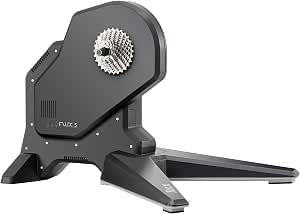 | Best for Quiet Direct-Drive Training | Trainer type: Smart direct-drive | Resistance mechanism: Electromagnetic | Power accuracy: Within ±3% | VIEW LATEST PRICE | See Our Full Breakdown |
| indoor cycling trainer | Resistance mechanism | Load capacity | Warranty |
|---|---|---|---|
| Alpcour Foldable Magnetic Bike | Magnetic | 150–250 lb | — |
| Garmin Tacx NEO 3M Smart Train | — | — | 1-year limited |
| Magnetic Indoor Bike Trainer S | — | — | — |
| Wahoo KICKR V6 Smart Indoor Bi | — | 250 kg | 1 year |
| ThinkRider XXPRO Smart Bike Tr | Electromagnetic | 242 lb | 1 year |
| Saris M2 Smart Indoor Electrom | Electronic electromagnetic | 300 lbs | Limited lifetime |
| CYCPLUS R200 Smart Bike Traine | Magnetic | 250 pounds | 2 years |
| Garmin Tacx Antares Indoor Ret | Electronic | — | — |
| Alpcour Fluid Bike Trainer Sta | Fluid | 300 lbs | — |
| Saris Fluid2 Indoor Bike Train | Fluid | — | Limited lifetime |
| CXWXC Fluid Bike Trainer Stand | Fluid | 330 pounds | — |
| ThinkRider X2Max Smart Bike Tr | Electromagnetic | 240 pounds | — |
| Tacx Flux S Smart Bike Trainer | Electromagnetic | 300 pounds | 2-year limited warranty |
More Details on Our Top Picks
Alpcour Foldable Magnetic Bike Trainer Stand
The Alpcour Foldable Magnetic Bike Trainer Stand is a practical choice for riders who want indoor sessions without replacing their existing bike or committing to a connected training setup. Its six handlebar-controlled resistance settings make effort changes straightforward, while the folding frame, riser block, and carry bag suit occasional use or storage between rides. Unlike the Garmin Tacx NEO 3M, this is a wheel-on magnetic trainer: it costs you no smart-app features or simulated terrain, and the bike’s rear tire stays in contact with the resistance unit. The tradeoff is simpler training feedback and fixed resistance steps rather than the NEO 3M’s precise, app-controlled changes. Check your wheel size before buying; the listed compatibility covers 26–28-inch and 700c wheels, while the product data also lists 29 inches. It makes most sense for casual riders who value portability over realism.
Pros:- Six resistance settings can be adjusted from the handlebars.
- Folding stainless steel frame and included carrying bag simplify storage and transport.
- Front wheel riser block and compatibility with road and mountain bikes support a familiar setup.
- Wide base and anti-slip rubber pads help keep the stand stable.
Cons:- Resistance changes in six fixed steps rather than continuously.
- Wheel-size compatibility details are inconsistent, so buyers should confirm fit before ordering.
- Wheel-on operation offers less realistic, data-rich training than direct-drive smart models such as the Wahoo KICKR V6.
Best for: Road or mountain bike owners who want a foldable, easy-to-store trainer for basic indoor workouts and do not need app-controlled resistance.
Not ideal for: Structured-training riders seeking measured power, virtual terrain, or seamless smart-app control, and cyclists whose wheel size falls outside the stated fit range.
- Resistance mechanism:Magnetic
- Resistance settings:6
- Compatible wheel sizes:26–28 in and 700c; listed wheel size also includes 29 in
- Frame material:Stainless steel
- Item weight:9.34 kg
- Dimensions:21.5 × 19 × 16.5 in
- Load capacity:150–250 lb
- Included accessories:Front wheel riser block and carrying bag
Our verdict“Choose the Alpcour if you want a portable, straightforward trainer for basic rides; skip it if smart control and precise training data are priorities.”
Garmin Tacx NEO 3M Smart Trainer
The Garmin Tacx NEO 3M is the most immersive option in this group for riders who want virtual terrain to feel closer to outdoor riding. Its toggleable multidirectional movement and virtual road-surface simulation add motion and texture that the more straightforward Wahoo KICKR V6 does not list, while simulated climbs reach 25%. Power accuracy within 1% and compatibility with apps such as Zwift and TrainerRoad suit structured sessions as well as virtual rides. A pre-installed 11-speed cassette and no-calibration setup reduce the work between unboxing and training. The tradeoff is a substantial 52-pound chassis, and some functions depend on a compatible device and app. Compared with the wheel-on Alpcour, it asks for more space and setup investment, but delivers a much more feature-rich direct-drive experience.
Pros:- Multidirectional movement and virtual road surfaces add immersion to app-based rides.
- Simulates gradients up to 25% for steep virtual climbs.
- Power accuracy within 1% supports structured training.
- Pre-installed 11-speed cassette and no-calibration setup reduce initial preparation.
Cons:- At 52 pounds, it is cumbersome to move and store.
- Some features require a compatible smart device and training app.
- Its advanced virtual-training focus is more than casual riders need compared with a basic wheel-on option such as the Alpcour.
Best for: Committed virtual-riding and structured-training cyclists who want realistic terrain effects, accurate power data, and broad training-app support.
Not ideal for: Riders who need a lightweight trainer they can move or store often, or those who want a simple, low-tech indoor setup.
- Trainer type:Direct-drive smart trainer
- Maximum power:2200 watts
- Power accuracy:Within 1%
- Simulated incline:Up to 25%
- Cassette:Pre-installed 11-speed
- Weight:52 lb
- Warranty:1-year limited
- Included components:Trainer, front wheel support, power cable, adapters, QR skewer, documentation, and 3-month Tacx Premium voucher
Our verdict“Pick the Tacx NEO 3M if immersive app-based training and accurate power matter more than portability or simplicity.”
Magnetic Indoor Bike Trainer Stand
This folding magnetic trainer stands out for its stated 330-pound supported weight, higher than the Alpcour stand’s listed 150–250-pound capacity. That makes it a more suitable basic wheel-on choice for heavier riders who want to keep using their current bike. Six resistance levels adjust from the handlebars, and the folding design supports storage when the ride is over. Compared with the Garmin Tacx NEO 3M, it gives up direct-drive operation, app-based terrain simulation, and smart power data in favor of a simpler setup with no additional tools required. There are practical limits: rough mountain-bike tires can produce substantial noise, and vibration may carry through an indoor space. Smooth tires are recommended, so riders with knobby tires should factor in both noise and possible tire changes.
Pros:- Listed maximum supported weight of 330 lb exceeds the Alpcour stand’s stated capacity range.
- Six resistance levels adjust from the handlebars.
- Folding portable design makes storage and transport easier.
- Setup requires no additional tools.
Cons:- Rough mountain-bike tires can make indoor sessions loud.
- Vibration or resonance may travel through the floor or surrounding room.
- It lacks the app-linked terrain and training functions available on smart direct-drive models such as the Garmin Tacx NEO 3M.
Best for: Heavier cyclists who want a folding, no-frills trainer for a compatible road or mountain bike and do not need smart training features.
Not ideal for: Apartment riders sensitive to tire noise or vibration, and cyclists who want app-controlled resistance or direct-drive power measurement.
- Resistance type:Magnetic
- Resistance levels:6
- Compatible wheel sizes:26–29 in, including 700c
- Maximum supported weight:330 lb
- Design:Folding, portable
- Setup:No additional tools required
- Tire guidance:Smooth tires recommended to reduce noise
Our verdict“Choose this stand for a simple folding setup with a high stated weight capacity, but avoid it if tire noise or connected training is a concern.”
Wahoo KICKR V6 Smart Indoor Bike Trainer
The Wahoo KICKR V6 is a strong fit for cyclists who want smart control and dependable data without making virtual road texture its central feature. Its 2.4 GHz Wi-Fi connectivity supports ride-data transfer to a computer, tablet, or phone, and automatic calibration reduces routine setup work. Power accuracy within ±1%, a high-inertia flywheel, and AXIS feet with side-to-side movement support hard sessions with a less rigid feel than a conventional stand. The Garmin Tacx NEO 3M goes further on simulated road surfaces and multidirectional movement, but the KICKR’s stated strengths center on connectivity and ride feel. At 22 kg, it is still a substantial piece of equipment, and its one-year warranty is limited. This is a better match for regular app users than for riders who need a light, occasional-use trainer.
Pros:- 2.4 GHz Wi-Fi supports ride-data transfer to compatible computers and mobile devices.
- Power accuracy within ±1% and automatic calibration support consistent training.
- AXIS feet allow side-to-side movement for a less fixed riding feel.
- High-inertia flywheel is designed to create a realistic ride sensation.
Cons:- At 22 kg, it is heavy to move and store.
- The listed warranty is limited to one year.
- Its feature set is less focused on virtual road-surface simulation than the Garmin Tacx NEO 3M.
Best for: Regular indoor cyclists who use connected training apps and want Wi-Fi data transfer, accurate power measurement, and some side-to-side movement.
Not ideal for: Riders who need a light trainer to carry between rooms, want the NEO 3M’s listed virtual road-surface effects, or prefer a longer stated warranty.
- Resistance:Electromagnetic
- Maximum resistance:Over 2,200 watts
- Power accuracy:Within ±1%
- Connectivity:2.4 GHz Wi-Fi
- Item weight:22 kg
- Load capacity:250 kg
- Frame material:Alloy steel
- Warranty:1 year
Our verdict“Pick the KICKR V6 if you train regularly with connected devices and value stable data, automatic calibration, and a more mobile ride feel.”
ThinkRider XXPRO Smart Bike Trainer
The ThinkRider XXPRO targets riders who want steep virtual climbs and high sprint resistance without calibration before each session. It lists up to 2500 W, simulated gradients up to 25%, and both uphill and downhill riding, giving it a broad virtual-terrain pitch compared with the simpler magnetic stands from Alpcour and the folding Magnetic Indoor Bike Trainer. Bluetooth and ANT+ connect it to compatible devices and training apps, while self-generating power can reduce reliance on an outlet; an adapter is also supported. Its main caveat is fit: the listed wheel size is 26 inches, which may not suit many bikes, so buyers should confirm compatibility before choosing it. Compared with the Garmin Tacx NEO 3M, the XXPRO offers a higher stated maximum power, but provides less clearly documented setup detail in the supplied specifications.
Pros:- Maximum stated power of 2500 W suits high-intensity virtual efforts.
- Simulates gradients up to 25% and includes downhill riding.
- Bluetooth and ANT+ support connections to compatible devices and apps.
- No calibration required, with self-generating power and an optional power adapter.
Cons:- The listed 26-inch wheel size may limit bike compatibility.
- At 242 lb, its stated load capacity is lower than the Magnetic Indoor Bike Trainer’s 330 lb limit.
- The supplied specifications give less setup and cassette detail than the Garmin Tacx NEO 3M listing.
Best for: App-based cyclists who want high stated sprint capacity, simulated climbs and descents, and wireless Bluetooth or ANT+ connections.
Not ideal for: Riders whose bikes do not match the listed 26-inch wheel size, or buyers who need clearly specified compatibility before purchase.
- Resistance mechanism:Electromagnetic
- Maximum power:2500 W
- Maximum simulated gradient:25%
- Data accuracy:±1%
- Connectivity:Bluetooth and ANT+
- Listed wheel size:26 in
- Load capacity:242 lb
- Dimensions:19.49 × 18.9 × 20.87 in
- Warranty:1 year
Our verdict“Choose the XXPRO for high-power app-based sessions and simulated climbs or descents only after confirming that your bike fits its listed wheel-size specification.”
Saris M2 Smart Indoor Electromagnetic Bike Trainer
I’d choose the Saris M2 for riders who want app-controlled workouts without taking the rear wheel off. Its wheel-on setup is simpler to mount than a direct-drive trainer, and ANT+ FE-C and Bluetooth let it connect to Zwift and other compatible training apps. Compared with the Saris Fluid2, the M2 can communicate workout data and resistance changes to apps, while the Fluid2 needs a separately sold sensor and does not offer the same smart control. The tradeoff is ±5% stated accuracy, less precise than the CYCPLUS R200’s ±1%, and its stated 69 dB noise level at 20 mph may be unwelcome in a quiet home. I’d pick it for convenient connected riding, not for riders who prioritize the tightest power readings.
Pros:- Wheel-on design avoids removing the bike’s rear wheel
- ANT+ FE-C and Bluetooth support compatible cycling apps
- Includes a steel quick-release skewer and one-month Rouvy subscription
- Limited lifetime warranty
Cons:- Stated power accuracy of ±5% is less precise than the CYCPLUS R200
- Noise is specified at 69 dB when riding at 20 mph
Best for: Road and mountain bike owners who want app-connected workouts but prefer to leave the rear wheel installed.
Not ideal for: Riders who need highly precise power data or train in a noise-sensitive shared space.
- Resistance mechanism:Electronic electromagnetic
- Power accuracy:±5%
- Connectivity:ANT+ FE-C and Bluetooth
- Noise level:69 dB at 20 mph
- Weight:20 pounds
- Dimensions:22 × 20 × 9 inches
- Wheel size:Up to 29 inches
- Load capacity:300 lbs
- Warranty:Limited lifetime
Our verdict“Choose the Saris M2 if easy wheel-on setup and app-controlled training matter more than top-tier power accuracy or a quieter ride.”
CYCPLUS R200 Smart Bike Trainer, 2200 W
The CYCPLUS R200 is the performance-focused pick here: ±1% power accuracy, up to 2200 W peak power, and simulated gradients reaching 19% give app-based sessions more precise feedback and a wider range of virtual climbs. Compared with the wheel-on Saris M2, the R200 is better suited to riders chasing accurate data and responsive resistance, though it asks more of the setup: the cassette is not included, and its virtual shifting requires a separate BC2 shifter. That shifting feature also cannot be used in ERG mode, so riders building workouts around ERG should check their preferred setup before buying. BLE and ANT+ support compatible apps, and the included cooling fan can help during hard sessions. I’d favor it over simpler fluid trainers for structured, connected training, but not for a minimal-hassle setup.
Pros:- Stated ±1% power accuracy supports precise training data
- Simulates gradients up to 19% and provides up to 2200 W peak power
- BLE and ANT+ connectivity supports compatible cycling apps
- Includes a cooling fan for extended training sessions
Cons:- Cassette is not included, adding a setup requirement
- Virtual shifting requires a separately sold CYCPLUS BC2 shifter
- Virtual shifting is not compatible with ERG mode
Best for: Dedicated indoor cyclists who use compatible apps for structured intervals, virtual climbs, and accurate power tracking.
Not ideal for: Casual riders who want a ready-to-use setup without sourcing a cassette or buying an optional shifter.
- Peak power:2200 W
- Maximum torque:80 N·m
- Power accuracy:±1%
- Simulated gradient:Up to 19%
- Connectivity:BLE and ANT+
- Resistance mechanism:Magnetic
- Cassette:Not included
- Load capacity:250 pounds
- Warranty:2 years
Our verdict“Pick the R200 for accurate, high-intensity app training if you’re comfortable handling the cassette and virtual-shifting requirements.”
Garmin Tacx Antares Indoor Retractable Bicycle Rollers, 62 cm
The Tacx Antares takes a different approach from the Saris M2 and CYCPLUS R200: instead of holding the bike in a fixed trainer, its rollers let the bike move naturally, making them a fit for riders who want to practice balance and smooth pedaling indoors. The tapered drums help keep the wheels centered, and the unit needs no power, which keeps setup simple and avoids app or electrical requirements. That freedom is also the main drawback: new roller riders need balance and control, unlike the more stable Alpcour fluid trainer. No adjustable resistance is specified, so it is less suited to riders seeking controlled intervals or simulated climbs. Its foldable design helps with storage, though the full riding footprint extends to 53 × 18.5 inches. I’d choose these for technique practice, not a hands-off substitute for a smart trainer.
Pros:- Tapered drums help keep the wheels centered
- Requires no power or routine maintenance
- Fits bikes with 26- to 29-inch wheels
- Folds down for storage
Cons:- Riding requires balance and skill, unlike the fixed Alpcour fluid trainer
- No adjustable resistance is specified
- Requires a riding footprint up to 53 × 18.5 inches
Best for: Experienced cyclists who want to work on balance, cadence, and smooth pedaling without powered resistance.
Not ideal for: Beginners who need a stable, fixed bike position or riders who want adjustable resistance and app-controlled workouts.
- Model:Tacx Antares T1000
- Wheel size:26–29 inches
- Roller diameter:3.93–4.33 inches (100–110 mm)
- Item weight:18.7 pounds
- Maximum footprint:53 × 18.5 inches
- Folded dimensions:31.5 × 18.5 × 5.31 inches
- Materials:Plastic and metal
- Resistance mechanism:Electronic
Our verdict“Choose the Antares if you’re an experienced rider seeking balance and pedaling practice rather than fixed-bike stability or app-controlled workouts.”
Alpcour Fluid Bike Trainer Stand – Portable Foldable Stainless Steel Trainer with Noise Reduction, Progressive Resistance, and Dual-Lock System for Road & Mountain Bikes
The Alpcour is a practical pick for riders who want a folding, wheel-on fluid trainer they can move or store between sessions. Its resistance rises as you pedal faster, giving effort a more natural progression than a fixed manual setting; unlike the smart CYCPLUS R200, though, it does not offer app-linked power data or electronically controlled resistance. The stainless steel frame, dual-lock tension knobs, and anti-slip pads are aimed at keeping the bike stable, while the included carrying bag makes transport easier than with a trainer meant to stay set up. The main compromise is that resistance is automatic, with limited manual adjustment. I’d choose this over the Saris Fluid2 when portability and the supplied bag matter more than a named trainer ecosystem or specified warranty details.
Pros:- Progressive fluid resistance increases with pedaling speed
- Foldable design and included carrying bag support storage and transport
- Stainless steel frame with dual-lock tension knobs and anti-slip pads
- Fits 26- to 29-inch and 700c wheels
Cons:- Resistance is automatic, with limited manual adjustment
- Does not specify app connectivity or smart power measurement
Best for: Riders with road or mountain bikes who need a foldable fluid trainer they can carry, store, or set up in different rooms.
Not ideal for: Cyclists who want electronically controlled resistance, smart power data, or direct resistance adjustment.
- Model:APC-BTSFBK
- Resistance mechanism:Fluid
- Wheel compatibility:26–29 inches and 700c
- Load capacity:300 lbs
- Material:Stainless steel
- Dimensions:19 × 19 × 18 inches
- Color:Black
- Included transport feature:Carrying bag
Our verdict“Choose the Alpcour if portability and progressive fluid resistance are priorities and you don’t need smart controls.”
Saris Fluid2 Indoor Bike Trainer for Road and Mountain Bikes
The Saris Fluid2 suits cyclists who want a straightforward indoor setup rather than the app-controlled features of the M2. Its progressive fluid resistance rises as pedaling speed increases, while a balanced flywheel is designed to support a smooth ride. The wheel-on setup and foldable frame keep mounting and storage relatively simple. It can work with Zwift and Rouvy when paired with a separately sold speed or cadence sensor, but it lacks the M2’s stated direct ANT+ FE-C and Bluetooth connectivity. That makes it a less connected option, not a smart-trainer equivalent. The single listed resistance setting also means less manual control than some riders may want. I’d pick it over the Alpcour when I value its stated limited lifetime warranty and compact 7.3-pound weight, but the missing sensor adds a separate purchase for app use.
Pros:- Progressive fluid resistance provides a more natural rise in effort as speed increases
- Balanced flywheel supports smooth, quiet riding
- Foldable frame and wheel-on setup simplify storage and bike mounting
- Compatible with Zwift and Rouvy when paired with a sensor
Cons:- Speed or cadence sensor is sold separately for app compatibility
- One listed resistance setting offers limited manual adjustment
- Lacks the M2’s stated ANT+ FE-C and Bluetooth smart connectivity
Best for: Road, mountain, and hybrid bike owners seeking a lightweight, foldable fluid trainer for uncomplicated indoor rides.
Not ideal for: Riders who want built-in smart connectivity, app-controlled resistance, or app use without buying an additional sensor.
- Resistance mechanism:Fluid
- Number of settings:1
- Compatible bike types:Hybrid, mountain, and road bikes
- Weight:7.3 pounds
- Dimensions:22 × 7 × 20 inches
- Frame material:Aluminum
- App compatibility:Zwift and Rouvy with a separately sold speed or cadence sensor
- Warranty:Limited lifetime
Our verdict“Choose the Fluid2 for a lightweight, simple fluid trainer, but pick the M2 if app-linked control is a priority.”
CXWXC Fluid Bike Trainer Stand for 26–29-Inch or 700c Wheels
I’d choose the CXWXC if I want app connectivity without switching to a direct-drive setup. Its fluid resistance and Bluetooth BLE 4.0 and ANT+ support let compatible bikes pair with Zwift, Kinomap, Meilan, and TrainerRoad, while the folding frame is easier to store than a fixed indoor bike. Compared with the Tacx Flux S, this is a simpler wheel-on option: I can leave the cassette question aside, but my rear tire stays in contact with the roller, so tire noise and wear matter more. The iron frame supports up to 330 pounds, though that figure is a load limit, not a measure of ride feel. It accepts several common wheel sizes and includes a quick-release skewer. The tradeoffs are that rough or knobby tires can get loud and a thru-axle adapter is sold separately.
Pros:- Connects over Bluetooth BLE 4.0 and ANT+ to several named training apps
- Folds for storage or transport
- Supports 26–29-inch and 700c wheels
- Iron frame has a stated 330-pound load capacity
Cons:- Thru-axle adapter is sold separately
- Rough or knobby tires can make the wheel-on setup louder
- Rear tire contacts the roller, unlike the direct-drive Tacx Flux S
Best for: Riders with a compatible quick-release road or mountain bike who want app-connected indoor sessions and a trainer that folds away between rides.
Not ideal for: Riders with a thru-axle bike who do not want to buy an extra adapter, or anyone prioritizing quieter sessions on rough-tread tires.
- Resistance mechanism:Fluid
- Design:Foldable, wheel-on
- Compatible wheel sizes:26–29 inches and 700c
- Connectivity:Bluetooth BLE 4.0 and ANT+
- Compatible apps:Zwift, Kinomap, Meilan, TrainerRoad
- Load capacity:330 pounds
- Frame material:Iron
- Included components:Bike trainer and quick-release skewer
Our verdict“Choose the CXWXC if you want a foldable, app-compatible fluid trainer for a quick-release bike and can accept tire noise and the separate thru-axle adapter.”
ThinkRider X2Max Smart Bike Trainer
The ThinkRider X2Max stands out for riders who want automatic resistance changes on simulated climbs: it pairs with BLE and ANT+ software such as Zwift and can reproduce gradients up to 18%. Its stated 2,000 W maximum and ±2% power accuracy make it the more climbing-focused choice here compared with the Tacx Flux S, which simulates up to 10% and lists 1,500 W sprint resistance. That capability comes with practical setup costs: the cassette is not included, and the X2Max weighs 35.2 pounds, so it is not a lightweight trainer to move around. The listed noise level is about 58 dB at 30 km/h, which may matter in shared spaces. Its iron I-beam triangular structure is intended to provide a stable base, but the stated load capacity is 240 pounds, below both the Tacx and CXWXC figures.
Pros:- Automatically simulates gradients up to 18%
- Lists up to 2,000 W power and ±2% power accuracy
- Supports BLE and ANT+ connections
- Compatible with Zwift and has a stable triangular frame design
Cons:- Cassette is not included
- Stated noise is about 58 dB at 30 km/h
- 240-pound load capacity is lower than the Tacx Flux S and CXWXC
Best for: Zwift and other app users who want automatic resistance for steep virtual climbs and whose rider-and-bike setup stays within the 240-pound load limit.
Not ideal for: Riders seeking a ready-to-use setup without sourcing a cassette, or those who need a higher load capacity or particularly quiet training.
- Resistance mechanism:Electromagnetic
- Maximum power:2,000 W
- Power accuracy:±2%
- Simulated slope:Up to 18%
- Connectivity:BLE and ANT+
- Noise level:About 58 dB at 30 km/h
- Load capacity:240 pounds
- Weight:35.2 pounds
- Cassette:Not included
Our verdict“Pick the X2Max for app-controlled steep-climb training if you are prepared to supply a cassette and its 240-pound capacity suits your setup.”
Tacx Flux S Smart Bike Trainer (Black) Model T2900S.60
For indoor sessions where tire noise is a concern, I’d put the Tacx Flux S ahead of the wheel-on CXWXC: its direct-drive design and electromagnetic resistance are described as near-silent, and removing the rear wheel avoids roller contact with the tire. It reports power within ±3%, supports sprint resistance up to 1,500 W, and simulates gradients up to 10%, giving app users a capable setup for structured workouts and virtual rides. Compared with the ThinkRider X2Max, it offers a lower maximum simulated slope and power figure, but its listed 300-pound load capacity is higher than the X2Max’s 240 pounds. The key tradeoff is portability: at 50 pounds, it is a poor match for riders who need to move a trainer often. The product data also lists only two resistance settings, and does not specify a cassette as an included component.
Pros:- Direct-drive design avoids rear-tire contact with a roller
- Near-silent electromagnetic resistance is suited to shared indoor spaces
- Power measurement is stated as accurate within ±3%
- Supports up to 1,500 W sprint resistance and 10% simulated gradients
Cons:- At 50 pounds, it is difficult to relocate frequently
- Its 10% gradient simulation is below the ThinkRider X2Max’s 18%
- Product data lists only two resistance settings
Best for: Riders building a mostly stationary, app-connected training setup who value low operating noise, direct drive, and a 300-pound stated load capacity.
Not ideal for: People who need a lightweight trainer to store or carry regularly, or riders whose priority is simulating gradients steeper than the X2Max’s 18%.
- Trainer type:Smart direct-drive
- Resistance mechanism:Electromagnetic
- Power accuracy:Within ±3%
- Maximum sprint resistance:1,500 W
- Simulated gradient:Up to 10%
- Load capacity:300 pounds
- Weight:50 pounds
- Warranty:2-year limited warranty
- Model number:T2900S.60
Our verdict“Choose the Flux S for a quiet, stationary direct-drive setup, but favor the X2Max if steeper virtual climbs matter more than low noise and portability.”

How We Picked
I compared these 13 indoor cycling trainers by the factors that change day-to-day use: resistance style, smart-training capability, bike and wheel compatibility, stability, storage, and likely setup demands. I also looked at how each design fits a real buyer: a frequent app-based cyclist has different needs from someone who wants an occasional indoor ride without replacing a tire or removing a wheel. Product names and listed features alone cannot settle fit, so I treated compatibility checks as part of the buying decision rather than assuming every trainer works with every bike.
The order favors options with the broadest appeal and a clearer case for their place in a home-training setup. The KICKR V6 ranks first as the strongest all-around smart choice; the NEO 3M follows as a premium alternative, while more specialized or simpler models rank lower because they suit narrower needs. Wheel-on stands, fluid trainers, and rollers are not inferior by default: they rank according to the rider they serve, with tradeoffs in connectivity, ride feel, setup, and storage made explicit.
| indoor cycling trainer | Resistance mechanism |
|---|---|
| Alpcour Foldable Magnetic Bike | Magnetic |
| Garmin Tacx NEO 3M Smart Train | — |
| Magnetic Indoor Bike Trainer S | — |
| Wahoo KICKR V6 Smart Indoor Bi | — |
| ThinkRider XXPRO Smart Bike Tr | Electromagnetic |
| Saris M2 Smart Indoor Electrom | Electronic electromagnetic |
| CYCPLUS R200 Smart Bike Traine | Magnetic |
| Garmin Tacx Antares Indoor Ret | Electronic |
| Alpcour Fluid Bike Trainer Sta | Fluid |
| Saris Fluid2 Indoor Bike Train | Fluid |
| CXWXC Fluid Bike Trainer Stand | Fluid |
| ThinkRider X2Max Smart Bike Tr | Electromagnetic |
| Tacx Flux S Smart Bike Trainer | Electromagnetic |
Factors to Consider When Choosing Best Indoor Cycling Trainers
Before choosing from this lineup, decide what you want indoor training to do for you. A trainer can be a connected workout platform, a convenient way to ride when the weather turns, or a compact tool for maintaining pedaling skills. Those goals lead to different choices, and a feature-heavy model can be the wrong fit if it adds setup or compatibility work you do not need.
Choose Smart Control Only If You Will Use It
A smart trainer can pair with training apps and adjust resistance during structured workouts, but connectivity adds little if you plan to ride at a steady effort without software. Before paying for smart features, decide whether virtual routes, coached sessions, or power-based intervals will become part of your routine. Also check which wireless protocols and apps are supported by the trainer and your device; compatibility is not automatic across every phone, computer, and service. A basic magnetic or fluid trainer can be a better match for casual spins and avoids app setup. If you are uncertain, prioritize a stable, compatible trainer over a feature list you may never use.
Match the Trainer Design to Your Bike and Wheel
Wheel-on trainers clamp the bike at the rear axle and press a resistance unit against the tire, while direct-drive models require removing the rear wheel and fitting the bike to the trainer. That difference affects setup time, spare-bike convenience, and whether the trainer works with your drivetrain and axle standard. Rollers use neither a rear-wheel clamp nor a direct-drive cassette, but they demand more balance and control. Confirm wheel size, axle type, cassette or freehub needs, and any adapter requirements before ordering. A common mistake is checking only the wheel diameter while overlooking the frame connection or drivetrain fit.
Think About Noise as a Household Issue
Noise is not just a trainer specification: tire choice, tire pressure, contact with a wheel-on roller, cadence, and the floor beneath the trainer all contribute to what other people hear. Direct-drive designs remove tire-on-roller contact, which can help reduce one source of noise, but drivetrain and room noise remain. A mat can limit vibration through the floor, though it will not make a loud setup silent. If you share walls or train while others sleep, favor a quieter setup and plan to maintain the bike drivetrain. Do not assume a trainer described as quiet will be inaudible in a small apartment.
Be Realistic About Storage and Setup
A foldable stand may be easier to put away between rides, but the bike still needs to be mounted and the trainer positioned each time. A direct-drive unit can stay ready for frequent training, yet it takes more dedicated floor space and may require a cassette or adapters for your bike. Rollers can be relatively simple to store, but they need a clear riding area and room to step on and off safely. Measure the space with the bike mounted, not just the folded trainer dimensions. If setup friction makes you skip workouts, a less advanced trainer that stays accessible can be the more useful choice.
Pay for Ride Control, Not Just a Larger Spec
Higher power capacity and advanced simulation features matter most to riders who train hard, follow demanding intervals, or want resistance changes to track virtual terrain. For steady endurance rides, those capabilities may not change the experience enough to justify extra cost or complexity. Likewise, a listed power figure does not tell you everything about accuracy, road feel, or how smoothly resistance changes. Match the trainer’s capabilities to your typical sessions and leave room for the rest of your setup, such as a suitable bike, fan, mat, and training software. The best upgrade is the one that removes a real limitation in your routine.
Plan for Maintenance and Long-Term Use
Wheel-on models rely on the tire and roller contact, so tire wear, pressure, and adjustment become part of regular use. Direct-drive trainers avoid that contact but still depend on a compatible drivetrain setup and may need a cassette installed. On any model, check manufacturer guidance for cleaning, storage, firmware, and replacement parts before committing. Consider whether you will use one bike or switch between bikes, since repeated swaps can make adapters and cassette compatibility more important. A trainer that is easy to maintain and works with your current bike can be a better long-term choice than a more elaborate model that creates recurring setup hassles.
Frequently Asked Questions
Should I choose a direct-drive trainer or a wheel-on trainer?
Choose direct drive if you expect frequent structured training, want smart resistance control, or prefer not to run your tire against a roller. It requires removing the rear wheel and checking drivetrain compatibility, so it is not automatically the simpler choice. Wheel-on models let you keep the bike’s rear wheel in place and can suit occasional riding, though tire contact adds setup and wear considerations. Think about how often you will mount the bike, not only the trainer’s feature list. If your bike has an unusual axle or drivetrain, verify fit before choosing either design.
Can I use these trainers with a mountain bike?
Some models in this roundup are described for road and mountain bikes, but that does not confirm fit for every mountain bike. Wheel diameter, axle standard, frame clearance, tire width, and drivetrain can all affect compatibility. Knobby tires may also create more noise and vibration on a wheel-on trainer than smoother tires. For a direct-drive unit, check the required cassette, freehub body, and axle adapters. Use the manufacturer’s compatibility information for your exact bike rather than relying on the broad label alone.
Do I need a smart trainer to follow indoor cycling workouts?
No. You can follow a workout on a screen while riding a non-smart fluid or magnetic trainer, adjusting effort through your gears and cadence. A smart trainer adds app communication and, on supported setups, automatic resistance changes that can make interval targets easier to follow. That convenience matters most when workouts are structured or you ride virtual courses regularly. If your sessions are mostly steady or self-directed, a simpler trainer may meet your needs. Check app and device support before buying a smart model.
Are rollers a good choice for a first indoor trainer?
Rollers can help develop smooth pedaling and balance, but the bike is not fixed in place, so mounting and riding require more control than on a stand-style trainer. That learning curve may frustrate a beginner who wants to focus on workout instructions or ride hands-free. A wheel-on or direct-drive trainer usually offers a more stable platform for starting indoor sessions. Choose rollers if balance practice is part of your goal and you have a safe, clear area to learn. Start at low effort and stay near a stable support until you feel confident.
What should I check before buying a trainer for a quiet apartment?
Look beyond a general quietness claim: trainer design, tire type, drivetrain condition, floor construction, and workout intensity all affect sound. Direct-drive models avoid tire-on-roller noise, while a wheel-on setup may need careful tire pressure and roller adjustment. A floor mat can reduce vibration but cannot remove drivetrain or fan noise. If possible, check the manufacturer’s guidance and think about when you will ride relative to neighbors or housemates. A quieter trainer still needs a well-maintained bike and a suitable place to use it.
Conclusion
For most riders who want app-connected indoor training, I’d choose the Wahoo KICKR V6 as best overall; the Garmin Tacx NEO 3M is my best premium pick for buyers drawn to a more feature-rich setup. For a simpler route, the Saris Fluid2 is the best value-style choice for riders who do not need app-controlled resistance, while the Alpcour Foldable Magnetic Stand is a sensible beginner option for basic indoor sessions and easier storage. Riders focused on balance should look at the Tacx Antares rollers, and those who want a smart direct-drive alternative can compare the Tacx Flux S and ThinkRider models after checking bike fit and connectivity. Choose the KICKR for the broadest smart-training case, the Fluid2 for straightforward riding, and the NEO 3M when premium features matter more than simplicity.
Evergreen bestsellers Picks

Hisense E6 Cinema Series 85-Inch 4K UHD Hi-QLED Smart Fire TV

TCL 85-Inch QM64L QD-Mini LED 4K Smart Fire TV

Samsung 85-Inch QN70F Neo QLED 4K Smart TV (2025)
As an affiliate, we earn on qualifying purchases.