The best gravel biking vests add useful wind protection or storage without the bulk of a jacket. I rank the Castelli Men’s Aria Vest as the best overall for riders who want a lightweight wind layer, while the Castelli Men’s Squadra Stretch stands out for a more forgiving fit and the CamelBak Chase Race 4 for built-in hydration on longer, remote rides. The main choice is between a close-fitting cycling shell, a warmer thermal layer, and a pack-style vest that carries water and gear. Each approach trades packability, warmth, or carrying capacity against weight and ventilation. Read on for the full breakdown and advice on matching a vest to your gravel routes.

Get sports gear delivered free — and shop member deals
- Fast, free delivery on millions of items
- Access to Prime Big Deal Days deals on October 6–7
- Prime Video, Amazon Music and more included
Complete the kit


Key Takeaways
- Wind protection is the clearest all-round use case: the Castelli Aria and Squadra Stretch are more ride-focused choices than hydration vests when a light outer layer is the priority.
- Warmth changes the job of the vest: the CEROTIPOLAR Thermal Fleece and ROCKBROS Windproof Thermal options suit cooler rides, but can feel excessive when effort or temperatures rise.
- Hydration vests serve a different kind of gravel ride: the CamelBak Chase Race 4 and USWE Rush 8L add water-carrying capacity, with more storage bringing more bulk than a simple wind shell.
- Packability and fit are not the same thing: a compact vest can be easy to stow, while stretch construction may matter more for comfort over varied riding positions and layers.
- Feature count does not replace route fit: reflective details and cargo pockets help with visibility and access, but they do not compensate for choosing a vest without the warmth, weather coverage, or carrying capacity your ride calls for.
| Castelli Men’s Aria Vest – Dark Gray, Large | 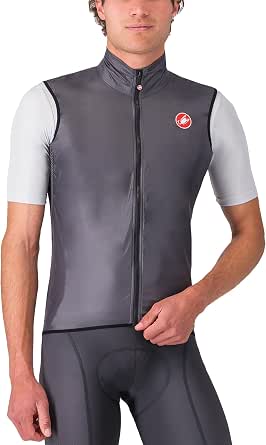 | Best Compact Wind Layer | Fabric: 100% polyester | Weight: 3.1 oz | Temperature range: 12°C–20°C / 54°F–68°F | VIEW LATEST PRICE | See Our Full Breakdown |
| CEROTIPOLAR Thermal Fleece Cycling Vest | 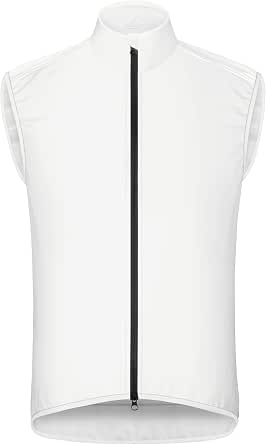 | Best for Cool, Wet Rides | Fabric: 100% polyester | Layers: Fleece lining, breathable waterproof membrane, quick-drying outer layer | Closure: Two-way zipper | VIEW LATEST PRICE | See Our Full Breakdown |
| CamelBak Chase Race 4 Bike Hydration Vest with 50 oz Reservoir |  | Best for Long, Self-Supported Rides | Reservoir capacity: 50 oz / 1.5 L | Pack capacity: 4 L | Cargo capacity: 2.5 L | VIEW LATEST PRICE | See Our Full Breakdown |
| MSR Rover Vest for Dirt Biking, Mountain Biking, and Hiking |  | Best for Maximum Pocket Storage | Material: 420D nylon ripstop | Weight: 5.6 pounds | Pockets: 12 external | VIEW LATEST PRICE | See Our Full Breakdown |
| CEROTIPOLAR Men’s Cycling Vest with Reflective Tape and 3 Cargo Pockets |  | Best for Cool-Weather Visibility | Fabric: 100% polyester | Fabric type: Windproof, breathable microfiber softshell | Ventilation: Breathable stretch panels | VIEW LATEST PRICE | See Our Full Breakdown |
| YKYWBIKE Winter Cycling Vest |  | Best for Cold, Changeable Gravel Weather | Fabric: 80% polyester, 20% TPU; nylon and spandex | Weather protection: Windproof fabric with durable water-repellent coating | Closure: Two-way YKK zipper | VIEW LATEST PRICE | See Our Full Breakdown |
| Castelli Men’s Espresso 2 Vest |  | Best Lightweight All-Rounder | Fabric: 100% synthetic | Weight: 110 g | Temperature range: 12°C–20°C (53°F–68°F) | VIEW LATEST PRICE | See Our Full Breakdown |
| ROCKBROS Men’s Lightweight Cycling Windbreaker Vest | 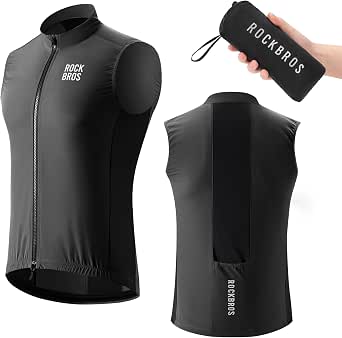 | Best for Packable Ventilation | Fabric: 100% nylon front; 100% polyester mesh panels | Closure: Dual-slider front zipper | Storage: Rear pocket; vest folds into itself | VIEW LATEST PRICE | See Our Full Breakdown |
| Castelli Men’s Squadra Stretch Windproof Cycling Vest |  | Best Close-Fit Wind Shell | Fabric: Coated ripstop nylon with tightly knit stretch side panels | Fit: Close to the body | Closure: Full-length zip | VIEW LATEST PRICE | See Our Full Breakdown |
| CamelBak Chase Race 4 Bike Hydration Vest with 50 oz Reservoir |  | Best for Hydration and On-Bike Storage | Item type: Cycling hydration vest | Reservoir capacity: 1.5 liters (50 oz) | Weight: 1.1 pounds | VIEW LATEST PRICE | See Our Full Breakdown |
| ROCKBROS Windproof Thermal Cycling Vest for Men and Women |  | Best for Cool-Weather Gravel Rides | Fabric: Polyester | Insulation: Padded inner layer | Wind protection: Windproof front | VIEW LATEST PRICE | See Our Full Breakdown |
| USWE Rush 8L Bike Hydration Vest with 2.0L Bladder |  | Best for Long, Self-Supported Gravel Rides | Capacity: 8L | Hydration bladder: 2.0L Elite Hydration Bladder | Front pockets: Five, including two zippered | VIEW LATEST PRICE | See Our Full Breakdown |
| ROCKBROS Lightweight Windproof Cycling Vest for Men and Women |  | Best Packable Layer for Changeable Conditions | Front and side panels: 100% polyester | Back mesh: 92% polyester, 8% spandex | Temperature range: 59°F–86°F (15°C–30°C) | VIEW LATEST PRICE | See Our Full Breakdown |
| Oakley Men’s Endurance Packable Wind Vest 2.0 | 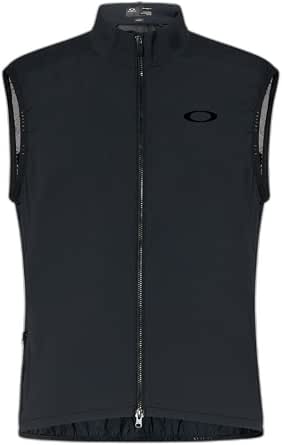 | Best Premium Stretch Wind Layer | Fabric: 73.5% polyester, 26.5% elastane | Wind protection: Windproof | Stretch: Stretch construction | VIEW LATEST PRICE | See Our Full Breakdown |
| gravel biking vest | Fabric | Care | Visibility |
|---|---|---|---|
| Castelli Men’s Aria Vest | 100% polyester | — | — |
| CEROTIPOLAR Thermal Fleece Cyc | 100% polyester | Machine wash | — |
| CamelBak Chase Race 4 Bike Hyd | — | — | — |
| MSR Rover Vest for Dirt Biking | — | — | — |
| CEROTIPOLAR Men’s Cycling Vest | 100% polyester | Machine wash | Reflective tape on rear pockets |
| YKYWBIKE Winter Cycling Vest | 80% polyester, 20% TPU; nylon and spandex | Machine wash | Light-emitting strip on the back |
| Castelli Men’s Espresso 2 Vest | 100% synthetic | — | — |
| ROCKBROS Men’s Lightweight Cyc | 100% nylon front; 100% polyester mesh panels | Machine wash | — |
| Castelli Men’s Squadra Stretch | Coated ripstop nylon with tightly knit stretch side panels | Hand wash only | Reflective details |
| CamelBak Chase Race 4 Bike Hyd | — | — | — |
| ROCKBROS Windproof Thermal Cyc | Polyester | Machine wash | Reflective details |
| USWE Rush 8L Bike Hydration Ve | — | — | Reflective details and LED-light attachment point |
| ROCKBROS Lightweight Windproof | — | Hand wash only | Reflective panels |
| Oakley Men’s Endurance Packabl | 73.5% polyester, 26.5% elastane | Dry clean only | High-visibility details |
More Details on Our Top Picks
Castelli Men’s Aria Vest – Dark Gray, Large
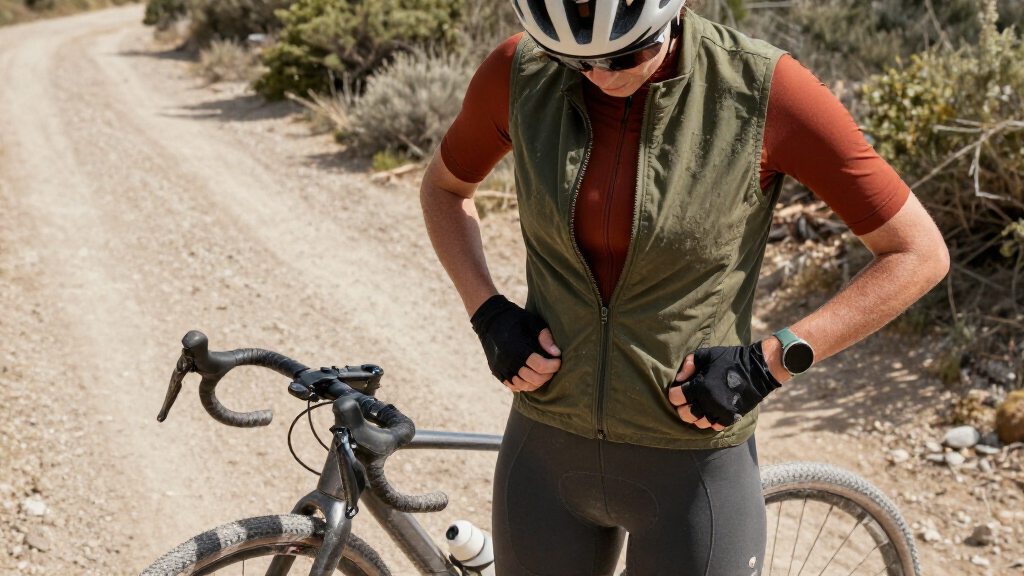
The Castelli Aria Vest is my pick for gravel riders who want a wind barrier that disappears into a jersey pocket when the route warms up. Its 3.1-ounce build and packable design suit exposed descents and changeable conditions, while the wind-blocking front and mesh back balance protection with airflow. A rear pocket adds a little carrying room without changing its minimalist purpose. Compared with the CEROTIPOLAR Thermal Fleece Cycling Vest, the Aria is far less focused on warmth or wet-weather coverage; it is the lighter choice for mild, breezy rides, not a substitute for insulation. The tradeoff is a narrow comfort range of 12°C–20°C and a close fit that may feel restrictive. I would size up if between sizes, as the product guidance suggests.
Pros:- Ultralight 3.1-ounce construction adds little bulk
- Wind-blocking front panel helps on breezy stretches
- Mesh back supports airflow during harder efforts
- Packs into a jersey pocket and includes a rear pocket
Cons:- Limited insulation makes it unsuitable for colder rides
- Close-to-body fit may feel compressive, especially when between sizes
Best for: Gravel riders who want a very light, packable wind layer for mild rides and exposed descents
Not ideal for: Riders seeking substantial warmth, rain protection, or a relaxed fit for layering
- Fabric:100% polyester
- Weight:3.1 oz
- Temperature range:12°C–20°C / 54°F–68°F
- Fit:Close to the body; size up if between sizes
- Front:Wind-blocking woven microfiber
- Back:Breathable mesh
- Zipper:Full-length YKK Vislon
- Storage:Rear pocket
Our verdict“Choose the Aria if packability and low-bulk wind protection matter more than warmth or wet-weather coverage.”
CEROTIPOLAR Thermal Fleece Cycling Vest
The CEROTIPOLAR Thermal Fleece Cycling Vest is the more protective clothing option here for riders who need warmth alongside weather resistance. Its fleece lining and breathable waterproof membrane target chilly, damp conditions that the minimalist Castelli Aria is not built to handle. Three rear pockets and a two-way zipper also make it practical over a jersey: the zipper can open from below for access to jersey pockets without fully unzipping the vest. Stretch side panels help preserve movement, while the high collar adds coverage. The tradeoff is a warmer, more layered design that may feel excessive on mild climbs, and the supplied product information does not include independent performance details. Compared with the CEROTIPOLAR reflective softshell vest, this model emphasizes insulation and weather coverage over visibility features.
Pros:- Fleece lining adds warmth for cooler outings
- Breathable waterproof membrane and quick-drying outer layer target damp weather
- Two-way zipper permits access to jersey pockets
- Three rear pockets and stretch side panels support practical riding use
Cons:- Layered construction is less suited to warm conditions or pocket-sized packing
- Product information does not provide independent performance details
Best for: Gravel riders who ride in cool, damp weather and want fleece warmth, pocket access, and storage
Not ideal for: Riders who prioritize ultralight packability or mostly ride in mild conditions
- Fabric:100% polyester
- Layers:Fleece lining, breathable waterproof membrane, quick-drying outer layer
- Closure:Two-way zipper
- Pockets:Three rear pockets: one large and two small
- Collar:High collar
- Side panels:Stretch panels
- Care:Machine wash
- Origin:Imported
Our verdict“Pick this vest for cool, damp rides where added warmth and weather protection outweigh minimal weight.”
CamelBak Chase Race 4 Bike Hydration Vest with 50 oz Reservoir
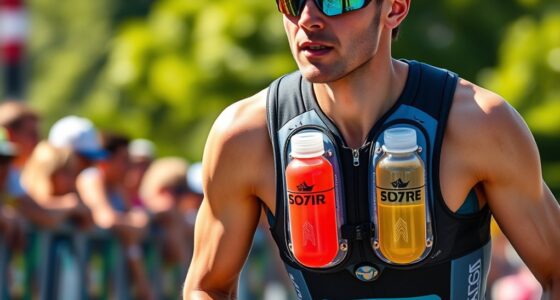
The CamelBak Chase Race 4 is a hydration-and-carry solution rather than a windproof clothing layer, so it earns its place for gravel riders who need water and tools close at hand. Its 50-ounce reservoir, seven pockets, and tool organization reduce reliance on bottles and jersey storage; the breathable mesh harness and adjustable sternum straps are designed to keep the load settled. A stretch overflow pocket can hold an extra layer, which pairs well with a compact vest such as the Castelli Men’s Aria Vest. Against the MSR Rover Vest, the CamelBak is much lighter and has an included reservoir, but its 4-liter pack capacity limits bulkier loads. Buyers should also distinguish this hydration vest from apparel: it does not replace a wind- or thermal-cycling vest.
Pros:- Included 50-ounce reservoir supports on-bike hydration
- Breathable mesh harness and adjustable sternum straps help stabilize the fit
- Seven pockets and tool organization keep small essentials accessible
- Stretch overflow pocket can carry an extra layer
Cons:- 4-liter pack capacity is limited for bulky or extended-trip loads
- Functions as a hydration vest, not as a weather-protective cycling garment
Best for: Gravel and endurance riders who want an integrated reservoir, organized tools, and compact ride essentials
Not ideal for: Riders looking for a windproof clothing layer or carrying bulky equipment beyond a compact 4-liter pack
- Reservoir capacity:50 oz / 1.5 L
- Pack capacity:4 L
- Cargo capacity:2.5 L
- Weight:9.8 oz
- Dimensions:10.63 W × 13.78 H in
- Pockets:7
- Materials:Nylon and polyester
- Included components:Vest and reservoir
Our verdict“Choose the Chase Race 4 when water and organized essentials matter more than a vest’s wind or thermal protection.”
MSR Rover Vest for Dirt Biking, Mountain Biking, and Hiking
The MSR Rover Vest takes a utility-first approach: its 12 external pockets and adjustable straps suit riders who want gear distributed across the torso rather than packed into a small hydration vest. The 420D nylon ripstop is abrasion-resistant, and a moisture-wicking spacer mesh back adds airflow against the body. Compared with the CamelBak Chase Race 4, the Rover offers more external pocket slots and tougher stated material, but it does not list an included reservoir or a comparable hydration system. Its broad use across dirt biking, mountain biking, and hiking also makes it less specifically tailored to gravel apparel than the Castelli Aria. Most concerning for long rides is the listed 5.6-pound weight, which is far heavier than the CamelBak’s 9.8 ounces; confirm that weight before choosing it for cycling.
Pros:- Twelve external pockets offer extensive organization
- 420D nylon ripstop is specified as abrasion-resistant
- Adjustable side, shoulder, and chest straps allow fit adjustment
- Spacer mesh back panel supports airflow and moisture management
Cons:- Listed weight of 5.6 pounds is a major burden for cycling
- One-size-fits-most sizing may not suit every body shape
- No reservoir is listed among the included components
Best for: Riders who prioritize numerous external pockets, adjustable load placement, and abrasion-resistant construction
Not ideal for: Gravel cyclists who want a light vest, a precise size range, or an integrated hydration reservoir
- Material:420D nylon ripstop
- Weight:5.6 pounds
- Pockets:12 external
- Fit:Universal, adjustable; one size fits most
- Closure:Zipper
- Back panel:Moisture-wicking spacer mesh
- Adjustments:Side, shoulder, and chest straps
- Color:Black
Our verdict“Consider the Rover only if its pocket count and rugged build outweigh the substantial listed weight for your rides.”
CEROTIPOLAR Men’s Cycling Vest with Reflective Tape and 3 Cargo Pockets
The CEROTIPOLAR Men’s Cycling Vest is a practical pick for riders who want wind protection, jersey-style storage, and a visibility detail in one garment. Its windproof microfiber softshell is balanced by breathable stretch panels, while three cargo pockets keep ride essentials accessible without adding a separate pack. Reflective tape on the rear pockets gives this vest a clearer low-light use case than the fleece-lined CEROTIPOLAR Thermal Fleece Cycling Vest, which puts more emphasis on warmth and weather coverage. A zipper guard at the neck helps limit chafing on longer rides. The tradeoff is its cool-weather focus: it is not the choice for hot climbs, and the product details do not state a temperature range or weight to guide layering. Compared with the packable Castelli Aria, its listed strengths center more on cargo storage and rear visibility.
Pros:- Windproof softshell helps shield against breezy conditions
- Breathable stretch panels allow airflow during effort
- Three cargo pockets provide on-vest storage
- Reflective rear tape adds a visibility feature, with a zipper guard at the neck
Cons:- Cool-weather design may feel too warm on hot rides
- Product details do not specify weight or a temperature range
Best for: Men riding in cool conditions who want wind protection, three cargo pockets, and reflective rear detailing
Not ideal for: Riders in warm climates or anyone seeking a documented temperature range, weight, or compact pack size
- Fabric:100% polyester
- Fabric type:Windproof, breathable microfiber softshell
- Ventilation:Breathable stretch panels
- Pockets:Three cargo pockets
- Visibility:Reflective tape on rear pockets
- Neck detail:Zipper guard
- Care:Machine wash
- Fabric certifications:OEKO-TEX 100 and bluesign approved
Our verdict“Choose this CEROTIPOLAR for cool rides where cargo pockets and reflective rear details matter more than ultralight packability.”
YKYWBIKE Winter Cycling Vest
The YKYWBIKE Winter Cycling Vest is the warm-weather-protection pick here: its windproof fleece fabric and water-repellent coating suit gravel rides where exposed sections and passing showers can chill your core. Unlike the Castelli Men’s Espresso 2 Vest, which is built around low weight and ventilation for milder conditions, this model emphasizes insulation and weather resistance. Three rear pockets offer room for ride essentials, while the two-way YKK zipper lets you adjust airflow or access a jersey pocket without fully unzipping. A reflective back strip and silicone-grip hem add practical touches for low-light rides and rough surfaces. The tradeoff is a less stretchy feel than a summer jersey, and the sizing needs careful checking; riders prioritizing a close, forgiving fit may prefer the Castelli.
Pros:- Windproof fleece fabric and a water-repellent coating help shield the torso from cold wind and light wet conditions.
- Three rear pockets provide practical storage for ride essentials.
- Reflective back strip supports visibility in low light.
- Silicone-grip back hem helps keep the vest positioned while riding.
Cons:- Less stretchy than a summer cycling jersey, which can limit comfort for riders who prefer a flexible fit.
- Sizing should be checked carefully before purchase.
Best for: Gravel riders who start in cold, changeable conditions and want wind protection, rear-pocket storage, and added visibility.
Not ideal for: Riders seeking a highly stretchy, close-fitting vest for mild-weather efforts or anyone unable to check sizing carefully before ordering.
- Fabric:80% polyester, 20% TPU; nylon and spandex
- Weather protection:Windproof fabric with durable water-repellent coating
- Closure:Two-way YKK zipper
- Pockets:3 rear pockets
- Visibility:Light-emitting strip on the back
- Fit features:Elastic armholes and silicone-grip back hem
- Care:Machine wash
Our verdict“Choose the YKYWBIKE when core warmth and weather protection matter more than the lighter, more ventilated feel of the Castelli Espresso 2.”
Castelli Men’s Espresso 2 Vest
For gravel riders who want a wind layer they can stash when the climb heats up, the Castelli Men’s Espresso 2 Vest is the most balanced lightweight option in this group. It weighs 110 g, with stretch-woven front panels to block wind and an Air_O back panel that lets heat escape during sustained efforts. That ventilation makes it a better fit for cool, active rides than the warmer YKYWBIKE Winter Cycling Vest, which prioritizes fleece-backed protection. Three rear pockets keep the usual ride supplies close, and the vest packs down for changing conditions. Its stated range of 12°C to 20°C gives buyers a useful temperature guide, but also marks its limit: colder, wet rides call for more insulation or weather protection. The close-to-body cut can feel restrictive, and riders between sizes may need to size up.
Pros:- At 110 g, it is easy to carry when changing conditions make a vest useful only part of the ride.
- Wind-blocking front panels and a breathable Air_O back balance protection with ventilation.
- Three rear pockets provide storage without requiring a separate pack.
- YKK Vislon zipper and elastic waist gripper support convenient adjustment and a secure fit.
Cons:- The stated 12°C to 20°C range limits its suitability for colder rides.
- Close-to-body fit may feel compressive, and riders between sizes may need to size up.
Best for: Gravel riders who want a lightweight, packable wind layer for active rides in cool-to-mild conditions and need rear pockets.
Not ideal for: Riders facing cold, wet conditions who need fleece warmth, or those who dislike a close-to-body fit and uncertain sizing.
- Fabric:100% synthetic
- Weight:110 g
- Temperature range:12°C–20°C (53°F–68°F)
- Fit:Close-to-body; size up if between sizes
- Pockets:3 rear pockets
- Zipper:YKK Vislon top and bottom zipper
- Waist gripper:Elastic
Our verdict“Pick the Espresso 2 for packable wind protection and ventilation on cool-to-mild gravel rides, not for deep-cold weather.”
ROCKBROS Men’s Lightweight Cycling Windbreaker Vest
The ROCKBROS Men’s Lightweight Cycling Windbreaker Vest suits gravel riders who want an easy-to-stow layer and need more airflow than a fully covered wind vest offers. Its nylon soft-shell front helps block wind, while polyester mesh panels let heat and moisture escape. The rear pocket doubles as a self-stowing pouch, a more compact carrying solution than the three-pocket layout of the Castelli Men’s Espresso 2 Vest, though it gives up that extra on-ride storage. Reflective logos and a dual-slider zipper add useful visibility and ventilation control. Silicone grippers and elastic armholes help keep the vest in place. The main uncertainty is fit: no sizing measurements are provided. The product data also makes no waterproofing claim, so I would not choose it as a dependable layer for wet gravel conditions.
Pros:- Mesh panels release heat and moisture during harder efforts.
- Rear pocket doubles as a self-stowing pouch for compact carrying.
- Reflective logos on the back and chest aid visibility.
- Dual-slider zipper allows adjustable ventilation.
Cons:- No sizing or fit measurements are provided, making fit harder to judge before purchase.
- No waterproofing information is provided, so wet-weather protection is uncertain.
- One rear pocket offers less ride storage than the Castelli Espresso 2’s three pockets.
Best for: Gravel riders who want a lightweight layer that packs into its own pocket and value ventilation on variable-effort rides.
Not ideal for: Riders who need stated sizing measurements, multiple rear pockets, or confirmed protection from rain.
- Fabric:100% nylon front; 100% polyester mesh panels
- Closure:Dual-slider front zipper
- Storage:Rear pocket; vest folds into itself
- Safety features:Reflective logos on back and chest
- Fit features:Elastic armholes and silicone-gripper hem
- Care:Machine wash
- Origin:Imported
Our verdict“Choose this ROCKBROS vest for compact carry and airflow, but look elsewhere if you need detailed fit guidance or assured rain protection.”
Castelli Men’s Squadra Stretch Windproof Cycling Vest
The Castelli Men’s Squadra Stretch is a focused choice for riders who want a close-fitting wind shell rather than a heavily insulated vest. Its coated ripstop nylon panels block wind at the front and back, while stretch side panels add flexibility and let some heat escape. That panel layout gives it a more body-hugging, streamlined feel than the ROCKBROS Men’s Lightweight Cycling Windbreaker Vest, whose mesh panels and self-stowing pocket prioritize airflow and portability. A high collar adds coverage at the neck, and reflective details are useful when gravel rides extend into low light. The tradeoffs are a close cut that may call for sizing up and hand-wash-only care. With no pocket details listed, it also makes less sense for riders who depend on vest storage for snacks or tools.
Pros:- Coated ripstop nylon panels help block wind at the front and back.
- Stretch side panels contribute to fit and ventilation.
- High collar offers added neck coverage.
- Reflective details support visibility in low light.
Cons:- Close-to-body fit may feel compressive or require sizing up.
- Hand-wash-only care is less convenient than the machine-wash ROCKBROS option.
- No pocket configuration is specified, limiting confidence for riders who need vest storage.
Best for: Gravel riders who prefer a close-fitting, wind-resistant layer with stretch side panels and a high collar.
Not ideal for: Riders who want a relaxed fit, machine-wash convenience, or specified pocket storage for carrying ride essentials.
- Fabric:Coated ripstop nylon with tightly knit stretch side panels
- Fit:Close to the body
- Closure:Full-length zip
- Collar:High collar
- Visibility:Reflective details
- Care:Hand wash only
- Origin:Made in the USA or imported
Our verdict“Pick the Squadra Stretch for a close-fitting wind shell with a high collar, provided its care needs and pocket details suit your rides.”
CamelBak Chase Race 4 Bike Hydration Vest with 50 oz Reservoir
The CamelBak Chase Race 4 is the outlier in this lineup: it is a hydration vest, not a windproof layer. Its included 1.5-liter reservoir, seven pockets, and 2.5-liter cargo capacity make it a strong match for gravel riders who want water, repair tools, and small essentials within reach without relying on jersey pockets. Adjustable sternum straps and breathable mesh support a stable, ventilated carry while riding at speed. Compared with the Castelli Men’s Espresso 2 Vest, which provides wind protection and three rear pockets, the Chase Race 4 shifts the priority from weather coverage to hydration and organization. That distinction matters: it weighs 1.1 pounds and offers no stated windproofing. Its reservoir capacity may also fall short on long routes without dependable refill points.
Pros:- Includes a 1.5-liter reservoir for carrying water on the bike.
- Seven pockets and 2.5-liter cargo capacity organize ride essentials and repair tools.
- Breathable mesh and adjustable sternum straps support a ventilated, stable fit.
- Stretch overflow pocket adds flexible storage.
Cons:- The 1.5-liter reservoir may require refills on longer rides.
- At 1.1 pounds, it is heavier than the 110 g Castelli Espresso 2 wind vest.
- Its hydration-first design does not provide stated wind protection or insulation.
Best for: Gravel riders who want an integrated water reservoir and organized storage for tools and essentials on routes with refill access.
Not ideal for: Riders looking mainly for a windproof or insulating vest, or those whose long routes demand more than a 1.5-liter reservoir between refills.
- Item type:Cycling hydration vest
- Reservoir capacity:1.5 liters (50 oz)
- Weight:1.1 pounds
- Dimensions:10.6 in W × 13.7 in H
- Number of pockets:7
- Cargo capacity:2.5 liters
- Material:Nylon and polyester
- Included components:Vest and reservoir
Our verdict“Choose the Chase Race 4 when hydration and organized carry matter more than wind protection or a minimal vest weight.”
ROCKBROS Windproof Thermal Cycling Vest for Men and Women
For gravel riders who need more warmth than a thin shell offers, this ROCKBROS vest pairs a windproof front with a padded inner layer to help limit chill on exposed roads. Its three rear pockets give it a more cycling-focused storage setup than the Oakley Men’s Endurance Packable Wind Vest 2.0, while reflective details add visibility for rides that run into low light. The two-way zipper can make it easier to adjust airflow or reach a jersey pocket without fully opening the vest. The tradeoff is less versatility when temperatures rise: unlike the mesh-backed ROCKBROS Lightweight Windproof Cycling Vest, this model doesn’t specify a breathable back or a warm-weather range. Its water protection is also unclear, so I wouldn’t treat it as a rain layer.
Pros:- Padded inner layer adds warmth for cool rides.
- Windproof front helps reduce chill on exposed gravel roads.
- Three rear pockets provide convenient ride storage.
- Reflective details and a two-way zipper support practical riding use.
Cons:- Sleeveless construction leaves arms exposed to cold and wind.
- Waterproof performance is not clearly detailed.
- No breathable back construction or temperature range is specified.
Best for: Gravel riders who start in cool conditions and want light insulation plus rear-pocket storage without adding sleeves.
Not ideal for: Riders seeking a warm-weather layer with strong back ventilation, full arm coverage, or clearly specified rain protection.
- Fabric:Polyester
- Insulation:Padded inner layer
- Wind protection:Windproof front
- Storage:Three rear pockets
- Visibility:Reflective details
- Fit details:Non-slip rubber strips and elastic edges
- Zipper:Two-way zipper
- Care:Machine wash
Our verdict“Choose this ROCKBROS vest for cool, dry gravel rides where light insulation and three rear pockets matter more than arm coverage or ventilation.”
USWE Rush 8L Bike Hydration Vest with 2.0L Bladder
The USWE Rush 8L is the storage-and-hydration choice in this group, not a simple wind shell. Its 2.0L bladder and 8L capacity suit long gravel routes where water access and carrying extra layers or ride essentials matter more than a minimal profile. Five front pockets keep frequently used items close, and a rear compartment adds room beyond what the three-pocket ROCKBROS Windproof Thermal Cycling Vest provides. The adjustable NDM Vest fit with elastic side panels is designed to limit bouncing as the terrain gets rough; that makes it better suited to loaded rides than the Oakley Men’s Endurance Packable Wind Vest 2.0. The cost of that capacity is bulk and extra gear to manage. It also lacks specified windproof or thermal construction, so I’d pair it with a suitable layer when weather protection is the priority.
Pros:- Included 2.0L bladder supports extended rides between water stops.
- 8L capacity and rear compartment carry more than a basic cycling vest.
- Five front pockets provide convenient access to small essentials.
- Adjustable NDM Vest fit and elastic side panels are designed to reduce bounce.
Cons:- Bulkier and more involved than a lightweight vest for short rides.
- Windproof or thermal fabric performance is not specified.
- The 30-day warranty is limited.
Best for: Gravel riders tackling long or remote routes who need substantial water capacity, quick-access storage, and room for ride essentials.
Not ideal for: Minimalist riders on short rides who want a compact wind vest rather than a hydration pack, or riders primarily seeking insulation and wind protection.
- Capacity:8L
- Hydration bladder:2.0L Elite Hydration Bladder
- Front pockets:Five, including two zippered
- Rear storage:Zippered mesh pocket
- Fit technology:NDM Vest technology with elastic side panels
- Visibility:Reflective details and LED-light attachment point
- Bladder connection:Plug-n-Play tube coupling
- Warranty:30 days
Our verdict“Pick the USWE Rush 8L for long gravel days when carrying water and gear takes priority over a light, weather-focused layer.”
ROCKBROS Lightweight Windproof Cycling Vest for Men and Women
This ROCKBROS model is the more adaptable wind layer for riders who want to pull a vest on for a breezy stretch, then stow it when the effort picks up. A windproof polyester front blocks airflow while the breathable mesh back helps release heat; that makes it a better warm-weather gravel option than the padded ROCKBROS Windproof Thermal Cycling Vest. It also packs small and has rear openings for jersey-pocket access, so I can reach ride essentials without taking the vest off. Compared with the Oakley Men’s Endurance Packable Wind Vest 2.0, its storage access is more explicitly designed around a cycling jersey, while Oakley specifies water-repellent fabric. The compromises here are the hand-wash-only care and a recommended range of 59°F–86°F, which limits its usefulness as a cold-weather layer. The mesh back is not reflective.
Pros:- Windproof front and mesh back balance protection with airflow.
- Packable construction is easy to stow when the ride warms up.
- Rear openings provide access to jersey pockets without removing the vest.
- Reflective panels and a two-way zipper add useful ride details.
Cons:- Recommended temperature range of 59°F–86°F limits cold-weather use.
- Hand wash only requires more care than machine-washable options.
- Mesh back is not reflective.
Best for: Gravel riders who want a compact wind layer for mild, variable conditions and need access to jersey pockets while wearing it.
Not ideal for: Riders looking for insulation in cold weather, machine-wash convenience, or reflective coverage across the back.
- Front and side panels:100% polyester
- Back mesh:92% polyester, 8% spandex
- Temperature range:59°F–86°F (15°C–30°C)
- Closure:Two-way zipper
- Storage access:Two rear openings for jersey pockets
- Packability:Packs into a small space
- Visibility:Reflective panels
- Care:Hand wash only
Our verdict“Choose this ROCKBROS vest for mild gravel rides where packability, airflow, and direct access to jersey pockets matter most.”
Oakley Men’s Endurance Packable Wind Vest 2.0
Oakley’s Endurance Packable Wind Vest 2.0 is the streamlined pick for riders who want a close-fitting layer that moves with them and disappears into its own pocket when the climb heats up. Its windproof stretch fabric and elastic binding at the armholes and cuffs prioritize a trim feel, while water-repellent fabric offers a degree of surface protection not specified for either ROCKBROS vest here. High-visibility details also suit gravel routes that include early starts or late finishes. Compared with the packable ROCKBROS Lightweight Windproof Cycling Vest, Oakley adds stated water repellency but doesn’t list mesh-back ventilation or jersey-pocket access openings. That makes it less suited to riders who want airflow and storage access while layered. Care is another compromise: dry-clean-only instructions are less convenient than the machine-wash guidance on the thermal ROCKBROS.
Pros:- Windproof stretch fabric supports movement while riding.
- Packs into its own pocket for convenient storage.
- Water-repellent fabric helps shed surface moisture.
- High-visibility details support use in low light.
Cons:- Dry clean only is less convenient than machine-washable alternatives.
- No specific water-resistance rating is provided.
- No mesh-back ventilation or jersey-pocket access is specified.
Best for: Gravel riders seeking a close-fitting, stretch wind layer that packs away and adds light water repellency for variable training conditions.
Not ideal for: Riders who need a breathable mesh back, jersey-pocket access openings, machine-wash care, or a stated water-resistance rating.
- Fabric:73.5% polyester, 26.5% elastane
- Wind protection:Windproof
- Stretch:Stretch construction
- Water protection:Water-repellent fabric
- Packability:Packs into its pocket
- Fit details:Elastic binding at cuffs and armholes
- Visibility:High-visibility details
- Care:Dry clean only
Our verdict“Choose the Oakley for a trim, packable wind layer with stretch and surface water repellency, but skip it if easy care or jersey-pocket access is essential.”
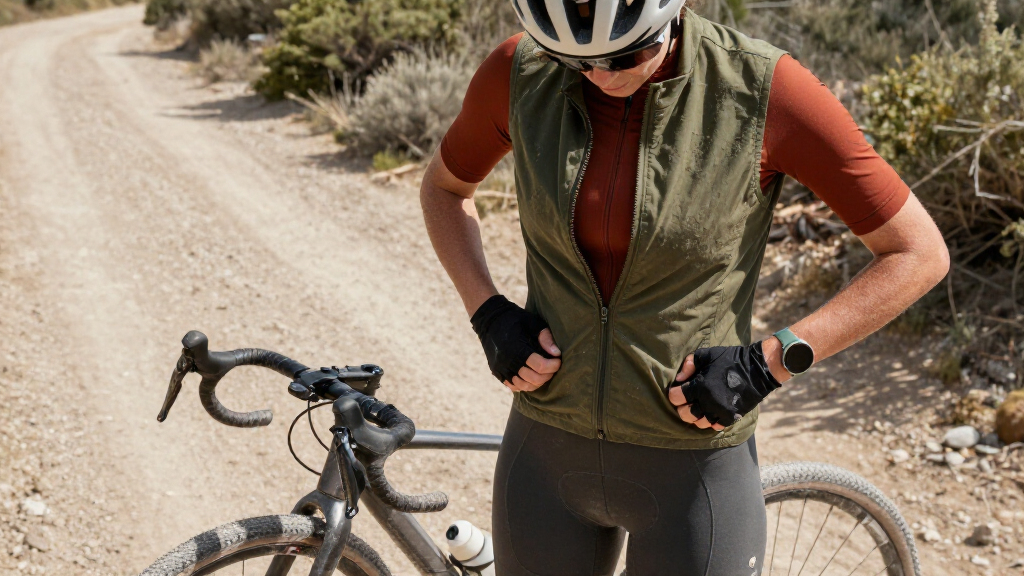
How We Picked
I compared the 14 listed products by how well their design matches distinct gravel-riding needs: wind protection, thermal coverage, packability, storage, visibility, and hydration. I also weighed the practical tradeoffs behind those features, including how added insulation or cargo capacity can increase bulk and how a lightweight shell may leave riders wanting more warmth or weather coverage. The list includes two entries for the CamelBak Chase Race 4, so those are treated as one product rather than separate choices.
The ranking favors useful versatility for typical gravel rides, then gives dedicated designs their place where they solve a specific problem better. Lightweight wind vests lead for riders who want a layer they can carry and put on as conditions change; thermal models rank for cold-weather use, and hydration vests rank for rides where carrying water and essentials matters more than a minimal profile. Because product names alone do not confirm fabric performance, fit range, or weather testing, I focus on the stated product type and features rather than claiming unverified performance.
| gravel biking vest | Care | Visibility |
|---|---|---|
| Castelli Men’s Aria Vest | — | — |
| CEROTIPOLAR Thermal Fleece Cyc | Machine wash | — |
| CamelBak Chase Race 4 Bike Hyd | — | — |
| MSR Rover Vest for Dirt Biking | — | — |
| CEROTIPOLAR Men’s Cycling Vest | Machine wash | Reflective tape on rear pockets |
| YKYWBIKE Winter Cycling Vest | Machine wash | Light-emitting strip on the back |
| Castelli Men’s Espresso 2 Vest | — | — |
| ROCKBROS Men’s Lightweight Cyc | Machine wash | — |
| Castelli Men’s Squadra Stretch | Hand wash only | Reflective details |
| CamelBak Chase Race 4 Bike Hyd | — | — |
| ROCKBROS Windproof Thermal Cyc | Machine wash | Reflective details |
| USWE Rush 8L Bike Hydration Ve | — | Reflective details and LED-light attachment point |
| ROCKBROS Lightweight Windproof | Hand wash only | Reflective panels |
| Oakley Men’s Endurance Packabl | Dry clean only | High-visibility details |
Factors to Consider When Choosing Best Gravel Biking Vests
Before choosing a vest, decide what problem you want it to solve on the bike. A wind shell, an insulated layer, and a hydration vest may all be called vests, but they behave differently on long gravel rides.
Choose a Vest for the Conditions, Not the Season Label
Temperature alone does not tell you whether you need a shell or insulation. Wind exposure on open roads can make a light windproof layer useful even when the air is mild, while a fleece-backed vest may become uncomfortable once you are climbing hard. Think about the coldest exposed part of your route, the pace you expect to hold, and whether you can remove or stow the layer easily. A common mistake is buying the warmest option for a cold start and wearing it through the entire ride. For variable gravel conditions, a packable shell over a breathable base layer often gives you more control than a permanently warm vest.
Check How the Vest Will Sit Over Your Riding Layers
A vest that fits over a thin jersey may bind when worn over a thermal layer, especially across the shoulders and chest. Look at sizing guidance and garment construction, then decide whether you want a close cycling fit or room for extra layers. Stretch designs can allow more movement, but extra room can also let air enter around the hem or armholes. Avoid sizing up automatically to gain comfort; excess fabric may flap on exposed roads. If you are between sizes, compare the intended layering setup with the maker’s measurements before choosing.
Treat Storage as a Route Decision
Pockets and pack capacity can change what you need to carry in a jersey, saddle bag, or backpack. For short rides with nearby resupply, a few accessible pockets may be enough; longer or remote routes can call for dedicated space for food, tools, and an extra layer. More carrying capacity is not free: loaded pockets or a hydration pack can shift, feel warm, or add bulk. Plan what you actually bring, including water, repair gear, and nutrition, instead of choosing by pocket count alone. If you already ride with a frame bag, a minimal vest may be the less cumbersome pairing.
Separate Hydration Needs From Wind-Layer Needs
Hydration vests such as the CamelBak Chase Race 4 and USWE Rush 8L are primarily carrying systems, not direct substitutes for a lightweight cycling shell. They make sense when you want water on your back and convenient access to ride essentials, particularly where stops are limited. A simple wind vest is usually the cleaner choice if your main aim is to block airflow and stash the layer when it warms up. Wearing both can work, but check how the pack sits over the clothing and whether straps or pockets conflict. Do not buy a hydration vest just for its storage if a smaller bag already meets your route needs.
Match Visibility Features to When and Where You Ride
Reflective tape can improve how visible a rider is when vehicle lights reach the garment, but it is not a replacement for lights or other visibility measures. Consider whether your gravel routes include road connections, low-light starts, or dusk finishes. Brightness and reflective placement matter more when the vest is visible from several angles rather than hidden by a pack or riding posture. A vest with reflective details may be a sensible choice for mixed-road use, while riders who mostly ride in daylight should give fit and weather function more weight. Check care instructions too, since regular washing and abrasion can affect reflective materials over time.
Think About Packability and Layering Before Paying for More Features
A packable vest is useful only if it fits somewhere you can reach without disrupting your ride. Check whether your jersey pockets, frame bag, or pack have room for it alongside food and repair items. Extra insulation, storage, and hydration can each solve a real problem, but combining them may duplicate gear you already carry. Pay more attention to construction and fit when you expect frequent use across changing conditions; choose a simpler design when you need a backup layer for occasional rides. The best setup is the one you can carry comfortably and use at the moment conditions call for it.
Frequently Asked Questions
Should I choose a wind vest or a thermal cycling vest for gravel riding?
Choose a wind vest when airflow and changing exposure are your main concerns, especially on rides where effort varies and you may need to remove a layer. A thermal vest is better suited to colder conditions where added insulation is useful throughout much of the ride. The CEROTIPOLAR Thermal Fleece and ROCKBROS Windproof Thermal models are the warmer direction in this lineup, while the Castelli Aria and Squadra Stretch fit the lightweight wind-layer role. If your routes include both cold starts and hard climbs, prioritize a layer you can stow or pair it with a breathable base rather than defaulting to maximum insulation.
Is a hydration vest worth carrying on a gravel bike ride?
A hydration vest can make sense when your route is long, remote, or short on reliable refill stops, and you want water and essentials close at hand. The CamelBak Chase Race 4 and USWE Rush 8L are more suited to that job than the simple wind shells in this roundup. For rides with frequent resupply or a bike already fitted with bottles and bags, a pack may add unnecessary weight and warmth. Consider how much water you need and whether you prefer a reservoir or bottles before deciding. Also check that the pack’s fit works with your cycling layers and riding posture.
Can one gravel vest work for both cool mornings and warm afternoons?
A packable wind shell is generally easier to use across a wide temperature swing than a thick thermal vest because it can be removed when the ride warms up. The Castelli Aria, Oakley Endurance Packable Wind Vest 2.0, and lightweight ROCKBROS options point toward this use case. A thermal model may be more comfortable during genuinely cold rides but harder to wear during sustained climbs or afternoon heat. Think about whether you can stow the vest in a jersey pocket or bag once removed. For a single versatile layer, portability and a comfortable fit over your usual jersey may matter more than extra insulation.
Do reflective details on a cycling vest replace bike lights?
No. Reflective details can help drivers notice movement when light falls on the vest, but they do not produce light on their own and cannot replace front and rear bike lights. The CEROTIPOLAR men’s vest with reflective tape is the clearest visibility-focused option in this lineup, but it should be treated as one part of a broader setup. Use lights in low visibility and choose clothing that remains visible from different angles. If you ride through traffic at dawn or dusk, check where reflective panels sit when you are bent over the handlebars.
How should I decide between a compact vest and one with more pockets?
Start with the gear you need to carry on your usual route, not the number of pockets advertised. If you already use a frame bag or jersey pockets, a compact shell can add wind protection without duplicating storage. If you ride far from services or want water and essentials on your body, a hydration vest may justify its added bulk. Pockets are most useful when you can reach and use them safely while stopped or riding at a controlled pace. Make a short list of your regular carry items and test whether your existing setup has room before choosing a larger vest.
Conclusion
For most riders seeking a dedicated layer, I would start with the Castelli Men’s Aria Vest as the best overall pick for lightweight wind protection. The ROCKBROS Men’s Lightweight Cycling Windbreaker Vest is the best value-style choice for riders who want a straightforward shell, while the Castelli Men’s Espresso 2 Vest is the premium-leaning option for buyers drawn to a more refined cycling-specific design. Beginners who want a simple first vest should compare the Castelli Men’s Squadra Stretch with the Aria and choose based on fit preference. For specific needs, choose the CEROTIPOLAR Thermal Fleece or ROCKBROS thermal vest for colder rides, the CEROTIPOLAR reflective-pocket vest for added visibility and storage, or the CamelBak Chase Race 4 and USWE Rush 8L when hydration and carrying capacity take priority. Match the vest to the job you need it to do; a warm layer, wind shell, and hydration pack are not interchangeable.
Halloween Picks
halloween
As an affiliate, we earn on qualifying purchases.