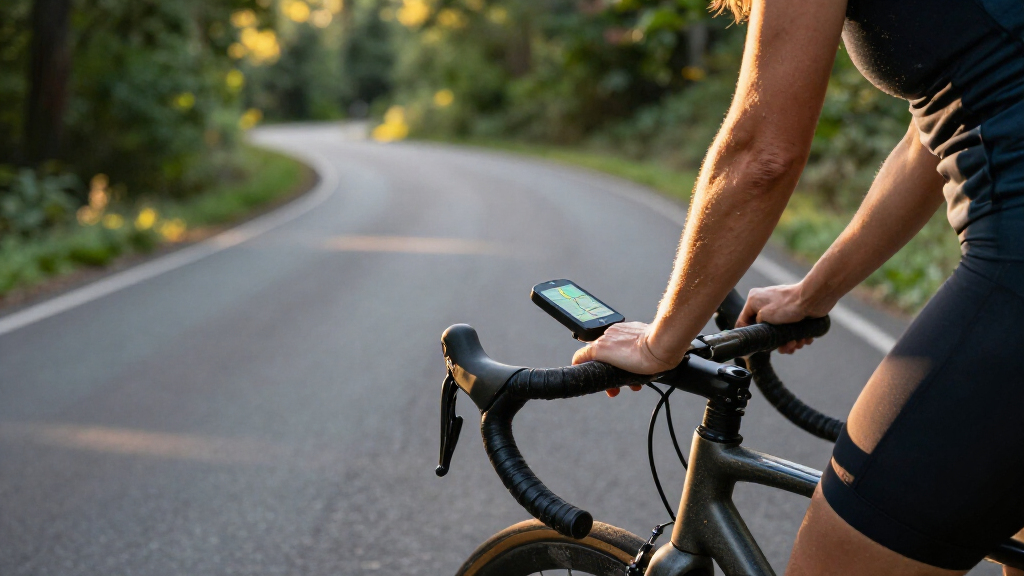

The best GPS bike computer for most riders is the Garmin Edge 840, which balances training tools, navigation, and a compact format. Riders who want a larger display can look at the Wahoo ELEMNT ROAM V3, while the Garmin Edge 540 is a strong fit for those who prefer buttons over a touchscreen. The main tradeoffs are screen size versus battery life, full mapping versus simple route guidance, and advanced training features versus ease of use. Lower-cost options can cover everyday ride tracking, but may differ in map detail, software support, or sensor integration. Read on for how all 15 computers compare and which one best fits your riding.

Get sports gear delivered free with Prime
- Fast, free delivery on millions of items
- Prime Video, Amazon Music and more included
- Member-only deals all year
Complete the kit


Key Takeaways
- The Garmin Edge 840 is the most balanced pick: its combination of mapping, training functions, and touch-and-button controls makes it more versatile than the button-only Edge 540 without moving to the larger premium Edge 1050.
- Screen preference divides the Garmin and Wahoo choices: the Edge 540 suits riders who want physical controls, while the ELEMNT ROAM V3 favors a larger navigation display; the BOLT V3 offers a more compact Wahoo alternative.
- Large touchscreens are a tradeoff, not an automatic upgrade: models such as the iGPSPORT BiNavi and Garmin Edge 1050 prioritize readable maps and on-device interaction, while smaller computers take up less space on the bars.
- Lower-cost models cover different levels of navigation: options such as the CYCPLUS G1 and basic 2.4-inch GPS computer suit ride recording, while several iGPSPORT and Magene models add color displays, maps, or touchscreen control.
- Battery claims need to be judged alongside the ride: a long stated runtime matters most on extended outings, but screen brightness, navigation use, sensors, and connectivity can change how much reserve a rider needs.
| Garmin Edge 840 GPS Cycling Computer |  | Best Overall | Screen: 2.6-inch LCD | Resolution: 240 × 320 | Battery life: Up to 26 hours; up to 32 hours in battery saver mode | VIEW LATEST PRICE | See Our Full Breakdown |
| iGPSPORT BSC200 Pro GPS Bike Computer with 3-Inch Color Touchscreen |  | Best for Color Touchscreen Navigation | Screen: 3-inch color touchscreen | Battery life: Up to 25 hours | Connectivity: Bluetooth only | VIEW LATEST PRICE | See Our Full Breakdown |
| CYCPLUS Wireless GPS Bike Computer G1, 70g, 2.0″ Screen, IPX6, 1200mAh | 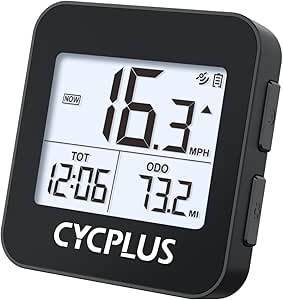 | Best for Long Battery Life and Basic Ride Tracking | Screen: 2-inch FSTN display | Weight: 70 g | Battery capacity: 1200 mAh | VIEW LATEST PRICE | See Our Full Breakdown |
| GPS Bike Computer, 2.4″ Screen, Altitude, Gradient, IPX7, 28H |  | Best for Simple Climb and Elevation Data | Screen: 2.4-inch LCD | Battery life: Up to 28 hours | Water protection: IPX7 | VIEW LATEST PRICE | See Our Full Breakdown |
| Garmin Edge 540, Compact GPS Cycling Computer |  | Best for Button-Controlled Training | Screen: 2.6-inch LCD | Resolution: 246 × 322 | Battery life: Up to 26 hours; up to 42 hours in battery saver mode | VIEW LATEST PRICE | See Our Full Breakdown |
| Garmin Edge 1050 Premium Cycling Computer |  | Best Premium GPS Bike Computer | Screen: 3.5-inch capacitive touchscreen LCD | Satellite systems: GPS, GLONASS, Galileo | Battery life: Up to 20 hours demanding use; up to 60 hours battery-saver mode | VIEW LATEST PRICE | See Our Full Breakdown |
| iGPSPORT BiNavi Bike Computer with 3.5-Inch Touchscreen and GPS Navigation |  | Best for Offline Navigation | Screen: 3.5-inch transflective color touchscreen with physical button controls | GPS: L1+L5 dual-band | Satellite systems: GPS, GLONASS, BeiDou, Galileo, QZSS | VIEW LATEST PRICE | See Our Full Breakdown |
| Wahoo ELEMNT BOLT V3 Aero GPS Bike Computer with Navigation |  | Best Compact Navigation Pick | Display: 2.2-inch, 64-color screen with ambient light sensor | Controls: Buttons | Storage: 16 GB | VIEW LATEST PRICE | See Our Full Breakdown |
| iGPSPORT BSC500 GPS Bike Computer, 3.3-Inch Touch Screen MAP Voice Navigation |  | Best for Long-Ride Navigation | Screen: 3.3-inch color touchscreen with button controls | GPS: L1+L5 dual-band | Satellite systems: GPS, GLONASS, BeiDou, Galileo, QZSS | VIEW LATEST PRICE | See Our Full Breakdown |
| GEOID CC700 Pro GPS Bike Computer with 2.8-Inch Color Touchscreen |  | Best for Connected Training Features | Display: 2.8-inch color TFT touchscreen | Storage: 4 GB | Satellite systems: GPS, BeiDou, GLONASS, QZSS, Galileo | VIEW LATEST PRICE | See Our Full Breakdown |
| Wahoo ELEMNT ROAM V3 GPS Bike Computer |  | Best for Long-Distance Navigation | Display: 2.8-inch LCD color touchscreen; 480 × 800 resolution | Battery life: Up to 25 hours | GPS: Dual-band; GPS, GLONASS, BeiDou, Galileo, QZSS, SBAS, and NavIC | VIEW LATEST PRICE | See Our Full Breakdown |
| Magene C506 GPS Bike Computer with 2.4-Inch Touchscreen |  | Best for Sensor-Rich Training on a Compact Unit | Display: 2.4-inch LCD touchscreen | Battery life: Up to 24 hours in endurance mode | Weight: 76 g | VIEW LATEST PRICE | See Our Full Breakdown |
| Garmin Edge 850 Compact GPS Cycling Computer |  | Best for Performance Coaching and Mixed-Surface Maps | Display: 2.7-inch LCD touchscreen | Controls: Buttons and capacitive touchscreen | Battery life: Up to 12 hours; up to 36 hours in battery saver mode | VIEW LATEST PRICE | See Our Full Breakdown |
| iGPSPORT BSC300T Wireless GPS Bike Computer with Touchscreen and Offline Maps |  | Best for Broad Bike and Sensor Compatibility | Screen: 2.4-inch capacitive touchscreen | Weight: 67 g | Battery life: Up to 20 hours | VIEW LATEST PRICE | See Our Full Breakdown |
| COOSPO Color Touchscreen GPS Bike Computer CS600 |  | Best for Extended Battery Runtime | Display: 2.4-inch color LCD touchscreen | Battery life: Up to 36 hours | Weight: 120 g | VIEW LATEST PRICE | See Our Full Breakdown |
| GPS bike computer | Connectivity | Battery life | Weight | Screen |
|---|---|---|---|---|
| Garmin Edge 840 GPS Cycling Co | Bluetooth, USB, and Wi-Fi | Up to 26 hours; up to 32 hours in battery saver mode | — | 2.6-inch LCD |
| iGPSPORT BSC200 Pro GPS Bike C | Bluetooth only | Up to 25 hours | 0.1 kg | 3-inch color touchscreen |
| CYCPLUS Wireless GPS Bike Comp | — | — | 70 g | 2-inch FSTN display |
| GPS Bike Computer | — | Up to 28 hours | 50 g | 2.4-inch LCD |
| Garmin Edge 540 | Bluetooth and Wi-Fi | Up to 26 hours; up to 42 hours in battery saver mode | — | 2.6-inch LCD |
| Garmin Edge 1050 Premium Cycli | Bluetooth, USB, Wi-Fi | Up to 20 hours demanding use; up to 60 hours battery-saver mode | 5.7 ounces | 3.5-inch capacitive touchscreen LCD |
| iGPSPORT BiNavi Bike Computer | ANT+ and Bluetooth | — | — | 3.5-inch transflective color touchscreen with physical button controls |
| Wahoo ELEMNT BOLT V3 Aero GPS | Bluetooth Smart, ANT+, Wi-Fi | Up to 15 hours (product description); 20 hours listed in product information | 84 g | — |
| iGPSPORT BSC500 GPS Bike Compu | ANT+ and Bluetooth | Up to 25 hours | 107 g | 3.3-inch color touchscreen with button controls |
| GEOID CC700 Pro GPS Bike Compu | ANT+, Bluetooth, Wi-Fi | — | 0.22 kg | — |
| Wahoo ELEMNT ROAM V3 GPS Bike | Bluetooth, USB, and Wi-Fi | Up to 25 hours | 109 g | — |
| Magene C506 GPS Bike Computer | ANT+, Bluetooth, and Wi-Fi | Up to 24 hours in endurance mode | 76 g | — |
| Garmin Edge 850 Compact GPS Cy | Bluetooth, USB, and Wi-Fi | Up to 12 hours; up to 36 hours in battery saver mode | 3.9 oz | — |
| iGPSPORT BSC300T Wireless GPS | ANT+, Bluetooth 5.0, and USB Type-C | Up to 20 hours | 67 g | 2.4-inch capacitive touchscreen |
| COOSPO Color Touchscreen GPS B | Bluetooth and ANT+ | Up to 36 hours | 120 g | — |
More Details on Our Top Picks
Garmin Edge 840 GPS Cycling Computer
I rank the Garmin Edge 840 first because it pairs detailed navigation and training tools with controls that adapt to changing ride conditions. Its touchscreen and buttons let riders use familiar tap controls while keeping physical inputs available when gloves or wet weather make a screen harder to operate. Multi-band GNSS supports more reliable positioning in challenging environments, and ClimbPro works without a loaded course, which is useful when a ride takes an unplanned turn. Compared with the button-only Edge 540, the 840 adds touchscreen interaction and more storage, though both share a compact 2.6-inch display and similar navigation and coaching strengths. The tradeoff is that some training insights depend on compatible sensors, and listed map coverage is limited to North America. Riders seeking a simpler, button-only setup may prefer the Edge 540.
Pros:- Touchscreen and button controls suit varied weather and riding conditions.
- Multi-band GNSS supports accurate positioning in difficult signal conditions.
- ClimbPro can show ascent information even without a preloaded course.
- Up to 32 hours in battery saver mode supports longer rides.
Cons:- Some coaching and performance insights require a compatible power meter and heart rate monitor.
- Listed map coverage is limited to North America.
- The Edge 540 offers many of the same core training and navigation tools with simpler button-only operation.
Best for: Road, gravel, and mountain riders who want detailed route guidance, adaptive training tools, and both touchscreen and button controls in one compact computer.
Not ideal for: Riders outside North America who need confirmed regional map coverage, or casual cyclists who do not need advanced training features and compatible sensors.
- Screen:2.6-inch LCD
- Resolution:240 × 320
- Battery life:Up to 26 hours; up to 32 hours in battery saver mode
- Storage:32 GB
- Map coverage:North America
- Controls:Buttons and capacitive touchscreen
- Navigation:GPS and multi-band GNSS
- Connectivity:Bluetooth, USB, and Wi-Fi
Our verdict“Choose the Edge 840 if you want a compact Garmin with advanced navigation, training features, and a choice of touchscreen or physical controls.”
iGPSPORT BSC200 Pro GPS Bike Computer with 3-Inch Color Touchscreen
The iGPSPORT BSC200 Pro is a fit for riders who want a large color touchscreen and practical route prompts without stepping up to a more training-focused computer like the Garmin Edge 840. Its turn-by-turn and voice navigation, customizable route colors, and off-course alerts help make directions easier to follow at a glance. The listed support for more than 100 cycling metrics gives data-minded riders plenty to display, while interrupted-ride resumption is handy when a stop breaks up a recording. Battery life reaches up to 25 hours, close to the Edge 840’s standard-use figure. The tradeoff is connectivity: this model uses Bluetooth only and does not support ANT+, so riders with existing ANT+ sensors should check compatibility before choosing it. Its supported-device limits also make it less flexible than a computer with broader sensor connections.
Pros:- Three-inch color touchscreen offers more room for route and data displays than the 2.6-inch Edge 840.
- Turn-by-turn and voice navigation with off-course alerts supports route following.
- Tracks more than 100 cycling metrics.
- Up to 25 hours of battery life and interrupted-ride resumption support long or stop-and-start outings.
Cons:- Bluetooth-only connectivity; ANT+ is not supported.
- Device compatibility is limited to supported models.
- The supplied product details do not specify multi-band GNSS or the advanced training features found on the Garmin Edge 840.
Best for: Riders who prioritize a readable color touchscreen, voice-guided route prompts, and broad ride-data displays, and whose sensors are supported over Bluetooth.
Not ideal for: Cyclists with ANT+-only heart rate, power, speed, or cadence sensors, or riders who want the Garmin Edge 840’s multi-band GNSS and training ecosystem.
- Screen:3-inch color touchscreen
- Battery life:Up to 25 hours
- Connectivity:Bluetooth only
- ANT+:Not supported
- Cycling metrics:100+
- Navigation:Turn-by-turn and voice navigation; off-course alerts
- Supported platforms:Strava, Komoot, and other compatible platforms
- Weight:0.1 kg
Our verdict“Pick the BSC200 Pro for a large color touchscreen and voice route guidance, provided your sensors work with its Bluetooth-only connections.”
CYCPLUS Wireless GPS Bike Computer G1, 70g, 2.0″ Screen, IPX6, 1200mAh
The CYCPLUS G1 takes a deliberately simpler approach than the Garmin Edge 540: it records core ride data rather than providing the detailed route planning and training tools that define a higher-end GPS computer. Its small 2-inch FSTN display shows essentials such as ride time, distance, speed-related data, clock, and altitude, with an automatic backlight intended to keep the screen readable in changing light. The standout is its stated more-than-55-hour runtime, far beyond the listed battery life of the Edge 540, making it appealing for riders who dislike frequent charging. At 70 grams and with IPX6 water protection, it stays compact and suited to wet-weather riding. The compromise is limited functionality: the supplied details do not list mapped navigation, connected training metrics, or a color touchscreen.
Pros:- Stated runtime exceeds 55 hours, well above the listed 26-hour demanding-use figure for the Edge 540.
- Lightweight 70-gram body suits riders who want a small handlebar unit.
- Automatic backlight and FSTN screen support visibility in varied lighting.
- IPX6 water protection supports use in rainy conditions.
Cons:- The supplied feature list does not describe mapped or turn-by-turn navigation.
- Small 2-inch display offers less room for data than the BSC200 Pro’s 3-inch color touchscreen.
- Listed functions focus on basic ride tracking rather than advanced training and connected metrics.
Best for: Commuters and recreational cyclists who want a lightweight GPS unit for basic ride recording and long intervals between charges.
Not ideal for: Route-focused riders and structured-training cyclists who want turn-by-turn maps, sensor-rich data, or features such as the Garmin Edge 540’s adaptive coaching.
- Screen:2-inch FSTN display
- Weight:70 g
- Battery capacity:1200 mAh
- Runtime:More than 55 hours stated
- Water protection:IPX6
- Controls:Buttons
- Mounting:Handlebar mount
- Tracked information:Ride time, distance, total ride time, total mileage, clock, and altitude
Our verdict“Choose the CYCPLUS G1 if long battery life and basic ride records matter more to you than route guidance or advanced training features.”
GPS Bike Computer, 2.4″ Screen, Altitude, Gradient, IPX7, 28H
This 2.4-inch GPS bike computer suits riders who want more than speed and distance but do not need the mapped routes or coaching offered by the Garmin Edge 840. It records altitude, gradient, and accumulated ascent, giving riders a straightforward way to follow climbs and terrain changes on road or trail rides. Built-in GPS removes the need for a wheel sensor or spoke magnet, and auto start and stop reduces the chance of forgetting to begin or end a recording. Its 28-hour stated runtime exceeds the Edge 840’s 26-hour demanding-use figure, while IPX7 protection is a useful specification for riding in wet conditions. The tradeoff is a narrower feature set: the supplied details do not identify route mapping, sensor connectivity, or advanced training functions. Choose it for ride data, not navigation.
Pros:- Displays altitude, gradient, and accumulated ascent alongside core ride statistics.
- Built-in GPS works without a wheel sensor or spoke magnet.
- Up to 28 hours of stated battery life.
- IPX7 water protection and automatic backlighting suit outdoor rides in changing weather.
Cons:- The supplied product details do not list route mapping or turn-by-turn navigation.
- No sensor connectivity or advanced training features are specified.
- Button-based LCD presentation is less interactive than the BSC200 Pro’s color touchscreen.
Best for: Recreational road and mountain riders who want GPS-based speed, distance, and elevation details with simple automatic recording.
Not ideal for: Touring cyclists who need route maps and turn-by-turn guidance, or training-focused riders who want the Edge 840’s adaptive coaching and sensor-linked tools.
- Screen:2.4-inch LCD
- Battery life:Up to 28 hours
- Water protection:IPX7
- Weight:50 g
- GPS and sensors:GPS sensor, motion sensor, barometric altimeter, and speed sensor
- Ride data:Speed, distance, ride time, temperature, altitude, gradient, and accumulated ascent
- Controls:Buttons
- Recording features:Auto start and stop; sleep after 7 minutes of inactivity
Our verdict“Choose this computer for simple GPS ride tracking and useful climb data, but look to the Edge 840 if navigation and training tools are priorities.”
Garmin Edge 540, Compact GPS Cycling Computer
The Garmin Edge 540 is the stronger fit for riders who prefer physical controls and want serious training and navigation features in a compact unit. Its multi-band GNSS supports positioning in places where satellite reception can be difficult, while ClimbPro can show remaining ascent and grade even when no course is loaded. Suggested workouts and adaptive coaching make it more than a ride recorder, although power targets and some performance insights require compatible sensors. Against the Edge 840, the main distinction is clear: the 540 keeps button-only operation and offers up to 42 hours in battery saver mode, while the 840 adds a touchscreen and more storage. Its 16 GB capacity is also lower than the 840’s 32 GB. This is a focused choice for riders who value tactile controls over touchscreen convenience.
Pros:- Button controls provide physical input in wet weather or with gloves.
- Multi-band GNSS supports enhanced positioning accuracy.
- ClimbPro works on rides without a loaded course.
- Up to 42 hours in battery saver mode.
Cons:- No touchscreen, unlike the Garmin Edge 840.
- Some coaching and performance insights require a compatible power meter and heart rate monitor.
- Listed 16 GB storage is half the Edge 840’s 32 GB.
Best for: Training-minded road, gravel, and mountain riders who want advanced Garmin guidance, button controls, and extended battery-saver endurance.
Not ideal for: Riders who want touchscreen interaction, greater listed storage, or simpler route and ride tracking without sensor-dependent training features.
- Screen:2.6-inch LCD
- Resolution:246 × 322
- Battery life:Up to 26 hours; up to 42 hours in battery saver mode
- Storage:16 GB
- Controls:Buttons
- Navigation:GPS and multi-band GNSS
- Map coverage:North America
- Connectivity:Bluetooth and Wi-Fi
Our verdict“Choose the Edge 540 if you want Garmin’s compact training and navigation tools with tactile buttons and do not need a touchscreen.”
Garmin Edge 1050 Premium Cycling Computer
The Edge 1050 earns its premium role by bringing a large, 3.5-inch color touchscreen together with route planning, climb guidance, training tools, hazard alerts, and group-ride features. Its display gives maps and ride data more room than the compact Wahoo ELEMNT BOLT V3, making it a stronger fit if you frequently check navigation on the device itself. Battery life reaches up to 20 hours in demanding use, with a longer battery-saver mode for extended outings. The tradeoff is that some connected features depend on a phone and Garmin Connect, while personalized training needs compatible sensors and Garmin Pay depends on bank support. I’d choose it for riders who want a feature-rich command center, not for those who prefer a simpler, button-led computer.
Pros:- Large 3.5-inch color touchscreen gives maps and ride metrics generous space.
- On-device course creation and route planning reduce reliance on a phone during a ride.
- Up to 20 hours in demanding use, with a battery-saver mode rated up to 60 hours.
- Combines climb planning, training guidance, hazard alerts, and group-ride functions.
Cons:- Several connected features require a compatible smartphone and Garmin Connect.
- Personalized training features require a compatible power meter and heart-rate monitor.
- Garmin Pay works only with supported banks.
Best for: Experienced cyclists who want a large touchscreen for on-device mapping, training guidance, and connected group-ride features.
Not ideal for: Riders who want a compact, straightforward computer or expect every training and payment feature to work without compatible accessories, a phone, or a supported bank.
- Screen:3.5-inch capacitive touchscreen LCD
- Satellite systems:GPS, GLONASS, Galileo
- Battery life:Up to 20 hours demanding use; up to 60 hours battery-saver mode
- Storage:64 GB
- Connectivity:Bluetooth, USB, Wi-Fi
- Mounting:Handlebar mount
- Audio:Built-in speaker
- Weight:5.7 ounces
Our verdict“Choose the Edge 1050 if you want a large-screen, feature-dense Garmin computer and can make use of its connected tools.”
iGPSPORT BiNavi Bike Computer with 3.5-Inch Touchscreen and GPS Navigation
The iGPSPORT BiNavi is a navigation-first choice for riders who want maps available on the computer, not just a line to follow on a route. Its global offline maps and automatic off-course rerouting can help when a ride changes or a turn is missed, while dual-band positioning supports tracking across varied riding environments. The 3.5-inch transflective screen is designed for sunlight readability, and physical buttons offer an alternative to touch controls. Compared with the more feature-packed Garmin Edge 1050, it has a similarly generous screen and broad route tools, but its planning and training features run through the iGPSPORT app. Sensor-based workouts also depend on compatible accessories, so riders seeking a fully self-contained training setup should look elsewhere.
Pros:- Global offline maps support navigation when a phone connection is unavailable.
- Automatic off-course rerouting helps recover from missed turns.
- 3.5-inch transflective touchscreen is designed for sunlight readability.
- ANT+ and Bluetooth support compatible cycling sensors and smart trainers.
Cons:- Route planning and training features use the iGPSPORT app.
- Sensor and smart-trainer functions require compatible devices.
- Its large-screen design is less suited to riders prioritizing a compact computer.
Best for: Route-focused cyclists who want global offline maps, rerouting, and a large outdoor-readable screen, plus compatible sensors for training.
Not ideal for: Riders who want to plan routes and manage training entirely on the device or who do not want to use the iGPSPORT app.
- Screen:3.5-inch transflective color touchscreen with physical button controls
- GPS:L1+L5 dual-band
- Satellite systems:GPS, GLONASS, BeiDou, Galileo, QZSS
- Maps:Global offline maps
- Navigation:Turn-by-turn directions and automatic off-course rerouting
- Training features:Climb analysis, structured workouts, interval training, FTP testing, training status
- Connectivity:ANT+ and Bluetooth
- Compatible devices:Heart-rate monitors, power meters, speed and cadence sensors, radar lights, smart trainers
Our verdict“Pick the BiNavi if offline mapping and rerouting matter more to you than app-independent setup.”
Wahoo ELEMNT BOLT V3 Aero GPS Bike Computer with Navigation
The Wahoo ELEMNT BOLT V3 suits riders who want dependable route prompts in a compact, button-operated format. It supports turn-by-turn directions for imported routes and can generate routes on demand; its LEDs and audible cues make upcoming turns or off-course alerts easier to notice without relying only on the screen. Automatic route downloads and ride uploads also simplify a setup built around supported services such as Strava, Komoot, and Ride With GPS. Compared with the larger iGPSPORT BiNavi, the BOLT gives up screen area and the supplied description does not emphasize global offline maps, but it offers a more focused interface and 16GB of storage. Smartphone-based notifications, live tracking, and some route functions mean it is less appealing if you ride without your phone.
Pros:- Turn-by-turn prompts work with imported GPX and TCX files and supported route services.
- Quicklook LEDs and audible cues provide alerts beyond the screen.
- On-device route generation supports destination selection and saved locations.
- ANT+, Bluetooth, and Wi-Fi support sensors, syncing, and connected features.
Cons:- The 2.2-inch screen offers less map and data space than the 3.5-inch BiNavi or Edge 1050.
- Live tracking and smart notifications require a smartphone during the ride.
- Route downloads and uploads depend on syncing compatible accounts.
Best for: Road cyclists who prefer a compact, button-controlled computer with clear turn cues and automatic syncing to supported route services.
Not ideal for: Riders who want a large touchscreen for map browsing, or who need smartphone-independent live tracking and notifications.
- Display:2.2-inch, 64-color screen with ambient light sensor
- Controls:Buttons
- Storage:16 GB
- Battery life:Up to 15 hours (product description); 20 hours listed in product information
- Connectivity:Bluetooth Smart, ANT+, Wi-Fi
- Water resistance:IPX7
- Mounting:Handlebar mount
- Weight:84 g
Our verdict“Choose the BOLT V3 if you value compact navigation cues and connected route syncing over a large map display.”
iGPSPORT BSC500 GPS Bike Computer, 3.3-Inch Touch Screen MAP Voice Navigation
The iGPSPORT BSC500 brings a practical mix of route guidance and ride data to cyclists who want more than a basic GPS track. Its 3.3-inch screen combines touch and button operation, while dual-band positioning, turn-by-turn directions, voice alerts, and automatic rerouting help keep navigation manageable on unfamiliar roads. The stated up-to-25-hour battery life is a useful advantage for long days out, and IPX7 protection adds reassurance in wet weather. Compared with the more training-oriented BiNavi, the BSC500 emphasizes audible directions, group location sharing, and extended battery life; the tradeoff is that its route planning and performance analysis rely on the iGPSPORT app. Its sensor connections also help only if you already own compatible accessories.
Pros:- Up to 25 hours of stated battery life suits extended rides.
- Voice directions and automatic rerouting can reduce the need to watch the screen.
- Dual-band GPS supports five satellite systems for route tracking.
- IPX7 water resistance and touch-plus-button controls suit varied riding conditions.
Cons:- Route planning and ride analysis depend on the iGPSPORT app and connected platforms.
- Performance data from sensors requires compatible accessories.
- At 107 g, it is heavier than the listed Wahoo ELEMNT BOLT V3.
Best for: Long-distance and group riders who want voice navigation, automatic rerouting, and long stated battery life in a weather-resistant unit.
Not ideal for: Cyclists who want app-free route planning or do not need connected group features, training analysis, or sensor support.
- Screen:3.3-inch color touchscreen with button controls
- GPS:L1+L5 dual-band
- Satellite systems:GPS, GLONASS, BeiDou, Galileo, QZSS
- Navigation:Turn-by-turn directions, voice alerts, automatic off-course rerouting
- Battery life:Up to 25 hours
- Connectivity:ANT+ and Bluetooth
- Water resistance:IPX7
- Weight:107 g
Our verdict“The BSC500 is a strong fit for riders who prioritize long battery life and audible rerouting over an app-independent experience.”
GEOID CC700 Pro GPS Bike Computer with 2.8-Inch Color Touchscreen
The GEOID CC700 Pro is a versatile option for cyclists who want offline maps alongside connections for sensors and smart-trainer workouts. Its 2.8-inch color touchscreen is larger than the compact Wahoo ELEMNT BOLT V3 display, while ANT+, Bluetooth, and Wi-Fi give it several ways to connect with compatible gear and apps. Offline maps, turn prompts, and route recalculation cover the core navigation needs, although recalculation requires a connection to the designated app. That dependency makes it less self-sufficient than the iGPSPORT BiNavi, which lists automatic rerouting as part of its navigation feature set. The CC700 Pro also adds support for selected DJI cameras, but that feature applies only to Action 4 and Action 5 Pro models. Its appeal is breadth, not a clearly phone-free navigation workflow.
Pros:- Offline color maps and turn prompts provide on-device route guidance.
- ANT+, Bluetooth, and Wi-Fi support a broad connected cycling setup.
- Smart-trainer workouts support customizable targets.
- IPX7 water resistance helps protect it in wet riding conditions.
Cons:- Route recalculation requires a connection to the designated app.
- DJI camera compatibility is limited to Action 4 and Action 5 Pro.
- The 4 GB storage capacity is less than the 16 GB listed for the Wahoo ELEMNT BOLT V3.
Best for: Cyclists building a connected setup with ANT+ sensors or a smart trainer who also want offline maps and app-linked route guidance.
Not ideal for: Riders who need route recalculation without an app connection or who expect DJI controls to work with cameras outside the listed models.
- Display:2.8-inch color TFT touchscreen
- Storage:4 GB
- Satellite systems:GPS, BeiDou, GLONASS, QZSS, Galileo
- Connectivity:ANT+, Bluetooth, Wi-Fi
- Water resistance:IPX7
- Mounting:Handlebar mount
- Weight:0.22 kg
- DJI camera compatibility:DJI Action 4 and Action 5 Pro
Our verdict“Choose the CC700 Pro if connected training and offline maps matter more than app-independent rerouting.”
Wahoo ELEMNT ROAM V3 GPS Bike Computer
The ROAM V3 pairs dual-band positioning with 64 GB of offline maps, making it a strong fit for riders who plan routes beyond familiar roads. Its 2.8-inch color screen is larger than the displays on the Magene C506 and iGPSPORT BSC300T, giving route prompts more room, though it still won’t match the map space of larger computers such as the iGPSPORT BiNavi. Up to 25 hours of battery life supports long days without the Edge 850’s shorter demanding-use limit, and buttons remain available alongside touchscreen controls. The tradeoff is that routing and syncing depend on supported route files or the companion app; riders who want a more self-contained training and mapping ecosystem may prefer Garmin’s Edge 850. Its 109 g weight also makes it less appealing to riders prioritizing the lightest setup.
Pros:- Dual-band, multi-constellation GPS is suited to tracking in urban streets and wooded routes.
- 64 GB of offline maps supports navigation away from cellular service.
- Up to 25 hours of battery life suits long rides and touring days.
- Touchscreen and buttons offer two ways to interact while riding.
Cons:- The 2.8-inch screen still limits map detail compared with larger bike computers.
- Route creation and syncing depend on supported files or the companion app.
- At 109 g, it is heavier than the Magene C506 and iGPSPORT BSC300T.
Best for: Touring and all-day road or gravel riders who want offline maps, reliable positioning, and long battery life in a mid-sized computer.
Not ideal for: Weight-conscious riders or those who want a larger map display or routing that relies less on a companion app and supported route files.
- Display:2.8-inch LCD color touchscreen; 480 × 800 resolution
- Battery life:Up to 25 hours
- GPS:Dual-band; GPS, GLONASS, BeiDou, Galileo, QZSS, SBAS, and NavIC
- Offline maps:64 GB
- Connectivity:Bluetooth, USB, and Wi-Fi
- Water resistance:IPX7
- Weight:109 g
- Controls and mounting:Buttons and touchscreen; handlebar mount
Our verdict“Choose the ROAM V3 if offline navigation and long ride time matter more than a larger screen or the lightest possible computer.”
Magene C506 GPS Bike Computer with 2.4-Inch Touchscreen
The Magene C506 is the compact pick for riders who want navigation and training connections without a bulky cockpit device. At 76 g, it is lighter than the Wahoo ELEMNT ROAM V3 and Garmin Edge 850, while its ANT+, Bluetooth, and Wi-Fi support gives it reach across sensors, smart trainers, and compatible lights. Downloadable maps and turn-by-turn directions cover route guidance, but the 2.4-inch screen offers less map space than the ROAM V3’s 2.8-inch display. Its listed up to 24-hour endurance-mode battery is appealing for long rides, though that figure is specific to endurance mode. Indoor-training features and customizable data views widen its use beyond navigation; some training and analysis functions, however, depend on the OnelapFit app, so riders seeking a more independent interface may prefer another option.
Pros:- Lightweight 76 g body keeps the handlebar setup compact.
- ANT+, Bluetooth, and Wi-Fi support a broad range of sensors and connected equipment.
- Downloadable maps and turn-by-turn directions provide route guidance.
- Endurance mode offers up to 24 hours of battery life.
Cons:- The 2.4-inch display leaves less room for map details than the Wahoo ROAM V3.
- Some training and data analysis functions rely on the OnelapFit app.
- The listed 24-hour battery life applies to endurance mode.
Best for: Cyclists building a sensor-connected setup who want a lightweight computer for outdoor navigation and indoor trainer sessions.
Not ideal for: Riders who need a large, easy-to-read map screen or prefer training features that do not depend on a companion app.
- Display:2.4-inch LCD touchscreen
- Battery life:Up to 24 hours in endurance mode
- Weight:76 g
- Navigation:GPS with turn-by-turn directions and downloadable street maps
- Connectivity:ANT+, Bluetooth, and Wi-Fi
- Mounting:Handlebar mount
- Supported equipment:Cycling sensors, smart trainers, and compatible lights
- Controls:Touchscreen and three buttons
Our verdict“Pick the C506 if low weight and broad sensor connectivity matter more than a roomy navigation display.”
Garmin Edge 850 Compact GPS Cycling Computer
The Garmin Edge 850 stands apart from navigation-first choices such as the Wahoo ELEMNT ROAM V3 by pairing preloaded road, gravel, and trail maps with smart fueling alerts, weather information, and road-hazard details. That mix is useful for riders who want ride guidance and performance prompts from one compact unit. Its 2.7-inch touchscreen works alongside buttons, while a built-in speaker handles prompts and doubles as a bike bell. The cost of those capabilities is endurance: battery life is listed at up to 12 hours in demanding use, although battery saver mode extends it to 36 hours. The ROAM V3 offers a longer stated run time for sustained navigation, while the Edge 850 is the stronger match for riders who value Garmin’s map and training features. Some functions also require a compatible phone, app, or sensors.
Pros:- Preloaded maps cover road, gravel, and trail riding.
- Smart fueling alerts add ride-planning prompts beyond basic navigation.
- Touchscreen and buttons provide alternative control methods.
- Built-in speaker gives spoken prompts and a bike-bell function.
Cons:- Battery life is up to 12 hours in demanding use, shorter than the Wahoo ROAM V3’s stated 25 hours.
- Some features require a compatible smartphone, Garmin Connect app, or additional sensors.
Best for: Road, gravel, and trail riders who want preloaded maps alongside ride-specific fueling, weather, and hazard information.
Not ideal for: All-day riders who routinely use demanding settings and want longer battery life without switching to battery saver mode.
- Display:2.7-inch LCD touchscreen
- Controls:Buttons and capacitive touchscreen
- Battery life:Up to 12 hours; up to 36 hours in battery saver mode
- Maps:Preloaded road, gravel, and trail maps
- Satellite navigation:GPS, GLONASS, and Galileo
- Connectivity:Bluetooth, USB, and Wi-Fi
- Weight:3.9 oz
- Audio:Built-in speaker and bike bell
Our verdict“Choose the Edge 850 if mixed-surface maps and performance prompts outweigh the need for longer battery life in demanding use.”
iGPSPORT BSC300T Wireless GPS Bike Computer with Touchscreen and Offline Maps
The iGPSPORT BSC300T is a flexible option for riders whose setup goes beyond a standard road bike. It supports e-bikes and a wide range of accessories, including speed, cadence, heart-rate, and power sensors, smart trainers, and watches. Its offline maps, turn prompts, and off-course alerts provide practical guidance, while tracking more than 130 metrics gives data-focused riders plenty to configure. Compared with the Magene C506, it adds listed compatibility with e-bikes and real-time group tracking; the C506 instead specifies Wi-Fi and indoor-training features. The BSC300T’s compact 2.4-inch display and 8 GB of memory make it less suited to riders who want abundant map space or storage. Battery life reaches up to 20 hours, and the charging cable is not included.
Pros:- Offline maps include turn prompts and off-course alerts.
- Supports e-bikes and a broad selection of cycling sensors and training devices.
- Tracks more than 130 riding metrics and supports real-time group tracking.
- IPX7 protection and up to 20 hours of battery life suit varied conditions and longer rides.
Cons:- The 2.4-inch screen provides limited space for viewing maps.
- The 8 GB memory is less than the Wahoo ROAM V3’s 64 GB map capacity.
- Charging cable is not included, and some features depend on compatible devices or the app.
Best for: Cyclists using e-bikes or several ANT+ and Bluetooth accessories who want offline routing and a wide range of ride metrics.
Not ideal for: Riders who want a larger map view, more onboard storage, or a computer supplied with its charging cable.
- Screen:2.4-inch capacitive touchscreen
- Weight:67 g
- Battery life:Up to 20 hours
- Memory:8 GB
- Navigation:Offline maps, turn prompts, and off-course alerts
- Connectivity:ANT+, Bluetooth 5.0, and USB Type-C
- Satellite systems:GPS, BeiDou, GLONASS, Galileo, and QZSS
- Water resistance:IPX7
Our verdict“Choose the BSC300T if compatibility with e-bikes and varied sensors matters more than a larger screen or generous map storage.”
COOSPO Color Touchscreen GPS Bike Computer CS600
The COOSPO CS600 is the endurance-focused choice here, with a stated 36-hour battery life that exceeds the Wahoo ELEMNT ROAM V3’s 25 hours and the iGPSPORT BSC300T’s 20. Its 2.4-inch color touchscreen, auto-backlight, customizable data pages, and breadcrumb navigation cover the basics for riders who want to follow uploaded routes and review ride metrics. Bluetooth and ANT+ support connections to compatible accessories, including radar, lights, and trainers, but the computer does not include sensors or an extension mount. Navigation is described as route following and breadcrumb guidance, a less detailed proposition than the ROAM V3’s offline-map capacity. The supplied data also does not specify onboard map storage. At 120 g, it is substantially heavier than the BSC300T, so its long runtime comes with a weight tradeoff.
Pros:- Stated 36-hour battery life is longer than the Wahoo ROAM V3’s 25 hours.
- Auto-backlight adjusts screen illumination for changing light conditions.
- Customizable data pages and more than 150 listed data insights support ride tracking.
- Bluetooth and ANT+ compatibility includes support for compatible bike radar.
Cons:- At 120 g, it is heavier than the iGPSPORT BSC300T and Magene C506.
- Route guidance is described as uploaded routes and breadcrumb following, with no onboard map capacity specified.
- Sensors and extension mounts are not included, so added capabilities require compatible accessories.
Best for: Long-distance riders who prioritize extended stated battery life, customizable ride data, and the option to pair compatible radar or training accessories.
Not ideal for: Riders who want a lighter computer, detailed offline-map specifications, or a ready-to-ride sensor bundle.
- Display:2.4-inch color LCD touchscreen
- Battery life:Up to 36 hours
- Weight:120 g
- Satellite systems:GPS and GLONASS
- Navigation:Uploaded routes and breadcrumb trail following
- Connectivity:Bluetooth and ANT+
- Water resistance:IPX7
- Controls and mounting:Buttons and touchscreen; handlebar mount
Our verdict“Choose the CS600 if long stated battery life matters more than low weight or clearly specified offline-map storage.”
How We Picked
I ranked these computers by how well their feature sets answer common riding needs: dependable GPS ride recording, useful route guidance, readable displays, straightforward controls, battery capacity, and compatibility with common sensors and cycling electronics. I also weighed the likely learning curve and how much of the computer’s value depends on advanced training or mapping features. A large touchscreen is helpful when checking a map, but it does not outrank easy controls, a sensible form factor, or useful ride information for every rider.
The Garmin Edge 840 takes the lead because it balances navigation and training features without forcing riders into the largest or most premium format. The Edge 540 ranks well for button-focused simplicity, while the Edge 1050 and Wahoo ROAM V3 suit riders who put a larger display first. Wahoo’s BOLT V3 earns a separate place for a more compact approach. The remaining models are judged by their stated screen, navigation, durability, battery, and connectivity features; product names and listed specifications alone do not establish equal map quality, software support, or long-term reliability, so buyers should verify those details before purchase.
Factors to Consider When Choosing Best GPS Bike Computers
Choosing a bike computer is less about collecting the longest feature list and more about matching the device to how you ride. I would start with the routes you follow, the information you actually check mid-ride, and how you prefer to operate a device with gloves or in poor weather. These broader checks can prevent paying for features you will rarely use—or choosing a basic unit that cannot support the rides you have planned.
Match Navigation to Your Route Habits
Think about whether you follow familiar roads, load planned routes, or need to make decisions on unfamiliar streets. A computer that records GPS data is not automatically a full-featured map navigator, and a route line may not provide the street names or context you expect. If you ride in areas with frequent detours, check how the device handles rerouting and whether maps work offline. Riders who stay on known roads can often accept simpler guidance and put the saved complexity toward a clearer screen or easier controls. Before buying, verify map coverage for your region and how routes transfer from the apps you already use.
Choose a Screen and Control Style You Can Use While Riding
A bigger display can make map details easier to read, but it occupies more handlebar space and may encourage more on-screen interaction. Touchscreens are convenient for panning or changing pages, yet gloves, rain, and rough surfaces can make physical buttons easier to operate. Button-focused models also let riders make deliberate changes without swiping through screens. Check whether a computer offers both control types if you expect to ride in varied conditions. Avoid choosing by screen size alone: the data layout, contrast, mount position, and your eyesight all affect readability.
Buy Only the Training Data You Will Use
Advanced performance metrics are useful when you have a training plan, compatible sensors, or a clear reason to review the data after rides. For casual navigation and ride logging, those features may add setup work without changing your decisions on the bike. Check support for the accessories you already own, such as heart-rate monitors, power meters, cadence sensors, and radar. ANT+ and Bluetooth support can widen compatibility, but pairing behavior and app integration still vary. I would prioritize reliable access to the few metrics you follow over a long list of numbers you never check.
Plan Battery Reserve Around Your Longest Ride
Compare a computer’s stated runtime with the duration of your longest typical ride, then leave room for navigation, screen brightness, cold weather, and connected sensors. A device that lasts through a short commute may be a poor match for an all-day route, even if its everyday features look appealing. Manufacturers may measure battery life under different conditions, so figures are not always directly comparable. If you depend on turn guidance for remote rides, running out of power can affect more than your ride record. Check charging connections and whether the mount or charging setup works with your existing equipment.
Check Fit, Mounts, and Weather Protection
Before choosing a larger unit, check available handlebar space, especially if your bike already carries a light, phone, or out-front mount. Confirm what mount is included and whether it matches the attachment standard you use; an incompatible setup can add cost and inconvenience. Water-resistance ratings can help indicate how a computer handles wet rides, but they do not replace sensible care around ports and seals. Also look at whether the buttons and charging port are easy to reach once the device is mounted. For riders switching between bikes, a compatible mounting system may matter more than a small difference in screen size.
Consider Setup and App Support Before You Commit
A computer’s usefulness depends partly on how easily it syncs routes, uploads rides, and receives software updates. Check whether it works with your preferred route-planning and training services before buying, rather than assuming every device shares the same integrations. Some riders value a phone-like touchscreen setup; others prefer a simpler interface that gets a ride started quickly. Look into update practices and support information, particularly for less familiar brands, because maps and connected features depend on software as well as hardware. Paying more makes sense when it removes a recurring friction point in your riding routine, not just when it adds more menus.
Frequently Asked Questions
Is the Garmin Edge 840 a better choice than the Edge 540 for most riders?
I would choose the Edge 840 if you want touchscreen interaction alongside physical buttons and expect to use its navigation or training features. The Edge 540 makes more sense when you prefer button-only operation and want a compact computer without touchscreen controls. Both are aimed at riders who want more than basic ride recording, so the right choice depends on how you interact with maps and data. If you rarely change screens or follow routes, you may not benefit from the 840’s added flexibility. Check the exact feature set and bundle before buying, since included accessories can differ.
Should I choose a larger GPS bike computer for better navigation?
A larger screen can make route lines and map labels easier to read at a glance, which helps on unfamiliar or complicated routes. It does not automatically provide better maps, clearer turn instructions, or more reliable rerouting. Larger units also take up more space and may be less appealing if you have a crowded cockpit. Compare map coverage, route handling, and display readability rather than treating screen size as a proxy for navigation quality. If you ride mostly familiar roads, a compact computer may be the more practical choice.
Will these GPS bike computers work with my heart-rate monitor or power meter?
Many cycling computers support common ANT+ or Bluetooth sensors, but compatibility depends on both the computer and the specific accessory. Check the device’s supported connection standards and the sensor’s pairing requirements before assuming they will work together. A computer may record GPS rides perfectly while offering limited integration with a particular training app or accessory. If you rely on a power meter, radar, or heart-rate monitor, make that compatibility a buying requirement rather than an afterthought. The COOSPO CS600 listing, for example, names Bluetooth and ANT+ support, but buyers should still confirm their exact sensor pairing needs.
Is a basic GPS bike computer enough if I only want to record rides?
For recording ride routes and basic ride data, a simpler GPS computer may be enough, especially if you do not need turn-by-turn directions or structured training features. The tradeoff is that basic models may offer less map detail, fewer ways to connect accessories, or a more limited display. Consider whether you will want to follow routes later, track elevation, or use a radar or power meter; those needs can make a more capable unit worthwhile. Also check how rides sync to the app or service you use. Buying a simpler device is sensible when its limits match your habits, not just because it has fewer features.
How much battery life should I look for in a bike computer?
Start with your longest planned ride, not your average weekday outing, and leave a reserve for navigation and connected sensors. Bright screens, frequent map use, and cold conditions can reduce runtime compared with a manufacturer’s stated figure. If you ride multi-hour routes, a longer-lasting model can reduce the need to manage charging between outings. For shorter rides near home, battery life may matter less than controls, screen readability, or fit. Check whether your usual route length leaves enough margin for an unexpected detour.
Conclusion
For most riders, I recommend the Garmin Edge 840 as the best overall because it balances navigation, training functions, and flexible controls. Riders seeking a premium, large-screen experience should compare the Garmin Edge 1050 with the Wahoo ELEMNT ROAM V3, while the Wahoo ELEMNT BOLT V3 is a better fit for those who want a more compact Wahoo computer. For beginners who mainly need ride recording and straightforward data, the CYCPLUS G1 or the basic 2.4-inch GPS computer may be easier to justify than a feature-heavy model; verify their navigation and sensor limits first. The Edge 540 is my button-focused pick, and iGPSPORT’s BiNavi or BSC500 deserves a closer look if a large touchscreen and map interaction are your priority. Choose according to the routes you ride and the controls you will actually use, rather than the longest feature list.
Black Friday Picks

Garmin Forerunner 165 GPS Running Smartwatch, 43 mm, Black
As an affiliate, we earn on qualifying purchases.