Shopping for a bicycle frame in 2026 usually means one of two very different projects: building a fat bike for soft terrain, or converting a frame into a motorized bicycle. That split shapes this entire roundup, because a frame that excels at one job is nearly useless for the other. My top pick for human-powered builds is the Gravity Fat Bike Frame and Fork, which stands out for coming nearly complete — headset, stem, seatpost, and clamp included — and clearing 26 x 4.0 tires. For 2-stroke engine conversions, the CDHPOWER Bicycle Gas Frame makes the most sense thanks to its integrated 3.4L tank and tidy internal cable routing, while the CDH G4-II is the stronger choice for 4-stroke builds that need the wider 195mm rear end. The main tradeoffs you will be weighing: included components versus bare-metal builds, steel fork durability versus weight, and how precisely each frame’s bottom bracket and headset dimensions match the parts you already own.

Get sports gear delivered free — and shop member deals
- Fast, free delivery on millions of items
- Access to Prime Big Deal Days deals on October 6–7
- Prime Video, Amazon Music and more included
Complete the kit


Key Takeaways
- The Gravity fat bike frame is the only pick here that arrives ride-ready apart from wheels and drivetrain — headset, stem, seatpost, and clamp are all in the box.
- Both CDHPOWER frames have built-in 3.4L fuel tanks, but they are not interchangeable: one targets 2-stroke engines at 135mm rear width, the other 4-stroke engines at 195mm.
- The CDH frames demand strict component matching — a 27.2mm seatpost, 1 1/8-inch headset, and 44mm bottom bracket — so check your parts list before buying.
- The Gravity’s steel rigid fork adds durability but weight; riders chasing a light fat bike will want to budget for an aluminum fork swap.
- The CDH G4-II is explicitly not recommended for quick-release rear axles unless you are a professional builder — a real constraint for casual hobbyists.
| Gravity Fat Bike Frame and Fork for 26 Inch Wheels with Headset, Stem, Seatpost, and Seatpost Clamp |  | Best Overall for Human-Powered Builds | Frame Material: Aluminum | Fork Material: Steel | Fork Type: Rigid | VIEW LATEST PRICE | See Our Full Breakdown |
| CDHPOWER Bicycle Gas Frame with 3.4L Gas Tank, Brushed Aluminum, 135mm Rear Width |  | Best for 2-Stroke Motorized Builds | Frame Type: Bicycle gas frame | Gas Tank Capacity: 3.4L built-in | Finish: Brushed aluminum | VIEW LATEST PRICE | See Our Full Breakdown |
| CDH G4-II Motorized Bicycle Gas Frame, 195mm Rear Width, Built-in 3.4L Fuel Tank, for 4-Stroke Engines, Green |  | Best for 4-Stroke Engine Conversions | Model: CDH G4-II | Type: Motorized bicycle gas frame | Color: Green | VIEW LATEST PRICE | See Our Full Breakdown |
| bicycle frame | Engine Compatibility | Rear Width | Seatpost Requirement | Bottom Bracket |
|---|---|---|---|---|
| Gravity Fat Bike Frame and For | — | — | — | — |
| CDHPOWER Bicycle Gas Frame wit | 2-cycle 48cc/66cc/80cc | 135mm | 27.2mm | 68mm x 35.4mm, 44mm diameter |
| CDH G4-II Motorized Bicycle Ga | 4-stroke engines with mounting plate | 195mm | 27.2mm | 68mm width, 44mm diameter, 35.4mm inner diameter |
More Details on Our Top Picks
Gravity Fat Bike Frame and Fork for 26 Inch Wheels with Headset, Stem, Seatpost, and Seatpost Clamp
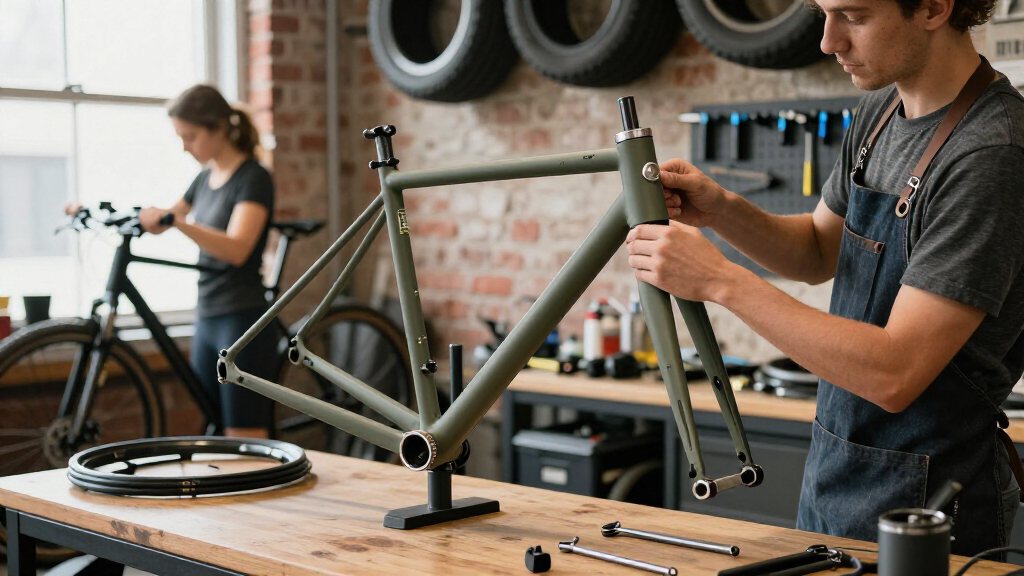
This Gravity frame-and-fork set is the pick I would point most builders toward, and the reason is simple: it removes the parts-hunting phase that derails so many fat bike projects. The box includes a headset, stem, seatpost, and seatpost clamp, which means the hardest compatibility questions are already answered. Compared with the CDH frames in this lineup — which arrive as bare metal and require you to verify a 27.2mm seatpost, a 1 1/8-inch headset, and a 44mm bottom bracket before you buy anything else — this Gravity set behaves more like a kit than a component.
The build itself pairs an aluminum frame with a steel rigid fork, and that combination is a deliberate tradeoff. Aluminum keeps the main triangle reasonably light; steel up front absorbs trail chatter and shrugs off the abuse that fat bikes tend to invite in winter slop and rocky terrain. The downside is weight — a steel fork is noticeably heavier than an aluminum one, and riders who plan to ride their fat bike on long mixed-surface routes will feel it on climbs. For snow, sand, and soft trails where fat bikes actually live, I think the durability tradeoff favors steel.
Clearance is the other strength here. The frame accepts 26 x 4.0 tires with 170mm rear spacing and 135mm front spacing, which is the standard fat bike geometry most wheel and hub manufacturers design around. That matters because replacement wheels, tires, and hubs in these widths are easy to find. Where this option falls short compared with the CDH frames: it has no provisions for an engine, no fuel tank, and no mounting plate, so anyone planning a motorized conversion should skip it entirely. It is also locked to 26-inch fat wheels — you cannot downsize it into a plus-tire trail bike without adapter headaches.
Pros:- Headset, stem, seatpost, and seatpost clamp are all included, eliminating most compatibility guesswork
- Clears wide 26 x 4.0 fat bike tires with standard 170mm rear / 135mm front spacing
- Aluminum frame paired with a durable steel rigid fork suited to rough, soft terrain
- Standards-based spacing makes replacement wheels and hubs easy to source
Cons:- Steel fork adds weight compared with aluminum fork alternatives
- Limited to 26-inch fat bike wheels with no practical path to other wheel sizes
- No provisions whatsoever for engine mounting or motorized builds
Best for: Riders building a human-powered fat bike for snow, sand, or soft trails who want included cockpit components and a straightforward, standards-compliant build.
Not ideal for: Anyone planning a motorized conversion, or riders who want a lightweight fat bike for long mixed-surface rides where the steel fork’s weight counts against them.
- Frame Material:Aluminum
- Fork Material:Steel
- Fork Type:Rigid
- Wheel Size:26 inches
- Tire Compatibility:26 x 4.0
- Rear Spacing:170mm
- Front Spacing:135mm
- Included Components:Headset, stem, seatpost, seatpost clamp
Our verdict“If your goal is a conventional fat bike rather than a motorized project, this is the most complete and least frustrating starting point in this roundup.”
CDHPOWER Bicycle Gas Frame with 3.4L Gas Tank, Brushed Aluminum, 135mm Rear Width
Of the two CDH gas frames here, this CDHPOWER model is the one built around 2-cycle engines — 48cc, 66cc, and 80cc — and that distinction drives everything else about it. The built-in 3.4L fuel tank is the headline feature, and its value is practical rather than cosmetic: it eliminates the strap-on external tank that most motorized builds use, which cleans up the silhouette and removes a component that vibrates loose over time. The brushed aluminum finish also resists the kind of visible wear that painted frames show after a season of engine grime.
Where this frame pulls ahead of its sibling, the G4-II, is in cable management and build simplicity. Integrated cable routing keeps lines away from engine mounts and exhaust heat, which is a genuine benefit on a 2-stroke build where the engine bay is crowded. Its 135mm rear width matches standard mountain bike hub spacing, so rear wheel options are plentiful — a real advantage over the G4-II’s 195mm width, which narrows your wheel choices considerably. The rear disc brake bracket also means you are not stuck with a rim brake on a bike that will carry motor speeds.
The tradeoff is fitment rigidity. This frame demands a 27.2mm seatpost, a 10×1.5mm petcock switch, a 1 1/8-inch headset, and a bottom bracket measuring 68mm x 35.4mm with a 44mm diameter. Any builder who already owns parts outside those dimensions will either need adapters or new components. The manufacturer’s recommended safe speed of 35 km/h is also worth reading literally — this is a cruiser frame, not a performance platform, and treating it otherwise shortens the life of every part bolted to it.
Pros:- Built-in 3.4L gas tank removes the need for a strapped-on external tank
- Heavy-duty brushed aluminum construction stands up to engine vibration and grime
- 135mm rear width and rear disc brake bracket keep wheel and brake options open
- Integrated cable routing keeps lines clear of engine mounts and exhaust heat
Cons:- Requires specific components including a 27.2mm seatpost and 10×1.5mm switch
- Bottom bracket and headset dimensions limit which existing parts you can reuse
- Recommended safe speed of 35 km/h caps it as a cruiser, not a performance build
Best for: Hobbyists building a 2-stroke (48cc/66cc/80cc) motorized bicycle who want an integrated fuel tank and clean cable routing with standard 135mm rear spacing.
Not ideal for: Builders running 4-stroke engines, anyone wanting a wider 195mm rear end, or buyers unwilling to match components to the frame’s specific dimensions.
- Frame Type:Bicycle gas frame
- Gas Tank Capacity:3.4L built-in
- Finish:Brushed aluminum
- Engine Compatibility:2-cycle 48cc/66cc/80cc
- Rear Width:135mm
- Brake Compatibility:Rear disc brake bracket
- Seatpost Requirement:27.2mm
- Bottom Bracket:68mm x 35.4mm, 44mm diameter
- Headset Requirement:1 1/8 inch
Our verdict“For a 2-stroke conversion, this frame’s integrated tank, disc brake readiness, and standard rear spacing make it the cleaner starting point compared with the wider, 4-stroke-oriented G4-II.”
CDH G4-II Motorized Bicycle Gas Frame, 195mm Rear Width, Built-in 3.4L Fuel Tank, for 4-Stroke Engines, Green
The G4-II exists for a different animal entirely: 4-stroke engines mounted on a plate. Compared with the CDHPOWER 2-stroke frame, the defining spec is the 195mm rear width, which accommodates the wider drive systems and wheel setups that 4-stroke conversions typically demand. That width is both the reason to buy this frame and its biggest limitation — it narrows your rear wheel options to hubs built for that spacing, whereas the 2-stroke frame can draw from the vast 135mm standard pool. If your engine choice is already settled on a 4-stroke, that tradeoff is simply the cost of doing business.
Like its sibling, the G4-II carries a built-in 3.4L fuel tank with a cap included, which keeps the build tidy and spares you the zip-tied external tank. The green finish gives it a distinctive look, for better or worse — builders wanting a sleeper aesthetic will prefer the CDHPOWER’s brushed aluminum. Fitment requirements mirror the 2-stroke frame closely: a 27.2mm seatpost, 1 1/8-inch headset, 44mm bottom bracket, and a 10×1.5mm petcock valve. That consistency is helpful if you have parts already, but it means both frames punish guesswork equally.
The honest caveat is assembly prep. The manufacturer is explicit that the bottom bracket needs paint cleaned out before installation, and that quick-release rear wheels are not recommended unless you are a professional builder — the wider dropouts and motor torque make QR axles a poor match. This is the least beginner-friendly option of the three. Compared with the Gravity fat bike frame, which is nearly bolt-together by contrast, the G4-II rewards experienced hands and punishes first-timers who skim the fitment notes.
Pros:- Designed specifically for 4-stroke engine conversions with a mounting plate
- Built-in 3.4L fuel tank with included cap simplifies the fuel system
- Clear, published compatibility requirements for seatpost, headset, and bottom bracket
- 195mm rear width supports the wider drive setups 4-stroke builds require
Cons:- Not recommended for quick-release rear wheels unless you are a professional builder
- Requires assembly preparation, including cleaning paint from the bottom bracket
- 195mm rear spacing limits rear wheel and hub options compared with 135mm frames
Best for: Experienced builders running 4-stroke engines with mounting plates who need the 195mm rear width and want an integrated fuel tank.
Not ideal for: First-time builders, anyone running a 2-stroke engine (the CDHPOWER frame fits that job better), and riders using quick-release rear wheels.
- Model:CDH G4-II
- Type:Motorized bicycle gas frame
- Color:Green
- Rear Width:195mm
- Fuel Tank Capacity:3.4L built-in
- Engine Compatibility:4-stroke engines with mounting plate
- Seatpost Requirement:27.2mm
- Headset Size:1 1/8 inch
- Bottom Bracket:68mm width, 44mm diameter, 35.4mm inner diameter
Our verdict“If a 4-stroke engine is the heart of your project, the G4-II’s width and mounting provisions make it the right chassis — but it demands a builder who reads the fine print.”
How We Picked
Since these frames serve different build types, I judged each one against its own intended project rather than a single yardstick. For the fat bike frame, I prioritized component completeness, tire clearance, and frame/fork material pairing, because a bare frame that forces you to source a headset and stem separately often erases its price advantage. For the motorized frames, my focus shifted to fitment precision: bottom bracket dimensions, headset size, seatpost diameter, and rear spacing are the specs that make or break an engine conversion, and vague compatibility is the most common failure point in these builds.
I also weighed how each frame manages the practical realities of its category. A built-in fuel tank matters far more on a gas frame than raw weight does, while internal cable routing matters on a motorized build because exposed cables interfere with engine mounts and heat. Finally, I compared each frame against the others in this lineup wherever their paths crossed — the two CDH frames in particular overlap enough that choosing between them is a genuine decision, and I explain exactly how to make it below.
Factors to Consider When Choosing Best Bicycle Frames
Choosing between these three frames comes down to one question before anything else: what is the frame for? Once you answer that, the specs that matter become obvious, and the specs that do not matter can be ignored. Here is how I would work through the decision.Human-Powered vs. Motorized: Decide First
This is the fork in the road, and it comes before any spec comparison. The Gravity fat bike frame has no engine provisions at all — no tank, no mounting plate, no bracket — so it is only suitable if pedals are your sole power source. Both CDH frames, conversely, are purpose-built for gas engines and would be strange, tank-laden choices for a pedal-only bike. Trying to force one category of frame into the other’s role wastes money either way.
Engine Type Determines the CDH Frame
If you are going motorized, your engine choice picks the frame for you. The CDHPOWER 135mm frame suits 2-cycle 48cc/66cc/80cc engines, while the G4-II with its 195mm rear width is built for 4-stroke engines on a mounting plate. Mixing these up leads to a frame that physically will not accept your drivetrain. The G4-II’s wider rear end also constrains wheel choice, which is worth factoring in if you already own a rear wheel.
Fitment Dimensions You Cannot Fudge
For motorized builds, three numbers dominate: seatpost diameter (27.2mm on both CDH frames), headset size (1 1/8 inch), and bottom bracket dimensions (68mm width, 44mm diameter, 35.4mm inner). Parts outside these measurements will not fit without adapters, and adapters on a vibrating gas engine are failure points. Measure what you own before you buy the frame, not after.
Frame and Fork Materials
The Gravity’s aluminum frame plus steel fork pairing trades weight for durability — sensible for a fat bike that gets ridden through rock and slush. The CDH frames’ heavy-duty aluminum is chosen for vibration resistance rather than lightness, since a gas engine subjects the frame to constant harmonic stress that lighter tubing handles poorly. Neither philosophy is wrong; they just serve different jobs.
Wheel and Brake Compatibility
Spacing is the hidden gatekeeper. The Gravity uses standard fat bike spacing (170mm rear, 135mm front), which keeps wheels and hubs easy to source. The CDHPOWER 2-stroke frame also uses 135mm rear spacing, and adds a rear disc brake bracket — a genuine safety feature on a motorized bike. The G4-II’s 195mm rear demands compatible hubs and solid axles; quick-release skewers are off the table for non-professionals.
Frequently Asked Questions
Can I put a gas engine on the Gravity fat bike frame?
No — and I would not try. The Gravity frame is designed purely as a human-powered fat bike chassis, with no engine mounting plate, no integrated fuel tank, and no provisions for the drivetrain stress a motor introduces. Both CDH frames in this comparison exist specifically for engine conversions, with built-in 3.4L tanks and mounting systems matched to their engine types. Retrofitting an engine onto a frame never designed for one usually results in failed mounts, frame damage, and an unsafe ride, so the better path is to pick the CDH frame that matches your engine from the start.
What is the difference between the two CDH gas frames?
The core difference is engine compatibility and rear width. The CDHPOWER brushed aluminum frame targets 2-cycle engines (48cc, 66cc, 80cc) with a standard 135mm rear width, a rear disc brake bracket, and integrated cable routing — making it the more flexible choice for common budget engine kits. The G4-II is built for 4-stroke engines with a mounting plate and uses a much wider 195mm rear end to accommodate those drive systems. In practice, your engine decision picks the frame: buy a 2-stroke kit and the CDHPOWER is the natural chassis; commit to a 4-stroke and the G4-II is the only one of the two that fits properly.
Why does the CDH G4-II warn against quick-release rear wheels?
Quick-release skewers rely on cam clamping force, which is fine for pedal power but unreliable under the torque and vibration a 4-stroke engine produces through a 195mm rear end. A motorized drivetrain can gradually work a QR axle loose or allow the wheel to shift under load, and either scenario at speed is dangerous. The manufacturer’s guidance that only professional builders should attempt QR setups reflects this — pros may add torque arms or reinforcement that a hobbyist would overlook. For most buyers, the simple answer is to run a solid bolt-on axle with a hub that matches the 195mm spacing.
Is the steel fork on the Gravity fat bike frame a problem?
It depends entirely on how you ride. A steel rigid fork is heavier than an aluminum one, and that weight is noticeable on long climbs or if you ride your fat bike on pavement more than dirt. In exchange, you get a fork that absorbs trail chatter better than aluminum, tolerates impacts and winter abuse, and is less prone to the harsh, buzzy feel aluminum forks can produce. For the snow, sand, and soft-trail riding fat bikes are built for, I consider steel the right call. If your riding skews toward long mixed-surface routes, budgeting for an aftermarket aluminum or carbon fork swap is a reasonable plan.
Do I need to buy extra parts to complete any of these builds?
Yes, all three need additional components, but the amounts differ sharply. The Gravity is the most complete: the headset, stem, seatpost, and seatpost clamp ship in the box, leaving mainly wheels, tires, drivetrain, and brakes to source. Both CDH frames arrive as bare chassis requiring strict part matching — a 27.2mm seatpost, 1 1/8-inch headset, and a bottom bracket set to the stated 68mm x 35.4mm dimensions — plus your engine kit, petcock valve, and controls. The G4-II adds extra prep work, including cleaning paint from the bottom bracket before installation. Whichever you choose, verify every dimension against your parts list before ordering, because returns on cut or modified frames are rarely simple.
Conclusion
Matching the frame to the builder is straightforward with this lineup. If you want a pedal-powered fat bike for snow, sand, or soft trails, the Gravity Fat Bike Frame and Fork is my clear top pick — it is the only option here that arrives with its cockpit components included, and its standard 170mm/135mm spacing keeps every downstream part easy to source. Riders chasing a lighter fat bike should simply plan a fork upgrade down the line.
If your project is a 2-stroke motorized bicycle with a 48cc, 66cc, or 80cc engine, the CDHPOWER brushed aluminum frame is the smarter chassis: standard 135mm rear spacing, a rear disc brake bracket, internal cable routing, and the same integrated 3.4L tank as its sibling, all of which add up to a cleaner, more flexible build. Choose the CDH G4-II only if a 4-stroke engine on a mounting plate is your plan — its 195mm rear width is the feature that makes that conversion possible, but it demands an experienced hand, careful prep work, and a bolt-on rear axle. The short version: Gravity for pedals, CDHPOWER for 2-stroke, G4-II for 4-stroke, and everything else in this comparison follows from that choice.
NFL season / tailgating Picks
team gear
As an affiliate, we earn on qualifying purchases.