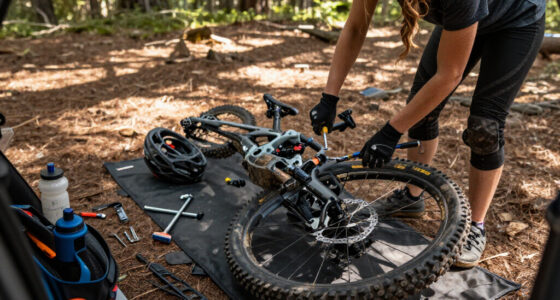
For riders shopping specifically for a carbon hardtail mountain bike, the TRIFOX is the clearest match in this group: it combines a T800 carbon frame, 29-inch wheels, a 12-speed Shimano Deore drivetrain, and a lockable 130 mm fork. The SAVADECK Lantop 610 is a simpler 29er with a 10-speed CUES drivetrain and hydraulic brakes, while the Lantop 612 Plus adds rear suspension but is a full-suspension bike, not a hardtail.

Get sports gear delivered free with Prime
- Fast, free delivery on millions of items
- Prime Video, Amazon Music and more included
- Member-only deals all year
I rank the TRIFOX first because its listed design and equipment most directly fit the title, then place the Lantop 610 as a more straightforward hardtail option with useful setup caveats. The 612 Plus appears here as a comparison for riders willing to trade the hardtail brief for rear-wheel comfort. The main choice is between front-only suspension and a clearer spec match, a less detailed hardtail package, or a more complex full-suspension layout. Check fit and confirm any unclear equipment details before buying.
Complete the kit


Key Takeaways
- TRIFOX is the most complete hardtail match: its 29-inch carbon frame, 130 mm lockable fork, Deore 12-speed drivetrain, and three listed frame sizes make its intended setup easier to assess.
- Lantop 610 is the simpler 29-inch alternative: it has a 10-speed Shimano CUES drivetrain and hydraulic brakes, but its suspension listing conflicts with the description of an oil spring fork.
- Lantop 612 Plus is not a hardtail: its dual-link rear suspension suits riders who value added rear-wheel movement more than a strict hardtail design.
- Drivetrain choice separates the two hardtail candidates: TRIFOX lists 12-speed Deore, while Lantop 610 lists 10-speed CUES; the TRIFOX offers more ratios, while the SAVADECK presents a simpler setup.
- Fit information is uneven: TRIFOX lists three frame sizes, Lantop 610 gives a rider-height range that needs size clarification, and the 612 Plus provides no frame-size options in the supplied details.
| TRIFOX Carbon Fiber 29-Inch Mountain Bike with Shimano Deore 12-Speed Drivetrain |  | Best Overall Hardtail | Frame: T800 carbon fiber | Bike type: Hardtail mountain bike | Wheel size: 29 inches | VIEW LATEST PRICE | See Our Full Breakdown |
| SAVADECK Lantop 610 Carbon Fiber Mountain Bike with Shimano 10-Speed Groupset and Hydraulic Disc Brakes |  | Best for a Simpler 29er Setup | Frame material: Carbon fiber | Wheel size: 29 inches | Drivetrain: Shimano CUES, 10-speed | VIEW LATEST PRICE | See Our Full Breakdown |
| SAVADECK Lantop 612 Plus Carbon Fiber Full-Suspension Mountain Bike, Shimano Deore M6100 12-Speed |  | Best Full-Suspension Alternative | Frame material: Carbon fiber | Bike type: Full-suspension mountain bike | Suspension: Dual-link rear suspension with lockout air shock | VIEW LATEST PRICE | See Our Full Breakdown |
| carbon hardtail mountain bike | Wheel size | Drivetrain | Brakes | Bike type |
|---|---|---|---|---|
| TRIFOX Carbon Fiber 29-Inch Mo | 29 inches | Shimano Deore M6100, 12-speed | Shimano MT200 hydraulic disc | Hardtail mountain bike |
| SAVADECK Lantop 610 Carbon Fib | 29 inches | Shimano CUES, 10-speed | Hydraulic disc | — |
| SAVADECK Lantop 612 Plus Carbo | 27.5 inches | Shimano Deore M6100, 12-speed | Shimano MT200 hydraulic disc | Full-suspension mountain bike |
More Details on Our Top Picks
TRIFOX Carbon Fiber 29-Inch Mountain Bike with Shimano Deore 12-Speed Drivetrain
The TRIFOX is my first choice for a buyer who wants the defining layout of a carbon hardtail rather than simply a carbon mountain bike. Its T800 carbon frame is paired with 29-inch wheels and a listed 130 mm front fork that can be locked out. That combination gives a rider front suspension for rougher ground while keeping the rear end rigid and mechanically simpler than the Lantop 612 Plus. The hardtail format is also stated plainly, avoiding the category uncertainty that comes with treating the full-suspension SAVADECK as an alternative hardtail.
The strongest equipment advantage over the Lantop 610 is the Shimano Deore 12-speed drivetrain. Twelve speeds offer a broader set of gear steps than the 610’s 10-speed CUES setup, which can help when a route shifts between climbs and faster trail sections. The TRIFOX also lists three frame sizes—15.5, 17, and 19 inches—where the Lantop 610 gives a rider-height range but does not clearly map that range to individual frame choices in the supplied information. That does not replace a fit check, but it gives the TRIFOX buyer more concrete sizing details to start from.
Its 130 mm lockable fork is another point of separation. Compared with the Lantop 610, whose fork description and suspension specification conflict, the TRIFOX offers a more legible account of its front-end setup. Lockout lets the rider reduce fork movement where a firmer feel is wanted, while the stated travel points to a trail-oriented front end. The bike weighs 26 pounds according to the listing, and it arrives 85% preassembled with tools. Some assembly remains, so I would not treat it as ready to ride straight from the box; the supplied details do not say that a professional setup is included.
The compromise is built into the category: there is no rear suspension. On rough, repeated impacts, the rider and rear tire have less suspension movement than on the Lantop 612 Plus. Its 29 × 2.1-inch tires are also a specific size buyers should weigh against their terrain and preferences rather than assume will suit every trail. For a strict hardtail shortlist, though, it is the most fully specified candidate here. I would choose it over the Lantop 610 for the clearer fork and drivetrain details, while a rider who prioritizes rear suspension should compare the 612 Plus and accept that it is a different kind of bike.
Pros:- Explicit hardtail design with a T800 carbon frame and 29-inch wheels.
- Shimano Deore M6100 12-speed drivetrain.
- Lockable 130 mm front suspension fork.
- Three listed frame sizes and stated 26-pound weight.
Cons:- Rigid rear end cannot absorb impacts like the Lantop 612 Plus full-suspension layout.
- Arrives 85% preassembled, so some assembly and setup remain.
- The listed 29 × 2.1-inch tire size may not suit every rider or trail preference.
Best for: Riders seeking a clearly identified carbon hardtail with 29-inch wheels, a 12-speed Deore drivetrain, a lockable front fork, and multiple listed frame sizes.
Not ideal for: Riders who want rear suspension, a bike requiring little assembly, or a frame size and fit recommendation that is fully resolved without further checking.
- Frame:T800 carbon fiber
- Bike type:Hardtail mountain bike
- Wheel size:29 inches
- Tires:29 × 2.1 inches
- Drivetrain:Shimano Deore M6100, 12-speed
- Suspension:Lockable front fork, 130 mm travel
- Brakes:Shimano MT200 hydraulic disc
- Frame sizes:15.5, 17, and 19 inches
- Weight and assembly:26 lb; 85% preassembled, tools included
Our verdict“I would start with the TRIFOX for a carbon hardtail because it has the clearest category match and the most complete hardtail specification in this comparison.”
SAVADECK Lantop 610 Carbon Fiber Mountain Bike with Shimano 10-Speed Groupset and Hydraulic Disc Brakes
The Lantop 610 is the more straightforward alternative for riders who want a carbon 29-inch mountain bike with a 10-speed drivetrain and hydraulic brakes. Its Shimano CUES rear derailleur and SL-U6000 trigger shifter make it a different proposition from the TRIFOX’s Deore 12-speed setup: fewer listed gears mean a simpler range to work through, while the TRIFOX gives buyers more ratios to choose between on varied climbs and descents. I would favor the 610 only if its fit and fork details check out and the less elaborate drivetrain better suits the rider’s priorities.
One practical advantage is its stated assembly level. The bike arrives about 90% preassembled and includes a tool kit, compared with the TRIFOX’s 85% figure. That difference may reduce the amount of initial assembly, although it does not remove the need to inspect the bike and complete setup correctly. The listing also states hydraulic disc brakes, which provide controlled braking through a hydraulic system rather than a cable-actuated design. The same brake category appears on the TRIFOX and Lantop 612 Plus, so brakes alone do not set this model apart within the group.
The main concern is a direct contradiction in the supplied specifications: the description mentions an oil spring fork, while the specifications list rigid suspension. I would not assume the bike has a working suspension fork until the seller or manufacturer confirms the actual configuration. This matters because the TRIFOX clearly lists a lockable 130 mm fork, while the Lantop 612 Plus clearly describes dual-link full suspension. The 610’s front-end uncertainty makes it harder to judge whether it matches a buyer’s intended trail use.
Fit requires similar care. The listing gives a 29 × 17 size and a recommended rider-height range of 165–188 cm, while also noting that the applicable range depends on frame size. That is not as useful as a size chart mapping each frame to rider measurements, and the TRIFOX’s three listed frame sizes are easier to compare at a glance. Before choosing the Lantop 610, I would confirm the exact frame size available for the rider and the fork specification. Its 10-speed CUES drivetrain, carbon frame, 29-inch wheels, hydraulic brakes, and tool kit make it a plausible simpler hardtail candidate, but the uncertain fork keeps it behind the better-documented TRIFOX.
Pros:- Carbon fiber frame with 29-inch wheels.
- Shimano CUES 10-speed drivetrain with SL-U6000 trigger shifter.
- Hydraulic disc brakes.
- About 90% preassembled with a tool kit included.
Cons:- Fork details conflict: the description lists an oil spring fork, while specifications say rigid suspension.
- Frame sizing is not clearly mapped to the stated rider-height range.
- 10-speed drivetrain offers fewer listed ratios than the TRIFOX’s 12-speed Deore setup.
Best for: Riders looking for a carbon 29-inch bike with a 10-speed Shimano CUES drivetrain, hydraulic disc brakes, and a higher stated preassembly level, provided the frame size and fork are confirmed.
Not ideal for: Buyers who need an unambiguous suspension specification, a clearly mapped size chart, or the wider gear selection listed on the TRIFOX.
- Frame material:Carbon fiber
- Wheel size:29 inches
- Drivetrain:Shimano CUES, 10-speed
- Shifter:Shimano SL-U6000 trigger shifter
- Rear derailleur:Shimano U6020 CUES
- Brakes:Hydraulic disc
- Fork listing:Oil spring fork in description; rigid suspension in specifications
- Size information:29 × 17; listed rider-height range 165–188 cm, depending on frame size
- Assembly and warranty:About 90% preassembled; tool kit included; 2-year warranty
Our verdict“I would choose the Lantop 610 as a simpler carbon 29er only after confirming its fork configuration and the exact frame size for the rider.”
SAVADECK Lantop 612 Plus Carbon Fiber Full-Suspension Mountain Bike, Shimano Deore M6100 12-Speed
The Lantop 612 Plus is included because it helps clarify the biggest design choice in this roundup, but it does not meet the hardtail brief. Its carbon frame uses a dual-link full-suspension layout with a lockout air shock. That rear suspension changes the ride concept compared with the TRIFOX and the hardtail-intended Lantop 610: the rear wheel has a suspension system, while the two hardtail candidates rely on a rigid rear end. A buyer who has already decided on a hardtail should skip this model rather than treat it as a close equivalent.
For a rider open to full suspension, the equipment list has clear strengths. The bike pairs a Shimano Deore M6100 12-speed drivetrain with Shimano MT200 hydraulic disc brakes, matching the TRIFOX on the named drivetrain family and speed count and on brake model. It uses 27.5-inch Continental all-terrain tires instead of the 29-inch wheels listed for both hardtail candidates. Wheel size is a personal and terrain-dependent preference, so I would not treat either diameter as universally superior. The smaller listed wheel size and rear suspension make this a notably different package, not simply a more equipped version of the TRIFOX.
The lockout air shock has adjustable rebound and lockout listed among its advantages. Those controls can let a rider tailor suspension behavior, but they also add setup choices absent from a rigid-rear hardtail. The supplied information does not list a frame-size range, a meaningful gap beside the TRIFOX’s 15.5, 17, and 19-inch options and the Lantop 610’s incomplete size information. I would ask for a size chart before ordering. The description also claims a 15% improvement in rolling efficiency, but the provided material does not substantiate that figure; I would not use it as a reason to buy.
My ranking places the 612 Plus third because the article’s target is hardtails, not because full suspension is inherently a poor choice. It makes more sense for someone who wants a carbon bike with rear suspension and accepts a different riding feel, added suspension setup, and unanswered sizing questions. Against the hardtail TRIFOX, it gives up the simple rigid rear layout; against the Lantop 610, it has a clearly described 12-speed drivetrain and full-suspension system but also a less suitable category match for this guide. Treat it as a comparison point for riders reconsidering hardtail versus full suspension, not as my recommended hardtail pick.
Pros:- Carbon fiber frame with dual-link full suspension and a lockout air shock.
- Shimano Deore M6100 12-speed drivetrain.
- Shimano MT200 hydraulic disc brakes.
- 27.5-inch Continental all-terrain tires.
Cons:- Full-suspension design makes it a mismatch for a strict hardtail shortlist.
- No frame-size options are specified in the supplied details.
- The claimed 15% rolling-efficiency improvement is not independently substantiated in the provided text.
Best for: Riders who are open to a carbon full-suspension bike with a Deore 12-speed drivetrain, a lockout air shock, and 27.5-inch tires.
Not ideal for: Buyers specifically seeking a hardtail, or anyone unwilling to proceed without clear frame-size information and confirmation of the bike’s fit.
- Frame material:Carbon fiber
- Bike type:Full-suspension mountain bike
- Suspension:Dual-link rear suspension with lockout air shock
- Drivetrain:Shimano Deore M6100, 12-speed
- Brakes:Shimano MT200 hydraulic disc
- Wheel size:27.5 inches
- Tires:Continental all-terrain
- Color:Green
- Frame sizes:Not specified in the supplied details
Our verdict“I would consider the Lantop 612 Plus only if rear suspension matters more than choosing a hardtail and the seller can clarify fit.”

How We Picked
I ranked these bikes by how well their stated design and equipment match the search for a carbon hardtail mountain bike. That means frame material alone was not enough: I looked at whether the bike is actually a hardtail, what its front suspension offers, which drivetrain and brakes are listed, and whether sizing information helps a buyer judge fit.
The TRIFOX leads because it is explicitly identified as a hardtail and has the most specific hardtail equipment list here: a T800 carbon frame, 29-inch wheels, a lockable 130 mm fork, Deore 12-speed drivetrain, and three frame sizes. The Lantop 610 remains a relevant second option, but the supplied details disagree about its fork and suspension, so I treat that uncertainty as a real purchasing drawback rather than assuming one specification is correct. Its 10-speed CUES drivetrain and hydraulic brakes are clear selling points, yet buyers should confirm the fork and frame size before choosing it.
I include the Lantop 612 Plus as a useful comparison, not as a hardtail substitute. Its carbon frame, Deore 12-speed drivetrain, and dual-link suspension may suit riders seeking more rear-wheel movement, but that suspension changes the category and adds a different setup choice. The supplied text does not substantiate its rolling-efficiency claim, and it omits frame-size options. I have not treated unsupported claims as proven performance, and I do not imply first-hand testing. The ranking reflects the details provided, with fit clarity, category match, and meaningful tradeoffs carrying the most weight.
| carbon hardtail mountain bike | Bike type | Drivetrain | Suspension | Brakes |
|---|---|---|---|---|
| TRIFOX Carbon Fiber 29-Inch Mo | Hardtail mountain bike | Shimano Deore M6100, 12-speed | Lockable front fork, 130 mm travel | Shimano MT200 hydraulic disc |
| SAVADECK Lantop 610 Carbon Fib | — | Shimano CUES, 10-speed | — | Hydraulic disc |
| SAVADECK Lantop 612 Plus Carbo | Full-suspension mountain bike | Shimano Deore M6100, 12-speed | Dual-link rear suspension with lockout air shock | Shimano MT200 hydraulic disc |
Factors to Consider When Choosing Best Carbon Hardtail Mountain Bikes
I would begin by deciding whether a hardtail is a firm requirement or just one way to narrow the field. In this comparison, the TRIFOX is explicitly a hardtail, the Lantop 610 has conflicting fork and suspension details, and the Lantop 612 Plus is full suspension. After that category check, compare fit, fork specification, drivetrain, wheel size, and the work required before the first ride.
Confirm the bike is actually a hardtail
A hardtail has front suspension and a rigid rear frame; a full-suspension bike has suspension at both ends. That distinction is the most important filter in this lineup. The TRIFOX is explicitly identified as a hardtail, the Lantop 610’s suspension details need confirmation, and the Lantop 612 Plus has a dual-link rear suspension layout. A full-suspension model may suit a rider who wants rear-wheel movement, but it should not be ranked as a hardtail just because it has a carbon frame.
I would also check that the exact product configuration matches the description before purchase. The Lantop 610 is a good example: one supplied section mentions an oil spring fork, while its specifications say rigid suspension. Ask the seller to confirm what fork is included. If the answer is unclear, the TRIFOX has the more dependable stated front-end specification for a buyer who wants a hardtail with front suspension.
Treat fit as a first-order specification
Frame material and component names cannot compensate for a poor fit. The TRIFOX lists frame sizes of 15.5, 17, and 19 inches, which gives a buyer concrete options to compare with their measurements. The Lantop 610 lists a 29 × 17 size and a rider-height range of 165–188 cm, but also says the suitable range depends on frame size. The Lantop 612 Plus supplies no frame-size options in the details provided. I would ask for a size chart that connects frame measurements to rider height and inseam before ordering any of them.
Do not read a broad height range as a personalized fit guarantee. Reach, standover, seat-tube length, riding posture, and personal preference all affect whether a mountain bike feels manageable. If the seller cannot explain which size corresponds to your measurements, that uncertainty should weigh against the purchase. The TRIFOX has the clearest starting point in this group, but its size labels still need to be checked against the rider.
Compare drivetrain range with simplicity
The TRIFOX and Lantop 612 Plus list Shimano Deore M6100 12-speed, while the Lantop 610 lists a 10-speed Shimano CUES setup. More speeds provide more gear steps to select from, which can help when a route changes between steep climbs and faster sections. That does not make a 12-speed system automatically right for every rider: a simpler 10-speed arrangement may be enough for local trails and the riding the owner expects to do.
Look at the complete drivetrain details rather than the speed count alone. The Lantop 610 names its SL-U6000 shifter and U6020 CUES derailleur. The TRIFOX lists the Deore model and speed count, while the Lantop 612 Plus shares that named Deore system. The supplied descriptions do not give every gearing detail, so I would avoid making claims about exact climbing range or gear ratios without confirmation. For this shortlist, the TRIFOX combines the hardtail format with the 12-speed Deore listing.
Choose suspension for the terrain and the bike category
The TRIFOX lists a lockable 130 mm front fork, a defined feature that separates it from the Lantop 610’s conflicting suspension information. A lockout can firm up the fork when less movement is wanted, while front suspension adds movement at the front wheel over rougher ground. The rigid rear end remains a hardtail tradeoff: the rider does not get a rear shock to move under impacts.
The Lantop 612 Plus has a lockout air shock and full suspension, so it is the option for a rider who is willing to leave the hardtail category. Rear suspension adds a separate adjustment and setup consideration; the supplied details mention rebound adjustment and lockout but do not give a full suspension setup guide. I would choose it only after checking fit and accepting that it is a different design, not a more direct version of the TRIFOX.
Use wheel and tire details as a preference check
Both hardtail candidates list 29-inch wheels, while the full-suspension Lantop 612 Plus lists 27.5-inch wheels and Continental all-terrain tires. Wheel diameter affects the character of a bike, but the supplied information does not establish that one size is better for every rider, trail, or riding style. Consider the bike as a whole: the TRIFOX pairs 29-inch wheels with 29 × 2.1-inch tires and a 130 mm fork, while the Lantop 610 gives a 29-inch size but does not resolve its suspension specification.
When tire width or tread matters to your planned routes, ask for details beyond the model description. A listed tire size helps set expectations, but it does not answer every question about casing, compound, or replacement compatibility. Do not infer those unlisted details. For this roundup, the useful distinction is simple: the two hardtail candidates are 29ers, while the full-suspension comparison uses a smaller listed wheel size.
Account for assembly and final setup
The Lantop 610 is listed as about 90% preassembled and includes a tool kit. The TRIFOX arrives 85% preassembled, with tools included. Those figures suggest assembly remains for both bikes; they do not tell the buyer exactly which work is required or whether the bike has received a final inspection. I would check the instructions and plan to verify key adjustments before riding rather than treating a high preassembly percentage as a substitute for setup.
The supplied information does not give an assembly percentage for the Lantop 612 Plus. No matter which model you choose, check brake operation, shifting, wheel attachment, steering, and fastener security before the first ride, following the manufacturer’s directions. If you are not comfortable with bicycle assembly and adjustment, arrange help from a qualified bike mechanic. That can be especially helpful when the fork details, fit, or suspension setup need clarification.
Frequently Asked Questions
Which bike in this roundup is the best match for a carbon hardtail?
I rank the TRIFOX first because it is explicitly described as a hardtail and lists a T800 carbon frame, 29-inch wheels, a lockable 130 mm front fork, and a Shimano Deore 12-speed drivetrain. Its three stated frame sizes also give buyers more fit information than the Lantop 612 Plus, though they should still check the size against their measurements. The Lantop 610 is another possible hardtail choice, but its fork and suspension details conflict and should be confirmed.
Is the SAVADECK Lantop 612 Plus a hardtail?
No. The supplied description identifies it as a full-suspension mountain bike with a dual-link layout and a lockout air shock. I include it as a comparison for riders who might prefer rear suspension, but it does not fit a strict hardtail requirement. If the rigid rear layout is central to your choice, focus on the TRIFOX or confirm the Lantop 610’s actual fork and configuration before considering it.
What is the main difference between the TRIFOX and Lantop 610?
The clearest differences are the listed drivetrain and the certainty of the suspension details. The TRIFOX lists a 12-speed Shimano Deore drivetrain and a lockable 130 mm fork, while the Lantop 610 lists a 10-speed Shimano CUES drivetrain but gives conflicting fork information. The Lantop 610 has a higher stated preassembly percentage, about 90% compared with the TRIFOX’s 85%, and includes a tool kit. I would compare them only after checking the 610’s fork and exact frame size.
Does carbon fiber mean these bikes are ready for every trail?
No. A carbon frame describes the frame material, not a guarantee of suitability for every trail, rider, or riding condition. The listed fork, wheel and tire setup, frame fit, brakes, and whether the bike is a hardtail or full suspension all matter. In this group, the TRIFOX is the clearest hardtail specification, while the Lantop 612 Plus adds rear suspension and the Lantop 610 needs clarification about its front end. Match the complete bike to the routes you plan to ride.
What should I verify before ordering one of these bikes?
Start with the exact frame size and fit chart, then confirm which fork is supplied, especially for the Lantop 610. Check what assembly remains, what tools are included, and whether the manufacturer’s instructions call for additional setup. For the Lantop 612 Plus, ask for frame-size options; for the TRIFOX, compare its 15.5-, 17-, and 19-inch choices with your measurements. If you are unsure about final assembly or adjustment, arrange help from a qualified bike mechanic.
Conclusion
For a rider who wants a carbon hardtail with the clearest equipment list, I recommend starting with the TRIFOX: it has a stated 130 mm lockable fork, Deore 12-speed drivetrain, 29-inch wheels, and three listed frame sizes. Choose the Lantop 610 if a 10-speed CUES setup and about 90% preassembly appeal more, but only after confirming the fork configuration and the right frame size. Consider the Lantop 612 Plus if you have decided that rear suspension matters more than a hardtail; it is a full-suspension alternative, not a hardtail pick. In every case, make fit and the exact supplied configuration the final checks before you buy.