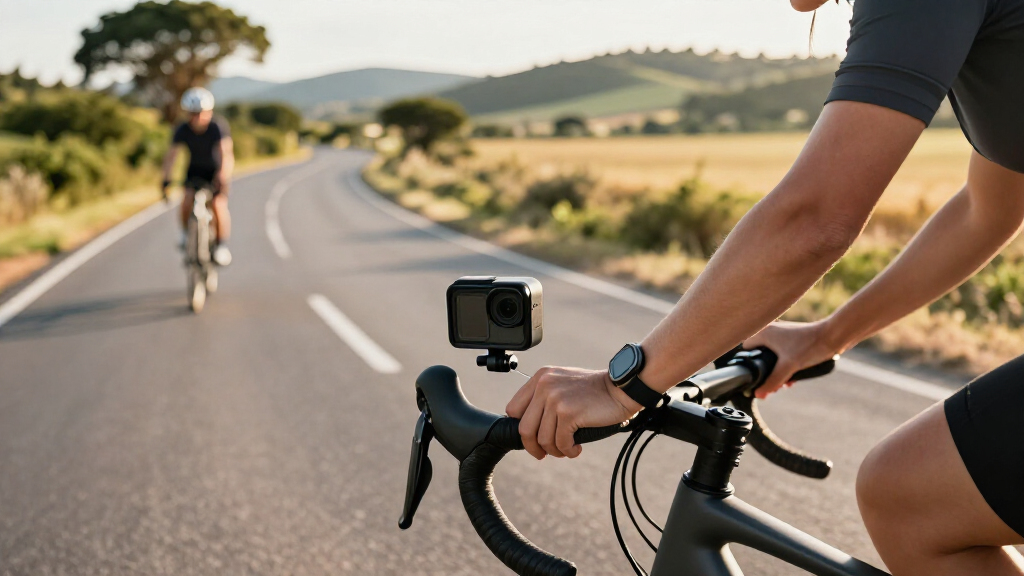
The best cycling cameras balance useful footage with the visibility, mounting ease, and battery life your rides demand. My best overall pick is the Spedal S1, which combines a 4K camera with GPS, a headlight, and cycling-computer functions. For dedicated rear visibility, the VeloScope adds vehicle alerts, while the Insta360 X4 Air suits riders who want immersive 360-degree footage. The main tradeoffs are between a live rear view and an action camera, and between simple setup and a feature-packed system. Read on for the full breakdown and help matching a camera to the way you ride.

Get sports gear delivered free with Prime
- Fast, free delivery on millions of items
- Prime Video, Amazon Music and more included
- Member-only deals all year
Complete the kit


Key Takeaways
- Spedal S1 is the broadest all-in-one choice: its camera, GPS, headlight, and cycling-computer functions cover more ride needs than a camera-only unit, though that feature mix may be unnecessary for riders who already own bike electronics.
- Rear-view systems solve a different problem from action cameras: ATOVANKA, FEISIKE, Fitense, and VeloScope prioritize a handlebar display and awareness of traffic behind you rather than immersive ride footage.
- VeloScope is the safety-focused standout: it pairs rear viewing with vehicle alerts and continuous recording, adding more awareness features than the simpler monitor-based options.
- Insta360 X4 Air and GO Ultra serve different filming styles: the X4 Air captures a wide 360-degree perspective, while the compact GO Ultra is aimed at hands-free recording with less camera bulk.
- Resolution alone does not decide the best pick: mounting position, screen visibility, alert usefulness, and whether the camera records the views you actually need matter just as much as a 4K or 8K label.
| ATOVANKA Bicycle Rear View Camera with 4.3-Inch 1080p Display |  | Best for Adjustable Rear Visibility | Display: 4.3 inches | Resolution: 1080p | Viewing angles: 60°, 90°, 110°, 130° | VIEW LATEST PRICE | See Our Full Breakdown |
| FEISIKE Bike Camera 4.3″ Rear View Monitor 3X Zoom 145° Wide Angle |  | Best for Nighttime Rear Monitoring | Screen: 4.3-inch IPS LCD | Resolution: 720p | Field of view: 145° | VIEW LATEST PRICE | See Our Full Breakdown |
| Insta360 X4 Air Road Cycling Bundle 8K 360 Camera |  | Best for Reframing 360° Ride Footage | Camera type: 360 camera | Video resolution: 8K at 30 fps | Weight: 165 g | VIEW LATEST PRICE | See Our Full Breakdown |
| VeloScope Bike Radar Camera with 1080P Rear View Camera & Smart Tail Light |  | Best for Radar-Assisted Commuting | Display: 4.3-inch color LCD touchscreen | Camera resolution: 1080p | Recording: Continuous recording | VIEW LATEST PRICE | See Our Full Breakdown |
| Insta360 GO Ultra Premium Cycling Bundle 4K Hands-Free Camera |  | Best Compact Wearable Cycling Camera | Video resolution: 4K at up to 60 fps | Camera weight: 53 g | Listed item weight: 162 g | VIEW LATEST PRICE | See Our Full Breakdown |
| Spedal S1 4K Bike Camera with GPS, Headlight, and Cycling Computer |  | Best All-in-One Cycling Camera | Video: 4K UHD at 30 fps | Stabilization: 6-axis EIS | Field of view: 132 degrees | VIEW LATEST PRICE | See Our Full Breakdown |
| Fitense 5-Inch 1080p Bike Rear-View Camera with 360° Rotatable Mount |  | Best for Live Rear-View Monitoring | Screen: 5 inches; 1920 × 1080 resolution | Camera resolution: 1080p | Viewing angle: Selectable 100, 110, or 130 degrees | VIEW LATEST PRICE | See Our Full Breakdown |
| HUPEJOS 4K Bicycle Action Camera with GPS |  | Best for a Wider Recording View | Video: 3840 × 2160 at 30 fps; also supports 2704 × 1520 and 1920 × 1080 | Stabilization: 6-axis electronic stabilization | Field of view: 150 degrees | VIEW LATEST PRICE | See Our Full Breakdown |
| cycling camera | Battery life | Field of view | Stabilization |
|---|---|---|---|
| ATOVANKA Bicycle Rear View Cam | Up to 10 hours | — | — |
| FEISIKE Bike Camera 4.3" Rear | Up to 10 hours | 145° | — |
| Insta360 X4 Air Road Cycling B | — | — | FlowState stabilization and 360° Horizon Lock |
| VeloScope Bike Radar Camera wi | 10+ hours | — | — |
| Insta360 GO Ultra Premium Cycl | — | 156° | FlowState Stabilization and 360 Horizon Lock |
| Spedal S1 4K Bike Camera with | Up to 5.5 hours recording; up to 11 hours light-only use | 132 degrees | 6-axis EIS |
| Fitense 5-Inch 1080p Bike Rear | — | — | — |
| HUPEJOS 4K Bicycle Action Came | Up to 5.5 hours recording only; 2.5 hours with light; 11 hours light only | 150 degrees | 6-axis electronic stabilization |
More Details on Our Top Picks
ATOVANKA Bicycle Rear View Camera with 4.3-Inch 1080p Display
The ATOVANKA is for riders who want a live view of traffic behind them, not recorded ride footage. Its 1080p display and four selectable viewing angles let riders choose between a tighter view and a wider field, while the ambient-light sensor adjusts screen brightness as conditions change. Compared with the FEISIKE, it offers higher stated resolution and more angle choices, but FEISIKE adds infrared night vision and zoom. The ATOVANKA’s 10,000 mAh battery is a strong fit for long rides, and its tool-free mount simplifies installation on compatible round handlebars. The limitation is decisive for anyone documenting rides: video recording is not supported. Its mounting restrictions also rule it out for some flat-bar, rack, and high-seat setups.
Pros:- 1080p live view on a 4.3-inch display
- Four selectable viewing angles from 60° to 130°
- 10,000 mAh battery rated for up to 10 hours
- Auto-brightness display and tool-free mounting
Cons:- Does not record video
- Mount is limited to compatible 22.2–31.8 mm handlebars
- Not designed for flat handlebars, cargo racks, or high rear seats
Best for: Commuters and touring cyclists with compatible handlebars who want a clear, adjustable live rear view and long battery life.
Not ideal for: Cyclists who need ride recordings for sharing or incident documentation, or whose bike has flat handlebars, a cargo rack, or a high rear seat.
- Display:4.3 inches
- Resolution:1080p
- Viewing angles:60°, 90°, 110°, 130°
- Battery capacity:10,000 mAh
- Battery life:Up to 10 hours
- Charging:USB-C
- Mount compatibility:22.2–31.8 mm handlebars
- Video recording:Not supported
Our verdict“Choose the ATOVANKA if adjustable, long-running rear visibility matters more than recording footage.”
FEISIKE Bike Camera 4.3″ Rear View Monitor 3X Zoom 145° Wide Angle
The FEISIKE prioritizes seeing approaching traffic across a broad area, with a 145° view, selectable 1x–3x digital zoom, and six infrared LEDs for low-light viewing. That makes it more adaptable after dark than the ATOVANKA, whose listed feature set does not include night vision; the ATOVANKA, by contrast, specifies 1080p where FEISIKE lists 720p. Its 4.3-inch IPS screen and up-to-10-hour battery life suit regular commutes, while IP64 housing adds protection against dust and water spray. The tradeoff is the wired camera-to-monitor link: its 2-meter cable can constrain placement and add routing work. This is a rear-view monitor, not a recording action camera, so riders looking to save footage should compare it with the Insta360 X4 Air instead.
Pros:- 145° field of view with selectable 1x, 2x, and 3x zoom
- Six infrared LEDs support rear viewing at night
- 4.3-inch IPS display
- IP64 housing and battery life rated up to 10 hours
Cons:- 720p resolution is lower than the ATOVANKA’s stated 1080p
- The 2-meter wired connection can limit camera and monitor placement
- Does not provide recorded ride footage
Best for: Commuters who ride in low light and want a wide live rear view with zoom and infrared assistance.
Not ideal for: Cyclists who want high-resolution recordings, a wireless setup, or the sharper stated resolution of the ATOVANKA.
- Screen:4.3-inch IPS LCD
- Resolution:720p
- Field of view:145°
- Zoom:1x, 2x, 3x
- Night vision:Six infrared LEDs
- Battery capacity:6,000 mAh
- Battery life:Up to 10 hours
- Mount compatibility:18–30 mm handlebars or seat tubes
- Weather protection:IP64
Our verdict“Pick the FEISIKE for wide-angle rear monitoring in low light, provided you can accommodate its wired setup and 720p resolution.”
Insta360 X4 Air Road Cycling Bundle 8K 360 Camera
The Insta360 X4 Air is the creative pick for cyclists who want to capture the whole scene and choose the framing later. Its 8K 360° video gives app-based reframing room to follow a rider, road, or passing landscape from a single camera position; FlowState stabilization and horizon lock help keep the result level on uneven roads. At 165 g, it is a more substantial setup than the 53 g Insta360 GO Ultra camera, but the included bike computer mount and strap are aimed directly at cycling footage rather than wearable point-of-view clips. Replaceable lenses can extend the camera’s usable life after lens damage, though they add a maintenance consideration. Editing and cloud features also bring extra steps, and the listed cloud storage depends on Insta360+.
Pros:- 8K 360° recording allows reframing after the ride
- FlowState stabilization and horizon lock help smooth and level footage
- Includes a bike computer mount and strap
- Replaceable lenses can be swapped if damaged
Cons:- At 165 g, it is heavier than the 53 g Insta360 GO Ultra camera
- App-based reframing and editing add post-ride work
- Cloud storage features require an Insta360+ service
Best for: Cyclists and creators who want immersive ride footage, flexible post-ride framing, and stabilized video from a bike-mounted camera.
Not ideal for: Riders seeking a simple live rear-view monitor, minimal editing, or the lightest possible wearable camera.
- Camera type:360 camera
- Video resolution:8K at 30 fps
- Weight:165 g
- Stabilization:FlowState stabilization and 360° Horizon Lock
- Lens design:Replaceable lenses
- Included accessories:Bike computer mount and strap
- Editing:App-based reframing and AI editing
- Cloud storage:Up to 2 TB with Insta360+
Our verdict“Choose the X4 Air if flexible, immersive 360° footage matters more than a lightweight, simple recording setup.”
VeloScope Bike Radar Camera with 1080P Rear View Camera & Smart Tail Light
The VeloScope combines a live rear camera with radar alerts, making it the safety-focused option for riders who want more than a screen showing traffic behind them. Its system detects approaching vehicles up to 190 meters and pairs visual and audible warnings with an integrated smart tail light. Compared with the ATOVANKA, it adds vehicle alerts and continuous recording, rather than just a live rear view; the ATOVANKA is lighter in stated complexity and specifies a larger battery capacity, while VeloScope lists over 10 hours of use. The 4.3-inch display and IP56 weather resistance suit regular commuting, but its 0.7 kg listed weight and seatpost mount may be awkward for some bikes. Radar range can also vary with weather, so I would not treat alerts as a substitute for checking the road.
Pros:- Radar detection is listed up to 190 meters
- Combines live 1080p rear view with continuous recording
- Visual and audible vehicle warnings pair with a smart tail light
- IP56 weather resistance and battery life over 10 hours
Cons:- Listed weight of 0.7 kg may be substantial for a bike-mounted system
- Seatpost mounting may not suit every frame
- Radar range can be affected by adverse weather
Best for: Daily commuters who want rear-view video, vehicle approach alerts, and an integrated tail light in one system.
Not ideal for: Riders with seatpost-mount compatibility issues, those seeking a lightweight camera, or cyclists who need radar alerts to work as their only traffic check.
- Display:4.3-inch color LCD touchscreen
- Camera resolution:1080p
- Recording:Continuous recording
- Radar detection range:190 meters (208 yards, as listed)
- Battery life:10+ hours
- Mounting:Seatpost mount
- Weight:0.7 kg
- Weather resistance:IP56
- Lighting and alerts:Integrated smart tail light with visual and audible warnings
Our verdict“Choose VeloScope for an all-in-one commuting safety system if its seatpost mount fits your bike and you can accommodate the added weight.”
Insta360 GO Ultra Premium Cycling Bundle 4K Hands-Free Camera
At a listed 53 g camera weight, the Insta360 GO Ultra is the compact hands-free choice for riders who want point-of-view footage without mounting a larger camera on the bike. It records 4K at up to 60 fps, with Active HDR, FlowState stabilization, and horizon lock to help footage stay smooth and level. Its magnetic mounts and included cycling accessories give it more wearable flexibility than the 165 g Insta360 X4 Air, while the X4 Air is the stronger fit for 8K 360° capture and later reframing. The key compromise is runtime: the camera is listed for up to 70 minutes standalone, or up to 200 minutes with the Action Pod. The product data also gives conflicting sensor sizes and two weights, so I would verify those details before buying.
Pros:- Compact 53 g camera supports hands-free wearable mounting
- Records 4K at up to 60 fps with Active HDR
- FlowState stabilization and Horizon Lock support steadier footage
- Waterproof to 33 ft (10 m) and supplied with multiple cycling accessories
Cons:- Standalone runtime is listed at up to 70 minutes
- Sensor size is inconsistent in the supplied product details
- Camera weight and listed item weight differ substantially
Best for: Cyclists who want a small, wearable POV camera with included mounts for short rides and hands-free filming.
Not ideal for: Riders who need long standalone recording sessions, dependable clarity on the listed sensor and weight, or immersive 360° footage.
- Video resolution:4K at up to 60 fps
- Camera weight:53 g
- Listed item weight:162 g
- Field of view:156°
- Standalone battery life:Up to 70 minutes
- Battery life with Action Pod:Up to 200 minutes
- Stabilization:FlowState Stabilization and 360 Horizon Lock
- Included storage:128 GB microSD card
Our verdict“Pick the GO Ultra for lightweight wearable POV footage, but choose the X4 Air instead if 360° reframing or longer recording sessions matter more.”
Spedal S1 4K Bike Camera with GPS, Headlight, and Cycling Computer
The Spedal S1 suits riders who want a camera and ride-data unit in one handlebar-mounted device. Its 4K recording at 30 fps, six-axis stabilization, and 132-degree view capture a broad, steadier picture, while GPS adds speed, distance, and route information. The headlight and small display can also reduce the number of separate accessories on the bars. Compared with the HUPEJOS 4K Bicycle Action Camera, the S1 is a similar camera-and-light combination, but its listed field of view is narrower; choose based on whether you prefer the Spedal’s integrated cycling-computer function or HUPEJOS’s wider 150-degree view. The 64 GB card and tool-free mount make setup straightforward. Its tradeoffs are IP65 rain resistance rather than immersion protection, and app control is limited by a Wi-Fi range of about 20 feet.
Pros:- Combines 4K camera, GPS tracking, cycling-computer display, and three-mode headlight
- Six-axis stabilization and 132-degree field of view support useful ride footage
- Includes a 64 GB card and tool-free handlebar mount
- Records for up to 5.5 hours per charge
Cons:- IP65 protection is not suitable for immersion
- Wi-Fi app connection range is limited to about 20 feet
Best for: Road and commuter cyclists who want recorded footage, GPS ride data, and a front light in one handlebar unit.
Not ideal for: Riders who regularly film in heavy water exposure or need a wide-range wireless connection for app control.
- Video:4K UHD at 30 fps
- Stabilization:6-axis EIS
- Field of view:132 degrees
- GPS:Records speed, distance, and route
- Battery life:Up to 5.5 hours recording; up to 11 hours light-only use
- Water resistance:IP65
- Storage:64 GB card included; supports up to 512 GB
- Mounting:Tool-free handlebar mount; compatible with handlebars up to 5.5 inches
Our verdict“Choose the Spedal S1 if you want a stabilized 4K camera, ride tracking, and a headlight together, and can work within its rain-resistance limits.”
Fitense 5-Inch 1080p Bike Rear-View Camera with 360° Rotatable Mount
The Fitense 5-inch rear-view system is for riders who want to see approaching traffic while riding, not save footage afterward. Its large 1080p display and selectable 100-, 110-, or 130-degree camera view provide a live picture behind the bike, with color and infrared night vision for changing light conditions. The 360-degree mount helps position the screen around a rider’s cockpit, and its 10,000 mAh battery is rated for 10–12 hours of use. That makes it a different tool from the Spedal S1 and HUPEJOS 4K Bicycle Action Camera, both of which record forward-facing 4K footage and track GPS rather than showing a live rear view. The key compromise is clear: Fitense does not record, so it cannot provide ride footage or evidence after an incident. Charging also takes five to six hours.
Pros:- Large 5-inch 1080p display gives a clear live rear view
- Color and infrared black-and-white night vision support varied lighting
- Rated for 10–12 hours of use on its 10,000 mAh battery
- Tool-free installation and 360-degree mount allow flexible positioning
Cons:- Does not record video, so it cannot save ride footage
- Charging takes 5–6 hours
- The screen-and-camera system takes more cockpit space than a compact recording camera
Best for: Commuters and touring cyclists who want a dedicated live rear view, especially on busy roads or in low light.
Not ideal for: Cyclists seeking recorded ride footage, GPS route tracking, or a compact action camera for documenting rides.
- Screen:5 inches; 1920 × 1080 resolution
- Camera resolution:1080p
- Viewing angle:Selectable 100, 110, or 130 degrees
- Night vision:Color and infrared black-and-white
- Battery:10,000 mAh; 10–12 hours of use
- Charging time:5–6 hours
- Mount:360-degree rotation; tool-free installation
- Recording:Not supported
- Handlebar compatibility:20–30 mm
Our verdict“Pick the Fitense if seeing traffic behind you matters more than recording your ride.”
HUPEJOS 4K Bicycle Action Camera with GPS
The HUPEJOS 4K Bicycle Action Camera is a strong fit for riders who want a broad forward view, GPS ride data, and a built-in light without adding separate camera and tracking units. Its 150-degree lens covers more of the surroundings than the Spedal S1’s listed 132-degree view, while 4K recording at 30 fps and six-axis electronic stabilization support detailed footage on bumpy rides. GPS logs speed, distance, and routes, and the included 64 GB card means storage is ready from the outset. Compared with the Spedal S1, HUPEJOS lists more detail about its sensor and charging time, but both share IP65 water resistance and a compact handlebar setup. One major tradeoff is runtime: recording with the light cuts it to about 2.5 hours. Wi-Fi is also limited to roughly 6–7 meters, and the unit is rainproof, not immersion-proof.
Pros:- 150-degree view captures a broader scene than the Spedal S1’s listed 132-degree view
- 4K at 30 fps with six-axis electronic stabilization
- GPS records speed, distance, and routes
- Includes a 64 GB card and three-mode light
Cons:- Recording with the light is rated for about 2.5 hours
- IP65 rating does not make it suitable for immersion
- Wi-Fi range is limited to about 6–7 meters
Best for: Cyclists who want a wide-angle 4K record of the road and surroundings, plus GPS and a light in one compact handlebar device.
Not ideal for: Riders who need long recording sessions with the light on or expect a camera to withstand immersion or sustained heavy water exposure.
- Video:3840 × 2160 at 30 fps; also supports 2704 × 1520 and 1920 × 1080
- Stabilization:6-axis electronic stabilization
- Field of view:150 degrees
- Sensor:Sony IMX335 CMOS
- GPS:Tracks speed, distance, and routes
- Battery life:Up to 5.5 hours recording only; 2.5 hours with light; 11 hours light only
- Water resistance:IP65; rainproof, not suitable for immersion
- Storage:64 GB card included; supports cards up to 512 GB
- Charging:USB-C; full charge in about 3 hours
Our verdict“Choose HUPEJOS if a wider 4K view is your priority, but plan for shorter recording time when using its light.”
How We Picked
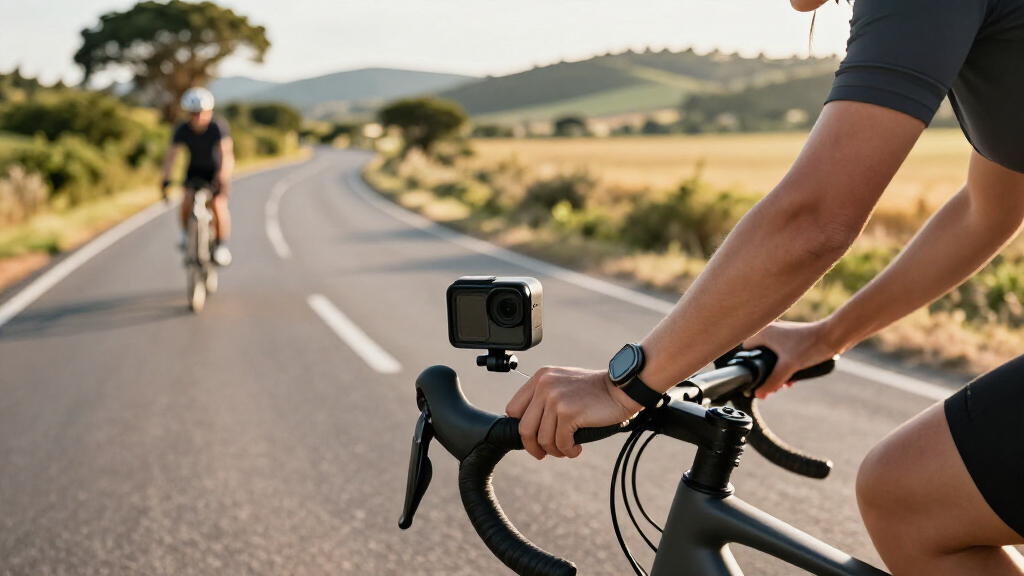
I compared these eight products by how well they address distinct cycling needs: rearward traffic awareness, incident recording, creative footage, and cockpit simplicity. I weighed stated video resolution alongside the practical role of each device, including whether it has a live display, GPS, vehicle alerts, lighting, or hands-free mounting. Build and setup considerations also matter on a bike, where a mount must stay usable over varied surfaces and a screen or camera should not crowd controls.
The ranking favors products that offer a clear benefit for a broad range of riders without relying on resolution alone. The Spedal S1 ranks first for its combination of camera and ride functions; VeloScope follows for riders who value rear visibility and alerts. Specialized 360-degree and compact cameras rank higher for their target use than basic rear-view systems, while the simpler monitors remain compelling for riders who mainly want to see traffic behind them. I treat advertised features as stated specifications, not as proof of performance in every riding condition.
Factors to Consider When Choosing Best Cycling Cameras
Before choosing, decide what problem you want the camera to solve. A device that helps you monitor traffic is not automatically the best tool for recording a ride, and a high-resolution action camera does not replace a rear-view display. These broader checks can help narrow the field before comparing individual models.
Choose Between Rear Visibility and Ride Footage
Start by deciding whether your priority is seeing traffic behind you or capturing video for later viewing. A rear-view camera sends a live image to a display, which can support awareness while riding; an action camera is generally built to record scenes rather than show a constant rear view. Some options combine recording with a screen or alerts, but no single feature makes a camera a substitute for looking and listening around you. Think about your regular routes: busy roads may make a live rear view or vehicle alerts more useful, while scenic rides may call for a broader recording perspective. Avoid buying a camera for one job and assuming it will handle the other equally well.
Match the View to Your Riding Position
A wide field of view can show more of the road, but perspective and mounting angle affect how easy it is to judge distance. A screen that looks clear at one angle may be harder to read when mounted beside other cockpit equipment or under changing light. Before buying, check where the display and camera can sit without obstructing controls, lights, or your normal head movement. A rotatable mount can make alignment easier, but it cannot fix a poor mounting position or an obstructed camera lens. Prioritize a view you can interpret quickly rather than selecting solely by the widest advertised angle.
Plan for Power and Ride Duration
Camera runtime can become a limitation on long rides, especially when recording continuously or powering a display and other functions at once. Compare the maker’s stated battery details with your typical ride length, and check whether the device supports external power or removable batteries if that matters to your routine. A headlight, GPS, screen, and recording system may be convenient in one unit, but each function can add power demands and setup choices. Riders who take short commutes may favor a simple system that is ready quickly; touring riders should think about charging access and how they will manage recordings. Do not assume that a large feature list means the camera will run through every ride without a charging plan.
Check Mounting, Weather Exposure, and Bike Compatibility
Bike-mounted electronics face vibration, rain, dust, and frequent handling, so the mount and its fit deserve as much attention as the camera body. Confirm that the supplied hardware matches your handlebar or seatpost dimensions and leaves room for existing accessories. A secure mount reduces the chance of a shifting view, while a removable design can make charging or storage less awkward. Check the manufacturer’s weather-resistance information rather than assuming that every cycling camera can be left exposed in heavy rain. If you switch between bikes, consider whether moving the system is straightforward or requires adjusting several parts each time.
Decide Which Features You Will Actually Use
GPS, vehicle alerts, cycling-computer functions, lighting, and 360-degree recording can each add a distinct benefit, but they can also create more setup and more information to manage. Make a short list of features that would change your ride, such as recording incidents, checking a rear display, or tracking route data. Then separate those priorities from extras that duplicate a phone, bike computer, or existing light. An all-in-one unit can reduce cockpit clutter if it replaces devices you already carry; otherwise, a simpler camera may be easier to operate. Pay for capability that fits your routine, not just the longest feature list.
Choose Resolution for the Evidence or Footage You Need
Higher resolution can preserve more detail, but recording quality also depends on lighting, motion, lens coverage, and how footage is stored. For incident documentation, consider whether the camera records continuously, how easily you can find a relevant clip, and whether its view covers the road area you care about. For creative filming, a 360-degree perspective or hands-free form may matter more than a conventional rear-facing frame. Also check storage requirements and file handling before committing to a recording workflow. The most useful camera is one whose footage you can capture and retrieve reliably, not simply the one with the largest resolution figure.
Frequently Asked Questions
Should I buy a rear-view camera or a cycling action camera?
Choose a rear-view camera if your main aim is seeing traffic behind you on a handlebar display. Choose an action camera if you want recorded footage for ride videos or documentation, since recording devices do not necessarily provide a live view. If you want both functions, compare models that explicitly combine a monitor with continuous recording or alerts rather than assuming every camera does. Also think about where each unit mounts and whether a display will compete for cockpit space. Your primary use should decide the category before resolution or extra features do.
Is a vehicle-alert camera worth choosing over a basic rear-view monitor?
It may suit riders who want more than a picture of the road behind them, since an alert system can call attention to approaching vehicles. That extra information is useful only if the alerts are clear and fit the way you ride; it should not replace shoulder checks or awareness of nearby traffic. A basic monitor may be simpler if you mainly want a visual rear view and prefer fewer functions to configure. Compare how alerts are delivered, how the display is mounted, and what happens during recording. Choose the added system for the specific awareness features you will use, not simply because it has more components.
Do I need a 360-degree cycling camera?
A 360-degree camera makes the most sense when you want to reframe footage after a ride or capture more of the surroundings than a fixed lens can show. It is less compelling if you only need a straightforward rear-facing record or a live traffic display. Think about the extra editing and storage work that can come with immersive footage, as well as the mounting position needed to keep the view clear. A conventional camera can be the more direct choice for documenting a commute or keeping a simple recording routine. Select 360-degree capture for creative flexibility, not as a default measure of safety.
What should I check before mounting a camera on my bike?
Check that the mount fits your bars, seatpost, or intended attachment point and leaves brakes, shifters, lights, and displays accessible. The camera should not move enough to change its view over rough surfaces, and the lens should remain clear of bags, clothing, or other accessories. Consider whether you can remove the unit easily for charging or storage, especially if you leave your bike in public. Confirm weather-resistance details from the manufacturer rather than relying on appearance. A well-positioned, secure camera is more useful than one with impressive specifications mounted where its view is blocked.
Can one cycling camera replace my bike computer, light, or mirror?
Some models combine camera recording with features such as GPS, a headlight, or cycling-computer functions, but a combined device may not match every standalone accessory’s use or placement. Check which functions are actually included and whether they remain convenient while riding. A rear-view camera can provide a visual aid, but it should not be treated as a complete replacement for checking your surroundings. If an all-in-one device would remove duplicate equipment from your cockpit, the tradeoff may suit you. If you already rely on dedicated devices, a camera focused on your main recording or visibility need may be easier to integrate.
Conclusion
For most riders seeking one device with several ride functions, my best overall choice is the Spedal S1, while riders focused on rear traffic awareness should look closely at the VeloScope. For best value in a straightforward rear-view setup, compare the simpler ATOVANKA and FEISIKE monitors against the features you genuinely need; neither requires choosing a full action-camera workflow. The Insta360 X4 Air is my best premium pick for expansive footage, and the compact Insta360 GO Ultra is the more fitting choice for riders who want hands-free recording. For beginners, a dedicated rear-view system is often easier to understand than a camera with several recording and data functions. Choose Fitense if a larger display and adjustable mount suit your cockpit, or HUPEJOS if GPS and 4K recording are the priorities; the right pick depends on whether visibility, convenience, or footage matters most on your rides.
Columbus Day / Indigenous Peoples' Day Picks
long weekend sales
As an affiliate, we earn on qualifying purchases.